To save content items to your account,
please confirm that you agree to abide by our usage policies.
If this is the first time you use this feature, you will be asked to authorise Cambridge Core to connect with your account.
Find out more about saving content to .
To save content items to your Kindle, first ensure no-reply@cambridge.org
is added to your Approved Personal Document E-mail List under your Personal Document Settings
on the Manage Your Content and Devices page of your Amazon account. Then enter the ‘name’ part
of your Kindle email address below.
Find out more about saving to your Kindle.
Note you can select to save to either the @free.kindle.com or @kindle.com variations.
‘@free.kindle.com’ emails are free but can only be saved to your device when it is connected to wi-fi.
‘@kindle.com’ emails can be delivered even when you are not connected to wi-fi, but note that service fees apply.
This edited collection is drawn from the sixth Libraries Without Walls Conference, held in 2005. From their beginnings in 1995, the Libraries Without Walls conferences have mapped a major change in the practice of librarianship. While library services are still concerned to provide users with physical access to their buildings, electronic access, often from remote locations, is becoming ever more dominant. Papers presented at previous LWW conferences have provided examples of how libraries are pushing out the frontiers of their services. In 2005, a different approach was taken. The question was asked, 'How do we know whether these new services are having a positive impact on our users?' In response, papers written by leading professionals worldwide followed these broad themes: theoretical approaches to the evaluation of the new services, with an emphasis on qualitative methods; the user experience: what do we know about the users of these services? assessment of the usability - including the accessibility - of the services; and, measuring the outcomes and impact. These state-of-the-art papers will enable library managers and information professionals in all sectors to keep abreast of the latest developments in this vital area. The book will also assist educational specialists and course developers in increasing their understanding of the role and importance of information in the learning process.
Interest in m-library services has grown exponentially in the last five years, as libraries are recognizing the potential of ubiquitous and increasingly sophisticated mobile devices. Building on the highly regarded M-Libraries: libraries on the move to provide virtual access, this new book brings together research and case studies from all corners of the globe on the development and delivery of library services and content to mobile devices. Based on the proceedings of the Second International M-Libraries Conference held in Vancouver, this new collection of contributions from authorities in the field serves to demonstrate the ingenuity and creativity of developers and service providers in this area, ranging from the innovative application of basic mobile phone technology to provide information services in remote parts of the globe lacking internet access, to the development of new tools and technologies which harness the full functionality of popular mobile phones. This title includes topics such as: enhancing library access through the use of mobile technology; the university library digital reading room; mobile access for workplace and language training; the role of an agent supplying content on mobile devices; cyberlearning and reference services via mobile devices; podcasting as an outreach tool; service models for information therapy services delivered to mobiles; bibliographic ontology and e-books; health literacy and healthy action in the connected age; a collaborative approach to support flexible, blended and technology-enhanced learning; and, mobilizing the development of information skills for students on the move and in the workplace. This collection demonstrates the emergence of an evidence base for m-libraries, with a number of contributions presenting the results of user surveys and studies of user behaviour. This highly topical book should be read by information professionals in all sectors, and by policy makers, researchers, developers, publishers and suppliers. It will also be of great interest to library and information studies students and newcomers to the profession.
Library Management in Disruptive Times identifies the key skills and attitudes needed by the library leaders of today and tomorrow and delivers a balanced view of the future of the profession. Contributed to by expert professional library leaders and educators from across the globe, this edited collection offers thought-provoking perspectives on the challenge of the current operating environment across a range of library sectors, library professional associations and geographic regions. Each author brings their own particular area of expertise and perspective on to consider the effects of disruptive change in libraries globally.
All library and information professionals involved with collection development are currently confronting the challenge of how to make informed decisions in the face of the bewildering array of electronic resources available. This practical book addresses the situation by guiding the information professional step-by-step through building and managing an electronic resource collection. It outlines the range of electronic products currently available in abstracting and indexing, bibliographic, and other services and then describes how to effectively select, evaluate and purchase them. Electronic resources are a fast moving area so the new edition of this invaluable guide has been brought completely up to date; emerging new areas such as Virtual Learning Environments and reading/resource list software are considered, and the helpful bibliography of sources is expanded. This invaluable guide identifies best practice and highlights the pitfalls involved in building an electronic resource collection, and the case studies and models used are fully international in their application. This is an essential book for the professional or student new to e-collection development, as well for the experienced practitioner.
The world wide web is arguably the most important, and certainly the largest and most ubiquitous, cultural and commercial information resource in existence. The requirements to actively preserve selected parts of it, and the attendant problems of archiving such a vast and ephemeral entity, are only now beginning to be fully appreciated. This important book is the first to offer practical guidance to information-management professionals seeking to implement web archiving programmes of their own. It is essential reading for those who need to collect and preserve specific elements of the web - from national domains or individual subject areas to an organization's own website. Drawing on the author's experience of managing The National Archives' web-archiving programme, together with lessons learned from other international initiatives, this book provides a comprehensive overview of current best practice, together with practical guidance for anyone seeking to establish a web-archiving programme. It assumes only a basic understanding of IT and web technologies, although it also offers much for more technically oriented readers. Contents include: the development of web archiving; selection; collection methods; quality assurance and cataloguing; preservation; delivery to users; legal issues; managing a web-archiving programme; and; future trends. Written to address audiences from the whole spectrum of information-management sectors, this book is essential reading for three types of reader: policy-makers, who need to make decisions about establishing or developing an institutional web archiving programme; information-management professionals, who may be required to implement a web-archiving programme; and website owners and webmasters, who may be required to facilitate archiving of their own websites.
This Toolkit provides you with everything you need to successfully market any library. As libraries continue to fight for their survival amid growing expectations, competition from online sources and wavering public perceptions, effective marketing is increasingly becoming a critical tool to ensure the continued support of users, stakeholders and society as a whole. This unique practical guide offers expert coverage of every element of library marketing and branding for all sectors including archives and academic, public and special libraries, providing innovative and easy-to-implement techniques and ideas. The book is packed with case studies highlighting best practice and offering expert advice from thought-leaders including David Lee King and Alison Circle (US), Terry Kendrick and Rosemary Stamp (UK), Alison Wallbutton (New Zealand) and Rebecca Jones (Canada), plus institutions at the cutting-edge of library marketing including the British Library, New York Public Library, the National Archive, Cambridge University, JISC, the National Library of Singapore and the State Library of New South Wales. The key topics covered in the text are: seven key concepts for marketing libraries; strategic marketing; the library brand Marketing and the library building; an introduction to marketing online; marketing with social media; marketing with new technologies; marketing and people; internal marketing; library advocacy as marketing; marketing Special Collections and archives. The book is supplemented by a companion website (http://www.librarymarketingtoolkit.com) and is essential reading for anyone involved in promoting their library or information service, whether at an academic, public or special library or in archives or records management. It's also a useful guide for LIS students internationally who need to understand the practice of library marketing.
Public libraries have changed beyond anyone's predictions in the past ten years and are at a vital stage in their historical development. This timely book is the first standalone text to examine the role and services of the UK public library in the 21st century context. The book discusses the nature and functions of the modern public library service, from its beginnings as the street-corner university, through its delivery of state-of-the-art services and beyond. At the heart of the book is a passionate argument for the professional and public significance of the public library service. The key chapters are: public libraries - the modern context; historical development of public libraries; equity of access; cultural and leisure roles; information, advice and informed citizenship; lifelong learning; the impact of ICT; management, governance and budgeting issues; performance measurement and evaluation; professional and staffing issues; marketing, branding and buildings; and, the public library of tomorrow. Of interest to all students and researchers of library and information science, as well as professionals in public libraries, this book is an advocacy tool for an essential service consistently under pressure.
If the vision for the future of digital information is order, ease of access, discoverable resources and sustainable business models, how might this be achieved? In an information environment shaped by an ever-growing and persistent demand for more and more digital content from every direction, it has become increasingly important that publishers, libraries and information professionals understand the challenges and opportunities of the Google environment. This book addresses these issues and carves out a strategy for the future of digital information. Put together by an international, cross-sectoral team of contributors, each authored chapter provides a snapshot of where we are now and considers how the barriers to success might be overcome and what the digital information environment might look like if these issues are - or indeed are not - addressed. They include: digital information - an overview of the landscape; scholarly communications - the view from the library; scholarly communications - the publisher's view; e-books and scholarly communication futures; digitizing the past - next steps for public sector digitization; resource discovery; and, who owns the content in the digital environment. This book is essential reading for all library and information professionals as well as for researchers and library students. The book will also be of interest to publishers wishing to reconcile their own digital strategies with those of both information consumers and providers.
As the information environment becomes increasingly electronic, digital libraries have proliferated, but the focus has often been on innovations in technology and not the user. Although userneeds have become a popular concept, in practice the users are rarely consulted in the development of services. Research and analysis of users is essential to fine-tune the content and approach of digital libraries to the diverging requirements and expectations of incredibly varied communities and to ensure libraries are effective, accessible and sustainable in the long term. Providing a clear and coherent overview of the user studies domain and user issues in digital libraries this landmark edited text captures a truly global cross-section of leading voices.
The changing environment in higher education requires different approaches to be taken to the provision of professional support services. This may result in the development of outsourced shared services, the convergence of many different student-facing services or the development of more active collaborative networks. This collection of essays considers the changing context and broad principles affecting the ways in which we need to manage and provide services and offers case studies of changes that have already taken place. This book recognizes and uncovers the innovations that leaders and practitioners are implementing to transform and develop the provision of sustainable and creative support services. Such innovations are resulting in diverse models of service delivery and the development of more active collaborative networks and commercial partnerships. The essays are drawn from a broad spectrum of professionals working inside and outside library and information services as well as those responsible for leading multiply converged or joint service teams.
Libraries and information services are being transformed by the increasing availability of electronic information. The management of information resources in libraries is of greater, not lesser importance in the digital world. Librarians are well placed to provide leadership in the new century as they draw on enduring principles and updated skills to provide organized access to worthwhile information in order to meet the needs of library clients. Developments in this area have been so rapid in the last few years that no current work on collection management covers it adequately. This book fills that gap by presenting an overall view of the information resources that library clients are likely to require in the 21st century. It is an accessible practice-based guide encompassing all areas of collection management, but with a particular focus upon what is new or different from traditional approaches. Integrating discussion of available electronic information sources throughout, it covers: collection management in the organizational context; collection development policies; library co-operation and networking; selection principles and resources; principles of acquisition, access and licensing; budget management; collection evaluation and review; and preservation and weeding of library resources. The book features many examples and case studies, together with focus questions at the start of each chapter and suggestions for further reading at the end. It also includes a detailed annotated bibliography. Written in a straightforward and accessible way, this is essential reading for acquisitions librarians and collection managers in all types of libraries, as well as for students of library and information studies.
Anyone wishing to be a successful supervisor must learn the interpersonal skills of communication, assertiveness and motivation in order to build a successful team with a positive ethos. This book provides a practical guide to supervisory skills for team leaders and supervisors in library and information work. Although reference is made to relevant management concepts, its strength is that it translates theory into practice, and the focus is decidedly on the latter. This is very much a 'how to' guide for anyone wishing to develop a supervisory role in an ILS context. Each topic is covered in a practical and down-to-earth manner, and is illustrated by examples and case studies from different types of ILS. The text also offers self-assessment audits and other activities to enable the reader to relate the tools and techniques to their own work situation. Key topics covered are: the role of team leader in ILS; leading and managing the team; confident leadership and supervision; the psychology of motivation; managing the work; communication skills; managing and leading complex teams; human resource management; workplace learning and training; and, personal and professional development. This is an essential tool for new and aspiring supervisors and team leaders in ILS, and for more experienced supervisors who wish to dip into it to refresh their approach. It will also be of great value to ILS students.
With the increasing availability of digital resources, it is vital for those involved in purchasing them to get to grips with the complexities of contracts, costs and the relationships that exist between subscriber and publisher. "Negotiating Licences for Digital Resources" is a practical guide on how to get the best deal for online subscriptions. The processes outlined in this book can be applied to a wide range of electronic products, ranging from e-journals to multi-modular databases. There are practical tips and guidance on what to focus on during the course of the negotiation and, most importantly, what preparation is needed to ensure that you gather the necessary amount of information to achieve the best outcome. The text guides you logically through the stages of negotiation, from initial awareness of your organization's needs to making the contract more understandable, and offers advice on the skills and techniques of negotiation, whether in written or face-to-face scenarios. This book can act as a reference tool for experienced negotiators, or as a primer for those who have never before been involved in the process. It is essential reading for information professionals, knowledge managers, online resource buyers and procurement officers across all sectors, and will also be of interest to publishers, e-journal agents and vendors of online resources.
An up-to-date showcase of the innovative and inspiring work that libraries are doing across the world to interact with their users and deliver resources via mobile devices.
This title offers expert hands-on advice on getting the most out of web 2.0 and cloud computing. Applications like YouTube, Facebook, Flickr and Slideshare all raise legal problems for the information professional. Whether you're working with, managing or using web 2.0 or cloud computing applications you will need to be able to assess and manage risk effectively. This no-nonsense practical working tool will make the relevant legal principles simple to understand for those with little or no experience and common problems quick to solve when you're struggling with daily deadlines. Each chapter starts with an accessible introduction to the key areas of relevant law and the implications for web 2.0 and cloud computing. Cross-sectoral case studies illustrate real world problems and easy-to-follow, pragmatic solutions allowing you to quickly develop good practice. The relevant practice is discussed in relation to these key topics: the major legal issues raised by Web 2.0 ; an overview of copyright; other intellectual property rights and related rights; data protection including UK and EU law; freedom of information; defamation and global differences in defamation law; cloud computing issues; liability issues. This is an essential toolkit for all information professionals working in public, academic or special libraries, archives or museums, who are working with, using or managing Web 2.0 or cloud computing applications. It also provides a practical introduction to the law on these topics for LIS students and academics.
There is a queue, the phone is ringing, the photocopier has jammed and your enquirer is waiting for a response. You are stressed and you can feel the panic rising. Where do you go to find the information you need to answer the question promptly and accurately? Answering queries from users is one of the most important services undertaken by library and information staff. Yet it is also one of the most difficult, least understood subjects. There are still very few materials available to help frontline staff - often paraprofessional - develop their reader enquiry skills. This award-winning sourcebook is an essential guide to where to look to find the answers quickly. It is designed as a first point of reference for library and information practitioners, to be depended upon if they are unfamiliar with the subject of an enquiry - or wish to find out more. It is arranged in an easily searchable, fully cross-referenced A-Z list of around 150 of the subject areas most frequently handled at enquiry desks. Each subject entry lists the most important information sources and where to locate them, including printed and electronic sources, relevant websites and useful contacts for referral purposes. The authors use their extensive experience in reference work to offer useful tips, warn of potential pitfalls, and spotlight typical queries and how to tackle them. This new edition has been brought right up-to-date with all sources checked for currency and many new ones added. The searchability is enhanced by a comprehensive index to make those essential sources even easier to find - saving you valuable minutes! Offering quick and easy pointers to a multitude of information sources, this is an invaluable reference deskbook for all library and information staff in need of a speedy answer, in reference libraries, subject departments and other information units.
Global thought-leaders define the future of research communication. Governments and societies globally agree that a vibrant and productive research community underpins a successful knowledge economy but the context, mechanisms and channels of research communication are in flux. As the pace of change quickens there needs to be analysis of new trends and drivers, their implications and a future framework. The editors draw together the informed commentary of internationally-renowned experts from all sectors and backgrounds to define the future of research communication. A comprehensive introduction by Michael Jubb is followed by two sections examining changing research behaviour and the roles and responsibilities of other key actors including researchers, funders, universities, research institutes, publishers, libraries and users. Key topics include; changing ways of sharing research in chemistry, supporting qualitative research in the humanities and social sciences, creative communication in a 'publish or perish' culture, cybertaxonomy, coping with the data deluge, social media and scholarly communications, the changing role of the publisher in the scholarly communications process, researchers and scholarly communications, the changing role of the journal editor, the view of the research funder, changing institutional research strategies, the role of the research library and, the library users' view. This is essential reading for all concerned with the rapidly evolving scholarly communications landscape, including researchers, librarians, publishers, funders, academics and HE institutions.
How do archives and other cultural institutions such as museums determine the boundaries of a particular community, and of their own institutional reach, in constructing effective strategies and methodologies for selecting and maintaining appropriate material evidence? This book offers guidance for archivists, record managers and museums professionals faced with such issues in their daily work. This edited collection explores the relationships between communities and the records they create at both practical and scholarly levels. It focuses on the ways in which records reflect community identity and collective memory, and the implications of capturing, appraising and documenting these core societal elements - with particular focus on the ways in which recent advances in technology can overcome traditional obstacles, as well as how technologies themselves offer possibilities of creating new virtual communities. It is divided into five themes: a community archives model; communities and non-traditional record keeping; records loss, destruction and recovery; online communities: how technology brings communities and their records together; and, building a community archive. This book will appeal to practitioners, researchers, and academics in the archives and records community as well as to historians and other scholars concerned with community building and social issues.
This very practical guide, offering a comprehensive overview of best practice, is aimed at the non-specialist, assuming only a basic understanding of IT and offering guidance as to how to implement strategies with minimal time and resources. Digital preservation has become a critical issue for institutions of all sizes but until recently has mostly been the preserve of national archives and libraries with the resources, time and specialist knowledge available to experiment. However, as the discipline matures and practical tools and information are increasingly available the barriers to entry are falling for smaller organizations which can realistically start to take active steps towards a preservation strategy. However, the sheer volume of technical information now available on the subject is becoming a significant obstacle and a straightforward guide is required to offer clear and practical solutions. Each chapter covers the essential building blocks of digital preservation strategy and implementation including: making the case for digital preservation; understanding your requirements; models for implementing a digital preservation service; selecting and acquiring digital content; accessioning and ingesting digital objects; describing digital objects; preserving digital objects; providing access to users; future trends. This is an essential handbook for anyone involved in digital preservation in medium or smaller sized organizations and those wanting to get a better understanding of the process. It's also a useful guide to digital preservation basics for students studying library and information science, archives and records management courses and academics getting to grips with practical issues.
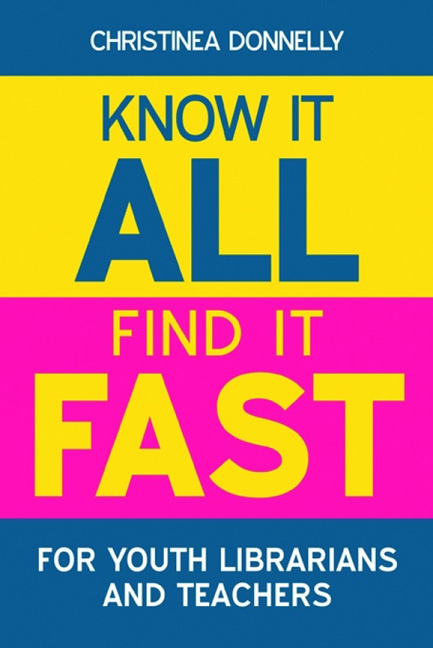
This is a brand new version of the bestselling enquiry desk reference text, "Know it All, Find it Fast", for those working with children and young people in schools, public libraries and at home. After a general introduction covering essential information about education and the curriculum there is a comprehensive A-Z of topics covering school subjects from science and maths to reading and literacy, and more general themes such as children's health, wellbeing and hobbies. Each topic is broken down into useful sections that will guide your response: typical questions - 'Are there any homework clubs in my area?'; Definitions - 'Homework is...'; what to consider: environment and time of day; where to look - homework guidelines, print resources and websites; and, how to have success - how to evaluate resources. This is an indispensable guide for librarians and teachers in schools and public libraries working with children and young people. It will also be a handy reference for parents and anyone working with children and young people in other organizations such as health visitors.