To save content items to your account,
please confirm that you agree to abide by our usage policies.
If this is the first time you use this feature, you will be asked to authorise Cambridge Core to connect with your account.
Find out more about saving content to .
To save content items to your Kindle, first ensure no-reply@cambridge.org
is added to your Approved Personal Document E-mail List under your Personal Document Settings
on the Manage Your Content and Devices page of your Amazon account. Then enter the ‘name’ part
of your Kindle email address below.
Find out more about saving to your Kindle.
Note you can select to save to either the @free.kindle.com or @kindle.com variations.
‘@free.kindle.com’ emails are free but can only be saved to your device when it is connected to wi-fi.
‘@kindle.com’ emails can be delivered even when you are not connected to wi-fi, but note that service fees apply.
This edited collection explores critical literacy theory and provides practical guidance to how it can be taught and applied in libraries. Critical literacy asks fundamental questions about our understanding of knowledge. Unlike more conventional approaches to literacy and resource evaluation, with critical literacy there is no single ‘correct' way to read and respond to a text or resource. A commitment to equity and social justice sets critical literacy apart from many other types of literacy and links it to wider societal debates, such as internationalization, community cohesion and responses to disability. The book provides a foundation of critical literacy theory, as applied to libraries; combines theory and practice to explore critical literacy in relation to different user groups, and offers practical ways to introduce critical literacy approaches in libraries.
In these turbulent times, with the challenges of a constantly changing job market, shifting information-seeking behaviour and a vast array of new resources continually being produced, library and information services need to constantly keep one step, or more, ahead of their users. The benefits of analysing user behaviour are self-evident: better strategic planning, cost benefits and better use of budgets, better marketing, satisfied customers, satisfied management, and a library or information unit that is central to the needs of your parent organization. However, paradoxically, user needs and levels of expectation, including those of remote users, are often not fully explored. This accessible text goes back to the basics and investigates the following key issues: why this book; defining your users; understanding users - the what, why, where, when, how and who; what is the current knowledge of user behaviour and needs - is it really predictable; great expectations - how LIS professionals can manage and train users; using information about past user behaviour; making the most of knowing your users; keeping track of changes in what users want; tracking the future - electronic and social networking; and, future perfect. This book will help any library or information professional anywhere to take a fresh look at this important area and to tackle it in their organization, so as to ensure that their users will always obtain exactly what they want. Webmasters and knowledge managers will also find much to interest them.
In a rapidly changing environment where increasingly the boundaries are blurring between librarians' roles and those of learning technologists, information technologists, educational developers, skill support specialists and, indeed, academic staff, the academic librarian needs not only to embrace new opportunities but also to influence proactively the development of learning environments. This essential book captures and critically discusses the librarian's changing learning support role in an educational context, providing guidance and practical support. Written by acknowledged experts across a broad range of roles in the new academic environment, it challenges thinking in this area as well as offering practice-based advice. This book is essential reading for practitioners at every level within the higher education and further education sectors, including information specialists, learning support professionals, academic liaison co-ordinators and subject specialists, academic service managers, and heads of library and information services. It will also be a valuable resource for all other professionals involved in the delivery of learning support, and for students of LIS and of education.
The long-awaited 2nd edition of this best-selling research methods handbook is fully updated and includes brand new coverage of online research methods and techniques, mixed methodology and qualitative analysis. This edition includes two new contributed chapters: Professor Julie McLeod, Sue Childs and Elizabeth Lomas focus on research data management, applying evidence from the recent JISC funded ‘DATUM’ project; Dr Andrew Shenton examines strategies for analysing existing documents.
The advent of new information retrieval (IR) technologies and approaches to storage and retrieval provide communities with previously unheard of opportunities for mass documentation, digitization, and the recording of information in all its forms. This book introduces and contextualizes these developments and looks at supporting research in IR, the debates, theories and issues. Contributed by an international team of experts, each authored chapter provides a snapshot of changes in the field, as well as the importance of developing innovation, creativity and thinking in IR practice and research. Key discussion areas include: browsing in new information environments classification revisited: a web of knowledge approaches to fiction retrieval research music information retrieval research folksonomies, social tagging and information retrieval digital information interaction as semantic navigation assessing web search machines: a webometric approach. The questions raised are of significance to the whole international library and information science community, and this is essential reading for LIS professionals , researchers and students, and for all those interested in the future of IR.
This new and updated second edition of a classic text provides a thought provoking introduction to metadata for all library and information students and professionals. Metadata for Information Management and Retrieval has been fully revised to bring it up to date with new technologies and standards. It builds on the concept of metadata through an exploration of its purposes and uses as well as considering the main aspects of metadata management. This new edition, containing new chapters on 'Very Large Data Collections' and the 'Politics and Ethics of Metadata', assesses the current theory and practice of metadata and examines key developments in terms of both policy and technology.
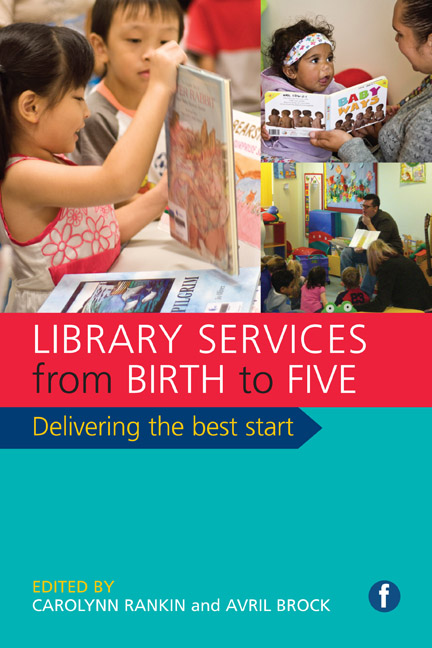
There is a growing awareness of the significance of the first five years of life for intellectual, social and emotional development and early intervention is of political interest. This book provides knowledge and understanding about early language and literacy development and how young children become successful through enjoyable and meaningful experiences. This book will be useful reading for early years professionals and librarians, those responsible for commissioning and delivering pre-school library services, students of library and information studies or childhood studies and practitioners undertaking practical early years qualifications.
The internet as a platform for facilitating human organization without the need for organizations has, through social media, created new challenges for cultural heritage institutions. Challenges include but are not limited to: how to manage copyright, ownership, orphan works, open data access to heritage representations and artefacts, crowdsourcing, cultural heritage amateurs, information as a commodity or information as public domain, sustainable preservation, attitudes towards openness and much more. Participatory Heritage uses a selection of international case studies to explore these issues and demonstrates that in order for personal and community-based documentation and artefacts to be preserved and included in social and collective histories, individuals and community groups need the technical and knowledge infrastructures of support that formal cultural institutions can provide. In other words, both groups need each other. Divided into three core sections, this book explores:Participants in the preservation of cultural heritage; exploring heritage institutions and organizations, community archives and groupChallenges; including discussion of giving voices to communities, social inequality, digital archives, data and online sharingSolutions; discussing open access and APIs, digital postcards, the case for collaboration, digital storytelling and co-designing heritage practice.Readership: This book will be useful reading for individuals working in cultural institutions such as libraries, museums, archives and historical societies. It will also be of interest to students taking library, archive and cultural heritage courses.
Cornish's Copyright is the standard work in its field and is indispensable for all librarians and information professionals and who are looking for solutions to their copyright problems. The book explains the provisions of the UK Copyright Act and supporting legislation in quick and easy question-and-answer form. This latest edition is revised and expanded in the light of new legislation which came into force in 2014/5 and some decisions by the courts which have changed our understanding of what the law means. Areas such as moral rights, originality, databases, and the use of broadcast material in education all receive detailed attention, along with Wikipedia, Creative Commons and Open Archives. Copyright is also considered in the context of social media.
This book shows you how to harness the power of linked data and web-scale discovery systems to manage and link widely varied content across your library collection. Libraries are increasingly using web-scale discovery systems to help clients find a wide assortment of library materials, including books, journal articles, special collections, archival collections, videos, music and open access collections. Depending on the library material catalogued, the discovery system might need to negotiate different metadata standards, such as AACR, RDA, RAD, FOAF, VRA Core, METS, MODS, RDF and more.
As mobile devices proliferate and the services and apps available increase exponentially, the average person expects information to be delivered to their mobile with minimum fuss and effort. Adapting to this new environment as an information service is crucial for survival but also offers myriad opportunities for improvement and promotion, providing a direct route to the user. Packed with easy to implement ideas, practical examples and international case studies, this title provides you with the ultimate toolkit, exploring ideas as simple as renewals and reminders to the more complex such as access to e-books and virtual worlds. Easy to follow coverage of the background and context to mobile delivery will enable you to fully understand the challenges and embrace the opportunities, getting to grips with critical issues such as what sort of services users really want. Key topics covered include: context including market penetration, range and functionality of devices, texting apps vs. mobile websites, mobile information literacy vs. other information literacies, mobiles in teaching, linking the physical and virtual worlds via mobile devices, E-books for mobiles, and the future of mobile delivery. This is an essential practical guide for all information professionals who want to get to grips with or improve their use of mobile services to strengthen their relationship with users.
Emerging Strategies for Supporting Student Learning provides a straightforward and accessible guide to the latest learning and teaching practices appropriate for use with higher education students. It is both an exciting and challenging time to be working in higher education as the sector experiences rapid changes including: an increasingly diverse student population with changing expectations; changes in technology including the rise in the use of social media; increased emphasis on employability and internationalisation; development of new social learning spaces; as well as an ever-decreasing resource base. As a result of these changes, new approaches to supporting student learning are developing rapidly.
An overview of the field of information organization that examines resource description as both a product and process of the contemporary digital environment. This timely book employs the unifying mechanism of the semantic web and the resource description framework to integrate the various traditions and practices of information and knowledge organization. Uniquely, it covers both the domain-specific traditions and practices and the practices of the 'metadata movement' through a single lens; that of resource description in the broadest, semantic web sense.
Jane Secker and Chris Morrison have completely revised and updated this highly successful text to take into account recent developments in the field and changes to the law in the UK and elsewhere in the world. Through its practically based overview of current and emerging copyright issues facing those working in e-learning, this book will help equip professionals with the tools, skills and understanding they need to work confidently and effectively in the virtual learning environment with the knowledge that they are doing so legally. New and developing services, software and other technologies are being adapted for online learning environments to engage students and academic staff. These technologies present increasing challenges to IPR and legal issues and this book will help librarians and educators to meet them.
A vision for the future of information literacy teaching Based on groundbreaking research, undertaken by the authors as part of the prestigious Arcadia Programme at Cambridge University, this presents a new and dynamic information literacy curriculum developed for the 21st century information professional. The curriculum adopts a broad definition of information literacy that encompasses social as well as academic environments and situates IL as a fundamental attribute of the discerning scholar and the informed citizen. It seeks to address in a modular, flexible and holistic way the developing information needs of students entering higher education over the next five years. Interweaving the authors' research and the reflections of internationally-recognised experts from the library, education and information literacy sectors, it will illustrate how and why this new curriculum will work in practice.
This book takes a strategic approach to the leadership of school libraries and will inspire and enable school librarians to think creatively about their work and the community in which they operate. The Innovative School Librarian raises important questions about the functions of the school librarian and sets out to encourage the reader to re-examine their own professional values, assumptions and practices. This has led to the inclusion of a new chapter on using evidence, a large number of new vignettes to illustrate responses to challenges as well as a significant re-structuring of other chapters.Written by current leaders in the field, each chapter addresses the practical issues facing school librarians. This new edition has been fully updated In the light of curriculum revisions, resource changes, developments in the use and integration of technology and new routes into the profession.Key topics covered include:the librarian's philosophy and professional identitybridging the gap between different visions for the school libraryidentifying and understanding our communitymaking a positive response to changekeeping inspired and inspiring others integrating the library into teaching and learning.This is an essential, thought-provoking book for all school librarians, practitioners in schools library services, and students of librarianship. It has plenty to interest school leadership, headteachers, educational thinkers, public library managers and local government officers.
In this book, John Bowman provides an introduction to the Dewey Decimal Classification suitable either for beginners or for librarians who are out of practice using Dewey. He outlines the content and structure of the scheme and then, through worked examples using real titles, shows readers how to use it. Most chapters include practice exercises, to which answers are given at the end of the book. A particular feature of the book is the chapter dealing with problems of specific parts of the scheme. Later chapters offer advice on how to cope with compound subjects, and a brief introduction to the Web version of Dewey. Written in an engaging and direct style, this text is a companion volume both to the author's own bestselling Essential Cataloguing and to Vanda Broughton's Essential Classification. It is ideal for library students, and for public, school and solo librarians and classifiers who are just beginning to use Dewey and need some simple examples.
The research landscape is changing, with key global research funders now requiring institutions to demonstrate how they will preserve and share research data. However, the practice of structured research data management is very new, and the construction of services remains experimental and in need of models and standards of approach. This groundbreaking guide will lead researchers, institutions and policy makers through the processes needed to set up and run effective institutional research data management services. This ‘how to' guide provides a step-by-step explanation of the components for an institutional service. Case studies from the newly emerging service infrastructures in the UK, USA and Australia draw out the lessons learnt. Different approaches are highlighted and compared; for example, a researcher-focused strategy from Australia is contrasted with a national, top-down approach, and a national research data management service is discussed as an alternative to institutional services. The key topics covered are: research data provision; options and approaches to research data management (RDM) service provision; a spectrum of roles, responsibilities and competences; a pathway to sustainable research data services; the range and components of RDM infrastructure and services; case studies of Johns Hopkins University, University of Southampton, Monash University, the UK Data Service and Jisc Managing Research Data programmes. This book will be an invaluable guide to those entering a new and untried enterprise. It will be particularly relevant to heads of libraries, information technology managers, research support office staff and research directors planning for these types of services. It will also be of interest to researchers, funders and policy makers as a reference tool for understanding how shifts in policy will have a range of ramifications within institutions. Library and information science students will find it an informative window on an emerging area of practice.
In order to make an impact with their customers, library staff must be well trained and up-to-date. Training is often delivered by library managers, development officers and trainers who may have limited budgets with access to few resources. This accessible guide uses case studies and examples of best practice from public, school, academic, special and government libraries to help library and information workers deliver excellent training practice. Increasingly, library and information staff are being asked to do more and more with fewer resources. In the context of higher education and further education, library and information workers are often involved in training large, diverse groups of more than 100 students, who may have limited resources. In public libraries, library staff may be involved in delivering a wide range of training activities to extremely diverse groups. Many library and information workers in special libraries deliver end-user and specialist training to busy professionals who are unlikely to have the time to attend pre-scheduled workshops. In addition, the rise of social networking tools and other information and communication technologies, has meant that training practices are continually changing to meet the expectations of participants. This book provides guidance on the design and delivery of effective training courses and is aimed at helping experienced trainers, as well as those who are still developing their skills, including: The people side of training; Use of technologies to support training practices; Different approaches to learning and teaching; Planning and designing training; Delivering training: face-to-face and blended learning; Evaluation of training events and continuous improvement; Learning and development in the workplace. The book will be essential reading for all library and information workers involved in training.
This collection provides a multifaceted response to today's fascination with the idea of the archive and showcases the myriad ways in which archival ideas and practices are being engaged and developed by emerging and internationally renowned scholars. Engaging with Records and Archives offers a selection of original, insightful and imaginative papers from the Seventh International Conference on the History of Records and Archives (I-CHORA 7). The contributions in this volume comprise a wide variety of views of records, archives and archival functions, spanning diverse regions, communities, disciplinary perspectives and time periods. From the origins of contemporary grassroots archival activism in Poland to the role of women archivists in early 20th century England; from the management of records in the Dutch East Indies in the 19th century to the relationship between Western and Indigenous cultures in North America and other modern archival conundrums, this collection reveals the richness of archival thinking through compelling examples from past and present that will captivate the reader.