To save content items to your account,
please confirm that you agree to abide by our usage policies.
If this is the first time you use this feature, you will be asked to authorise Cambridge Core to connect with your account.
Find out more about saving content to .
To save content items to your Kindle, first ensure no-reply@cambridge.org
is added to your Approved Personal Document E-mail List under your Personal Document Settings
on the Manage Your Content and Devices page of your Amazon account. Then enter the ‘name’ part
of your Kindle email address below.
Find out more about saving to your Kindle.
Note you can select to save to either the @free.kindle.com or @kindle.com variations.
‘@free.kindle.com’ emails are free but can only be saved to your device when it is connected to wi-fi.
‘@kindle.com’ emails can be delivered even when you are not connected to wi-fi, but note that service fees apply.
Subjective cognitive complaints (SCC) can precede cognitive decline and are associated with demographic, exposure, lifestyle, and psychological factors. Prevalences of SCC and their correlates in individuals with repetitive head impacts (RHI) are poorly understood. This study characterized SCC in former elite American football players by frequency, mood and behavioral correlates, concordance with informant reports, and associations with neuropsychological test performance, cerebrospinal fluid (CSF), and magnetic resonance imaging (MRI) markers of neurodegeneration.
Method:
Former American football players (n = 180) completed measures of global and domain-specific SCC, neuropsychiatric symptom questionnaires, neuropsychological testing, lumbar puncture, and MRI. Elastic net regression evaluated the relative importance of potential SCC correlates. Intraclass correlation coefficients measured concordance between self and informant reports. Multiple linear regressions tested associations between SCC and verbal memory and executive functioning scores. CSF Aβ1-42, p-tau181, t-tau, neurofilament light (NfL), hippocampal volume, and regional cortical thickness were examined for their potential associations with SCC.
Results:
Rates of SCC ranged from 43 to 77% depending on the domain. Symptoms of depression, impulsivity, and anxiety were strongly associated with SCC. Self- and informant-reported SCC showed moderate inter-rater agreement. Adjusting for age, race, education, APOE ϵ4 carrier status, and depressive symptoms, SCC were associated with lower objective verbal memory and executive functioning performance. SCC were associated with lower parahippocampal cortical thickness but not with hippocampal volume or any of the measured CSF tests.
Conclusions:
SCC are strongly associated with neuropsychiatric factors in former American football players. SCC may also be a marker of cognitive decline and neurodegeneration.
Paleontology provides insights into the history of the planet, from the origins of life billions of years ago to the biotic changes of the Recent. The scope of paleontological research is as vast as it is varied, and the field is constantly evolving. In an effort to identify “Big Questions” in paleontology, experts from around the world came together to build a list of priority questions the field can address in the years ahead. The 89 questions presented herein (grouped within 11 themes) represent contributions from nearly 200 international scientists. These questions touch on common themes including biodiversity drivers and patterns, integrating data types across spatiotemporal scales, applying paleontological data to contemporary biodiversity and climate issues, and effectively utilizing innovative methods and technology for new paleontological insights. In addition to these theoretical questions, discussions touch upon structural concerns within the field, advocating for an increased valuation of specimen-based research, protection of natural heritage sites, and the importance of collections infrastructure, along with a stronger emphasis on human diversity, equity, and inclusion. These questions offer a starting point—an initial nucleus of consensus that paleontologists can expand on—for engaging in discussions, securing funding, advocating for museums, and fostering continued growth in shared research directions.
There is a lack of knowledge on deaths related to police use of force across Canada. Tracking (In)Justice is a research project that is trying to make sense of the life and death outcomes of policing through developing a collaborative, interdisciplinary, and open-source database using publicly available sources. With a collaborative data governance approach, which includes communities most impacted and families of those killed by police, we document and analyze 745 cases of police-involved deaths when intentional force is used across Canada from 2000 to 2023. The data indicate a steady rise in deaths, in particular shooting deaths, as well as that Black and Indigenous people are over-represented. We conclude with reflections on the ethical complexities of datafication, knowledge development of what we call death data and the challenges of enumerating deaths, pitfalls of official sources, the data needs of communities, and the living nature of the Tracking (In)Justice project.
We present the Evolutionary Map of the Universe (EMU) survey conducted with the Australian Square Kilometre Array Pathfinder (ASKAP). EMU aims to deliver the touchstone radio atlas of the southern hemisphere. We introduce EMU and review its science drivers and key science goals, updated and tailored to the current ASKAP five-year survey plan. The development of the survey strategy and planned sky coverage is presented, along with the operational aspects of the survey and associated data analysis, together with a selection of diagnostics demonstrating the imaging quality and data characteristics. We give a general description of the value-added data pipeline and data products before concluding with a discussion of links to other surveys and projects and an outline of EMU’s legacy value.
Diagnostic stewardship of urine cultures from patients with indwelling urinary catheters may improve diagnostic specificity and clinical relevance of the test, but risk of patient harm is uncertain.
Methods:
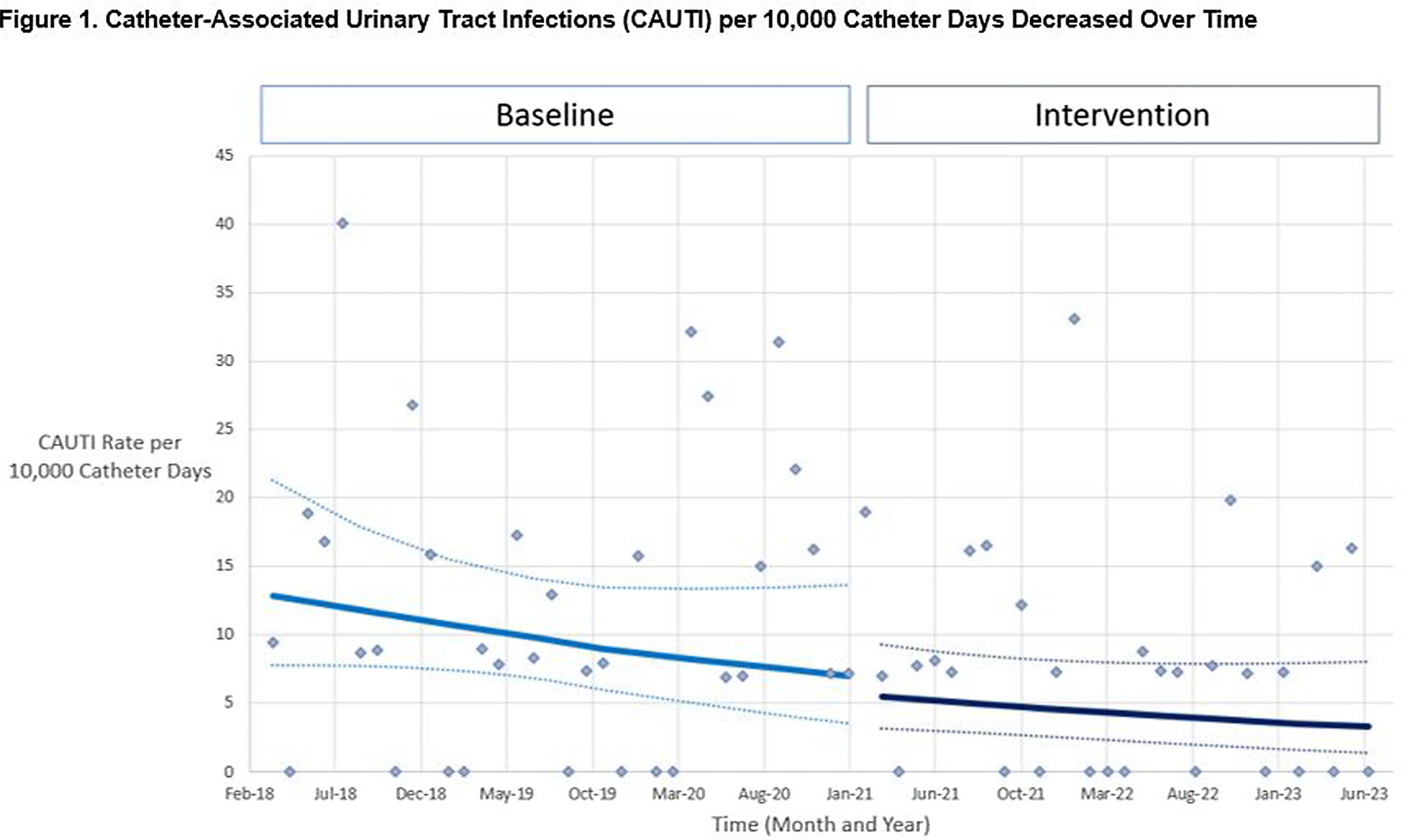
We retrospectively evaluated the impact of a computerized clinical decision support tool to promote institutional appropriateness criteria (neutropenia, kidney transplant, recent urologic surgery, or radiologic evidence of urinary tract obstruction) for urine cultures from patients with an indwelling urinary catheter. The primary outcome was a change in catheter-associated urinary tract infection (CAUTI) rate from baseline (34 mo) to intervention period (30 mo, including a 2-mo wash-in period). We analyzed patient-level outcomes and adverse events.
Results:
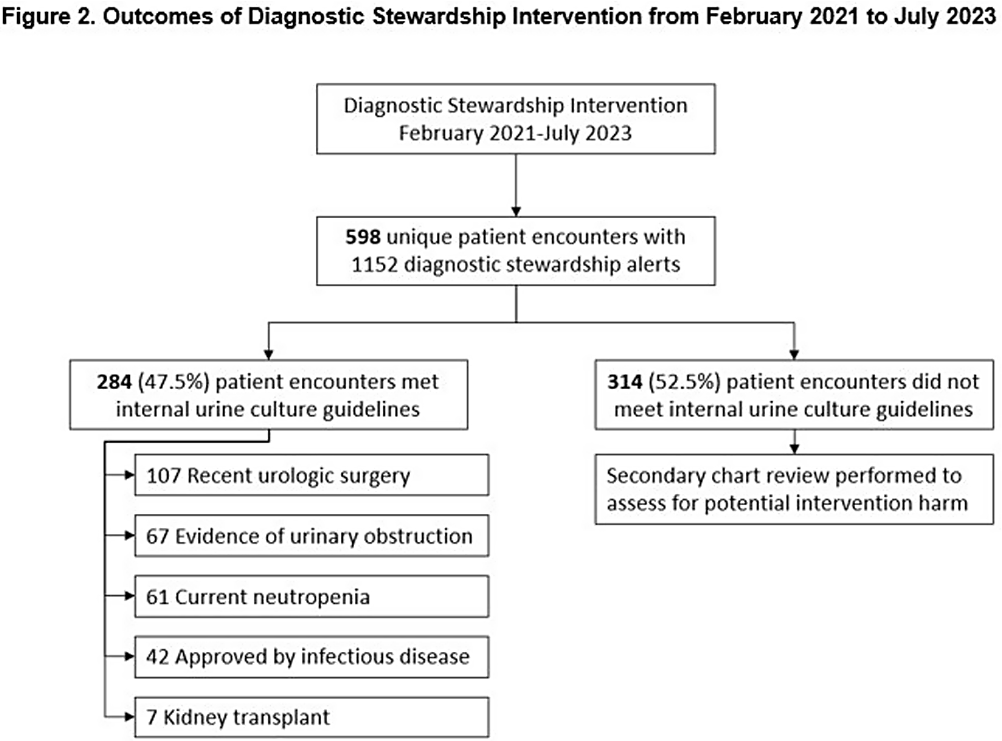
Adjusted CAUTI rate decreased from 1.203 to 0.75 per 1,000 catheter-days (P = 0.52). Of 598 patients triggering decision support, 284 (47.5%) urine cultures were collected in agreement with institutional criteria and 314 (52.5%) were averted. Of 314 patients whose urine cultures were averted, 2 had a subsequent urine culture within 7 days that resulted in a change in antimicrobial therapy and 2 had diagnosis of bacteremia with suspected urinary source, but there were no delays in effective treatment.
Conclusion:
A diagnostic stewardship intervention was associated with an approximately 50% decrease in urine culture testing for inpatients with a urinary catheter. However, the overall CAUTI rate did not decrease significantly. Adverse outcomes were rare and minor among patients who had a urine culture averted. Diagnostic stewardship may be safe and effective as part of a multimodal program to reduce unnecessary urine cultures among patients with indwelling urinary catheters.
Educational attainment (EduA) is correlated with life outcomes, and EduA itself is influenced by both cognitive and non-cognitive factors. A recent study performed a ‘genome-wide association study (GWAS) by subtraction,’ subtracting genetic effects for cognitive performance from an educational attainment GWAS to create orthogonal ‘cognitive’ and ‘non-cognitive’ factors. These cognitive and non-cognitive factors showed associations with behavioral health outcomes in adults; however, whether these correlations are present during childhood is unclear.
Methods
Using data from up to 5517 youth (ages 9–11) of European ancestry from the ongoing Adolescent Brain Cognitive DevelopmentSM Study, we examined associations between polygenic scores (PGS) for cognitive and non-cognitive factors and cognition, risk tolerance, decision-making & personality, substance initiation, psychopathology, and brain structure (e.g. volume, fractional anisotropy [FA]). Within-sibling analyses estimated whether observed genetic associations may be consistent with direct genetic effects.
Results
Both PGSs were associated with greater cognition and lower impulsivity, drive, and severity of psychotic-like experiences. The cognitive PGS was also associated with greater risk tolerance, increased odds of choosing delayed reward, and decreased likelihood of ADHD and bipolar disorder; the non-cognitive PGS was associated with lack of perseverance and reward responsiveness. Cognitive PGS were more strongly associated with larger regional cortical volumes; non-cognitive PGS were more strongly associated with higher FA. All associations were characterized by small effects.
Conclusions
While the small sizes of these associations suggest that they are not effective for prediction within individuals, cognitive and non-cognitive PGS show unique associations with phenotypes in childhood at the population level.
Background: Indiscriminate urine culturing of patients with indwelling urinary catheters may lead to overdiagnosis of urinary tract infections, resulting in unnecessary antibiotic treatment and inaccurate reporting of catheter-associated urinary tract infections (CAUTIs) as a hospital quality metric. We evaluated the impact of a computerized diagnostic stewardship intervention to improve urine culture testing among patients with indwelling urinary catheters. Methods: We performed a single-center retrospective observational study at Rush University Medical Center from April 2018 – July 2023. In February 2021, we implemented a computerized clinical decision support tool to promote adherence to our internal urine culture guidelines for patients with indwelling urinary catheters. Providers were required to select one guideline criteria: 1) neutropenia, 2) kidney transplant, 3) recent urologic procedure, 4) urinary tract obstruction; or if none of the criteria were met, then an infectious diseases consultation was required for approval. We compared facility-wide CAUTI rate per 10,000 catheter days and standardized infection ratio (SIR) during baseline and intervention periods using ecologic models, controlling for time and for monthly Covid-19 hospitalizations. In the intervention period, we evaluated how providers responded to the intervention. Potential harm was defined as collection of a urine culture within 7 days of the intervention that resulted in a change in clinical management. Results: In unadjusted models, CAUTI rate decreased from 12.5 to 7.6 per 10,000 catheter days (p=0.04) and SIR decreased from 0.77 to 0.49 (p=0.09) during baseline vs intervention periods. In adjusted models, the CAUTI rate decreased from 6.9 to 5.5 per 10,000 catheter days (p=0.60) (Figure 1) and SIR decreased from 0.41 to 0.35 (p=0.65) during baseline vs intervention periods. Urine catheter standard utilization ratio (SUR) did not change (p=0.36). There were 598 patient encounters with ≥1 intervention. Selecting the first intervention for each encounter, 284 (47.5%) urine cultures met our guidelines for testing and 314 (52.5%) were averted (Figure 2). Of these, only 3 ( < 1 %) had a urine culture collected in the subsequent 7 days that resulted in change in clinical management. Conclusion: We observed a trend of decreased CAUTIs over time, but effect of our diagnostic stewardship intervention was difficult to assess due to healthcare disruption caused by Covid-19. Adverse outcomes were rare among patients who had a urine culture averted. A computerized clinical decision support tool may be safe and effective as part of a multimodal program to reduce unnecessary urine cultures in patients with indwelling urinary catheters.
The estimated global preterm birth rate in 20201 was more than 10% of livebirths or 13.4 million infants. Nutrition in the neonatal period is a key factor to optimise growth, neurodevelopment, and later metabolic disease risk2. There is no consensus on optimal nutrition for preterm infants, leading to substantial practice variation3. We aimed to assess the quality of nutritional guidelines for preterm infants, the consistency of recommendations, and the gaps in these recommendations. This review is reported using the Preferred Reporting Items for Systematic Reviews and Meta-Analysis (PRISMA) 2020 checklist. The study protocol was registered with PROSPERO (CRD42022327248). We searched six databases and 44 websites for nutritional guidelines for preterm infants before first hospital discharge, which were endorsed, prepared, or authorised by a regional, national, or international body, written in English, and published between 2012-2023. Two reviewers independently screened articles and extracted relevant data including nutritional recommendations (ranges or descriptions), the quality of recommendations (certainty of evidence and strength of recommendation), and gaps in recommendations, defined as those identified by the guidelines or when recommendations were based on very low certainty evidence. Disagreements were resolved by discussion or a third reviewer. Four reviewers appraised the included guidelines using AGREE II. We identified 7051 records, 27 guidelines were included in the review, 26% of which were of high quality. Most guidelines lacked stakeholder involvement and rigour of development. Twelve guidelines had recommendations for macronutrient intake, 18 for micronutrient intake, 12 for feeding, eight for fortification, and 14 for monitoring of nutritional adequacy. Only two guidelines provided recommendations for all five of these aspects. We found considerable variation in recommendations, many of which lacked details of certainty of evidence and strength of recommendation. Recommendations for feeding types and breastmilk fortification were consistent among high quality guidelines, but recommendations varied for intakes of almost all nutrients and monitoring of nutritional adequacy. Different guidelines gave different certainty of evidence for the same recommendations. Most gaps in recommendations were due to a very low certainty of evidence. Future development of nutritional guidelines for preterm infants should follow the standard guideline development method and ensure rigorous process including stakeholders’ involvement to improve the reporting of strength of recommendation, certainty of evidence, and gaps in recommendation. Evidence is needed to support recommendations about macro and micronutrient intakes, breastmilk fortification, and markers on adequacy of intake of different nutrients.
White matter hyperintensity (WMH) burden is greater, has a frontal-temporal distribution, and is associated with proxies of exposure to repetitive head impacts (RHI) in former American football players. These findings suggest that in the context of RHI, WMH might have unique etiologies that extend beyond those of vascular risk factors and normal aging processes. The objective of this study was to evaluate the correlates of WMH in former elite American football players. We examined markers of amyloid, tau, neurodegeneration, inflammation, axonal injury, and vascular health and their relationships to WMH. A group of age-matched asymptomatic men without a history of RHI was included to determine the specificity of the relationships observed in the former football players.
Participants and Methods:
240 male participants aged 45-74 (60 unexposed asymptomatic men, 60 male former college football players, 120 male former professional football players) underwent semi-structured clinical interviews, magnetic resonance imaging (structural T1, T2 FLAIR, and diffusion tensor imaging), and lumbar puncture to collect cerebrospinal fluid (CSF) biomarkers as part of the DIAGNOSE CTE Research Project. Total WMH lesion volumes (TLV) were estimated using the Lesion Prediction Algorithm from the Lesion Segmentation Toolbox. Structural equation modeling, using Full-Information Maximum Likelihood (FIML) to account for missing values, examined the associations between log-TLV and the following variables: total cortical thickness, whole-brain average fractional anisotropy (FA), CSF amyloid ß42, CSF p-tau181, CSF sTREM2 (a marker of microglial activation), CSF neurofilament light (NfL), and the modified Framingham stroke risk profile (rFSRP). Covariates included age, race, education, APOE z4 carrier status, and evaluation site. Bootstrapped 95% confidence intervals assessed statistical significance. Models were performed separately for football players (college and professional players pooled; n=180) and the unexposed men (n=60). Due to differences in sample size, estimates were compared and were considered different if the percent change in the estimates exceeded 10%.
Results:
In the former football players (mean age=57.2, 34% Black, 29% APOE e4 carrier), reduced cortical thickness (B=-0.25, 95% CI [0.45, -0.08]), lower average FA (B=-0.27, 95% CI [-0.41, -.12]), higher p-tau181 (B=0.17, 95% CI [0.02, 0.43]), and higher rFSRP score (B=0.27, 95% CI [0.08, 0.42]) were associated with greater log-TLV. Compared to the unexposed men, substantial differences in estimates were observed for rFSRP (Bcontrol=0.02, Bfootball=0.27, 994% difference), average FA (Bcontrol=-0.03, Bfootball=-0.27, 802% difference), and p-tau181 (Bcontrol=-0.31, Bfootball=0.17, -155% difference). In the former football players, rFSRP showed a stronger positive association and average FA showed a stronger negative association with WMH compared to unexposed men. The effect of WMH on cortical thickness was similar between the two groups (Bcontrol=-0.27, Bfootball=-0.25, 7% difference).
Conclusions:
These results suggest that the risk factor and biological correlates of WMH differ between former American football players and asymptomatic individuals unexposed to RHI. In addition to vascular risk factors, white matter integrity on DTI showed a stronger relationship with WMH burden in the former football players. FLAIR WMH serves as a promising measure to further investigate the late multifactorial pathologies of RHI.
Although attenuated psychotic symptoms in the psychosis clinical high-risk state (CHR-P) almost always occur in the context of a non-psychotic disorder (NPD), NPD is considered an undesired ‘comorbidity’ epiphenomenon rather than an integral part of CHR-P itself. Prospective work, however, indicates that much more of the clinical psychosis incidence is attributable to prior mood and drug use disorders than to psychosis clinical high-risk states per se. In order to examine this conundrum, we analysed to what degree the ‘risk’ in CHR-P is indexed by co-present NPD rather than attenuated psychosis per se.
Methods
We examined the incidence of early psychotic experiences (PE) with and without NPD (mood disorders, anxiety disorders, alcohol/drug use disorders), in a prospective general population cohort (n = 6123 at risk of incident PE at baseline). Four interview waves were conducted between 2007 and 2018 (NEMESIS-2). The incidence of PE, alone (PE-only) or with NPD (PE + NPD) was calculated, as were differential associations with schizophrenia polygenic risk score (PRS-Sz), environmental, demographical, clinical and cognitive factors.
Results
The incidence of PE + NPD (0.37%) was lower than the incidence of PE-only (1.04%), representing around a third of the total yearly incidence of PE. Incident PE + NPD was, in comparison with PE-only, differentially characterised by poor functioning, environmental risks, PRS-Sz, positive family history, prescription of antipsychotic medication and (mental) health service use.
Conclusions
The risk in ‘clinical high risk’ states is mediated not by attenuated psychosis per se but specifically the combination of attenuated psychosis and NPD. CHR-P/APS research should be reconceptualised from a focus on attenuated psychotic symptoms with exclusion of non-psychotic DSM-disorders, as the ‘pure' representation of a supposedly homotypic psychosis risk state, towards a focus on poor-outcome NPDs, characterised by a degree of psychosis admixture, on the pathway to psychotic disorder outcomes.
ABSTRACT IMPACT: This study assesses patient and volumetric risk factors for distant recurrence within 6 months of completion of curative chemoradiation with brachytherapy in locally advanced cervical cancer. OBJECTIVES/GOALS: Initial tumor volume and tumor shrinkage velocity are prognostic of cure and survival after curative chemoradiation (CRT) for cervical cancer. We explored whether local tumor volumetric changes influence time to distant recurrences outside the radiation field. METHODS/STUDY POPULATION: We performed a retrospective cohort study of patients with FIGO Stage IB-IVA cervical cancer treated with curative CRT and brachytherapy at a tertiary academic center with minimum 3 months follow up and standard post-treatment FDG-PET. Patients received 6 weekly fractions of brachytherapy interdigitated with external beam radiation and cisplatin. Tumor volumes were assessed by MRI at brachytherapy planning. Patients who developed distant metastasis were classified as earliest (3-6 months), early (6-24 months) or late (>24 months) following completion of CRT. Absolute and percent decrease in tumor volume for each fraction were calculated with respect to first brachytherapy volume. Fisher’s exact and Mann Whitney-U tests were used for comparison of categorical and continuous variables. RESULTS/ANTICIPATED RESULTS: 143 of 574 (25%) patients developed distant metastasis. Distribution of age, histology, FIGO 2018 stage, primary tumor SUVmax, treatment length, and pre/post treatment squamous cell carcinoma antigen levels were not associated in each group. Para-aortic lymph metastases were more common in patients with earliest distant recurrence (33% earliest, 26% early, 12% late, p=0.03). Median initial tumor volume in the earliest (n=24), early (n =29) and late (n=9) groups was 57, 28 and 40 mL, respectively (p=0.08); 57 (earliest) vs 30mL (early+late groups), p=0.04. Average mid treatment (fraction 4) and end of treatment (fraction 6) percent shrinkage was 80 (earliest) vs 73 (early+late), p=0.84 and 94 vs 92, p=0.95, respectively. Neither absolute nor percent tumor shrinkage differed between early vs. late groups. DISCUSSION/SIGNIFICANCE OF FINDINGS: Tumor volumetric changes during definitive chemoradiation were not associated with the timing of developing distant metastasis, which is linked to presence of lymph node metastasis and tumor volume at diagnosis.
A cumulative environmental exposure score for schizophrenia (exposome score for schizophrenia [ES-SCZ]) may provide potential utility for risk stratification and outcome prediction. Here, we investigated whether ES-SCZ was associated with functioning in patients with schizophrenia spectrum disorder, unaffected siblings, and healthy controls.
Methods
This cross-sectional sample consisted of 1,261 patients, 1,282 unaffected siblings, and 1,525 healthy controls. The Global Assessment of Functioning (GAF) scale was used to assess functioning. ES-SCZ was calculated based on our previously validated method. The association between ES-SCZ and the GAF dimensions (symptom and disability) was analyzed by applying regression models in each group (patients, siblings, and controls). Additional models included polygenic risk score for schizophrenia (PRS-SCZ) as a covariate.
Results
ES-SCZ was associated with the GAF dimensions in patients (symptom: B = −1.53, p-value = 0.001; disability: B = −1.44, p-value = 0.001), siblings (symptom: B = −3.07, p-value < 0.001; disability: B = −2.52, p-value < 0.001), and healthy controls (symptom: B = −1.50, p-value < 0.001; disability: B = −1.31, p-value < 0.001). The results remained the same after adjusting for PRS-SCZ. The degree of associations of ES-SCZ with both symptom and disability dimensions were higher in unaffected siblings than in patients and controls. By analyzing an independent dataset (the Genetic Risk and Outcome of Psychosis study), we replicated the results observed in the patient group.
Conclusions
Our findings suggest that ES-SCZ shows promise for enhancing risk prediction and stratification in research practice. From a clinical perspective, ES-SCZ may aid in efforts of clinical characterization, operationalizing transdiagnostic clinical staging models, and personalizing clinical management.
This study was designed to investigate the contribution of non-native (L2) patterns of pausing to the perceived effort of listening to speech. English-language speech samples from ten native speakers of Korean and Mandarin Chinese (five of each) previously assessed as having intermediate proficiency in English were manipulated by removing all non-juncture silent pauses as well as all filled pauses. The original and manipulated speech samples, as well as samples of comparable but un-manipulated English speech produced by ten native speakers of Korean and Mandarin Chinese with higher English proficiency were evaluated in a between-groups design by 60 native speakers of American English. Although the removal of non-juncture pauses did not significantly alter listeners’ ratings of the intermediate speech, results did suggest a subtle interaction between ratings of effort and measures of listeners’ working memory capacity, suggesting that the detrimental effects of pausing in non-native accented speech may be related to increased demand on limited-capacity cognitive processing resources such as working memory.
There is evidence that environmental and genetic risk factors for schizophrenia spectrum disorders are transdiagnostic and mediated in part through a generic pathway of affective dysregulation.
Methods
We analysed to what degree the impact of schizophrenia polygenic risk (PRS-SZ) and childhood adversity (CA) on psychosis outcomes was contingent on co-presence of affective dysregulation, defined as significant depressive symptoms, in (i) NEMESIS-2 (n = 6646), a representative general population sample, interviewed four times over nine years and (ii) EUGEI (n = 4068) a sample of patients with schizophrenia spectrum disorder, the siblings of these patients and controls.
Results
The impact of PRS-SZ on psychosis showed significant dependence on co-presence of affective dysregulation in NEMESIS-2 [relative excess risk due to interaction (RERI): 1.01, p = 0.037] and in EUGEI (RERI = 3.39, p = 0.048). This was particularly evident for delusional ideation (NEMESIS-2: RERI = 1.74, p = 0.003; EUGEI: RERI = 4.16, p = 0.019) and not for hallucinatory experiences (NEMESIS-2: RERI = 0.65, p = 0.284; EUGEI: −0.37, p = 0.547). A similar and stronger pattern of results was evident for CA (RERI delusions and hallucinations: NEMESIS-2: 3.02, p < 0.001; EUGEI: 6.44, p < 0.001; RERI delusional ideation: NEMESIS-2: 3.79, p < 0.001; EUGEI: 5.43, p = 0.001; RERI hallucinatory experiences: NEMESIS-2: 2.46, p < 0.001; EUGEI: 0.54, p = 0.465).
Conclusions
The results, and internal replication, suggest that the effects of known genetic and non-genetic risk factors for psychosis are mediated in part through an affective pathway, from which early states of delusional meaning may arise.
This study attempted to replicate whether a bias in probabilistic reasoning, or ‘jumping to conclusions’(JTC) bias is associated with being a sibling of a patient with schizophrenia spectrum disorder; and if so, whether this association is contingent on subthreshold delusional ideation.
Methods
Data were derived from the EUGEI project, a 25-centre, 15-country effort to study psychosis spectrum disorder. The current analyses included 1261 patients with schizophrenia spectrum disorder, 1282 siblings of patients and 1525 healthy comparison subjects, recruited in Spain (five centres), Turkey (three centres) and Serbia (one centre). The beads task was used to assess JTC bias. Lifetime experience of delusional ideation and hallucinatory experiences was assessed using the Community Assessment of Psychic Experiences. General cognitive abilities were taken into account in the analyses.
Results
JTC bias was positively associated not only with patient status but also with sibling status [adjusted relative risk (aRR) ratio : 4.23 CI 95% 3.46–5.17 for siblings and aRR: 5.07 CI 95% 4.13–6.23 for patients]. The association between JTC bias and sibling status was stronger in those with higher levels of delusional ideation (aRR interaction in siblings: 3.77 CI 95% 1.67–8.51, and in patients: 2.15 CI 95% 0.94–4.92). The association between JTC bias and sibling status was not stronger in those with higher levels of hallucinatory experiences.
Conclusions
These findings replicate earlier findings that JTC bias is associated with familial liability for psychosis and that this is contingent on the degree of delusional ideation but not hallucinations.
First-degree relatives of patients with psychotic disorder have higher levels of polygenic risk (PRS) for schizophrenia and higher levels of intermediate phenotypes.
Methods
We conducted, using two different samples for discovery (n = 336 controls and 649 siblings of patients with psychotic disorder) and replication (n = 1208 controls and 1106 siblings), an analysis of association between PRS on the one hand and psychopathological and cognitive intermediate phenotypes of schizophrenia on the other in a sample at average genetic risk (healthy controls) and a sample at higher than average risk (healthy siblings of patients). Two subthreshold psychosis phenotypes, as well as a standardised measure of cognitive ability, based on a short version of the WAIS-III short form, were used. In addition, a measure of jumping to conclusion bias (replication sample only) was tested for association with PRS.
Results
In both discovery and replication sample, evidence for an association between PRS and subthreshold psychosis phenotypes was observed in the relatives of patients, whereas in the controls no association was observed. Jumping to conclusion bias was similarly only associated with PRS in the sibling group. Cognitive ability was weakly negatively and non-significantly associated with PRS in both the sibling and the control group.
Conclusions
The degree of endophenotypic expression of schizophrenia polygenic risk depends on having a sibling with psychotic disorder, suggestive of underlying gene–environment interaction. Cognitive biases may better index genetic risk of disorder than traditional measures of neurocognition, which instead may reflect the population distribution of cognitive ability impacting the prognosis of psychotic disorder.
Item 9 of the Patient Health Questionnaire-9 (PHQ-9) queries about thoughts of death and self-harm, but not suicidality. Although it is sometimes used to assess suicide risk, most positive responses are not associated with suicidality. The PHQ-8, which omits Item 9, is thus increasingly used in research. We assessed equivalency of total score correlations and the diagnostic accuracy to detect major depression of the PHQ-8 and PHQ-9.
Methods
We conducted an individual patient data meta-analysis. We fit bivariate random-effects models to assess diagnostic accuracy.
Results
16 742 participants (2097 major depression cases) from 54 studies were included. The correlation between PHQ-8 and PHQ-9 scores was 0.996 (95% confidence interval 0.996 to 0.996). The standard cutoff score of 10 for the PHQ-9 maximized sensitivity + specificity for the PHQ-8 among studies that used a semi-structured diagnostic interview reference standard (N = 27). At cutoff 10, the PHQ-8 was less sensitive by 0.02 (−0.06 to 0.00) and more specific by 0.01 (0.00 to 0.01) among those studies (N = 27), with similar results for studies that used other types of interviews (N = 27). For all 54 primary studies combined, across all cutoffs, the PHQ-8 was less sensitive than the PHQ-9 by 0.00 to 0.05 (0.03 at cutoff 10), and specificity was within 0.01 for all cutoffs (0.00 to 0.01).
Conclusions
PHQ-8 and PHQ-9 total scores were similar. Sensitivity may be minimally reduced with the PHQ-8, but specificity is similar.
Underground Nuclear Astrophysics in China (JUNA) will take the advantage of the ultra-low background in Jinping underground lab. High current accelerator with an ECR source and detectors were commissioned. JUNA plans to study directly a number of nuclear reactions important to hydrostatic stellar evolution at their relevant stellar energies. At the first period, JUNA aims at the direct measurements of 25Mg(p,γ)26 Al, 19F(p,α) 16 O, 13C(α, n) 16O and 12C(α,γ) 16O near the Gamow window. The current progress of JUNA will be given.