Refine search
Actions for selected content:
4 results
The Spectral Gap and Low-Energy Spectrum in Mean-Field Quantum Spin Systems
- Part of
-
- Journal:
- Forum of Mathematics, Sigma / Volume 11 / 2023
- Published online by Cambridge University Press:
- 06 December 2023, e112
-
- Article
-
- You have access
- Open access
- HTML
- Export citation
OBSERVABILITY OF BAOUENDI–GRUSHIN-TYPE EQUATIONS THROUGH RESOLVENT ESTIMATES
- Part of
-
- Journal:
- Journal of the Institute of Mathematics of Jussieu / Volume 22 / Issue 2 / March 2023
- Published online by Cambridge University Press:
- 14 June 2021, pp. 541-579
- Print publication:
- March 2023
-
- Article
- Export citation
-
In this article, we study the observability (or equivalently, the controllability) of some subelliptic evolution equations depending on their step. This sheds light on the speed of propagation of these equations, notably in the ‘degenerated directions’ of the subelliptic structure.
First, for any $\gamma \geq 1$, we establish a resolvent estimate for the Baouendi–Grushin-type operator $\Delta _{\gamma }=\partial _x^2+\left \lvert x\right \rvert ^{2\gamma }\partial _y^2$, which has step $\gamma +1$. We then derive consequences for the observability of the Schrödinger-type equation $i\partial _tu-\left (-\Delta _{\gamma }\right )^{s}u=0$, where $s\in \mathbb N$. We identify three different cases: depending on the value of the ratio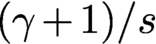 $(\gamma +1)/s$, observability may hold in arbitrarily small time or only for sufficiently large times or may even fail for any time.
As a corollary of our resolvent estimate, we also obtain observability for heat-type equations $\partial _tu+\left (-\Delta _{\gamma }\right )^su=0$ and establish a decay rate for the damped wave equation associated with $\Delta _{\gamma }$.


REDUCTION OF DIMENSION AS A CONSEQUENCE OF NORM-RESOLVENT CONVERGENCE AND APPLICATIONS
- Part of
-
- Journal:
- Mathematika / Volume 64 / Issue 2 / 2018
- Published online by Cambridge University Press:
- 03 April 2018, pp. 406-429
- Print publication:
- 2018
-
- Article
- Export citation
The Landau-Zener Transition and the Surface Hopping Method for the 2D Dirac Equation for Graphene
- Part of
- Partial differential equations, initial value and time-dependent initial-boundary value problems
- Applications to specific physical systems
- Equations of mathematical physics and other areas of application
- Approximation methods and numerical treatment of dynamical systems
- Quantum theory
- General mathematical topics and methods in quantum theory
-
- Journal:
- Communications in Computational Physics / Volume 21 / Issue 2 / February 2017
- Published online by Cambridge University Press:
- 07 February 2017, pp. 313-357
- Print publication:
- February 2017
-
- Article
- Export citation
