To save content items to your account,
please confirm that you agree to abide by our usage policies.
If this is the first time you use this feature, you will be asked to authorise Cambridge Core to connect with your account.
Find out more about saving content to .
To save content items to your Kindle, first ensure no-reply@cambridge.org
is added to your Approved Personal Document E-mail List under your Personal Document Settings
on the Manage Your Content and Devices page of your Amazon account. Then enter the ‘name’ part
of your Kindle email address below.
Find out more about saving to your Kindle.
Note you can select to save to either the @free.kindle.com or @kindle.com variations.
‘@free.kindle.com’ emails are free but can only be saved to your device when it is connected to wi-fi.
‘@kindle.com’ emails can be delivered even when you are not connected to wi-fi, but note that service fees apply.
Chapter 6 examines the politics of scientific fields at the level of micro-social interaction by analyzing intellectual conflict between RA members and their detractors in sustainability science. Data include firsthand observations of contentious interactions at academic conferences and detailed analyses of public debates, online forums, and scholarly publications. I identify the main groups in sustainability science with whom RA clashed and provide high-resolution accounts of key episodes of intellectual conflict. I show how RA used conferences to assert their theoretical faith, recruit new adherents, and challenge existing disciplinary boundaries. Competitor groups staged public performances (or “anti-rituals”) to re-establish these boundaries by questioning RA’s scientific faith, publicly shaming them, and desecrating their most sacred symbols. I conclude by showing how these conflicts over legitimacy altered RA’s ideas and those of their critics, leading to creative advances for RA and its competitors.
This article explores the growing forms of collaboration between volunteers and professionals within the Italian refugee reception system through the lens of boundary work—an ongoing process of reciprocal demarcation and self-reflexivity that positions them in synergy, tension, or mutual opposition. Drawing on 33 qualitative interviews conducted at Italian reception facilities employing both volunteer and paid staff, this study explains why volunteers are welcomed in these settings. Volunteers are expected and willing to build authentic and unique relationships with migrants, expanding opportunities for housing, employment, and training, while extending care beyond the temporal and spatial boundaries of institutional reception, softening the disciplinary logic characterizing these contexts. However, we show that the boundaries between professional and volunteer care logics and practices are also carefully monitored and managed in the pursuit of a mutually beneficial diversity. These efforts are aimed at preventing care from becoming an overly individualized endeavour that could undermine bureaucratic, rights-based standards of equity and foster dependency rather than autonomy among refugees. This analysis highlights the perceived opportunities and risks of collaboration between volunteers and professionals in these contexts, contributing to a deeper understanding of the functioning and outcomes of refugee reception systems.
How do “novel” spaces of transnational law emerge rather than being captured within existing legal regimes? This article argues that processes driving how the subject matter of a transnational legal space is defined and framed and by whom are notable in mediating such outcomes. The article presents the empirical case study of global neurotechnology governance and examines socio-legal processes whereby individual and organizational actors have constructed and defended neurotechnology as a distinct space of transnational law. Here, I argue that this can be understood as boundary work, which examines discursive and spatial processes of demarcating social entities from one another. The article shows how attention to external and internal boundaries around and within a transnational legal domain can sensitize socio-legal analysis to the more emergent features of these spaces, including more subtle modes of exclusion, cooperation, and coordination. The article concludes by reflecting on how attention to processes of boundary work can enrich inquiry into, and critique of, the earliest stages of transnational legal ordering.
This article introduces a new conceptual framework for examining the transformation of central banks’ activities at the intersection of science and politics. It builds on the results of the contributions gathered in this special section on the scientization of central banking, to which this article also provides an introduction. We start with an analysis of Martin Marcussen’s concept of ‘scientization’, originally formulated to describe the changes within central banks since the 2000s. After highlighting how Marcussen’s concept has raised different interpretations, we broaden our scope to examine how ‘scientization’ is applied in the wider social sciences, extending beyond the study of central banks. This brings to the fore two ideas: scientization as ‘boundary work’ (redrawing the line between ‘science’ and ‘non-science’) happening both in the public-facing (‘frontstage’) and internal (‘backstage’) activities of organizations. Finally, we suggest how these two ideas can be used to reinterpret ‘scientization’ of central banks as the emergence of central banks as ‘boundary organizations’. This reframing allows us to untangle and clarify the phenomena previously conflated under the original concept of scientization, offering a more coherent framework for ongoing research on central banks.
Despite symbolic boundaries between civil and criminal law, sociolegal scholars note their conceptual and operational overlap, or hybridity. Values (e.g., restoration vs. punishment) and practices (e.g., monetary compensation vs. incarceration) thought distinct to each manifest in both, and contact with one legal system can generate involvement with the other. Scholars typically attribute hybridity’s emergence to top-down mechanisms like legislation. This article presents interviews with sexual violence plaintiffs’ attorneys who describe their efforts to improve case outcomes by incorporating criminal legal artifacts like police reports, police evidence and criminal convictions into civil litigation and inserting civil legal artifacts, including costly evidence, victim support and monetary compensation, into criminal prosecutions. Building on organizational theories of boundary work, this article argues that attorneys, in taking purposive action to win their cases, blur distinctions between civil and criminal law from the bottom-up, a distinct mechanism through which civil-criminal hybridity emerges.
In 2021, the International Monetary Fund (IMF) moved to integrate climate risks into its Article IV surveillance of member states. While the IMF has not traditionally been at the forefront of climate change efforts, this decision involved defining climate change as a risk to macro-economic stability. I argue that the integration of climate change into IMF surveillance can be understood as a case of international organisation (IO) boundary work taking place via the mechanism of economisation: an economic institution addressing a (traditionally non-economic) issue as an economic issue. The study identifies crucial factors shaping this boundary expansion, particularly the agency of IMF staff, as well as preferences within the IMF Executive Board, and institutional ideas. The straightforward integration of physical and transition climate risks is in contrast to the contestation surrounding the integration of mitigation policy. The findings contribute to the literature on IOs and their boundaries, change within the IMF, and the environmental political economy. The analysis reveals the role of IMF staff in this boundary work and, in addition, that institutionalised ideas and the heterogeneous preferences among member states acted as scope conditions limiting how far this economisation could go.
For over forty years, presidents of the Summer School Association of Queen’s University wrote annually to teachers across Canada, encouraging them to attend summer courses for credit toward a bachelor of arts. In the 1920s, presidents’ messages associated attendance with societal progress and the professionalization of teaching. In the 1930s, such messages linked attendance with personal growth and career development. In the 1940s and 1950s, they linked attendance with having an enjoyable summer vacation. This article analyzes how and why these messages evolved and argues that the underlying structure of the messages remained consistent: they were means through which Queen’s Summer School Association presidents marked symbolic boundaries between more and less professional teachers. This article contributes to our understanding of the social history of teacher education by interpreting a unique primary data source to explore the participation of teachers themselves in the construction of symbolic boundaries marking professional status.
Examining the “world's largest cash-based social policy” through the lens of care reveals widely shared scalar imaginaries and the productivity of care in constituting scale. In standardizing the minimum livelihood guarantee (dibao), officials, applicants and researchers in rural Sichuan cited both “too much” and “not enough” care at the scale of the family in recommending or rejecting state assistance. Different levels of organization (scale1) were not stable bases with specific sizes and qualities (scale2) that enabled or limited care. Dibao-related practices were evaluated as an appropriate (“filial piety”), insufficient (“individualism”) or excessive (“corruption”) amount of family care. Care became an indicator of kinship measurements and a marker of state boundaries. Thus, scale (in both meanings) was enacted in China, as elsewhere, through negotiations of needs and responsibilities, through evaluations of care practices and their outcomes. In this sense, care scales.
This chapter reviews the history of the IPCC’s efforts to achieve and maintain policy relevance while remaining policy-neutral and staying far away from ‘policy prescriptiveness’. The chapter argues that the boundaries between policy relevance, neutrality and prescriptiveness are a practical achievement – they must be constantly negotiated as the science and politics of climate change evolve. The chapter uses historical case studies to illustrate this point, such as the controversy over the so-called ‘burning embers’ diagram. It ends by discussing recent debates about the IPCC’s new role in the post-Paris Agreement policy landscape. While IPCC actors call for greater policy relevance, observers and critics contend that the IPCC will always and inevitably be policy-prescriptive, even if on a tacit and unintentional level. Achieving even greater policy relevance may therefore mean jettisoning or modifying the aspiration to be policy-neutral.
Over three decades, the IPCC has been no stranger to controversies. Given its institutional character as a boundary organisation working between science and policy, it is no surprise that IPCC reports often reflect wider controversies in the scientific and political life of climate change, especially those concerning its consequences and potential solutions. In this chapter, we explain why controversies about the IPCC’s knowledge assessment are inevitable and point out how the IPCC could use controversies for adapting and developing its assessment processes in constructive ways. That is, we show how controversies serve as ‘generative political events’ for the IPCC’s own learning process. To do so, we classify IPCC knowledge controversies into four types (factual, procedural, epistemic and ontological) and, using two illustrative cases, distinguish between controversies which the IPCC triggers and those which the IPCC absorbs into its knowledge assessment.
Despite many flaws, including variable quality and a lack of universal standards, peer review – the formal process of critically assessing knowledge claims prior to publication – remains a bedrock norm of science. It therefore also underlies the scientific authority of the IPCC. Most literature used in IPCC assessments has already been peer reviewed by scientific journals. IPCC assessments are themselves reviewed at multiple stages of composition, first by Lead Authors, then by scientific experts and non-governmental organisations outside the IPCC, and finally by government representatives. Over time, assessment review has become increasingly inclusive and transparent: anyone who claims expertise may participate in review, and all comments and responses are published after the assessment cycle concludes. IPCC authors are required to respond to all comments. The IPCC review process is the most extensive, open, and inclusive in the history of science. Challenges include how to manage a huge and ever-increasing number of review comments, and how to deal responsibly with review comments that dispute the fundamental framing of major issues.
The article discusses practices of cooperation between metal detectorists and professional archaeologists in Germany by exploring the approach of the regional office for historic preservation (Generaldirektion Kulturelles Erbe) in Speyer (Rheinland-Pfalz, southwest Germany). Its model is based on open access to a permit for detecting in a certain area, combined with regular meetings in order to establish knowledge circulation between volunteer and professional spheres. Relying on ethnographic fieldwork and questionnaires, the research shows that the approach creates a symmetric coproduction of knowledge, recognizing the metal detectorists as volunteer researchers producing genuine knowledge. Several theoretical aspects of knowledge circulation are analyzed with regard to their relevance for practices of knowledge production. The enactment of the boundary between public and professionals is the result of boundary work actively performed. As a consequence, this boundary should rather be seen as a fluid, hybrid zone, conceptualized as a translation zone. The concept of boundary objects points to the importance of specific elements for enabling circulation of knowledge between different spheres. Various communities of practice and their shared practices, conventions, perceptions, et cetera, influence the relationship and knowledge circulation, and these should be taken into account in coproduction processes.
This article discusses two approaches to save the European white stork populations from extinction that emerged after 1980. Despite the shared objective to devise transnational, science-based conservation measures, the two approaches’ geographical focus was radically different. Projects by the World Wildlife Fund and the International Council for Bird Preservation focused firmly on the stork’s wintering areas on the African continent. Interventions by a second group of ornithologists at the Max Planck Institute for Ornithology in Radolfzell concentrated on the Middle East as a migration bottleneck. Based on archival research, interviews and correspondence with involved ornithologists, the article examines stork representations as an important lens for investigating the professional politics of ecology and conservation. It shows that representations of white storks, the birds’ ecology, and derived conservation hotspots became part of the boundary work used by European ornithologists in the creation of changing scientific and institutional identities.
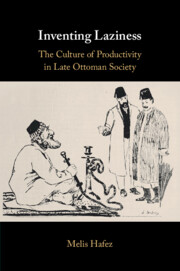
Neither laziness nor its condemnation are new inventions, however, perceiving laziness as a social condition that afflicts a 'nation' is. In the early modern era, Ottoman political treatises did not regard the people as the source of the state's problems. Yet in the nineteenth century, as the imperial ideology of Ottomanism and modern discourses of citizenship spread, so did the understanding of laziness as a social disease that the 'Ottoman nation' needed to eradicate. Asking what we can learn about Ottoman history over the long nineteenth-century by looking closely into the contested and shifting boundaries of the laziness - productivity binary, Melis Hafez explores how 'laziness' can be used to understand emerging civic culture and its exclusionary practices in the Ottoman Empire. A polyphonic involvement of moralists, intellectuals, polemicists, novelists, bureaucrats, and, to an extent, the public reveals the complexities and ambiguities of this multifaceted cultural transformation. Using a wide variety of sources, this book explores the sustained anxiety about productivity that generated numerous reforms as well as new understandings of morality, subjectivity, citizenship, and nationhood among the Ottomans.
Chapter four focuses on Avicenna's endeavour in his famous Canon of Medicine to reassert the epistemic authority of philosophy by restoring the proper boundaries of medicine, which Galen had especially obscured through his engagements with Plato's Timaeus. I maintain that Avicenna, a student of Aristotle, formulates this polemic in response to the threat that Galen's defence of the dialogue's brain centred psycho-physiology posed to the credibility of Aristotelian cardiocentrism, which identified the heart as the source of sensation. This study examines how Avicenna appeals to the restrictive epistemic hierarchies of his intellectual milieu, which limit doctors to subjects only relevant to the production or preservation of bodily health, to delegitimize Galen's contributions to natural philosophy. The rhetorical, as opposed to normalizing, force of the disciplinary prescriptions that he levels at Galen in the Canon of Medicine will become clear from my analysis of Avicenna's discussions of the hegemonic organ and pleasure in his philosophical works, where he transgresses his own 'laws' when disputing or even adopting TImaean positions on these issues.
Reflecting on the subjects from Plato's Timaeus at the centre of the disciplinary rivalry explored in the preceding chapters, I conclude that mind-body problems -- questions treating the extent to which psychic and 'mental' processes are separable from the corporeal realm -- provoked the most debate. My contention is that Galen's interpretation of a close link between the body and soul in the dialogue allowed himself and his sympathizers to give doctors a stake in psychological knowledge and trouble the distribution of value based on the corporeal-incorporeal dichotomy, which privileged philosophers. Therefore, the restrictive disciplinary laws imposed on doctors by Avicenna and Maimonides are a strategy to reclaim philosophy's hegemony on the soul and superior epistemic standing. While my study had divided Galen's successors into supporters and opponents of his project, I maintain that each Arabic actor tries to overwrite Galen's expertise with their own. Finally, I consider how my examination of the discursive reimagining of medicine can provide a longue durée perspective on modern reconceptualizations of the field, such as disputes about the relevance of the Medical Humanities.
The introduction asserts that the different causal, spatial, and comparative relations in Plato's Timaeus generated a model of knowledge that denies a strict separation between the disciplines. I contrast the dialogue's epistemic vision with the prevailing hierarchies of knowledge developed by ancient thinkers, including Plato himself, which ranks medicine below philosophy because it is a technē ('art'), deals with the body, and its practitioners were often enslaved or freedpersons. I argue that Galen's expansive refiguring of medicine's boundaries -- his 'boundary work' -- is part of a tactic to improve his profession's credibility and his own authority. After outlining my approach to science as a discursive practice, I consider how Galen's philosophical training enabled him to exploit the epistemic possibilities of the Timaeus, which seems to recognize that knowledge can be divided and bounded differently by each knower. I conclude by proposing that Galen’s own role in interfacing Arabic readers with the dialogue called for Arabic doctors and philosophers to reevaluate their own categories and taxonomies of knowledge, which had been shaped by late-antique epistemologies.
Organization and management researchers praise the value of care in the workplace. However, they overlook the conflict between caring for work and for coworkers, which resonates with the dilemma of care allocation highlighted by ethicists of care. Through an in-depth qualitative study of two organizations, we examine how this dilemma is confronted in everyday organizational life. We draw on the concept of boundary work to explain how employees negotiate the boundary of their caring responsibilities in ways that grants or denies care to coworkers. We argue that the possibility of an ethics of care for coworkers requires boundary work that suspends the separation of personal and professional selves and constitutes the worker as a whole person. We contribute to research on care in organizations by showing how care for coworkers may be enabled or undermined by maintaining or suppressing the care allocation dilemma.
Although there is an impressive body of research on the U.S. Congress, there has been limited discussion about the central role race plays in the organization of this political institution. While some scholars have documented Congress’ racist past, less is known about the present significance of race in the federal legislature. Throughout the day, African Americans routinely nod to one another in the halls of the Capitol, and consider the Black nod as a common cultural gesture. However, data from over sixty in-depth interviews suggest there is an additional layer of meaning to the Black nod in Congress. From the microlevel encounters, I observed and examined, I interpret the nod as more than a gesture that occurs in a matter of seconds between colleagues or even among perfect strangers in the halls of Congress. The Black nod encompasses and is shaped by labor organized along racial lines, a history of racial subordination, and powerful perceptions of race in the post-Civil-Rights era on the meso-, and macrolevels. Using this interpretive foundation, this article will show how the nod is an adaptive strategy of Black staffers that renders them visible in an environment where they feel socially invisible. The nod becomes an external expression of their racialized professional identity. I argue that the congressional workplace is a raced political institution and that the microlevel encounters I observed delineate and reproduce its racial boundaries. This article represents perhaps the first sociological study of Congress and provides an unprecedented view into its inner workings and the social dimensions that organize workplace relationships.
Shortly after the death of Albert von Schrenck-Notzing (1862–1929), the doyen of early twentieth century German para psychology, his former colleague in hypnotism and sexology Albert Moll (1862–1939) published a treatise on the psychology and pathology of parapsychologists, with Schrenck-Notzing serving as a prototype of a scientist suffering from an ‘occult complex’. Moll’s analysis concluded that parapsychologists vouching for the reality of supernormal phenomena, such as telepathy, clairvoyance, telekinesis and materialisations, suffered from a morbid will to believe, which paralysed their critical faculties and made them cover obvious mediumistic fraud. Using Moll’s treatment of Schrenck-Notzing as an historical case study of boundary disputes in science and medicine, this essay traces the career of Schrenck-Notzing as a researcher in hypnotism, sexology and parapsychology; discusses the relationship between Moll and Schrenck-Notzing; and problematises the pathologisation and defamation strategies of deviant epistemologies by authors such as Moll.