To save content items to your account,
please confirm that you agree to abide by our usage policies.
If this is the first time you use this feature, you will be asked to authorise Cambridge Core to connect with your account.
Find out more about saving content to .
To save content items to your Kindle, first ensure no-reply@cambridge.org
is added to your Approved Personal Document E-mail List under your Personal Document Settings
on the Manage Your Content and Devices page of your Amazon account. Then enter the ‘name’ part
of your Kindle email address below.
Find out more about saving to your Kindle.
Note you can select to save to either the @free.kindle.com or @kindle.com variations.
‘@free.kindle.com’ emails are free but can only be saved to your device when it is connected to wi-fi.
‘@kindle.com’ emails can be delivered even when you are not connected to wi-fi, but note that service fees apply.
This chapter argues that large-scale biological and energy systems were an important environmental concept in Victorian literature. It traces two intertwined cultural narratives. On the one hand, the transition to a fossil energy economy raised fears of coal exhaustion that were echoed by narratives of entropy: In both geology and the thermodynamic physical sciences it was proposed that the eventual exhaustion of energy sources would lead to the end of civilization or even human life. On the other hand, narratives of biological degeneration and atavism arose from a certain interpretation of evolutionary theory; some writers claimed to see unhealthy symptoms of species decline in “degenerate” artists and criminals. We can see how these cultural narratives functioned as environmental concepts in Victorian literary genres of science fiction and decadence, through texts such as H. G. Wells’s The Time Machine and Oscar Wilde’s The Picture of Dorian Gray.
How did Victorian authors conceive of the rise of an extraction-based society? This chapter looks to the literary archive for early impressions of industrial mining’s wider social significance. Thanks to the new role of fossil fuels in nineteenth-century industry, the Victorian period saw a massive acceleration of mining in terms of the depths plumbed and volumes extracted. Mining operations in Britain and overseas were becoming a source of wide public attention at this time as the economy and culture shifted toward those of an extraction-based society, one grounded in the extraction of finite underground materials. This chapter explores the depiction of extraction in Elizabeth Barrett Browning’s 1843 protest poem “The Cry of the Children,” Joseph Skipsey’s 1878 poem “Mother Wept,” Charles Dickens’s 1861 novel Great Expectations, and William Jevons’s 1865 study The Coal Question: An Inquiry Concerning the Progress of the Nation, and the Probable Exhaustion of Our Coal-Mines.
Using a welcoming and conversational style, this Student's Guide takes readers on a tour of the laws of thermodynamics, highlighting their importance for a wide range of disciplines. It will be a valuable resource for self-guided learners, students, and instructors working in physics, engineering, chemistry, meteorology, climatology, cosmology, biology, and other scientific fields. The book discusses thermodynamic properties such as temperature, internal energy, and entropy, and develops the laws through primarily observational means without extensive reference to atomic principles. This classical approach allows students to get a handle on thermodynamics as an experimental science and prepares them for more advanced study of statistical mechanics, which is introduced in the final chapter. Detailed practical examples are used to illustrate the theoretical concepts, with a selection of problems included at the end of each chapter to facilitate learning. Solutions to these problems can be found online along with additional supplemental materials.
Science diplomacy (SD) is increasingly used to encourage international collaboration and produce knowledge for global challenges. This study explores how a 12-year SD campaign helped shape a scientific community around the Water–Energy–Food (WEF) Nexus – a framework linking resource systems for sustainability. By analyzing events, recruitment efforts, and over 1,600 scientific publications, we trace how this community formed, evolved, and interacted with policy agendas. The results show both progress and challenges: growing collaboration and new research directions, but also delays between diplomatic goals and scientific output. The findings offer insights into how SD can support long-term sustainability through knowledge and institutional networks.
Technical summary
Global sustainability challenges have increased reliance on SD to mobilize research communities and align scientific production with policy goals. A central mechanism in these efforts is the formation of scientific epistemic communities (ECs), yet evidence on how SD contributes to durable communities and actionable knowledge remains limited. This study examines a 12-year SD campaign promoting the WEF Nexus, a framework encouraging integrated governance of interdependent resource systems. We combine qualitative coding of 143 SD events and 107 scientific recruitment activities with bibliometric analysis of 1,643 WEF publications (2011–2022). This mixed-methods approach traces the temporal and structural evolution of the WEF EC, focusing on recruitment patterns, thematic consolidation, and co-authorship network resilience. Findings show that SD efforts broadened participation, supported the emergence of a recurring group of authors, diversified journal outlets, and expanded global collaboration networks. Network simulations reveal that by 2022 the EC was moderately resilient but remained dependent on a small subset of strategically connected researchers. The analysis also identifies a temporal lag between SD agenda-setting and scientific response, raising considerations about the alignment of science and policy cycles. Overall, the results clarify conditions under which SD can catalyze scientific community formation and support sustainability-oriented knowledge infrastructures.
Social media summary
How does SD shape global research? Our new study on the WEF Nexus reveals key mechanisms and insights.
Addressing environmental problems like climate change urgently requires the acceleration of sustainability transitions. This Intelligence Briefing explains why this is starting to happen for technical innovations like renewable energy technologies and electric vehicles. Drawing on socio-technical transitions theory, it discusses five acceleration mechanisms that reduce cost, improve performance, change actor orientations, mobilise finance, and increase socio-political support. While not denying their potential relevance, the Briefing also shows that these acceleration mechanisms are not (yet) being activated for social innovations and deep lifestyle change. The Briefing, therefore, also criticises wishful thinking tendencies in some sustainability transformation research strands.
Technical summary
Sustainability transitions should accelerate to address environmental problems like climate change and biodiversity loss. This Intelligence Briefing aims to explain the empirical phenomenon that rapid transitions are starting to happen with regard to several low-carbon technologies (like solar-PV, wind, and electric vehicles), but not with regard to transformative social innovations or lifestyle changes. It identifies and discusses five reasons that help explain this difference: increasing-returns-to-adoption mechanisms; socio-technical feedbacks between technology, actors, and institutions; financial reorientation; issue linkage to wider political goals; and societal acceptance. It further suggests that technical innovations can act as a flywheel or catalyst for subsequent social innovations. And it makes critical comparisons between the socio-technical transitions literature and some approaches in the transformations literature, finding the former more theoretically developed, empirically validated, and policy relevant than the latter for the topic of acceleration.
Social media summary
Low-carbon technologies are starting to accelerate sustainability transitions, while purely social innovations linger.
The growing impact of climate change and the global shift toward a carbon-neutral economy necessitate the development of sustainable technologies. Microbial electrochemical technologies (METs) innovatively utilize microorganisms to generate electricity and produce valuable chemicals from organic and inorganic materials. While METs have demonstrated significant potential in wastewater treatment and carbon recycling at the laboratory scale, the challenge remains in scaling the technologies for industrial applications. This transition could revolutionize clean energy production and environmental protection, laying the foundation for a sustainable future.
Technical summary
METs offer innovative solutions for pollution reduction and sustainable energy production. By integrating microbial metabolic processes with electrochemical systems, METs facilitate the conversion of organic and inorganic substrates into electricity, chemicals, or fuels. Research at the laboratory scale has demonstrated the substantial potential of METs in wastewater treatment, carbon resource utilization, and energy recovery. However, scaling METs from the lab to industrial applications involves challenges about system design, operational stability, economic feasibility, and technological integration. This review provides a comprehensive examination of the scaling up of METs, including microbial fuel cells, microbial electrolysis cells, and microbial electrosynthesis systems. It highlights recent advancements in reactor and electrode design, and operational conditions, and offers insights for future research and development aimed at successful industrial implementation.
Social media summary
Breakthrough in METs is set to revolutionize how we treat wastewater and recycle carbon. As METs move from the lab to large-scale applications, they have the potential to reshape industries and drive us closer to a carbon-neutral economy.
This chapter brings in the complexities of the intersection between renewable resources, sustainable development, and Indigenous treaty law. It begins by examining international guidance for renewable energy sources and their role in achieving sustainability objectives. This chapter then delves into the principles and rules governing sustainable forestry practices, fisheries management, and energy development. It highlights the importance of international agreements, protocols, and treaties in promoting responsible resource management, conservation, and the recognition of Indigenous rights and knowledge. By considering these principles and rules within the context of Indigenous treaty law, it highlights the need for harmonious and inclusive approaches to renewable resource use in the age of sustainable development. It underlines the significance of collaboration, respect for Indigenous knowledge, and the integration of sustainability principles to ensure a balanced and equitable relationship between renewable resources, Indigenous rights, and sustainable development.
One major aspect involved in the development of post-intensive care syndrome (PICS) is muscle wasting and weakness. In health, augmented dietary protein is required for skeletal muscle maintenance or growth. Critical illness is characterised by complex metabolic alterations including initial hypometabolism followed by hypermetabolism and muscle catabolism. Despite the potential role of nutrition in attenuating extensive muscle wasting observed in critical illness, no large-scale definitive interventional trial has tested the impact of augmented protein delivery on muscle wasting, and observational and small randomised trial data are conflicting. This may be due to the extensive physiological response to critical illness that cannot be easily overcome or untested factors including individualised nutrition interventions delivered beyond the first week of critical illness. Despite the lack of definitive answers, prolonged under-provision of nutrition will likely result in nutrition-related consequences and has been associated with negative clinical outcomes. The aim of this chapter is to summarise the current critical care nutrition evidence and make practical recommendations for clinicians with the aim of preventing the development or progression of malnutrition and reducing the development of PICS following critical illness.
Magnesium (Mg2+) is essential for plant growth and metabolism, acting as a cofactor in numerous enzymatic and structural processes. This review outlines the main physiological and biochemical functions of Mg2+ and summarizes current knowledge on its transport and homeostatic regulation. We examine how Mg2+ homeostasis intersects with broader signalling networks and metabolic pathways, including its crosstalk with other mineral nutrients, where antagonistic and synergistic interactions influence nutrient acquisition, allocation and stress responses. Emerging evidence further suggests that, beyond its classical roles, Mg2+ may function as a regulatory ion with signalling properties reminiscent of secondary messengers in animal systems. Finally, we highlight recent findings linking Mg2+ dynamics to circadian regulation, suggesting reciprocal interactions between temporal control mechanisms and nutrient fluxes. These insights underscore the central importance of Mg2+ in plant biology and identify key gaps in understanding its regulatory and integrative roles.
In this study, we provide ex post empirical analysis of the effects of climate policies on carbon emissions at the aggregate national level, using a comprehensive database of 121 countries. Carbon taxes and emissions trading systems (ETS), and the overall stringency of climate policies are considered. We use dynamic panel regressions, controlling for macroeconomic factors (economic development, GDP growth, urbanisation and the energy mix). Higher carbon taxes and ETS prices reduce carbon emissions. An increase in carbon taxes by $10 per ton of CO2 reduces CO2 emissions per capita by 1.3% in the short run and by 4.6% in the long run.
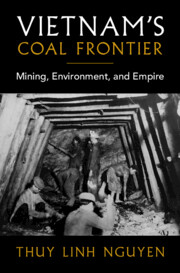
In one of the first energy histories of Southeast Asia, Thuy Linh Nguyen explores the environmental, economic, and social history of large-scale coal mining in French colonial Vietnam. Focusing on the Quảng Yên coal basin in northern Vietnam, known for the world's largest anthracite coal mines, this deeply researched study demonstrates how mining came to dominate the landscape, restructuring the region's environment and upending local communities. Nguyen pays particular attention to the role of various non-state local actors, often underrepresented in grand narratives of modern Vietnam, including Vietnamese and Chinese migrant mine workers, timber traders, loggers, and local ethnic minorities. Breaking away from the metropole-colony paradigm, Nguyen offers a new lens through which to explore the dynamics of colonial rule and the importance of inter-Asian networks, arguing that the colonial energy regime must be understood as a complex, multilayered interaction between empire, capital, labor, water, sea, land, and timber forests.
Chapter 2 turns to loco-descriptive lyric poetry, read in the context of expanding highway infrastructure. It opens with a consideration of oil maps deposited in Ezra Pound’s Cantos, some of which critique the expropriation of former Ottoman territories by Anglo-American cartels. At that very locus, the Iraqi modernist poet Nazik al-Malā’ikah envisioned a very different kind of energy poetics, where the dividing line between oil’s extractive and consumptive spheres is decidedly smudged. In postcolonial counterpoint, the chapter closes by reading the automotive aesthetics in Marianne Moore, William Carlos Williams, and Wallace Stevens. The US highway system provides them with a conflicted linguistic resource, where the trace of oil’s violent extraction is smeared by the exhilarations of their lyrics.
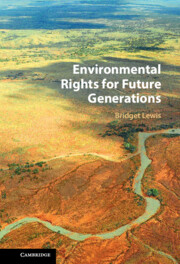
This book presents readers with a new theory and practice of international human rights law that is designed to improve its protection of the environmental rights of future generations. Arguing that international law is currently unable to safeguard future generations from foreseeable environmental harm, Bridget Lewis proposes that the law needs to be reformed in the interests of achieving intergenerational justice. The book draws on different theories of intergenerational responsibility to articulate a fresh approach, revising both substantive principles of environmental rights and procedural rules of admissibility and standing. It looks at several case studies to explore how the proposed new approach would apply in relation to contemporary environmental challenges like fracking, deep seabed mining, nuclear energy, decarbonisation and geoengineering.
This chapter takes a comparative approach to fossil fuel narratives to consider whether there are continuities between coal fiction and oil fiction in different periods of modernity and whether there are identifiable formal features that unify fossil fuel fiction. The chapter pursues these questions by examining correspondences between Helon Habila’s 2010 novel Oil on Water, which depicts the socio-environmental consequences of oil extraction in the Niger Delta, and several exemplary fictions of extraction written 100 or 150 years earlier, including Charles Dickens’s Hard Times (1854), Joseph Conrad’s ‘Youth’ (1898) and Heart of Darkness (1899), and D. H. Lawrence’s Sons and Lovers (1913). The commonalities that persist across the historical gap from coal fiction to oil fiction express distinguishing aspects of life under fossil fuels and constitutive elements of the writing of fossil fuels.
Any education in theoretical physics begins with the laws of classical mechanics. The basics of the subject were laid down long ago by Galileo and Newton and are enshrined in the famous equation F=ma that we all learn in school. But there is much more to the subject and, in the intervening centuries, the laws of classical mechanics were reformulated to emphasis deeper concepts such as energy, symmetry, and action. This textbook describes these different approaches to classical mechanics, starting with Newton's laws before turning to subsequent developments such as the Lagrangian and Hamiltonian approaches. The book emphasises Noether's profound insights into symmetries and conservation laws, as well as Einstein's vision of spacetime, encapsulated in the theory of special relativity. Classical mechanics is not the last word on theoretical physics. But it is the foundation for all that follows. The purpose of this book is to provide this foundation.
At the heart of classical mechanics sits the venerable equation F=ma. To solve this equation, we first need to specify the force at play. In this chapter, we start along this journey. We will look at various forces, including gravity, electromagnetism and friction, and start to understand some of their features. For each, we will solve F=ma in some simple settings.
Chapter 10 evaluates the challenges of SDG 7: Affordable and Clean Energy, which aims to ensure access to affordable, reliable, sustainable, and modern energy for all. The scarcity of non-renewable minerals and energy resources presents a critical global challenge that could constrain economic growth and well-being. Various ways to measure natural resource scarcity are evaluated, and an economic analysis of the optimal extraction of exhaustible resources over time is established. Policies to address future demands for mineral and energy resources while balancing the environmental impacts of extraction and use are discussed. For example, substituting non-renewable energy with renewable energy sources poses economic and environmental challenges. Concerns over supply constraints and reliance on critical minerals have prompted calls for self-sufficiency, reducing reliance on imports of essential raw materials, and creating incentives to enhance recycling, recovery, and reuse, especially of rare earth elements. In addition, developing new technologies to improve end-use efficiency can support the decoupling of dependency on non-renewable resources from economic growth.
By exploring issues of energy, efficiency, growth and systemic resets, the reader is able to see the trajectory humanity is currently on and how it needs to change in order to survive and thrive moving forwards.
This chapter looks at the most recent climate science and starkly sets out the severity of the problems ahead. It gives the reader all the knowledge needed to broadly understand the critical issues of our day from a technical perspective, including systems of production and consumption for energy and food, biodiversity loss, pollution (including plastics), disease threats and population levels. It then looks at ways in which we can technically transfer to a sustainable way of living.
After the Kahramanmaraş earthquakes, the study aimed to assess the nutritional quality, energy, and macronutrient content of meals from field kitchens, evaluating their capacity to meet recommended daily intakes in the region.
Methods
The contents of morning, lunch, and evening meals prepared by the Turkish Red Crescent in field kitchens in 10 provinces were collected on the second day of the earthquake and 3 times at 1-month intervals: February 7, March 7, and April 7.
Results
During the Kahramanmaraş earthquakes, 570 public institutions and/or non-governmental organizations provided food assistance at 2.342 assembly points in 10 provinces on February 7, March 7, and April 7. In the aftermath of the Kahramanmaraş earthquakes, the Turkish Red Crescent provided meals to over 4.8 million people at 10 different locations for a period of 3 days. Starting from the second day after the earthquake (February 7), when food services were regularly recorded at nutrition service points, the percentages of macronutrients covering total energy were found to be within the normal range.
Conclusions
To promote the health of disaster survivors, it is important to improve the balanced RDAs for energy and macronutrients and ensure compliance with national dietary guidelines.