To save content items to your account,
please confirm that you agree to abide by our usage policies.
If this is the first time you use this feature, you will be asked to authorise Cambridge Core to connect with your account.
Find out more about saving content to .
To save content items to your Kindle, first ensure no-reply@cambridge.org
is added to your Approved Personal Document E-mail List under your Personal Document Settings
on the Manage Your Content and Devices page of your Amazon account. Then enter the ‘name’ part
of your Kindle email address below.
Find out more about saving to your Kindle.
Note you can select to save to either the @free.kindle.com or @kindle.com variations.
‘@free.kindle.com’ emails are free but can only be saved to your device when it is connected to wi-fi.
‘@kindle.com’ emails can be delivered even when you are not connected to wi-fi, but note that service fees apply.
This chapter builds on the assumption that constitutional references to the historical constitution can contribute to the community building process in Hungary. While this assumption itself might be contended, this paper puts aside the question of whether the Hungarian historical constitution could be revived in legal terms or whether it could have legally binding force in any way. Instead, it will approach the question from a non-legalistic point of view and consider whether references to the Hungarian historical constitution might be useful and desirable from the perspective of community building. To put it briefly, this chapter contends that it might be useful and desirable but only under certain circumstances. Unfortunately, whether these conditions prevail can only be established retrospectively.
Social integration is a critical predictor of health and wellbeing for older people, yet limited research examines how older people experiencing homelessness navigate social integration and what their needs are. This study explores how 20 older adults with lived experiences of homelessness and housing precarity perceive and experience social integration in an independent housing setting with on-site support. Additionally, it aims to identify the factors that facilitate and promote social integration for this population. Drawing on semi-structured lifecourse interviews and photovoice sessions, reflexive thematic analysis identified four key themes: (1) From isolation to inclusion: narratives on social integration; (2) Space, place and social integration; (3) Unlocking pathways to deep and meaningful social interactions; and (4) Navigating social integration: the vital role of autonomy and choice. The findings reveal that social integration exists along a continuum. While some participants valued solitude and independence, others actively sought meaningful connections, or occupied a middle ground, engaging in casual interactions. Social integration was influenced by three factors: the built and natural environment, opportunities for deep and meaningful interactions, and individual autonomy and choice. These findings add to the knowledge and debate surrounding the definition of social integration and its contributory factors, especially for older adults with experiences of homelessness and housing precarity. The study underscores the need for different housing models and environments to accommodate and cater across the social integration continuum, ensuring that everyone can find their place within the community and engage in a way that feels comfortable and fulfilling for them.
Philanthropic participation is a stepping stone to integration for immigrants. However, the philanthropic participation behavior of Chinese internal immigrants, the largest immigrant group in the world, is not well understood. Data from the Special Survey on Social Integration and Mental Health of the Chinese Immigrant Population are employed to examine philanthropic participation among Chinese internal immigrants based on the perspective of integration. The study demonstrates that Chinese internal immigrants are less likely to engage in philanthropic activities than non-immigrants in China. The regression results suggest that, with the exception of social security, integration factors at the economic level are not important drivers to participate in philanthropic activities, while integration factors at the social, psychological and cultural levels, including social networks, social identity and acculturation, are positively related to philanthropic participation. In addition, social integration circumstances, including perceived inclusion and community services, are significant drivers of immigrants’ philanthropic participation. These findings improve our understanding of the philanthropic behaviors of Chinese internal immigrants and have important policy implications for government and NPO to promote immigrants’ philanthropic engagement.
We investigate the bridging interactions between migrant-background and native-born volunteers. Bridging interactions are the connections that occur across social lines between dissimilar groups. Bridging interactions are a core topic in civil society research that is concerned with questions of trust-building through volunteering and civic engagement. Such interactions between native-born and immigrants in voluntary settings are important for both the immigrants and policymakers occupied with the challenge of immigration and integration. While past studies have addressed the topic of immigrant volunteering from a quantitative approach, we offer a qualitative analysis of the micro-interactions of immigrant and native-born volunteers within nonprofit organizations in Germany. Using 22 in-depth interviews, we explore the interaction experiences and the relations of trust and conflict among volunteers of migrant and native origins. We find that volunteering interactions bridge differences between immigrant and native-born populations by reducing exclusionary effects among differing groups. Immigrant volunteering acts as an accelerator to integration due to two characteristics the volunteers have in common: the willingness to adapt to each other’s cultures and the prioritization of the recipients’ needs.
This qualitative research study examines how volunteering and nonvolunteering is associated with immigrant perceptions of their integration into US society. The study analyzes 24 semi-structured interviews to explore differences in social integration experiences and perceptions of social integration between immigrant volunteers and nonvolunteers. The study’s theoretical framework is intersectionality, and the conceptual framework consists of social integration, rational choice, and symbolic boundary theory. While past studies assert that volunteering increases feelings of social integration, this empirical study offers a comparative perspective between immigrants who volunteer and those who do not. Study findings suggest that formal immigrant volunteers build a stronger sense of agency in their social integration journeys through their contributions to American society. Data suggest that most nonvolunteering participants achieve minor benefits by engaging in informal volunteering outside of organizational auspices.
I read all the chapters, essential for engaging in an Afterword. I engaged as a sociological social theorist, long interested in power relations in organizations, who has contributed to the field of management and organization studies but currently works in a School of Project Management. I first encountered projects in the work of Alfred Schütz, as undergraduate reading in sociological theory. His phenomenological understanding of projects grounds much of my thinking about them. I conceptualized the role of contracts in projects as a form of coding that seeks to impose standing conditions on an open system in order to try and make it stable and closed. In a word, contracts work as autopoiesis. The endeavour is always in vain wherever events intrude. It is from this perspective that I review the ‘Five Hands’ debate. I regard the debate sociologically as a series of accounts. In doing this, some curious causality is revealed. From these auspices the chapter proceeds to discuss the central debate as a battlefield of ideas. It does so prior to considering each chapter in terms of the framing advanced. Finally, seven conclusions reposition project management studies, encapsulate the argument of the Afterword.
There are two practices of constitutional review: the diffuse review by the judiciary with supreme courts as the final appellate body in common law countries and the concentrated review by constitutional courts outside the ordinary judiciary in civil law countries. Though we observe a tendency towards a convergence of diffuse and concentrated review, there are still differences. In this chapter, the comparative merits and problems of concentrated versus diffuse review are evaluated. In order to compare the types of apex courts, a normative concept of constitutional review is developed. According to this concept, the most important precondition for legitimate and effective constitutional review is the difference between judicial and political decision-making. Judges who are capable of respecting this difference, enhance social integration by establishing a specific mechanism to correct procedural and substantive injustices. When evaluated by this standard, neither supreme nor constitutional courts are superior. Rather, the problem of both practices concerns a gradual process of a judicialization of politics. More and more political questions are decided by apex courts with constitutional review power, thereby reducing political alternatives. In concluding, a division of labor between judges and legislators is suggested that promises legitimate and effective constitutional review enriching democratic governance.
Employment and relationship are crucial for social integration. However, individuals with major psychiatric disorders often face challenges in these domains.
Aims
We investigated employment and relationship status changes among patients across the affective and psychotic spectrum – in comparison with healthy controls, examining whether diagnostic groups or functional levels influence these transitions.
Method
The sample from the longitudinal multicentric PsyCourse Study comprised 1260 patients with affective and psychotic spectrum disorders and 441 controls (mean age ± s.d., 39.91 ± 12.65 years; 48.9% female). Multistate models (Markov) were used to analyse transitions in employment and relationship status, focusing on transition intensities. Analyses contained multiple multistate models adjusted for age, gender, job or partner, diagnostic group and Global Assessment of Functioning (GAF) in different combinations to analyse the impact of the covariates on the hazard ratio of changing employment or relationship status.
Results
The clinical group had a higher hazard ratio of losing partner (hazard ratio 1.46, P < 0.001) and job (hazard ratio 4.18, P < 0.001) than the control group (corrected for age/gender). Compared with controls, clinical groups had a higher hazard of losing partner (affective group, hazard ratio 2.69, P = 0.003; psychotic group, hazard ratio 3.06, P = 0.001) and job (affective group, hazard ratio 3.43, P < 0.001; psychotic group, hazard ratio 4.11, P < 0.001). Adjusting for GAF, the hazard ratio of losing partner and job decreased in both clinical groups compared with controls.
Conclusion
Patients face an increased hazard of job loss and relationship dissolution compared with healthy controls, and this is partially conditioned by the diagnosis and functional level. These findings underscore a high demand for destigmatisation and support for individuals in managing their functional limitations.
Chapter 2 provides a theoretical framework for the book. I articulate, first, why it is useful to think in terms of social imaginaries, rather than alternative sociological concepts (such as paradigms or ideologies), for analysing social integration in modern societies. I then explore why, in modernity, it was imaginaries of prosperity that provided the most stable foundations for social integration. These imaginaries can bridge, I argue, the plurality of worldviews and identities, while at the same time play into modernity’s strengths, namely democracy and knowledge governance. However, any particular imaginary of prosperity can provide only a temporary foundation, because it will sooner or later produce too many problems and contradictions to continue fulfilling its integrative role. When such problems mount, imaginaries of prosperity become subject to their own dialectics, having to shift eventually between privatised and collective routes to prosperity. If, however, the pressures for change cannot be institutionalised through democratic channels, we have seen in the past – and are seeing again today – that illiberal and undemocratic tribal imaginaries may take hold, making identity (rather than prosperity) the main vector of politics.
How were freed people represented in the Roman world? This volume presents new research about the integration of freed persons into Roman society. It addresses the challenge of studying Roman freed persons on the basis of highly fragmentary sources whose contents have been fundamentally shaped by the forces of domination. Even though freed persons were defined through a common legal status and shared the experience of enslavement and manumission, many different interactions could derive from these commonalities in different periods and localities across the empire. Drawing on literary, epigraphic, and archaeological evidence, this book provides cases studies that test the various ways in which juridical categories and normative discourses shaped the social and cultural landscape in which freed people lived. By approaching the literary and epigraphic representations of freed persons in new ways, it nuances the impact of power asymmetries and social strategies on the cultural practices and lived experiences of freed persons.
This article presents results of a Dutch randomised experiment, challenging the ‘workfare’ paradigm, which is dominant in many countries. We study whether social assistance (SA) schemes with fewer conditions and more autonomy for recipients stimulate valuable but often overlooked unpaid socio-economic activities (USEA), which are not classified as work. In the qualitative part of the mixed method study, we generated new hypotheses stating that particularly recipients who are older, higher educated, have a migration background, have relatively poor health, or have young children, will spend more time on USEA in less conditional and more autonomous regimes. The quantitative part of the study, where two experimental conditions are compared with the usual treatment of SA recipients, does not show convincing average treatment effects, but does reveal that a less conditional and more autonomy-oriented SA scheme translates into more USEA for older people, people with a migration background and people with relatively poor mental health.
Chapter 2 describes four types of relational features: social support, social integration, social capital, and social norms, collectively referred to as the “four socials.” The ways in which each of these relational factors impact health can be understood as operating through psychological, behavioral, and biological pathways. This chapter presents the definitional distinctions between the four socials and describes the scientific evidence for their pathways.
This article brings together labour relations, sociological and political perspectives on precarious employment in Australia, identifying local contexts of insecurity and setting them within the economics of regional supply chains involving the use of migrant labour. In developing the concept of precarious work-societies, it argues that precarity is a source of individual and social vulnerability and distress, affecting family, housing and communal security. The concept of depoliticisation is used to describe the processes of displacement, whereby the social consequences of precarious work come to be seen as beyond the reach of agency. Using evidence from social attitudes surveys, we explore links between the resulting sense of political marginalisation and hostility to immigrants. Re-politicisation strategies will need to lay bare the common basis of shared experiences of insecurity and explore ways of integrating precarious workers into new community and global alliances.
Chapter 9 explains Durkheim's understanding of moral facts and the conception of social solidarity at the core of his account of the division of labor's function in organized societies: crucial to what holds societies together and enables them to live are moral facts that inform relations among social members. Durkheim views human society as normatively constituted – governed by rules accepted as authoritative by social members – and claims that social institutions serve moral and not merely "useful" social functions. The chapter articulates the resources Durkheim has for conceiving of social pathology (itself an ethical phenomenon), examines the modern pathology most important to him, anomie, and coins a term for a related social pathology, hypernomie, a condition in which social rules are excessively rigid or constraining. Finally, the chapter reconstructs Durkheim's understanding of what is bad about social pathology – why social members should care whether their society is ill.
The role of the art therapist can be to identify the creative potential, to value it and to support social integration through art. Detecting and developing the outstanding and hidden abilities of the atypical child can lead to a normal behavior and to a better social integration.
Objectives
Increasing self-esteem, through personal satisfaction, emotional development and the development of hidden and outstanding skills.
Methods
Stimulating the child through the environment, works as a non-directive method during the art therapy session. Work environments offer various possibilities of expression, he chooses the materials to which he shows an interest, developing his own technique over time.
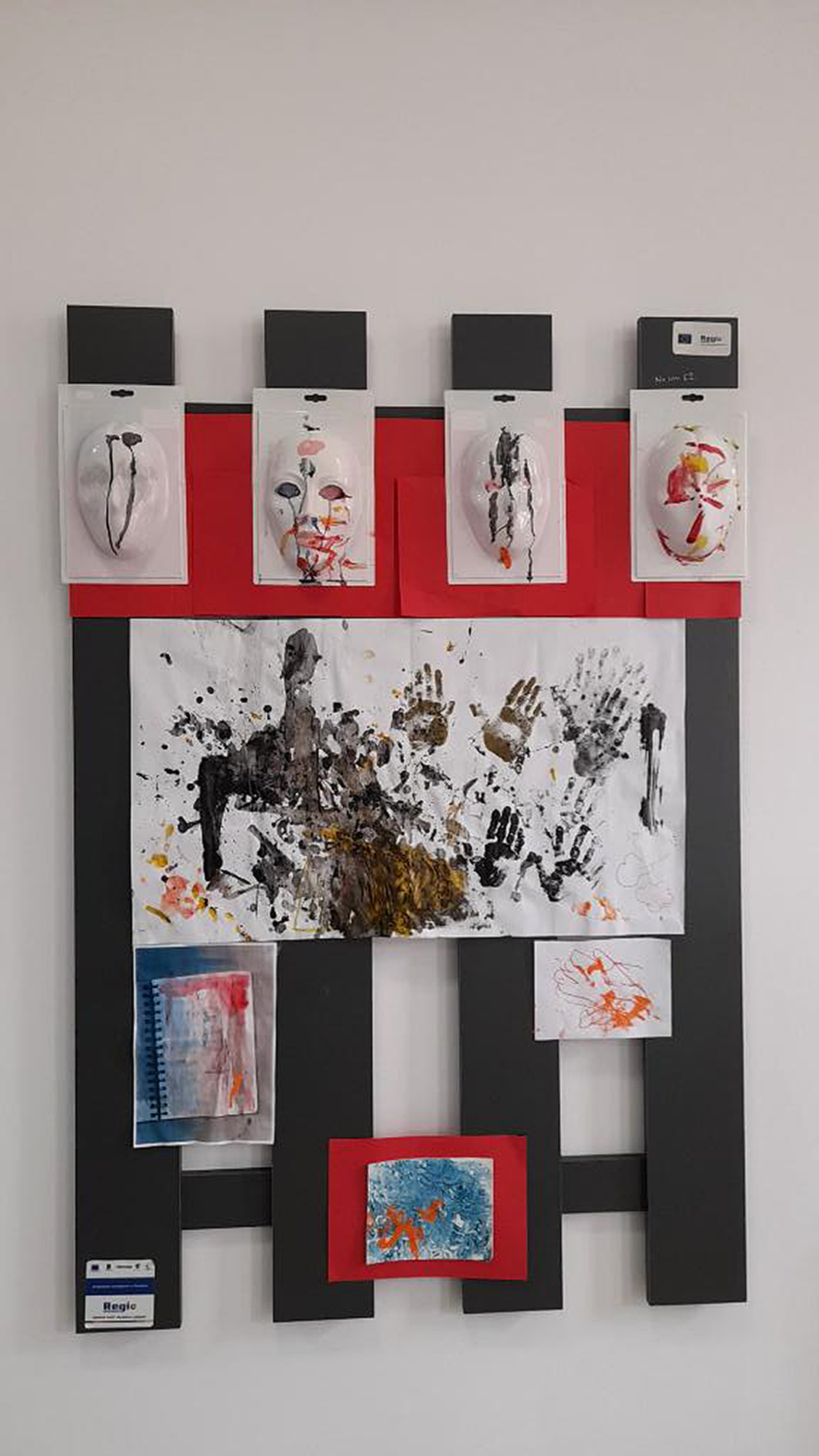
The child is encouraged during the art therapy sessions, by exhibiting the works and decorating the work environment.
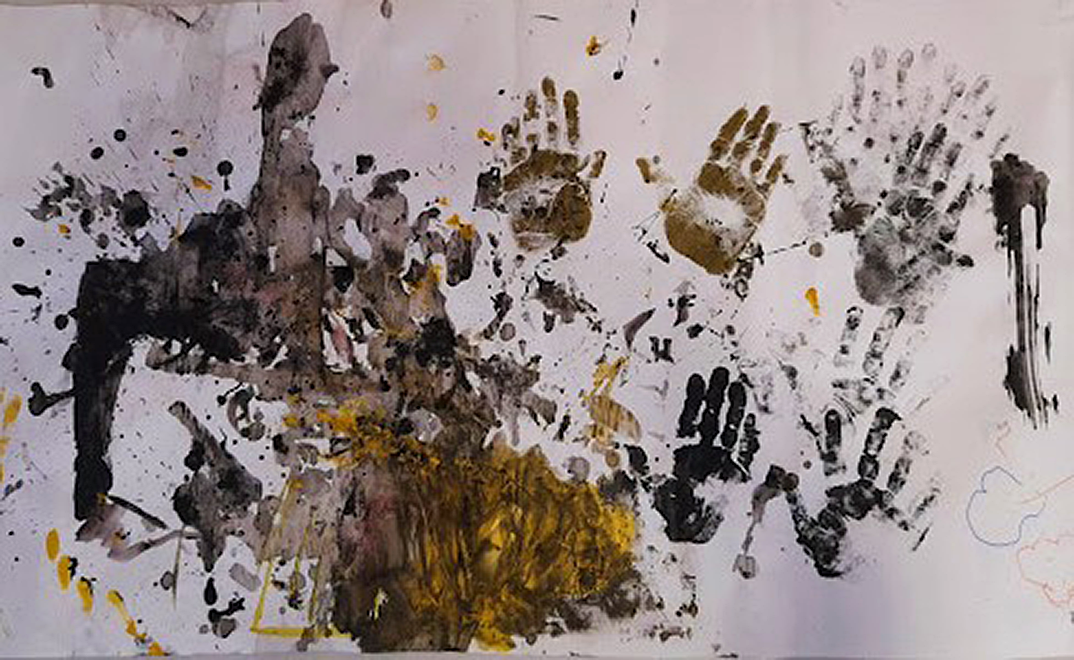
Through these non-directive methods, the evolution of visual thinking is accelerated. The chromatic diversification, the gestures in painting and the alternation of work techniques such as printing, graphic lines and dripping, are signs of a visual thinking. The child discovers the environment and interacts with it trough art.
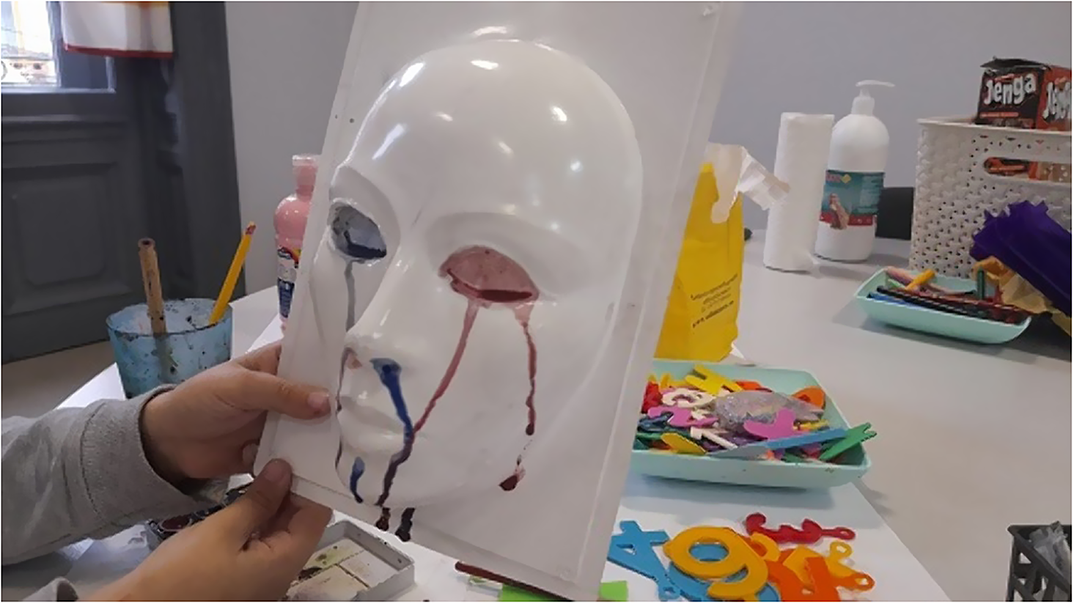
Observing the potential of the materials around him and also certains physical phenomena, such as a three-dimensional mask that allows the color to outline its volumes by draining it on the shape, the child uses consciously the properties of materials and the movement of the object.
Results
Discovering artistic and decorative skills; Increased self-esteem; Interaction in the artistic environment and even verbal communication in cases of autism.
Conclusions
Through art, the child can get closer to the social life.
Among psychosocial interventions, recent studies have highlighted that sport-based interventions can positively impact on the long-term outcomes of patients with severe mental disorders, in terms of improving their quality of life and promoting social inclusion. Although sport-based interventions should be considered an effective strategy for promoting patients’ recovery, few data are available on their dissemination in the clinical routine care in Europe.
Objectives
to evaluate the availability of sport-based psychosocial interventions in European countries.
Methods
In the framework of the EU-Erasmus+, the European Alliance for Sport and Mental Health (EASMH) project has been funded. In order to evaluate the availability of sport-based interventions, an ad-hoc online survey, sent to national mental health centres, has been developed.
Results
103 responses were obtained (49 from Italy, 31 from UK, 17 from Finland and 12 from Romania). The respondents were mainly psychiatrists working in community mental health centers. Sport-based interventions were frequently provided by mental health services, in particular in Italy, UK and Finland. While in UK and Finland sport-based interventions are commonly offered to all patients, in the other countries these are provided only by patient’s request. The most frequent types of sport practised were: running, football, volleyball, tennis and table tennis and basketball. Almost all respondents reported to not use a dedicated monitoring tool for evaluating the efficacy of those interventions.
Conclusions
Sport-based interventions are not frequently provided in the routine clinical settings, although no monitoring tools are routinely adopted. The EASMHaims to fill this gap by disseminating good clinical practice related to sport-based interventions.
The European Union introduced ‘European Union citizenship’ in 1992. European Union citizens hold a citizenship that is linked to national citizenship. It is the only form of citizenship in the world that is acquired automatically by those who are nationals of a member state. Citizenship is complex and varied – some countries allow dual citizenship while others do not; individuals can change their citizenship or renounce it but states may not arbitrarily deprive a citizen of this status. As the EU is not a nation state, EU citizenship does not give Union citizens dual nationality. This chapter will explore the character of EU citizenship and the substance of the rights associated with it. EU citizenship may have been the idea that drove a wedge between the UK and the EU resulting in Brexit. A key question is whether it can be given enough substance to act as a ‘glue’ and bind the nationals in the twenty-seven EU member states. Furthermore, what is its value – is it an ‘inviolable’ status, giving rise to rights that exist regardless of any economic activity?
Wartime destruction and postwar redrawing of borders sparked a refugee crisis in Poland massive in dimensions and very particular in character. Two million ethnic Poles, driven out of the territories annexed by the Soviet Union at the end of the war, had to find new homes in the German territory ceded to Poland in 1945. The refugees did not encounter a “host society” per se, as the region’s former ethnic German population had been expelled, nor did they settle entirely unpopulated land. Some 2.5 million other Poles had migrated from the war-torn towns and villages of central Poland to the country’s new west shortly before the refugees’ arrival. These groups of Poles were joined by 200,000 Polish Jews who had survived the Holocaust, 200,000 Ukrainian-speakers forcibly resettled from southern and eastern Poland in 1947, and 1,000,000 so-called autochthones in Upper Silesia and Masuria, former German citizens allowed to stay in Poland because of their presumed Polish background. This essay explores strategies used to integrate this diverse population and the long-term consequences of forced migration.
This introductory chapter sets out the rationale for the book and in particular for its focus on the relationship between social integration and language development in the experiences of newcomer school students with English as an additional language. It also provides a critical examination and definitional review of key terms and concepts at the heart of the discussion: EAL, newly arrived, mainstreaming, language development and social integration.
Suicide in the elderly is a complex and significant public health problem. The purpose of our study was to examine the role of loneliness and social integration as potential mediators in the relationship between physical pain and suicidal ideation in the elderly.
Design:
Descriptive, bivariate correlations, and moderated mediation analyses were performed.
Setting:
Personal meetings were held with participants in their homes.
Participants:
A total of 198 elderly men aged 65 and over.
Measurements:
Self-report measures: Beck Scale for Suicidal Ideation, Physical pain subscale, Multidimensional Social Integration in Later Life Scale, and University of California, Los Angeles (UCLA) Loneliness Scale (Version 3).
Results:
Our findings showed that the association between physical pain and suicidal ideation was mediated by loneliness and social integration. Further analyses revealed that this mediation model was significant among single, but not married, men.
Conclusions:
Physical pain and social factors are both important in understanding suicidality in late life. Elderly single men who experience physical pain may be lonelier and less socially integrated, and these factors may contribute to higher risk of suicidal ideation.