To save content items to your account,
please confirm that you agree to abide by our usage policies.
If this is the first time you use this feature, you will be asked to authorise Cambridge Core to connect with your account.
Find out more about saving content to .
To save content items to your Kindle, first ensure no-reply@cambridge.org
is added to your Approved Personal Document E-mail List under your Personal Document Settings
on the Manage Your Content and Devices page of your Amazon account. Then enter the ‘name’ part
of your Kindle email address below.
Find out more about saving to your Kindle.
Note you can select to save to either the @free.kindle.com or @kindle.com variations.
‘@free.kindle.com’ emails are free but can only be saved to your device when it is connected to wi-fi.
‘@kindle.com’ emails can be delivered even when you are not connected to wi-fi, but note that service fees apply.
Focusing on the ‘keeping’ and ‘cure’ of frantic persons, Chapter 5 explores the ideational link between ‘reason’ and ‘rule’ which – in the minds of contemporaries – justified these interventions. If the ‘ruling faculties’ of the human mind were impaired, this merited the placement of the affected individual under the ‘rule’ of others. If the subject was an adult male, the result was a rapid and often chaotic reshuffling of power relations within the home and the wider community. Looking at how householders, parishioners, physicians, mayors, and local magistrates responded to frenzy, this chapter shows how the ideas explored in Chapters 1–3 changed the lives of those who received the diagnosis. It suggests that, if the high premium placed on the faculty of the ‘reason’ served to shore up the rigidly hierarchical order of social relations which obtained in early modern England (encompassing rank, age, gender, and species), frenzy exposed the fragility of that same order.
Alcohol and other drug use (AOD) use tends to hold a privileged position within legal decision-making (Seear, 2020; Flacks, 2023), and the criminal case of R v Taj (2018) was no exception. The defendant, who was – it was agreed by all parties – experiencing paranoia and psychosis, launched a violent attack on a man he suspected of being a terrorist. Mr Taj had been drinking on eve of the incident, and the night before that, but tests on the day found no trace of alcohol in his bloodstream. He was nevertheless unable to plead self-defence on the basis that he honestly believed there was a risk to life and limb because, successive courts argued, he was already at fault for drinking alcohol, which led to the psychotic thoughts. There were some significant and potentially far-reaching claims in the case, including that intoxication-related behaviour does not require the presence of alcohol in the body, and that psychosis can be caused by alcohol alone. This allowed the court to conclude that Mr Taj was wholly responsible for his actions and so could not claim excuse or mitigation.
Chapter 17 explores the implication of the failure to establish a proper legal sovereign in the Mandates under Article 22 of the Covenant of the League of Nations. The tension was never resolved between the Mandatory power exercising the attributes of sovereignty and actually possessing it, notably on the all-important issue of maintaining ‘public order’. Repression as interpreted politically through the Permanent Mandates Commission (PMC) thus shaped Mandatory rule. Three examples show dialogue between the PMC and the Mandatory powers articulated sovereignty as a system of legal practice. The repression of the Bondelswarts rebellion of 1922 and the Great Syrian Revolt of 1925–27 muddled the distinction between Class C and Class A Mandates. The repression of the Arab revolt in Palestine of 1936–38 exemplified legalist tensions within the Mandate system that had been there all along. Neither the PMC nor the Mandatory power (Britain) could either construct sovereignty over a unitary Palestine or partition it. As Europe veered towards war in 1939 and as the League itself started to disintegrate, ‘public order’ in Palestine came to exist for its own sake, disconnected from any resolution of the political stalemate.
This chapter provides a general overview of World War I, including the scale and character of the military campaigning; the depth of societal mobilization and the transformation of state–economy relations; the consequences for personhood and citizenship; the normalizing of mass killing and genocide; the war’s demographic catastrophe and the pervasiveness of violence and death. “Total war” is distinguished as a main theme for the early twentieth century, whether in the shape of popular experience or the impact of the interventionist capacities of states. Empire, colonialism, and the war’s globality are also marked.
Edited by
Katherine Warburton, California Department of State Hospitals, University of California, Davis, USA,Stephen M. Stahl, University of California, Riverside, USA
Schizophrenia is known to be a disabling psychiatric condition with wide reaching impact on everyday functioning and outcomes. These functional outcomes include increases in all-cause mortality (especially suicide and injury), cognitive and functional capacity deficits, lower reported levels of quality of life, increased incarceration, higher risk for violence and victimization, and homelessness. Studies have shown that medications and outpatient services can improve each of these functional outcomes in individuals with schizophrenia. However, most studies of pharmacological treatment utilize rating scales which do not reflect the real-world outcomes. This review looks at available studies focused on real-world outcomes and argues for an expansion of this body of research.
This chapter explores the implications of a post-transition context and an ongoing violent confrontation for the memory regime, looking at Kenya as our case study. Despite a power-sharing agreement and a concluded transitional justice process following election-related violence in the country (2008–2012), today Kenya is again characterised by public amnesia with regard to the most recent violence committed in the context of a ‘War on Terror’. The chapter shows how memory is securitised, with amnesia presented as resilience and memory as vulnerability in the context of the confrontation. Spaces of violence are reconstructed and fortified, and people invited to reinhabit them as a way to fight terror. The chapter takes a close look at the rectification of the Westgate Mall in Nairobi, showing the different ways in which labours of memory erasure have paradoxical effects, acting as triggers of memory, archives of memory discourse, and even markers of insecurity.
Chapter 6 explores the emergence of social inequality, prestige, and status through the lens of mortuary data from sites on the eastern plateau. Here, status and prestige appear to be based upon access to long-distance trade and the acquisition of weapons and costly exotic goods.
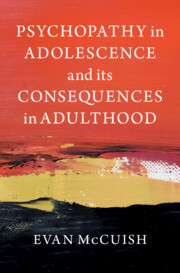
What becomes of young people who display strong psychopathy traits? By combining cutting-edge research with interviews from over 500 incarcerated youth assessed for psychopathy and involved in serious, violent offenses, this book investigates whether they are destined to persist in crime throughout their lives. Evan McCuish explores not only long-term offending patterns but also psychopathy's influence on relationships, employment, substance use, and mortality. Through this, the text clarifies the meaning of the clinical construct of psychopathy and debunks myths and misconceptions popularised by the true crime genre. This allows readers to more reliably interpret the accuracy of popular culture descriptions of psychopathy. Synthesising over 100 years of research, this book defines psychopathy and contributes new knowledge to the field. It is ideal for students, scholars, and practitioners in psychology, criminology, social work, and law seeking further insight into this intriguing disorder.
Prevention of child maltreatment – incorporating physical abuse, sexual abuse, emotional abuse, neglect and exposure to domestic violence – is a clearly defined global policy priority. Global Burden of Disease studies have focused on estimating burden attributable to childhood sexual abuse omitting other forms of child maltreatment. This study aims to estimate burden attributable to child maltreatment using data from the first comprehensive national study, the Australian Child Maltreatment Study (ACMS), accounting for the co-occurrence of multiple forms, the complex impact of multi-type maltreatment and the contribution of interrelated factors.
Methods
We estimated burden attributable to child maltreatment by age and gender for Australia in 2021. Risk–outcome pairs that met criteria for sufficient evidence for a causal relationship were included. Relative risks were estimated as a function of exposure based on data from the ACMS incorporating increased risk with multi-type maltreatment and adjustment for confounding. Levels of exposure in each of the 32 mutually exclusive combinations or patterns of child maltreatment were estimated based on ACMS data by age and gender. The theoretical minimum risk exposure level was determined as no exposure to child maltreatment in the population and population attributable fractions (PAFs) were calculated. Attributable mortality, years of life lost, years lived with disability and disability-adjusted life years (DALYs) were estimated by multiplying PAFs by the relevant burden of disease estimates by age and gender for Australia in 2021. Sensitivity analyses were conducted to assess the robustness of the results. Uncertainty was propagated into attributable burden estimates using Monte Carlo simulation methods.
Results
Overall, child maltreatment accounted for 6.6% (95% uncertainty interval (UI), 6.2–6.9%) of all DALYs for women and 6.4% (95% UI, 6.0–6.7%) of all DALYs for men in Australia in 2021. An estimated 71.2% of self-harm, 57.1% of anxiety disorders and 49.3% of major depressive disorder (MDD) DALYs in women, and 63.8% of self-harm, 55.9% of anxiety disorders and 42.9% of MDD DALYs in men were attributable to child maltreatment.
Conclusions
Child maltreatment contributes to a substantial proportion of burden of disease in Australia, equivalent to leading lifestyle-related risk factors such as high body mass index, high blood pressure and smoking. This research significantly advances knowledge of the disease burden attributable to child maltreatment and provides novel methodology for measuring the impact of all five forms of child maltreatment combined on mental health and health risk behaviours nationally and globally.
The Roman Empire was rooted in violent acts. The spread of Roman control over the provinces was a lengthy process, but one that fundamentally changed the nature of political relationships. Settlers extruded from Italy. Large amounts of wealth changed hands. Land tenure was reconfigured. The population was divided first into provinces, then into assize districts. Subject populations were registered, counted, and taxed. The process put immense amounts of strain on the internal structures of communities. Roman governors were tasked with administering this new political landscape, where their position was tenuous. They distrusted new local elites who, along with Roman settlers, were prone to take advantage of local people. These same people were also responsible for tax collection, which, along with keeping the peace, was the governor’s ultimate responsibility. This systemic tension opened a space for provincial legalism.
Edited by
Liz McDonald, East London NHS Foundation Trust,Roch Cantwell, Perinatal Mental Health Service and West of Scotland Mother & Baby Unit,Ian Jones, Cardiff University
Millions of women and girls worldwide experience violence. Violence against women and girls takes many forms, including physical, emotional and sexual violence and abuse, which is associated with a range of adverse impacts on women, their families and society as a whole. Health professionals supporting women during the perinatal period should assess the risks posed by exposure to previous or current violence and how this may affect them during pregnancy. As an important risk factor in a woman’s mental health presentation, psychiatrists working with pregnant and postpartum women should consider the presence of violence in their formulation; it can increase the risk of anxiety, depression and post-traumatic stress disorder (PTSD). Domestic violence and abuse increase the risk of domestic homicide and may play a role in many perinatal suicides. Sensitive assessment and effective management of women exposed to violence can improve engagement with mental health services and response to treatment.
In contrast to the ‘benign’ and ‘hostile’ forms of secularism found globally, many European states exhibit a distinctive model we term ‘discriminatory secularism’. In this arrangement, the state discriminates against certain minority religions while privileging religious majorities, creating an uneven religious playing field. Discriminatory secularism is justified not on the basis of religious ideology but on the basis of secularist principles. We argue that discriminatory secularism fosters a culture of hostility toward minority faith communities, increasing the likelihood of physical violence against them. Using cross-national data from European states between 2003 and 2017, we find that higher levels of discriminatory secularism are strongly associated with greater violence against religious minorities. These results remain robust across multiple model specifications and statistical techniques.
Attacks on health care are war crimes. This study aims to investigate the types, scales, and patterns.
Methods
The secondary analysis explores public data from WHO’s “Surveillance System for Attacks on Health Care (SSA)” from January 2018 to December 2024.
Results
The analysis shows that the attacks on health care and number of affected countries increased strongly. A total of 8,012 attacks on health care were recorded across 22 countries. Just over half of the attacks impacted health care personnel, and almost a quarter affected patients. Attacks can vary widely in type, complexity, and impact, which have regional specificities. The occupied Palestinian territory and Ukraine have suffered the most attacks on health care worldwide. Country-specific attack strategies are identified. Furthermore, the combination of violence with individual and heavy weapons in an attack accumulated the probability of injuries or deaths. Improvements were observed in a few countries. A 2-step cluster analysis reveals that the heterogeneous attacks can be well clustered into approximately 2 halves. It identifies patterns across countries. The most important predictor for clustering of the attacks on health care is violence with heavy weapons, which is frequently observed, for example, in Ukraine.
Conclusion
The global trend has worsened dramatically. Prevention and protection are needed.
In this article, we explore how Long-Term Residential Care (LTRC) features contribute to violence against staff.
Methods:
Data were collected using a mixed-methods case study in LTRC, including an online survey (N = 240) and interviews with staff (N = 29) in two Canadian provinces.
Findings:
Survey data showed 97.2% of staff reported experiencing at least one form of violence from residents, and 53.2% experienced one or more forms of violence from family carers. Severe physical violence from residents was significantly correlated with the number of different types of training staff received and working with a higher proportion of residents with cognitive impairment. Staff attributed violence from family carers to mistrust, lack of understanding, and ‘unrealistic expectations’ while they attributed violence from residents to insufficient resources.
Discussion:
Violence in LTRC occurs across multiple relationships. To address this, structural changes to staffing and working conditions that enhance trust and relational care are essential.
The July 2011 viral video from the University of Benin and its violent aftermath reveal how “lesbian” sex, digital voyeurism, and so-called corrective rape become public sites for contesting sexual citizenship and personhood in Nigeria. Through digital circulation, intimate queer pleasure is transformed into moral evidence, rendering embodied aliveness perilous under conditions of surveillance and communal judgment. Grounded in online commentary and Igbo moral philosophy, the concept of mmadu (personhood) illuminates how visibility authorizes discipline and extrajudicial violence, reframing queer pleasure not as transgressive resistance but as a condition of personhood itself.
Public amnesia and the political choice to 'forget' aspects of a difficult past define many post-atrocity contexts. Paths to Forgetting explores how distinct forms of transition such as rebel victory or power-sharing shape the memory regime and produce different forms of public amnesia in Rwanda, Burundi and Kenya. The book focuses on sites of violence and their encounters with erasure to capture the everyday aspects of securitisation of memory. The book finds that public amnesia directly impacts conflict transformation and peacebuilding. It examines how amnesia contributes to grievance via non-recognition in Rwanda, and how exposures without meaningful redress in Burundi and the refusal to engage with deeper roots of conflict in Kenya undermine peacebuilding. Finally, the book highlights the importance of addressing the regional dimensions of memory and forgetting and equips readers with new conceptual tools for peacebuilding scholarship and practice.
Synesius of Cyrene (b. ca. 373–d. ca. 410) was trained in the classical literature that depicted war as an event with armies opposing one another in battle, but he experienced a different kind of conflict in his own life – namely, the periodic and unpredictable raiding that troubled late ancient Libya. Synesius’ letters and his treatise On Kingship show that these conflicts brought sentiment to the surface as a kind of evidence about people that could be implicitly trusted; Synesius’ sentiment was palpably xenophobic, aligned against both “barbarians” and “Scythians,” and so strong as to circumvent rational examinations of the evidence around him. This essay examines the scaffolded construction of stereotype, built in Synesius’ advice to a hypothetical ruler, and demonstrates how knowledge, even knowledge that seems intimate and trustworthy, can be bent through engagements with violence.
The Introduction opens with a (personal) precursor to the writing of the book. It discusses the methodological, normative, and theoretical basis of the book. It offers an overview of the argument and the chapters, and outlines sources employed in the research.
As in many pre-modern societies, in ancient Rome the use of and protection from violence acted as a blunt display of an individual’s power. When a person did violence to another, they manifestly had the power to do so. Violence not only creates social hierarchies, but it also protects them, and power, status and wealth, and the resources they commanded, played an important role in protecting high-status individuals from the threat of everyday violence and physical coercion, treatment more readily associated with those of lower status. But while we know this to be the case for the powerful men of ancient Rome, can the same thing be said to apply to powerful women? Through an analysis of the physicality of Roman power as it applied to wealthy women, both as agents and targets of physical coercion, at home and in public, this chapter argues that it can.
This chapter shows the evolution and tenuous persistence of white supremacy from the middle of the twentieth century to the present. It begins by analyzing racial terrorism and lynching in the USA. It connects these acts of violence to broader patterns of economic exclusion and political dominance across English-speaking societies. The analysis reveals deep connections between American segregation and Nazi Germany, demonstrating how racist ideologies reinforced each other globally. While civil rights movements achieved significant victories, white power structures adapted through subtler forms of oppression, including discriminatory policing, housing discrimination, and coded political messaging. The chapter shows how anti-colonial and civil rights movements worldwide recognized their common struggle against a global system of white supremacy. The election of Barack Obama marked a crisis point, triggering an intense backlash that culminated in Trump’s presidency and Brexit. These recent manifestations of white nationalism, while politically successful, may represent desperate attempts to preserve a crumbling system rather than signs of strength.