To save content items to your account,
please confirm that you agree to abide by our usage policies.
If this is the first time you use this feature, you will be asked to authorise Cambridge Core to connect with your account.
Find out more about saving content to .
To save content items to your Kindle, first ensure no-reply@cambridge.org
is added to your Approved Personal Document E-mail List under your Personal Document Settings
on the Manage Your Content and Devices page of your Amazon account. Then enter the ‘name’ part
of your Kindle email address below.
Find out more about saving to your Kindle.
Note you can select to save to either the @free.kindle.com or @kindle.com variations.
‘@free.kindle.com’ emails are free but can only be saved to your device when it is connected to wi-fi.
‘@kindle.com’ emails can be delivered even when you are not connected to wi-fi, but note that service fees apply.
Elk Ridge was the largest pueblo in the northern Mimbres River Valley during the Classic Mimbres period. Data from the pueblo and surrounding sites indicate that it was the economic and ritual center of a larger community. Here, we use multiple lines of evidence—including survey data, ceramics, architecture, and faunal remains—to reconstruct the extent and structure of the Elk Ridge community. We see social interaction as the basis for community development, with (1) community members interacting to negotiate access to land, resources, and labor; and (2) communal rituals serving to reinforce cooperation and cohesion. The Elk Ridge community produced ceramics and raised turkeys that were traded to other Classic Mimbres communities, and these exchange networks created social ties between communities. Data from Elk Ridge also document interaction with non-Mimbres communities to the north, revealing a network of cultural interaction across the region. This study illustrates how landscape, location, kin relations, exchange networks, and ritual activities translate into a social community, similar to those we see throughout the US Southwest and elsewhere in the Neolithic world.
Each year thousands of immigrants and refugees begin their lives in new places, speaking new languages, and facing new challenges. Challenges include access to health/mental care, education, transportation, and employment. Researchers and practitioners frequently focus on challenges of newcomers and their deficits in meeting needs for self-sufficiency. This study explores newcomers’ giving back and emphasizes an untapped reservoir of strength and capacity. Based on qualitative semi-structured interviews with 54 immigrants and refugees, themes identified include (1) a desire to maintain ethnic identity and connection; (2) ethnic community as an extension of family; (3) a sense of duty and obligation; and (4) measure of achieved success. Researchers and practitioners should shift their view to recognize the strengths and capacities of newcomers who give back to their communities.
In this paper, we apply the established ‘neo-contingency approach’ from organizational theory into the field of community-led social ventures which, by necessity, have to be embedded within their local community context in order to achieve their social mission. Through our analysis of three heterogeneous case studies from around rural Japan, we show how the external environment and contingencies affect leadership style and the pattern of social capital, influencing the type of community development apparent in each setting. We propose that local contingencies, such as external environment, leadership and social capital, play a role in influencing organizational culture in community-led social ventures and, indeed, the form that the social venture takes. We conclude by arguing that if the neo-contingency approach is to fulfil its potential then further theoretical and conceptual development is required.
In order to deal with “wicked problems” like inequality and social exclusion, one needs the support of committed citizens (Brandsen et al. in Manufactured civil society: practices, principles and effects, Palgrave, London, 2014). A promising setting to examine to what extent this is the case is that of community development projects in derelict neighbourhoods where the largest representation of ‘marginalised’ citizens can often be found (Head in Community development: theory and method of planned change, Vikas Publishing House, New Delhi, 1979; Needham in Personal co-production, 2009). In this article, we examine to what extent citizens are actually involved in local co-productive community development projects (in the city of Ghent, Belgium), and how professional field workers influence this engagement. We focus on three different potential effects of co-productive community development (inclusion and empowerment of citizen co-producers and the equity in the benefits they receive), and whether professional support can influence these effects. We find that co-production in community development projects may lead to more inclusion, empowerment and equity. Moreover, it is posited that the presence of professionals in their different roles does have a positive impact on co-productive community development.
Community Development (CD) is a process to favour the socio-economic development of communities through the engagement of citizens, social workers, public authorities or non-profit organizations. Over the last decades, theories and practices of the CD have spread all over the world. Italy has a consistent “Third Sector” (TS) with a long-standing tradition; Despite the absence of a well-defined area of the Italian CD, in recent years, particularly within theso-called Third Sector (TS), there has been to develop characterizes of the CD. This paper aims to theorize the features of the CD in the Italian TS. The research engages representatives of 23 organizations—from neighbourhood associations to foundations and national bodies—and investigates through qualitative semi-structured interviews how they promote and conceptualize CD processes. Through the framework of international theories, it is possible to define the field of the CD in the Italian TS.
In the United States, neoliberal strategies for social, economic, and state organization have been accompanied by frequent calls for volunteers to solve serious social problems. A case study of a community mobilization of middle-class volunteers to provide one-on-one support to families in poverty shows both possibilities and limitations. Volunteers provide social support to families in poverty, thus alleviating social isolation. Volunteers learn about systemic forces that cause poverty, its effects on families and communities, and about themselves and their capacities to engage in poverty work. However, social isolation is but one of many problems associated with poverty, and even a more knowledgeable amateur volunteer corps cannot take the place of substantial social, economic, and political change.
In this case study, we aimed to investigate residents’ agency through their participation in the development of their residential area in the city of Espoo, Finland. With the aid of seven themes, we identified by thematic analysis five types of residents in terms of agency: free floaters, home troops and helpers, representative information brokers, informed reviewers, and change agents. Relational agency, rooted from the cultural-historical activity theory, necessitated recognizing the available resources, understanding the motives of others, and collaborating in joint activities. The results of 30 interviews showed that residents are willing to participate, and they need space and structure to exploit their relational agency in order to build common interests in their neighbourhood. The findings are discussed with reference to the potential of residents’ agency while participating in neighbourhood governance and volunteering. Our study contributes to the understanding of residents’ relational agency in community development and in volunteering.
This paper treats new data about small mammals from the Chongphadae Cave Site, Democratic People’s Republic of Korea. Seven samples from Layers 8–10 and 12–15 included 161 tooth fossils of small mammals. The composition of small mammal assemblage is 3 orders, 5 families, and 11 species, which are 1 insectivore taxon, 1 lagomorph taxon, and 9 rodent taxa. The community development is distinguished into five stages (62.122–19.630 ka), and stage I is characterized by the dominance of xerophilous elements, including Myospalax epsilanus, Microtus brandti, and Cricetulus barabensis. Alternating between mesophilous and xerophilous elements, the last stage (stage IV) of community development is characterized by the existence of only mesophilous elements, such as Ochotona alpina and Erinaceus sp. The dynamics of small mammal communities of the Chongphadae Cave Site demonstrate that alternation between mesophilous and xerophilous elements during the Late Pleistocene contributed to the formation of the modern mosaic landscape consisting of forests, grasslands, and riverside.
Ontario seniors face a range of challenges as they age, including financial, physical and social barriers. Addressing these challenges is essential to improving the health and well-being of older adults in the province. Objective: The discussion proposes that naturally occurring retirement communities (NORCs) offer a viable and safe alternative to formal retirement communities and evaluates how NORCs can support seniors when examined through the lens of the social determinants of health.
Methods
The analysis focuses on the role and impact of NORC-specific service programming, distinct from NORCs themselves, and assesses their potential in mitigating age-related challenges faced by seniors in Ontario.
Findings
NORC-specific service programs have shown success in supporting senior wellness and improving quality of life. These service address key social determinants of health and demonstrate potential for broader application across Ontario’s NORCs.
Discussion
The discussion recommends increased attention from governments and policymakers, including efforts to identify NORCs across Ontario, expand affordable and accessible housing options for seniors, and invest in health and social supports. Strategic development of NORC programs can play a significant role in building capacity and delivering targeted wellness services to seniors.
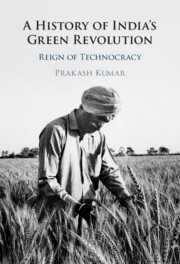
In the mid-1960s, India's 'green revolution' saw the embrace of more productive agricultural practices and high yielding variety seeds, bringing the country out of food scarcity. Although lauded as a success of the Cold War fight against hunger, the green revolution has also faced criticisms for causing ecological degradation and socio-economic inequality. This book contextualizes the 'green revolution' to show the contingencies and pitfalls of agrarian transformation. Prakash Kumar unpacks its contested history, tracing agricultural modernization in India from colonial-era crop development, to land and tenure reforms, community development, and the expansion of arable lands. He also examines the involvement of the colonial state, post-colonial elites, and American modernizers. Over time, all of these efforts came under the spell of technocracy, an unyielding belief in the power of technology to solve social and economic underdevelopment which, Kumar argues, best explains what caused the green revolution.
With the Cold War’s epicenter shifting from Europe to the Third World, the Eisenhower administration’s foreign policy concerns of containing the Soviet bloc were tied to questions of socioeconomic development. Besides “trade and aid,” the appeal of this shift rested on the apparent complementarity between ideas of rural modernization and the practices of agrarian democracy. “Community development” referred to a series of projects initiated by the Ford Foundation and postcolonial governments toward this cultural-political end. This article examines the contested meanings, practices, and outcomes of such a project in East Pakistan (present-day Bangladesh). Drawing on the project’s archives and published sources, it addresses how and why a disjuncture between the political-societal aspirations of decolonization and the hardening Manicheanism of Cold War competition came to characterize the contested trajectory of this project. As its proponents and detractors negotiated competing expectations, inter-regional tensions, and geostrategic interests, this disjuncture gave way to a developmental ideology envisioned around the technocratic nodes of population control and food production. Consequently, the supposed complementarity between “agrarian democracy” and modernization was relegated to the margins of developmental thinking, even as growing rural unrest and Cold War realpolitik propelled its need for legitimizing new claims on political power. The prism of community development enables a novel analysis of the conjunctural dynamics of mid-twentieth-century decolonization and the contingencies of Cold War politics of agrarian modernization.
Informal social protection systems (ISPs) continue to play a significant role where government-sanctioned social security measures do not reach vulnerable populations. Despite their essence and utility, they remain marginalised in social policy, theory, and practice, and thus many call for their integration. However, research has often overlooked factors embedded in the integration process particularly how these can affect the future performance of ISPs if they are to interact with formal systems. Adopting an argumentative conceptual approach, and a synthesis of social policy literature on ISPs, we provide a framework for managing relationships with actors to optimise the interaction between ISPs and formal social welfare systems through a conceptual framework that utilises design thinking and community development principles. We outline three essential conditions for effective engagement with ISPs to achieve social impact, urging government and others to engage with empathy; treat communities as equal collaborators; and keep a social justice focus.
Area-based initiatives are designed to improve economic, physical, and social outcomes in a formally defined territorial area. A considerable amount of literature highlights that the implementation of this approach differs considerably between Western European countries. The study identifies three common approaches. The first, defined as a sector-based approach, focuses on the coordination of welfare services in a specific area. This approach may promote an efficient organisation of specific welfare sectors but does not seek to implement a multi-sectoral approach. The second, defined as the integrated approach, pays particular attention to institutional arrangements. The third, informal relations-based approach, is developed mainly in intersubjective relations and focuses on individual abilities, often without systematic engagement to change how public and private institutions work. In this study, I outlined a conceptual framework for a new perspective in area-based initiatives that recognises the plurality of autonomies that operate in a community.
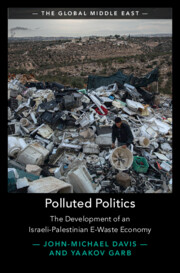
This book describes the politically charged afterlife of Israeli electronics gathered by and processed in a cluster of rural Palestinian villages that has emerged as an informal regional e-waste hub. As with many such hubs throughout the global South, rudimentary recycling practices represent a remarkable entrepreneurial means of livelihood amidst poverty and constraint, that generates staggering damage to local health and the environment, with tensions between these reaching a breaking point. John-Michael Davis and Yaakov Garb draw on a decade of community-based action research with and within these villages to contextualise the emergence, realities and future options of the Palestinian hub within both the geo-political realities of Israel's occupation of the West Bank as well as shifting understandings of e-waste and recycling dynamics and policies globally. Their stories and analysis are a poignant window into this troubled region and a key sustainability challenge in polarized globalized world.
The preface describes how a chance story about black rain interfering with the traditional drinking water collection from village rooftops, led us to a massive but little-known Palestinian e-waste hub in the southern West Bank, employing a thousand people who work to collect, refurbish, and recycle a large portion of Israeli e-waste, creating livelihoods in a setting of few options after prolonged Israeli occupation of the West Bank. We describe our efforts to learn with and from these communities about the dynamics and scale of the informal e-waste value chain, and its serious environmental and health consequences, and to forge and test a vision for development that would preserve this precious source of livelihood while eliminating its crippling harms. We overview the intertwined stories we tell in the book about our years of community-based research and advocacy, and their lessons for different audiences.
Rising poverty, shrinking economic opportunities, disengaged citizens and contentious public discourse, and racial inequality have become some of the greatest challenges communities are confronting. In efforts to maximize participation in addressing these issues, universities, community organizations, corporations, local government entities, and foundations are, independently or collaboratively, devoting resources to develop local leadership capacities. This chapter examines these community leadership development efforts and details two cooperative extension programs in a Midwestern US state. Through analysis of these case examples, the chapter offers a vision for how to reimagine community leadership programs so that they are more responsive to the complexity of current and emergent community challenges. An argument is made that US university extension services, because of their strong ties to local communities and networks nationwide, are well placed to support community leadership development that promotes community-identified strategies to address a wide range of local issues among diverse stakeholders. Insights from this chapter can inform future research and influence the design and implementation of community leadership development programs around the world.
The Chinese government launched a nationwide policy campaign regarding neighborhood governance in the early 2010s. The state-led movement served both to strengthen state legitimacy and enhance community development. But how it contributed to community empowerment or disempowerment is little examined. This chapter attempts to review the extant literature on the campaign from a community empowerment perspective. Implications and suggestions for future research are also included.
Neighborhood associations are geographically bound, grassroots organizations that rely on volunteer membership and direct participation to identify and address issues within their neighborhood. Often these groups serve as intermediaries between residents and local decision-makers, such as government officials, developers and business owners, and providers of public goods and services. As a case example, we describe the Minneapolis Neighborhood Revitalization Program (NRP), launched in 1990. The NRP is a notable long-standing attempt to bolster the role of neighborhood associations in municipal governance. It demonstrates many of the potential benefits as well as the challenges of neighborhood associations as vehicles for locally scaled democracy. After this, we examine dynamics of community power and empowerment processes in neighborhood associations and make recommendations for practice and future research.
Mentawai gibbons (Hylobates klossii) are one of the nine species of gibbon in Indonesia, all of which are threatened with extinction. We present a view of the future for gibbons on the Mentawai Islands using information from previous research as well as recent surveys. The largest gibbon population and habitat is currently in the Siberut National Park area, with approximately 10,484 individuals. In addition, there are 13 locations outside the national park with densities ranging from 1.04 groups/km2 to 4.01 groups/km2. A serious threat to the Mentawai gibbon is forest loss and hunting. Our survey also shows that the cultural value of Mentawai gibbons is being lost due to acculturation with modern culture. Uma (the Mentawai longhouse) and sikerei (the Mentawai shaman) are cultural symbols that are no longer found on the islands of Sipora and North and South Pagai. Currently there are only 94 uma and 135 sikerei (who have an average age of 64 years) on Siberut Island. We recommend conservation activities at the grassroots level for the Mentawai gibbon, activities that encourage local community capacity development and enhance the local economy, whilst at the same time strengthening Mentawai cultural and customary values.
In addition to adopting greater person-centred and recovery-oriented approach to build more productive partnerships between mental health staff and service users, mental health organisations that wish to become more socially inclusive need to develop partnerships with other agencies, particularly those that provide supported accommodation, supported education, and supported employment, so that these become more of a focus for care planning alongside traditional mental health interventions. Working in partnership to build bridges with local community resources and build capacity for the inclusion of people with mental health conditions acts to break down the stigma and discrimination that they experience. Services also need to ensure that people have access to personal budgets so that they are empowered to direct their own care and support. These approaches bring obvious benefits for carers too since creating a network of services and resources in the community for people will increase the social supports available and potentially reduce carer burden. Clinicians may also experience greater shared responsibility with other providers as they expand their community resource networks and are further rewarded by witnessing people building successful and participatory lives in the community.