To save content items to your account,
please confirm that you agree to abide by our usage policies.
If this is the first time you use this feature, you will be asked to authorise Cambridge Core to connect with your account.
Find out more about saving content to .
To save content items to your Kindle, first ensure no-reply@cambridge.org
is added to your Approved Personal Document E-mail List under your Personal Document Settings
on the Manage Your Content and Devices page of your Amazon account. Then enter the ‘name’ part
of your Kindle email address below.
Find out more about saving to your Kindle.
Note you can select to save to either the @free.kindle.com or @kindle.com variations.
‘@free.kindle.com’ emails are free but can only be saved to your device when it is connected to wi-fi.
‘@kindle.com’ emails can be delivered even when you are not connected to wi-fi, but note that service fees apply.
L’attente passive d’une intervention législative en matière d’emploi qui répondra prodigieusement aux enjeux de la crise climatique est délétère. Les fondements du droit du travail révèlent que ce sont les luttes sociales, la solidarité ouvrière et une prise de conscience sociétale à l’égard des dérives et des risques de l’industrialisation sur la personne humaine qui ont alimenté sa densité normative et les différentes strates de lois spécifiques qui le composent aujourd’hui. Pourtant, la crise climatique se présente comme une conséquence évidente du phénomène de l’industrialisation. C’est par un retour sur les mécanismes et les déclencheurs sociaux de la fabrication du droit du travail que se profile sa capacité de répondre aux risques climatiques en emploi ainsi qu’aux conséquences découlant des changements climatiques pour les personnes salariées. L’interface des droits de la personne concourrait également à combler les interstices de la législation du travail face aux défis contemporains posés par la crise climatique.
Opiate smuggling has found increasing scholarly attention. Legal distribution however remains largely a blind spot. Against this background, I follow in this article some of the traces it has left in Switzerland. I ask not only how it was regulated, but also where the drugs came from and how and by whom they were sold. In the first section, I examine the trade in the opium-based panacea theriac in the eighteenth and nineteenth centuries. At that time, pharmacists were increasingly successful in claiming the exclusive right to sell remedies. When powerful industrial opiates gradually replaced the early modern artisanal goods in the nineteenth century, it was they who benefited most. As I argue in the second section, this line of business came under pressure when the use of opiates increasingly faced criticism in the last third of the century. However, as I show in the third section, legal provisions were only reluctantly enforced and followed. A fundamental shift only occurred in the 1960s when, in the context of the cold war, the Americanisation of international crime control and the “war on drugs” led to a repressive turn in law enforcement.
In the first section of the chapter, basic patterns of urban economic development are presented in general terms. Its conditions and dynamics are discussed from the perspective of the New Economic Geography, historical caesuras of the political/institutional environment, and determining technological trends. According to these dimensions, the overall development is divided into the three phases: the first industrialisation (until the 1880s), the second industrialisation (until 1960/1970s) and more recent post-industrial or post-Fordist developments (since the 1980s). Further sections illustrate the patterns of development, and the summary provides an overview of the most important findings.
This chapter surveys the evolution of urbanisation in Western Europe during the nineteenth and twentieth centuries. The discussion follows the urban geography of the region, how and why it changed, and the relationship to industrialisation, capitalist production, market and transport networks. It considers the ways in which cities and towns along the Channel coast and North Sea, the coast of the Atlantic, and along the Mediterranean both substantiate and exhaust the vision of ‘Western Europe’ and evidence the richness of European patterns of urban life. Emphasis is on the density of the urban network as well as the multiplicity and distinctiveness of urban society in Western Europe as it evolved over time. Attention is given to the bourgeois and working-class experience, the rise of urban reform and planning, and the dissemination of Western European urban patterns as a model of modernity. The chapter recounts the fate of cities in the first and second world wars. It gives full attention to the late twentieth century and how Western European urban life changed under the influence of modernisation schemes, post-industrial society and globalisation.
This chapter focuses on the cities produced by state socialism first in the Soviet Union and then in Central and Eastern Europe after the Second World War. Split from the onset between radical change and incremental reform, socialist urbanism created some cities from scratch, yet others were old-timers transformed under the new political impetus. It will be argued that it is the latter type, especially historic capitals, that best represents the evolution of the socialist city. The political economy of making a socialist city is first outlined, discussing the urban impact of ideological tenets such as the elimination of private property and the town–country divide, the industrialisation drive and central planning. This is followed by a review of the evolution of the urban model contextualising trends vis-à-vis political and social changes: from Stalinist monumentality, through de-Stalinisation and its concern for the material conditions of life, to the last two decades when urbanism was overwhelmed by social and environmental problems. The conclusion discusses the afterlife of socialist cities, focusing on the consequences of privatisation, de-industrialisation, deregulation and decommunisation after 1989.
Volume III uncovers the radical transformations of European cities from 1850 to the twenty-first century. The volume explores how modern developments in urban environments, socio-cultural dynamics, the relation between work and leisure, and governance have transformed urban life. It highlights these complex processes across different regions, showcasing the latest scholarship and current challenges in the field. The first half provides an overview on the urban development of European regions in the West, North, Centre, East-Southeast and South, and the interconnectedness of European urbanism with the Americas and Africa. The second half explores major themes in European urban history, from the conceptualisation of cities, their built fabric and environment, to the continuities, rhythms and changes in their social, political, economic and cultural histories. Using transborder, transregional and transdisciplinary approaches to discern traits that characterise modern and contemporary European urbanism, the volume invites readers to reconsider major paradigms of European urban history.
The topic of ‘consumption and entrepreneurship in the city’ needs an ‘intra-city’ approach, which concentrates on the changes in the urban environment and the mutual effects of city governance and business actors. The chapter thematises the past 150 years using three time periods and three cities: first presenting the main characteristics of the era and then connecting it with the history of the city and its entrepreneurship. The period before the First World War was the age of industrialisation and the spread of factory production; the relationship between city and business is presented via Budapest, a newly born national capital, and the steam-mill industry. The inter-war period was a short but economically diverse and turbulent era, which was permeated by the influence of politics. In the case of Łódź, which rapidly grew earlier thanks to its textile industry, this was the era when the effects of the industry in the city came under the control of the city government. Finally, after the Second World War came the age of consumer society, with de-industrialisation. Sheffield’s centuries-old industrial history was no longer enough security for the future, but thanks to the city administration and urban entrepreneurship, there was no question of decline.
This article examines the geographical distribution of tuberculosis mortality in Italy from 1891 to 1951 and its relationship with industrialisation. During this period, industrialisation brought about profound changes, although it affected the north and south of the country unequally. During the same period, the incidence of pulmonary tuberculosis increased, and the disease became a major health problem. Tuberculosis spread mainly among industrial workers and in densely populated urban areas, where living and working conditions were often precarious. Overall, the incidence of pulmonary tuberculosis was significantly higher in the more industrialised provinces of the North than in the backward provinces of the South. This article shows a positive correlation between pulmonary tuberculosis mortality and the levels of provincial industrialisation.
A considerable knowledge gap exists in relation to the presence and even existence of seagrass within Northern Ireland’s waters. Peer-reviewed publications on the historical ecology of seagrass are scarce and a collated timeline of references directly focusing on Northern Irish seagrasses does not exist. Recognising abiotic and biotic induced environmental change within key marine features such as seagrass is vital when attempting to measure the biodiversity and carbon sequestration services they provide. The research undertaken during this study identified three distinct periods within the archival records, which could be matched to the ecological history of seagrass in Northern Ireland. The first period (extensive and dense seagrass meadows from 1790 to 1880) was characterised by extensive seagrass meadows which were dense and healthy. The second period (degradation from 1880 to 1940) saw the beginnings of decline in seagrass from the 1790s, initially from anthropogenic influences and later from the seagrass wasting disease) and the final period (signs of recovery from 1940 to present day) showed small amounts of local regrowth of seagrass but at far reduced densities compared to the historical baseline described. These three defined periods all delivered varying degrees of anthropogenic stressors which determined the conservational health of seagrass in Northern Ireland. Seagrass habitats have become integral components in future-proofing the coastal marine environment against the effects of climate change and its associated impacts. Therefore, it is envisaged that the historical baseline that this manuscript provides will greatly benefit habitat managers in protecting, repairing, and restoring lost seagrass meadows.
In Victorian times, the family’s problems were viewed by one influential British economist, Alfred Marshall, through the lens of public consternation with urban family impoverishment. Marshall provided a critical extension of the population studies of late eighteenth-century clergyman, T. Robert Malthus, for whom poverty occurred when family reproduction exceeded the capacity of agricultural production. On the one hand, Marshall argued that Malthus had not recognised how larger populations could be sustained by the productivity gains of industrialisation. On the other hand, Marshall extended Malthus’s criticisms of the Old Poor Laws to the New laws too, which were rejected for encouraging poor families to have more children than they could adequately sustain. Marshall also followed Malthus by rejecting calls by Annie Besant, Charles Bradlaugh, and others for working-class access to contraceptive knowledge and birth-control techniques. Describing and evaluating class-based behaviour in factory families, artisanal families, and families of the higher class, Marshall identified the effects on labour productivity and living standards of patterns of family formation, fertility, mortality, household–market labour division, educational investment, and aged care provision. However, his policies supported gendered divides, overlooking how male breadwinning did not convert into an adequate family income, and rejecting activist demands for women’s rights.
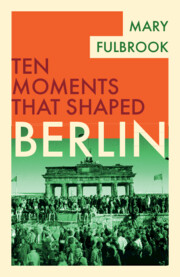
Now capital of the Federal Republic of Germany, Berlin rose from insignificant origins on swampy soil, becoming a city of immigrants over the ages. Through a series of ten vignettes, Mary Fulbrook discusses the periods and regimes that shaped its character – whether Prussian militarism; courtly culture and enlightenment; rapid industrialisation and expansion; ambitious imperialism; experiments with democracy; or repressive dictatorships of both right and left, dramatically evidenced in the violence of World War and genocide, and then in the Wall dividing Cold War Berlin. This book also presents Berlin's distinctive history as firmly rooted in specific places and sites. Statues and memorials have been erected and demolished, plaques displayed and displaced, and streets named and renamed in recurrent cycles of suppression or resurrection of heroes and remembrance of victims. This vivid and engaging introduction thus reveals Berlin's startling transformations and contested legacies through ten moments from critical points in its multi-layered history.
Following military defeat by France in 1806 and domestic reforms in the Napoleonic era, after 1815 Berlin became capital of a larger and more important Prussian state, stretching from eastern outposts by the Baltic to western provinces in the Rhineland. As trade and industry grew, Berlin began a further striking transformation: from being primarily a princely residence and garrison town to a rapidly expanding industrial city. A new sense of German nationalism began to develop, alongside the development of bourgeois culture and associated institutions and buildings, while early industrialisation also meant the growth of an impoverished working class. Political eruptions in France in 1848 sparked unrest across central Europe, including Berlin. Following defeat of the revolutionary and nationalist movements in 1848–49, authoritarianism backed by military might prevailed over liberalism in a new period of reactionary conservatism under Chancellor Bismarck. In 1871, Bismarck brought about the unification of ‘small Germany’, excluding Austria, by policies of ‘blood and iron’.
Indian Economics’ short-term development plan aimed to harness progress in the two main sectors of the economy – industry and agriculture. The peasants, factory workers and merchants needed specific policies to aid them in growing their crops, manufacturing their products and selling their goods, respectively. India needed agricultural production of raw materials, industrial production using raw materials, and distribution of the finished manufactured products. Indian Economics prescribed a balanced growth strategy, seen later in India’s post-independence five-year plans, the first of which was implemented by Jawaharlal Nehru (1889–1964) from 1951 to 1956.
Upon the discovery of oil in 1908, the oil industry in Iran underwent a swift and extensive expansion, precipitating rapid industrialisation and significant demographic transformations that fundamentally redefined social relations, societal structures, and governance both locally and nationally. Central to these transformative processes was the development of oil towns, which emerged as crucibles of change, profoundly reconfiguring traditional lifestyles, and labour practices. This chapter delves into the complexities of managing oil production in areas not wholly subsumed under the aegis of the Iranian central government. It highlights the significant challenges encountered in cultivating a stable workforce and inculcating a culture imbued with principles of labour discipline, orderliness, and punctuality. These shifts presented formidable obstacles, especially for tribesmen traditionally engaged in nomadic pursuits, who found themselves compelled to transition to regimented forms of employment. Further, this discussion extends to the strategic recruitment and deployment of Indian workers, initially engaged for security purposes, whose roles evolved to encompass skilled, semi-skilled, and clerical positions, ultimately cementing their place as a permanent fixture within the industry. This narrative underscores the profound and multifarious impacts of the oil industry on the social and economic terrains of Iran.
Exploring the pivotal role of oil in the social and economic development of Iran between two World Wars, the era was marked by the establishment of a modern state aimed at ensuring territorial integrity and creating a homogeneous society within defined geographical borders. Such transformative efforts led to the collapse of the Qajar dynasty and the ascent of Reza Shah Pahlavi’s centralised and authoritative government. During this period, extensive social and economic development policies radically transformed the fabric of Iranian society, notably through the state’s substantial role in industrial investment, which significantly increased the number of industrial workers. Despite these broad changes, operations in the oil industry continued as initially established, resulting in dissatisfaction among both Iranian and Indian workers. This discontent gave rise to a series of labour strikes in the 1920s, underscoring the workers’ capacity to influence the shaping of civil society. Concurrently, the imperative for oil revenue coupled with the Iranian government’s insistence on employing local labour precipitated the cancellation of the D’Arcy Agreement and the signing of a new contract in 1933. A crucial term of this contract was the ‘Iranianisation’ of the workforce, which gradually increased the presence of skilled Iranian workers within the industry. This strategic shift not only redefined employment and living conditions but also facilitated the expansion of oil towns, where policies of ethnic and employment segregation were widely implemented, reflecting the broader national goals of integration and societal standardisation.
Chapter 35 examines Goethe’s awareness of the impact of human activity on the physical environment and his often prescient depictions of damage to natural systems. These are shaped by a range of perspectives and experiences, from Goethe’s work as a civil servant, to his scientific study, to his lifelong passion for nature. The chapter traces two themes in particular that run through his literary work: first, flooding, and second, fire and the destruction of forests. It also examines Goethe’s historical position, between the pre-industrial world and capitalist modernity.
Chapter 32 considers the question of modernity as explored in Goethe’s Faust. In his hands, the cast of mind of the restless central character constitutes an analogy of modernity. The chapter argues that the duo of Faust and Mephistopheles epitomises the mood of Goethe’s own time, which paved the way for the modern industrial era. It demonstrates that Part I radicalises the revolt against tradition which is an essential part of the original Faust legend, while Part II thematises incipient capitalist economics and the manipulation of nature through technology.
Shanghai is often seen as the exemplar of Chinese cosmopolitan modernity, including gender and sexual progressiveness under Western influence. This chapter argues that Shanghai’s cosmopolitanism is also rooted in migration, activism, and state policies. The early reforms of patrilineage coincided with influxes of migrants and refugees, who constituted the majority of Shanghai’s urban population. As the hotspot for China’s industrialization, women’s economic empowerment and social activism occurred almost simultaneously. The semi-colonial status of Shanghai before 1949 that protected groups such as the Chinese Communist Party (CCP) in extra-territorialities also made possible the survival of sexual minorities. These historical and social conditions created an urban environment that has made negotiations of the most intimate aspects of human life both possible and difficult. Shanghai as the pioneer of gender equality and sexual modernity in China must be viewed through those intimate negotiations, in which people transform the definitions of freedom, belonging, and modernity.
This paper presents a unique database that explores how industrialisation affected municipalities' incomes, expenditures and education spending. Using the importance of the mines and steelworks in Biscay in northern Spain between 1860 and 1910 as indicators of industrialisation, the findings show that there was a positive relationship between these dimensions and towns' incomes, which was indirectly transmitted to municipalities' expenditures, showing that municipalities were able to benefit from industrialisation. However, the thriving mining and metallurgy sectors did not support an increase in education spending. The lack of short-term results from spending on education may have led town councils to divert the revenues of industrialisation into more urgent areas, or those that could deliver faster results.
Technological development typically has outcomes that can be perceived as both positive and negative for humanity. In a capitalist society, the benefits of new technology are often evaluated in economic terms, whereas the negative impacts are often evaluated in social, health-related or environmental terms – the externalities of conventional economics. The benefits of a new technology are often immediately obvious, while the negative consequences appear rather later. In this chapter, we examine four areas of major development or change: industrial technology, agricultural technology, medical technology, and digital and communication technology. Each has had, and continues to have, a significant impact on individuals, families, communities and societies, as well as on the understanding and practice of social work. These are discussed using the questions identified above: Who owns? Who uses? Who or what benefits? Who or what loses? This allows us to consider their implications for social work and for the re-imagining of social work in the twenty-first century.