To save content items to your account,
please confirm that you agree to abide by our usage policies.
If this is the first time you use this feature, you will be asked to authorise Cambridge Core to connect with your account.
Find out more about saving content to .
To save content items to your Kindle, first ensure no-reply@cambridge.org
is added to your Approved Personal Document E-mail List under your Personal Document Settings
on the Manage Your Content and Devices page of your Amazon account. Then enter the ‘name’ part
of your Kindle email address below.
Find out more about saving to your Kindle.
Note you can select to save to either the @free.kindle.com or @kindle.com variations.
‘@free.kindle.com’ emails are free but can only be saved to your device when it is connected to wi-fi.
‘@kindle.com’ emails can be delivered even when you are not connected to wi-fi, but note that service fees apply.
In this chapter, the subjection of the Israelites in Egypt and their later liberation from oppression is examined with extracts from the Hebrew Torah, and the Greek Septuagint. The vocabulary of servitude of both Hebrew and Greek is discussed through the account of Joseph’s service and disgrace in the house of Potiphar, followed by the suffering of the Israelites, the later descendants of Jacob. The oppression inflicted by the Egyptians and their pharaoh on the Israelites in Egypt is to be seen in their forced labour in making bricks and construction work. Liberation involved leaving the country together, under the leadership of Moses. A final section examines a few further literary texts dating from the Hellenistic and Roman periods that treat related Jewish subjects.
This summary chapter focuses on the tensions that characterized the political histories of Southeast Mesoamerica. At the heart of these contradictions are the majority’s strategies to protect their autonomy in the face of those who sought to centralize power and build hierarchy by promoting the rank and file’s dependence on them for essential goods, symbols, and practices. Schemes to concentrate power by reconfiguring extant social nets and the movement of resources through them were met by countermeasures of the intended victims, who redirected needed assets to their projects by working within social networks of their own making. Oscillations between centralizing and decentralizing tendencies occurring at multiple scales resulted from these contests. Shifts in the availability of resources among competitors presented opportunities for the formation of new political arrangements comprised of novel social webs enacted through unprecedented practices. Thus, as diverse agents sought their often contradictory aims, assets derived from multiple origins came to constitute the lives of people of all ranks living across wide swaths of Southeast Mesoamerica.
In this chapter tomb paintings join the selection of texts (preserved on stone, papyrus, and leather) to show the role of dependence as a structural feature of pharaonic society. Foreigners were acquired through raiding and warfare, and settled in both existing and new communities. An actual trade in persons is also documented and varying aspects of the experience of such individuals is examined, as they were exploited by those who purchased them or passed them on as gifts. Changes over time in the vocabulary of dependence are discussed, as are the different types of work and production in which such dependents were involved. Non-free dependents were employed on the land, in animal herding, and in artisanal workshops, especially textiles, as well as in the home. The key economic role of Egyptian temples is a constant feature of the period.
The Naco and Middle Chamelecón’s political histories continued to diverge from patterns seen elsewhere in the Southeast during the ninth through tenth centuries. Political fragmentation in the Naco valley was accompanied by the proliferation of craft specialization. Specialized manufacture, though still pursued at La Sierra, was no longer restricted to the capital. Just about every known rural homestead was engaged in one or more forms of manufacture, exchanges of surpluses constituting a matrix of social networks that bound all valley residents together in relations that were more heterarchical than hierarchical. Differences in the scales and intensities of production did contribute to variations in the material well-being of producers; those who made more of a greater variety of goods accumulated more valuables than those who made less. Community-wide specialization in pottery production continued at Las Canoas even as signs of centralized power vanished there. Las Canoas’ potters exchanged their output with the Naco valley’s residents, though they were seemingly disadvantaged in those dealings. This vital system of production and exchange ended by CE 1000.
We review here the scant evidence pertaining to the early arrival of people in Southeast Mesoamerica and what is presently known about the timing and nature of the first efforts to domesticate plants in the area. Most of the chapter summarizes the different forms that sociopolitical complexity took in the Southeast during 1600–400 BCE. It was during this period that the first monumental platforms were raised in the area, suggesting the emergence of leaders who could plan these projects and command the labor to complete them. While such constructions speak to a modicum of political centralization, they did not necessarily signify the existence of hierarchies. People in different areas thus used similar things, such as large buildings, to craft different, locally specific power relations. Such variety sets the stage for the different political histories that will take shape in the coming centuries.
This chapter introduces the following corpus of texts from ancient Egypt, and outlines the differing meanings ascribed to slavery and dependence from antiquity to modern times. The terms used for dependents and slaves in the various languages of the texts translated here – Egyptian (Hieroglyphic, Hieratic, Demotic, and Coptic), Greek, and Arabic – are briefly presented, and defining features of the condition of those so labelled are discussed. How and from where such persons were acquired, their life experiences, and the different forms of exploitation in which they were involved are introduced, as are forms of slave resistance and limits to the archaeological and textual evidence available, and so to what we can learn from it.
This chapter considers processes of political centralization, hierarchy building, and social differentiation that were initiated and sustained by agents who, from CE 600–800, operated in realms that were not in direct contact with representatives of the Copán state. In general, the creation of sociopolitical complexity in each case involved the selective acquisition and use of goods and ideas from various sources, including but not limited to the Maya lowlands, in strategies designed to advance the interests of a few elites over those of their immediate subordinates. The latter, in turn, transformed their domestic arrangements as they sought to maintain as much autonomy as they could in the face of these threats. The resulting changes often involved increased involvement in craft production and possibly market exchanges as those facing onerous elite demands for tribute sought novel means to counter them. The outcome was a dynamic set of political relations that operated at multiple spatial scales and which were animated by people of all ranks who mobilized diverse resources secured through overlapping social networks from various sources to exercise power in all its forms.
This chapter summarizes the diverse natural environments from which Southeast Mesoamerica’s inhabitants variably drew the resources they used in forging their distinct but interrelated histories. We then review how archaeologists have approached the study of those histories. In particular, we relate the relative lack of interest that researchers exhibited in the area’s ancient inhabitants to trends in anthropological and archaeological theory that pertained throughout much of the twentieth century. Especially important were the efforts of investigators to define the borders of lowland Maya civilization and the relegation of those living beyond those limits in the Southeast to a frontier or periphery whose residents were largely enthralled and dominated by the accomplishments of their lowland Maya neighbors. Ancient Southeast Mesoamerican developments were, thus, understood as pale reflections of, and largely inspired by, events instigated by lowland Maya rulers. The legacy of this approach for our understanding of Southeast Mesoamerica’s Pre-Columbian past is long and pervasive, an issue that is also addressed within this section.
Two major forms of political organization emerged in Southeast Mesoamerica during the last Pre-Columbian centuries. One, prevalent throughout western Honduras, saw power weakly concentrated in the hands of leaders who ruled small domains together with councils comprised of lesser elites. The boundaries of these realms were fluid, interelite alliances combining several independent domains into larger units that often fragmented at the deaths of their creators. The other, found mostly in El Salvador, was characterized by highly centralized, hierarchically structured states ruled from small cities. Whereas the former mode of governance was of autochthonous origins, the latter is attributed to Pipil migrants from further west in Mesoamerica. After describing these patterns, the chapter recounts developments in the Naco valley that diverge from the aforementioned political tendencies. The Naco experiment was shaped by persistent tensions among elite factions and between rulers and their subordinates that ultimately resulted in a form of corporate, or councilor, rule. Resources from far and near played key roles in shaping these political contests and their outcomes.
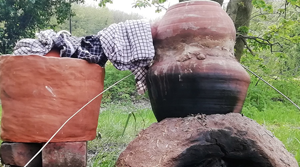
This article engages with certain peculiar finds and features that we have documented at former German WWII military camps in Finnish Lapland, with a particular emphasis on an excavated assemblage that has affinities to traditional ritual (sacrificial) practices. The relevant finds and features date from the post-war period, but they are meaningfully associated with WWII sites. We consider the possible connections of these finds and features to folk magic and the supernatural, especially with regard to boundaries and boundary-making. The material is interpreted in relation to the painful histories and memories of WWII in the high North, and in the broader context of northern ways of life and being and perceptions of temporally layered landscapes. More specifically, we focus on how locals have coped with the difficult and haunting presences of WWII in northern landscapes and mindscapes after the war in a particular natural, cultural and cosmological lived environment which people have long co-inhabited with various non-human and spiritual entities. We aim to contribute to the broader discussion of the folklore of WWII as a dimension in conflict heritage and memory.