To save content items to your account,
please confirm that you agree to abide by our usage policies.
If this is the first time you use this feature, you will be asked to authorise Cambridge Core to connect with your account.
Find out more about saving content to .
To save content items to your Kindle, first ensure no-reply@cambridge.org
is added to your Approved Personal Document E-mail List under your Personal Document Settings
on the Manage Your Content and Devices page of your Amazon account. Then enter the ‘name’ part
of your Kindle email address below.
Find out more about saving to your Kindle.
Note you can select to save to either the @free.kindle.com or @kindle.com variations.
‘@free.kindle.com’ emails are free but can only be saved to your device when it is connected to wi-fi.
‘@kindle.com’ emails can be delivered even when you are not connected to wi-fi, but note that service fees apply.
The floating dendrochronological sequence of pine wood from Józefowo, N. Poland was expected to cover the ∼660 BC radiocarbon (14C) excursion. The sequence was radiocarbon dated using the OxCal wiggle matching procedure and the IntCal20 calibration curve. 14C concentrations were measured in one-year α-cellulose samples from around 660 BC. The published data on the ∼660 BC 14C excursion from Grabie, Poland were used to absolute date the Józefowo chronology with 1-year accuracy. The results confirm the occurrence of a rapid increase in Δ14C in 664/663 BC and its potential to be used as a fixing point for floating dendrochronological sequences.
The Tyrolean ice mummy known as Ötzi presents some of the earliest direct evidence of tattooing in the human past. Despite decades of study, it remains unclear how the Iceman's tattoos were created and what tools and methods were used. Popular discussions of the Iceman describe his tattoos as having been made by incision, first cutting the skin and then rubbing in pigment from the surface. The authors review the scholarly literature on the Iceman's tattoos and summarize ethnographic, historic, and anthropological research on global patterns of tattooing to contextualize the Iceman's marks within pre-electric tattooing traditions. The results of recent experimental tattooing studies are then compared to the physical signature of the Iceman's marks to evaluate existing claims and provide informed hypotheses as to how those tattoos were created.
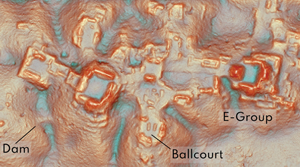
Relative to the centuries preceding and following it, the tenth century a.d. in Mesoamerica is poorly understood by scholars. Although there is some regional variation in the timing of these events, archaeologists commonly ascribe a pattern of political decline, dynastic collapse, or social reorganization to this period. Paradoxically, increasing interregional interactions and emergent market exchange networks are also characteristics of macroregional patterns during the tenth century. These contradictory phenomena contribute to confusion surrounding interpretations of this transitional time. This article contributes a comparative dataset from systematic archaeological investigations of El Coyote, a monumental center in the lower Cacaulapa valley, Department of Santa Barbara, Honduras. The late occupational phase contains evidence for Early Postclassic chronological markers, including Tohil Plumbate pottery; obsidian from Pachuca, Hidalgo; and copper metallurgy. Calibrated radiocarbon assays with a 2σ error place these contexts between a.d. 710 and 1040, with a clustering of intercepts circa a.d. 900. These results are consistent with a pattern described throughout Mesoamerica and demonstrate that despite variation in the use of cultural terminology—Epiclassic, Terminal Classic, or Early Postclassic—there is uniformity in the timing of this macroregional interaction.
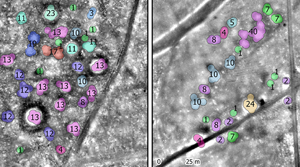
This study presents the first extensive radiocarbon dating programme of Bronze Age material from northern Germany, and it combines radiocarbon dates, relative typo-chronological date ranges, and stratigraphic data within a Bayesian chronological framework. We estimate the cemetery complex at Mang de Bargen (Bornhöved, distr. Segeberg, Schleswig-Holstein) to be in use for more than two millennia, which is exceptionally long in northern Germany and in a wider European context. The site provides a unique insight into the dynamic nature of burial monuments and associated burial practices, from the Late Neolithic and into the Pre-Roman Iron Age (c. 2500–50 bc). The barrow building tradition lasted around a millennium (c. 2350 –1300 bc), with several barrows in concurrent use. The barrows were persistently re-used as burial ground, both within ‘living memory’ of the primary graves, but also long after. The burial intensity varied over the cemetery’s use-life, with distinct peaks in the Late Neolithic, when the first barrows were erected; in the Older Bronze Age when more barrows were erected; in the Younger Bronze Age, when secondary cremation graves were added to existing barrows; and finally in the Pre-Roman Iron Age, with the addition of an urnfield. The funerary rituals vary considerably over the period: from inhumation to cremation, and from primary and secondary graves in barrows to flat graves. Cremation was introduced in the 14th century bc but inhumation and cremation were used in parallel for around a century before the former ritual was abandoned c. 1300 bc. The study provides absolute chronological distributions of the grave types present at Mang de Bargen and shows them to be comparable to other sites at a regional and over-regional scale, successfully demonstrating how new types were quickly adopted across large parts of north-western Europe.
Biophysical conditions played a fundamental role in early human colonization of insular territories, particularly in food-producing societies dealing with limited resources and the challenges of maintaining a sustainable carrying capacity. Studies on past human colonization of small oceanic islands thus offer insights into economic plasticity, ecological impacts, and adaptation of early food-producing groups. On the coast of southern Chile, early evidence is dated to 950 cal BP of island colonization by coastal populations with mainland subsistence systems based on the exploitation of marine resources, along with gathering, managing, and cultivating plants and hunting terrestrial animals. Strikingly, the extent to which these mixed economies contributed to insular colonization efforts is largely unknown. Here we used organic residue analysis of ceramic artifacts to shed light on the subsistence of populations on Mocha Island in southern Chile. We extracted and analyzed lipids from 51 pottery sherds associated with the El Vergel cultural complex that flourished in southern Chile between 950 and 400 cal BP. Chemical and stable isotope analysis of the extracts identified a range of food products, including C3 and C4 plants and marine organisms. The results reveal the central role of mixed subsistence systems in fueling the colonization of Mocha Island.
Representations of wounded animals and humans in European Upper Palaeolithic art have traditionally been conceived as figures related to the hunting activities of hunter-gatherer societies. In this paper, we propose an analysis of Franco-Cantabrian figurative representations showing signs of violence between 35,000 and 13,000 cal. bp to qualify the interpretations of hunting and death in Palaeolithic art. To this end, both multivariate statistical analyses and hypothesis tests have been used to highlight the formal, thematic, chronological and regional similarities and differences in these types of artistic representations. The results show that wounded graphic units are mythograms coded by different variables that do not seem to reflect the actual hunting of the animal, but rather a more complex meaning. It was also discovered that, in early times, the artist preferred to wound secondary or less frequent animals, like deer. This changed in more recent times, when the main animals, such as bison, are wounded under greater normativity and homogeneity in the Pyrenees or the Cantabrian region.
Drawing upon iconological theory, this article argues that mirrors and blood were regarded as a conceptually linked pair within the imperial ideology of Teotihuacan, Mexico from the second century onward. The relationship between blood and mirrors is shown to have codified with the construction of the Pyramid of the Feathered Serpent, Teotihuacan's third largest edifice. This monument's facade was adorned with hundreds of monumental sculptures of oracular mirrors, some number of which incorporated actual mirrors formed of obsidian. I demonstrate that the Teotihuacan mirror sign took obsidian, a form of black volcanic glass that was intensively worked in the city, as a key referent. This monument was also the site of a historically large human sacrifice of more than 200 individuals, an event argued here to have involved bloodletting with obsidian knives and blades. I note that Teotihuacan interest in the mirror icon increased in concert with the city's residents’ application of the reflective material of obsidian to warring and other blood-spilling behaviors. The mirror icon evoked both obsidian as a radiant material, as well as obsidian's potential for application to forceful martial actions. The article concludes that this icon in part signified imperial force, which was made real through the weaponization of the smoking glass.
The waterscape, including the sea, rivers, and lakes, was highly important to communities living during the Nordic Early Bronze Age (1800/1700–1100 bc). Waterways acted as highways that facilitated journeys, trade, and warfare, enabling maritime warriors and others to distinguish themselves. This is reflected in the maritime location of rock art and important Early Bronze Age burials, which have been used to reconstruct the Nordic Bronze Age cosmology. This centres on the journey of the sun across the sky during the day, and the underworld during night. This article analyses the use of water-related resources, such as seaweed, petrified organics, beach pebbles, and molluscs, in the construction of burials, which has received little attention despite renewed interest in the maritime seascape. The data demonstrate that local communities used different resources, indicating that a common belief system was realised in local differences. These marine materials were collected from the beach, which can be conceptualised as the liminal zone between the land of the living and the sea of the dead. It is suggested that these materials, in line with other funerary practices, helped to guide the recently deceased into the afterlife in the sea.
This paper presents an approach to the study of European Iron Age ethnicity, a core topic for several decades which has begun to lose interest in the last years. A review of some of the uncertainties involved in the archaeology of ethnicity, focused on several key issues, is proposed. Moreover, some relevant topics that are usually undermined are suggested in order to address new challenges in the discipline: the introduction of political identity as a major focus of study, the reassessment of the etic perspective as an inner part of processes of collective differentiation, or the need for a holistic approach to join and combine different forms of expression. Finally, these approaches will be explored in a case study based on the northwest of the Iberian peninsula. This region has been chosen because of the feasibility of combining the results of different studies about social and political organizsation with relevant textual evidence to extract information about their ethnic dynamics.
Scholars of the past frame the ‘origins’ or evolution of inequality, usually using archaeological or anthropological evidence as a basis for their arguments, as an intentional, inevitable, important step towards the development of states, implicitly framed as the pinnacle of human political and economic achievement. Anarchist archaeologies reject the idea of hierarchy as a positive or inevitable evolutionary outcome underlying the path to civilization. We argue instead for a radical reorientation towards archaeologies of equality. We propose a prefigurative archaeology that celebrates the myriad ways that human beings have actively undermined and resisted hierarchical social arrangements. We aim to reorient archaeology's focus towards societies that purposefully prevented or constrained the emergence of inequality. To demonstrate the potential of archaeologies of equality we present case examples from Oceania, Britain, West Asia and the American Southwest. Highlighting the accomplishments of societies of equals in the past demonstrates the contingency and problematic nature of present forms of inequality. It allows us to explore a different set of pasts and thus enact different presents as we imagine different futures.
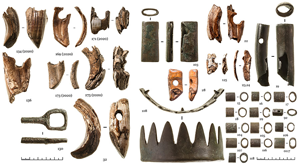
Lack of contextual evidence for the use of small personal ornaments means that much of our understanding of ornamentation traditions within archaeological cultures is reconstructed from ethnographic comparisons. New in situ finds from the areas around the ears and mouth in burials at Boncuklu Tarla, a Neolithic settlement in Türkiye, add a novel dimension to the interpretation of stone ‘tokens’ or ‘plugs’. This article presents a new typology for these artefacts and argues for their use as ear ornaments or labrets in a practice involving significant and lasting corporal alteration.
Excavations at the site of Tell el-Retaba since 2007 have revealed an extensive settlement and associated material culture dating from the Third Intermediate Period (1070–664 BC). This work represents the only large-scale investigation into domestic archaeology from this period in Egypt and the results offer important insights into aspects of urban life for an under-studied phase of Egyptian history.
Los otáridos fueron recursos críticos para muchas sociedades costeras de Sudamérica. Se han propuesto diferentes estrategias para la explotación de esta presa, que parten principalmente de considerar parámetros ecológicos sobre su distribución y comportamiento y que pueden ser examinados según la especie, la edad y el sexo de los especímenes identificados en el registro arqueológico. En este trabajo partimos de estos criterios para analizar la representación de restos de otáridos en conjuntos zooarqueológicos de diferentes espacios del sur de Tierra del Fuego. Los resultados indican que se implementaron estrategias similares de explotación en toda el área, aún donde se presumen condiciones geográficas, culturales y ecológicas diferentes en la relación humano-otárido. A partir de los resultados se examinan algunos aspectos analíticos sobre la identificación zooarqueológica de individuos lactantes y la caracterización de la forma de explotación de esta presa según el tipo de apostadero y su distribución en el ambiente actual.
This Element volume provides an up-to-date synthesis of the archaeology of the Roman conquest, combining new theoretical and methodological approaches with the latest fieldwork results. Recent advances in conflict archaeology research are revolutionising our knowledge of Rome's military campaigns in Western and Central Europe, allowing scholars to reassess the impact of the conquest on the indigenous populations. The volume explores different types of material evidence for the Roman wars of conquest, including temporary camps, battlefields, coinage production, and regional settlement patterns. These and other topics are examined using four case studies: Caesar's Gallic Wars, the Cantabrian and Asturian Wars, the Germanic Wars of Augustus, and the Roman conquest of Britain. By focusing on the 'dark sides' of the Roman expansion and reclaiming the memory of the conquered, the Element aims to contribute to a more holistic understanding of the processes of incorporation and integration into the Roman Empire.
This Element presents emerging concepts and analytical tools in landscape archaeology. In three major sections bookended by an Introduction and Conclusion, the Element discusses current and emerging ideas and methods by which to explore how people in the past engaged with each other and their physical settings across the landscape, creating their lived environments in the process. The Element reviews the scales and temporalities that inform the study of human movements in and between places. Learning about how people engaged with each other at individual sites and across the landscape deep in the past is best achieved through transdisciplinary approaches, in which archaeologists integrate their methods with those of other specialists. The Element introduces these ideas through new research and multiple case studies from around the world, culminating in how to 'archaeomorphologically' map anthropic constructions in caves and their contemporary environments.
This study examines seascape depictions on pottery, including seafaring and sea creature scenes, from the 1896–9 excavations at Phylakopi on Melos, held in the National Archaeological Museum of Athens. This analysis demonstrates that seascape scenes varied in character through time and were typically associated with vessel shapes connected to the pouring of liquids between Early Cycladic (EC) III and Middle Cycladic late and were later focused on basins. A focus on seafaring is evident in EC III, while later the iconographic focus on the sea concentrates on sea creatures. An iconographic interest in the sea, alongside that of birds and floral depictions, is suggestive of an interest in living forms that inhabit different places to humans (i.e., non-domestic) with different corporeality to humans. This research contributes further to the growing debate on human–animal/plant relationships and ontologies in the Aegean Bronze Age.
During the Middle Horizon (AD 600–1000), obsidian was transported in greater quantities and distances than ever before identified in the Andes, in part by the expansionary Wari state. Two of the three major obsidian sources used in the south-central Andes are located in the modern department of Arequipa, Peru. Arequipa was a region of intense Wari influence and intrusive presence; however, little is known about regional obsidian use. Portable X-ray fluorescence (pXRF) and laser ablation-inductively coupled plasma-mass spectrometry (LA-ICP-MS) were used to analyze 383 obsidian artifacts recovered from 10 archaeological sites in Arequipa. Results highlight diachronic and spatial patterning related to obsidian procurement strategies, state versus bottom-up exchange networks, and local participation within the Wari realm. A wide variety of geological obsidian sources, including nonlocal obsidians originating from Wari's Ayacucho heartland, were used. By the late Middle Horizon, the Wari had consolidated regional resources with the sole use of Alca-1 and Alca-4 bedrock obsidians, the largest-sized and highest-quality sources in the area. We assess related models of obsidian procurement and exchange related to state political economy, long-distance caravan activity, and the role of local ceremonial/waystation centers that facilitated the flow of ideas, goods, and people across Arequipa.
As regional chronologies become better defined, we are better able to track large-scale population movements and related cultural change. A dataset of 156 radiocarbon dates from the Middle Cumberland Region (MCR), evaluated with 199 more dates from the Ridge and Valley portions of northern Georgia and East Tennessee, enable modeling of population movements from the Central Mississippi Valley into the MCR, as well as subsequent movements and effects in the Ridge and Valley between AD 1200 and 1450. The dissolution of Cahokia is of particular interest, because the MCR falls geographically between the American Bottom and the Ridge and Valley province. This large-scale chronological perspective places key events in this part of the Southeast and Midwest into a unified historical framework that increases our understanding of the timing of cultural events. A related goal is to sort out possible external events and influences that may have affected this large region. This study makes apparent the relationships between cultural events and natural events, such as the drought sequences reported for the Central Mississippi Valley and beyond.
This article examines a new dataset of radiocarbon dates that provides insights into the progressive installation of Inca infrastructure in the Copiapo Valley, situated at the southern edge of the Atacama Desert in northern Chile. It shows that the Inca imperial expansion in this region was not a linear process and was likely shaped by local negotiations and conflicts. The findings describe three main stages of Inca expansion. The first is the construction of the North–South Inca Road and the establishment of high-altitude mountain shrines. The next stage consisted of a physical intervention in a local village located in the upper valley, including the construction of administrative buildings and public spaces. The last stage involved indirect intervention in local villages, characterized by the presence of isolated administrative buildings that were potentially used for diplomacy and negotiation. I argue that the Inca imperial expansion, characterized by evolving strategies across regions and time periods, not only demonstrates the state's capacity for learning but also suggests the pivotal role of local actors in positions of power who wielded agency to shape these developments.