To save content items to your account,
please confirm that you agree to abide by our usage policies.
If this is the first time you use this feature, you will be asked to authorise Cambridge Core to connect with your account.
Find out more about saving content to .
To save content items to your Kindle, first ensure no-reply@cambridge.org
is added to your Approved Personal Document E-mail List under your Personal Document Settings
on the Manage Your Content and Devices page of your Amazon account. Then enter the ‘name’ part
of your Kindle email address below.
Find out more about saving to your Kindle.
Note you can select to save to either the @free.kindle.com or @kindle.com variations.
‘@free.kindle.com’ emails are free but can only be saved to your device when it is connected to wi-fi.
‘@kindle.com’ emails can be delivered even when you are not connected to wi-fi, but note that service fees apply.
Coccidioidomycosis is an infectious fungal disease endemic in Bolivia's Gran Chaco region that is caused by inspiration of the spores of Coccidiodes species. It is a respiratory pathology that can spread to the skeleton and produce diffuse lytic lesions in different parts of the body. This disease has rarely been described in historic populations, and we present here a new case of coccidioidomycosis in a mummified human individual. It corresponds to a female individual with an age at death of 25–35 years, dated to the Tiwanaku epoch of the thirteenth century AD. It was found inside a sepulchral cave near the city of Ulloma in western Bolivia. Radiographic examination shows numerous osseous lytic lesions with central cavitation concentrated on the cranial table and vertebral bodies. The observed condition could correspond to the secondary phase of coccidioidomycosis. This diagnosis is noteworthy because coccidioidomycosis was mainly described as a male work-related disease and has never been found in ancient western Bolivia.
The prints, negatives and albums in the British School at Rome's Thomas Ashby Photographic Archive are a rich assortment of materials created by Ashby and his colleagues, such as Agnes and Dora Bulwer. The archive was the natural and spontaneous product of Ashby's personal and working life and it was not until after his death that it was transferred into the public institutional domain. This article investigates the original intention of Ashby's archive, its transfer from a private to public context, and its subsequent evolution and reception. Building on the work of previous BSR staff and scholars, the article looks at Ashby's archive from a fresh perspective, emphasizing the need to consider the archive's original non-public authorial intent, its polyphonic elements, and the diachronic nature of its formation and reception from Ashby's time to the present. Given that images within photographic archives are now regularly viewed as digital objects, this is a timely discussion of the nature of private photographic archives that have been moved into the public domain. It is now more important than ever that archives like Ashby's are acknowledged as entities with detailed and complex histories, and that these histories are taken into account when viewing the individual photographs within the archive.
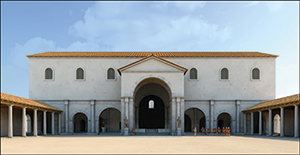
A 3D reconstruction of the principia at Novae (Bulgaria) allows modelling of the inscribed statues, altars and building stones as they used to look. By restoring the inscribed monuments to their original contexts, the model means that Roman military religiosity and its messages can be analysed in the legionary headquarters.
Cantabrian cave art is familiar from photographs reproduced in textbooks, but these two-dimensional images do not capture the irregularities of the rock surfaces on which animals and other designs were painted or engraved. Here, the authors use stereoscopic photography to review the parietal art of La Pasiega cave. By documenting the uneven surfaces of the cave's walls alongside painted and engraved marks, they identify new animal figures and reinterpret others, previously thought to be partial representations, as complete. The results show the positioning of animal figures to make use of concave/convex surfaces and rock edges to define the outlines of animals, reinforcing the need to record and interpret cave art three-dimensionally.
We have conducted radiocarbon (14C) dating of Japanese tree rings from 1053 to 921 BCE and 41 BCE to 130 CE. Dating was also performed using oxygen isotope dendrochronology to investigate subtle structures of the calibration curve corresponding to the beginning and the end of the Yayoi period in Japan. These two results followed IntCal20, which included the 14C ages of two Japan-sourced trees. The findings suggest that dating of specimens obtained from areas around the Japanese archipelago may be affected by periodic monsoons from the ocean, an effect that needs further examination.
As there exists a growing demand for chronological research and tracer applications using radiocarbon (14C) analyses of samples smaller than 100 μg C, a compact micro-specific hydrogen graphitization method has been developed at the Xi’an Accelerator Mass Spectrometry (AMS) Center. This article describes the performance of the system and the mass of carbon background produced during ultra-small sample preparation. Furthermore, we discuss the results of contamination corrections and perform 14C analyses on small samples with known age or reference values. The results reveal that our 14C analysis of ultra-small samples of 10–100 μg C can obtain accurate and reliable results, and the micro-scale 14C-AMS analysis technique meets our research objectives for dating and tracer applications.
In 1885, during excavations on the southwest slope of the Quirinal Hill, two magnificent Hellenistic bronzes were discovered by Rodolfo Lanciani. Although Lanciani dated the burial of the bronzes to the era of the barbarian attacks on the city of Rome, here it will be argued that the bronzes may have been excavated elsewhere by clandestine diggers and then reburied on the Quirinal slope, in a stash of robbers’ loot. Utilizing newly located archival sources that shed fresh light on the excavation, and interrogating Lanciani's published accounts of it, this paper presents a case study of this small area of the hill. This leads in turn to an investigation of Lanciani's practice as a cartographer in plate XXII of his Forma Urbis Romae where the hillside was subsequently depicted. Plate XXII has a wider relevance for any user of the FUR because a close analysis of this one plate suggests that Lanciani's representation of the southwest Quirinal is dominated by a cartographic rhetoric. This is composed of significant omissions, obfuscations and graphic hierarchies all of which are employed to influence and manipulate the reader. It is argued that plate XXII of Lanciani's map is a persuasive rendering rather than a disinterested record of the ancient structures that were found buried there. This has significance for any reader of the FUR.
Indigenous communities globally are challenged by threats to heritage resources due to residual effects of colonization, outsider encroachment on traditional spaces, and economic and political inequities. The effects of climate change add another dimension to these challenges, not only by altering familiar ecosystems and landscapes but also through the destruction of Indigenous heritage spaces. The University of Maine's Northeast archaeology program supports Indigenous resilience to climate change through community-engaged approaches to archaeological research. Recent shell heap research at the Holmes Point West site in Machiasport, Maine, exemplifies these efforts by blending archaeological science with service through Passamaquoddy language preservation and community engagement. This article discusses the University of Maine's partnership with the Passamaquoddy Nation and reflects on the nexus of Indigenous archaeology, heritage protection, and climate change resilience.
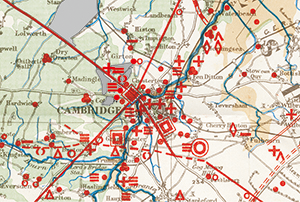
Cyril Fox's publication The archaeology of the Cambridge region (1923) is celebrated as a milestone in the development of landscape archaeology. Its centenary invites reflection on Fox's approach to landscape and on the development of knowledge about the archaeology of the Cambridge region over the intervening years. Here, the authors compare the evidence available to Fox with the results of three decades of development-led archaeology. The latter have revealed very high numbers of sites, with dense ‘packing’ of settlements in all areas of the landscape; the transformation in knowledge of clayland areas is particularly striking. These high-density pasts have far-reaching implications for the understanding of later prehistoric and Roman-period land-use and social relations.
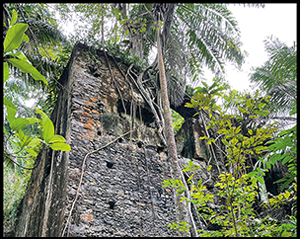
Praia Melão, the largest sugar mill and estate in São Tomé, active from the sixteenth to the nineteenth centuries, is the first archaeological site ever investigated on the island. It embodies the inception of the plantation economic system predicated on the labour of enslaved people and of local resistance.
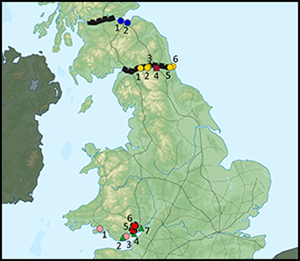
How did the Roman Empire supply and maintain its frontier garrisons? What was the impact on populations and landscapes of conquered territories? The Feeding the Roman Army in Britain project will answer these questions by establishing how soldiers were provisioned and how frontiers operated as economic as well as militarised zones.
GIRI (Glasgow International Radiocarbon Intercomparison) was designed to meet a number of objectives, including to provide an independent assessment of the analytical quality of the laboratory/measurement and an opportunity for a laboratory to participate and improve (if needed). The principles in the design of GIRI were to provide the following: (a) a series of unrelated individual samples, spanning the dating age range, (b) linked samples to earlier intercomparisons to allow traceability, (c) known age samples, to allow independent accuracy checks, (d) a small number of duplicates, to allow independent estimation of laboratory uncertainty, and (e) two categories of samples—bulk and individual—to support laboratory investigation of variability. All of the GIRI samples are natural (wood, peat, and grain), some are known age, and overall their age spans approx. >40,000 years BP to modern. The complete list of sample materials includes humic acid, whalebone, grain, single ring dendro-dated samples, dendro-dated wood samples spanning a number of rings (e.g., 10 rings), background and near background samples of bone and wood. We present an overview of the results received and preliminary consensus values for the samples supporting a more in-depth evaluation of laboratory performance and variability.
The distribution and hybridization of ceramic vessels provide insights into how local elites and imperial officials navigated imperial expansion. This article presents data on ceramic sherds from the sites of La Centinela and Las Huacas in the Chincha Valley that date to the period of Inca occupation (AD 1400–1532). In Chincha, the Inca established a style of joint rule in which Inca and local authority were closely aligned. The ceramic data demonstrate that Inca imperial designs and diagnostic shapes were most numerous in contexts associated with direct Inca presence and that the types of vessels and designs that elites used to develop their authority differed among the contexts: hybrid material culture thus varied throughout the Chincha Valley. These different hybrid material cultures include state-sponsored hybrid wares (Inca vessels, on which the Inca intentionally integrated Chincha designs) and local vessel shapes on which elites used Inca symbols and vessel shapes to assert their status to a mostly local audience.
Participating in an archaeological field school is one of the only educational experiences that nearly all professional archaeologists have during their training. As a result, field schools are uniquely suited to provide experiential education in emerging skills that all archaeologists will need, such as information and data literacies at all stages of the contemporary research and publishing cycle. The “embedded” librarian program in the University of New Brunswick's Downeast Maine Coastal Archaeology Field School is an effective means to deploy that focused expertise to help students better understand the relationship between fieldwork, data, and dissemination. At the same time, being in the field provides librarians with the knowledge to respond more effectively to the complex data management and research needs of archaeologists. We encourage large research projects to consider librarians as specialist members of the research team.