Refine search
Actions for selected content:
95778 results in Archaeology
RDC volume 65 issue 4 Cover and Back matter
-
- Journal:
- Radiocarbon / Volume 65 / Issue 4 / August 2023
- Published online by Cambridge University Press:
- 11 October 2023, pp. b1-b2
- Print publication:
- August 2023
-
- Article
-
- You have access
- Export citation
SPATIAL DISTRIBUTION OF FOSSIL FUEL CO2 IN MEGACITY DELHI DETERMINED USING RADIOCARBON MEASUREMENTS IN PEEPAL (FICUS RELIGIOSA) TREE LEAVES
-
- Journal:
- Radiocarbon / Volume 65 / Issue 4 / August 2023
- Published online by Cambridge University Press:
- 29 August 2023, pp. 967-978
- Print publication:
- August 2023
-
- Article
- Export citation
The future of archaeology is (still) community collaboration
-
- Article
-
- You have access
- Open access
- HTML
- Export citation
AQY volume 97 issue 394 Cover and Back matter
-
- Article
-
- You have access
- Export citation
NEW RADIOCARBON DATES FROM POLISH INLAND DUNES POINT TO PREVALENCE OF HUMAN IMPACT ON DUNE MOBILITY
-
- Journal:
- Radiocarbon / Volume 65 / Issue 4 / August 2023
- Published online by Cambridge University Press:
- 29 August 2023, pp. 1003-1015
- Print publication:
- August 2023
-
- Article
-
- You have access
- Open access
- HTML
- Export citation
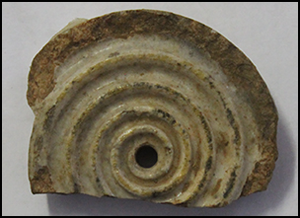
Real but unrealised: object transformations and political economy in East and southern Africa, AD 750–1250
-
- Article
-
- You have access
- Open access
- HTML
- Export citation
MARINE RADIOCARBON CALIBRATION IN POLAR REGIONS: A SIMPLE APPROXIMATE APPROACH USING MARINE20
-
- Journal:
- Radiocarbon / Volume 65 / Issue 4 / August 2023
- Published online by Cambridge University Press:
- 08 August 2023, pp. 848-875
- Print publication:
- August 2023
-
- Article
-
- You have access
- Open access
- HTML
- Export citation
-
The Marine20 radiocarbon (14C) age calibration curve, and all earlier marine 14C calibration curves from the IntCal group, must be used extremely cautiously for the calibration of marine 14C samples from polar regions (outside ∼ 40ºS–40ºN) during glacial periods. Calibrating polar 14C marine samples from glacial periods against any Marine calibration curve (Marine20 or any earlier product) using an estimate of ${\rm{\Delta R}}$, the regional 14C depletion adjustment, that has been obtained from samples in the recent (non-glacial) past is likely to lead to bias and overconfidence in the calibrated age. We propose an approach to calibration that aims to address this by accounting for the possibility of additional, localized, glacial 14C depletion in polar oceans. We suggest, for a specific polar location, bounds on the value of ${\rm{\Delta }}{{\rm{R}}_{20}}\left( {\rm{\theta }} \right)$ during a glacial period. The lower bound ${\rm{\Delta R}}_{20}^{{\rm{Hol}}}$ may be based on 14C samples from the recent non-glacial (Holocene) past and corresponds to a low-depletion glacial scenario. The upper bound, ${\rm{\Delta R}}_{20}^{{\rm{GS}}}$, representing a high-depletion scenario is found by increasing ${\rm{\Delta R}}_{20}^{{\rm{Hol}}}$ according to the latitude of the 14C sample to be calibrated. The suggested increases to obtain ${\rm{\Delta R}}_{20}^{{\rm{GS}}}$ are based upon simulations of the Hamburg Large Scale Geostrophic Ocean General Circulation Model (LSG OGCM). Calibrating against the Marine20 curve using the upper and lower ${\rm{\Delta }}{{\rm{R}}_{20}}$ bounds provide estimates of calibrated ages for glacial 14C samples in high- and low-depletion scenarios which should bracket the true calendar age of the sample. In some circumstances, users may be able to determine which depletion scenario is more appropriate using independent paleoclimatic or proxy evidence.


BATTLING THE LION: VISUAL COMMEMORATIONS OF CRUSADE IN TWELFTH- AND THIRTEENTH-CENTURY SEALS FROM THE BRITISH ISLES
-
- Journal:
- The Antiquaries Journal / Volume 103 / October 2023
- Published online by Cambridge University Press:
- 31 July 2023, pp. 240-262
- Print publication:
- October 2023
-
- Article
- Export citation
An Introduction to Mesoamerican Philosophy
-
- Published online:
- 28 July 2023
- Print publication:
- 03 August 2023
A speleothem record of seasonality and moisture transport around the 8.2 ka event in Central Europe (Vacska Cave, Hungary)
-
- Journal:
- Quaternary Research / Volume 118 / March 2024
- Published online by Cambridge University Press:
- 28 July 2023, pp. 195-210
-
- Article
- Export citation
RADIOCARBON DATING ON ECHOMICADAS, LSCE, GIF-SUR-YVETTE, FRANCE: NEW AND UPDATED CHEMICAL PROCEDURES
-
- Journal:
- Radiocarbon / Volume 66 / Issue 5 / October 2024
- Published online by Cambridge University Press:
- 28 July 2023, pp. 1166-1181
- Print publication:
- October 2024
-
- Article
- Export citation
THE RADIOCARBON SAMPLE ARCHIVE OF TRONDHEIM
-
- Journal:
- Radiocarbon / Volume 65 / Issue 4 / August 2023
- Published online by Cambridge University Press:
- 28 July 2023, pp. 953-966
- Print publication:
- August 2023
-
- Article
-
- You have access
- Open access
- HTML
- Export citation
Changes in the lake-grassland ecosystem revealed by multiple proxies in a sediment core from Ganggeng Nur Lake, northern China
-
- Journal:
- Quaternary Research / Volume 117 / January 2024
- Published online by Cambridge University Press:
- 28 July 2023, pp. 30-42
-
- Article
- Export citation
DEVELOPMENT OF THE INTCAL DATABASE
-
- Journal:
- Radiocarbon / Volume 66 / Issue 6 / December 2024
- Published online by Cambridge University Press:
- 28 July 2023, pp. 1852-1868
- Print publication:
- December 2024
-
- Article
-
- You have access
- Open access
- HTML
- Export citation
UNRAVELLING THE HISTORY OF A VENETIAN ANTIPHONARY
-
- Journal:
- Radiocarbon / Volume 66 / Issue 6 / December 2024
- Published online by Cambridge University Press:
- 28 July 2023, pp. 1718-1737
- Print publication:
- December 2024
-
- Article
-
- You have access
- Open access
- HTML
- Export citation
THE FIRST RADIOCARBON DATA FROM THE SETTLEMENT NITRA-LUPKA
-
- Journal:
- Radiocarbon / Volume 66 / Issue 6 / December 2024
- Published online by Cambridge University Press:
- 28 July 2023, pp. 1674-1682
- Print publication:
- December 2024
-
- Article
-
- You have access
- Open access
- HTML
- Export citation
CENTENNIAL TO MILLENNIAL-SCALE FLUCTUATIONS OF THE LAKE SUIGETSU ATMOSPHERIC 14C RECORD REPRESENT AUTHENTIC 14C FEATURES OVER LAST GLACIAL-TO-DEGLACIAL TIMES
-
- Journal:
- Radiocarbon / Volume 66 / Issue 6 / December 2024
- Published online by Cambridge University Press:
- 27 July 2023, pp. 2000-2011
- Print publication:
- December 2024
-
- Article
-
- You have access
- Open access
- HTML
- Export citation
Late Holocene coastal dynamics south of the Chanthaburi estuary, eastern Gulf of Thailand
-
- Journal:
- Quaternary Research / Volume 117 / January 2024
- Published online by Cambridge University Press:
- 27 July 2023, pp. 19-29
-
- Article
-
- You have access
- Open access
- HTML
- Export citation
EXPERIMENTAL STUDY ON THE CHARGE-EXCHANGE CROSS-SECTIONS OF LOW-ENERGY CARBON IONS IN HELIUM AT GXNU
-
- Journal:
- Radiocarbon / Volume 66 / Issue 5 / October 2024
- Published online by Cambridge University Press:
- 27 July 2023, pp. 1417-1428
- Print publication:
- October 2024
-
- Article
- Export citation
MODELING CORRECTIONS OF BOMB-PULSE RADIOCARBON DATING IN FORENSIC CASES
-
- Journal:
- Radiocarbon / Volume 66 / Issue 5 / October 2024
- Published online by Cambridge University Press:
- 27 July 2023, pp. 1440-1449
- Print publication:
- October 2024
-
- Article
-
- You have access
- Open access
- HTML
- Export citation
