Refine search
Actions for selected content:
125584 results in Asian Studies
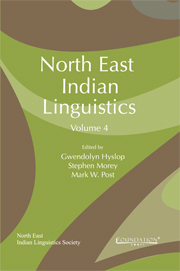
North East Indian Linguistics
-
- Published by:
- Foundation Books
- Published online:
- 05 May 2013
- Print publication:
- 01 January 2012
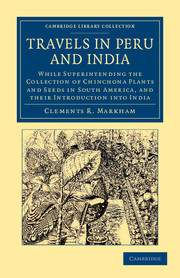
Travels in Peru and India
- While Superintending the Collection of Chinchona Plants and Seeds in South America, and their Introduction into India
-
- Published online:
- 05 May 2013
- Print publication:
- 07 June 2012
- First published in:
- 1862
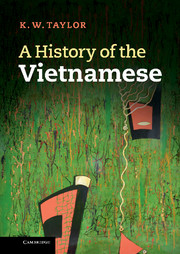
A History of the Vietnamese
-
- Published online:
- 05 May 2013
- Print publication:
- 09 May 2013
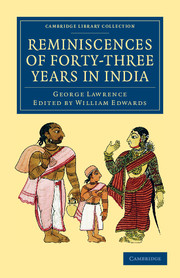
Reminiscences of Forty-Three Years in India
- Including the Cabul Disasters, Captivities in Affghanistan and the Punjaub, and a Narrative of the Mutinies in Rajputana
-
- Published online:
- 05 May 2013
- Print publication:
- 19 July 2012
- First published in:
- 1874
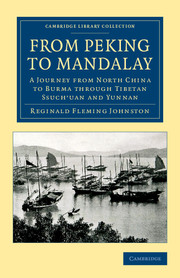
From Peking to Mandalay
- A Journey from North China to Burma through Tibetan Ssuch'uan and Yunnan
-
- Published online:
- 05 May 2013
- Print publication:
- 07 June 2012
- First published in:
- 1908

In Abor Jungles
- Being an Account of the Abor Expedition, the Mishmi Mission and the Miri Mission
-
- Published online:
- 05 May 2013
- Print publication:
- 26 April 2012
- First published in:
- 1912
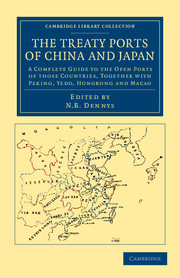
The Treaty Ports of China and Japan
- A Complete Guide to the Open Ports of those Countries, together with Peking, Yedo, Hongkong and Macao
-
- Published online:
- 05 May 2013
- Print publication:
- 26 April 2012
- First published in:
- 1867
Principles and Precedents of Moohummudan Law
- Being a Compilation of Primary Rules Relative to the Doctrine of Inheritance (Including the Tenets of the Schia Sectaries), Contracts and Miscellaneous Subjects
-
- Published online:
- 05 May 2013
- Print publication:
- 28 June 2012
- First published in:
- 1825
Creativity and Its Discontents: China's Creative Industries and Property Rights Offenses. By Laikwan Pang. Durham, N.C.: Duke University Press, 2012. ix, 299 pp. $89.95 (cloth); $24.95 (paper).
-
- Journal:
- The Journal of Asian Studies / Volume 72 / Issue 2 / May 2013
- Published online by Cambridge University Press:
- 28 May 2013, pp. 455-457
- Print publication:
- May 2013
-
- Article
- Export citation
Pilgrimages to the Ancient Temples in Nara: Koji junrei. By Watsuji Tetsurō. Translated by Hiroshi Nara. Portland, Maine: MerwinAsia, 2012. xxxv, 202 pp. $35.00 (paper).
-
- Journal:
- The Journal of Asian Studies / Volume 72 / Issue 2 / May 2013
- Published online by Cambridge University Press:
- 28 May 2013, pp. 476-477
- Print publication:
- May 2013
-
- Article
- Export citation
Chinese Architecture and Metaphor: Song Culture in the Yingzao Fashi Building Manual. By Jiren Feng. Honolulu: University of Hawai'i Press, 2012. xiv, 304 pp. $53.00 (cloth).
-
- Journal:
- The Journal of Asian Studies / Volume 72 / Issue 2 / May 2013
- Published online by Cambridge University Press:
- 28 May 2013, pp. 445-447
- Print publication:
- May 2013
-
- Article
- Export citation
The Quest for Statehood: Korean Immigrant Nationalism and U.S. Sovereignty, 1905–1945. By Richard S. Kim. Oxford: Oxford University Press, 2011. xii, 223 pp. $99.00 (cloth); $21.95 (paper).
-
- Journal:
- The Journal of Asian Studies / Volume 72 / Issue 2 / May 2013
- Published online by Cambridge University Press:
- 28 May 2013, pp. 484-486
- Print publication:
- May 2013
-
- Article
- Export citation
Intimate Distance: Andean Music in Japan. By Michelle Bigenho. Durham, N.C.: Duke University Press, 2012. xii, 248 pp. $79.95 (cloth); $22.95 (paper).
-
- Journal:
- The Journal of Asian Studies / Volume 72 / Issue 2 / May 2013
- Published online by Cambridge University Press:
- 28 May 2013, pp. 468-470
- Print publication:
- May 2013
-
- Article
- Export citation
The Religion of Falun Gong. By Benjamin Penny. Chicago: University of Chicago Press, 2012. xiii, 262 pp. $45.00 (cloth).
-
- Journal:
- The Journal of Asian Studies / Volume 72 / Issue 2 / May 2013
- Published online by Cambridge University Press:
- 28 May 2013, pp. 458-460
- Print publication:
- May 2013
-
- Article
- Export citation
Ghetto at the Center of the World: Chungking Mansions, Hong Kong. By Gordon Mathews. Chicago: University of Chicago Press, 2011. xi, 242 pp. $62.00 (cloth); $19.00 (paper).
-
- Journal:
- The Journal of Asian Studies / Volume 72 / Issue 2 / May 2013
- Published online by Cambridge University Press:
- 28 May 2013, pp. 453-455
- Print publication:
- May 2013
-
- Article
- Export citation
A Path for Chinese Civil Society: A Case Study on Industrial Associations in Wenzhou, China. By Jianxing Yu, Jun Zhou, and Hua Jiang. Lanham, Md.: Lexington Books, 2012. xi, 212 pp. $65.00 (cloth); $64.99 (ebook).
-
- Journal:
- The Journal of Asian Studies / Volume 72 / Issue 2 / May 2013
- Published online by Cambridge University Press:
- 28 May 2013, pp. 464-465
- Print publication:
- May 2013
-
- Article
- Export citation
Bonds of the Dead: Temples, Burial, and the Transformation of Contemporary Japanese Buddhism. By Mark Rowe. Chicago: University of Chicago Press, 2011. xv, 258 pp. $91.00 (cloth); $29.00 (paper).
-
- Journal:
- The Journal of Asian Studies / Volume 72 / Issue 2 / May 2013
- Published online by Cambridge University Press:
- 28 May 2013, pp. 473-475
- Print publication:
- May 2013
-
- Article
- Export citation
Queer Japanese: Gender and Sexual Identities through Linguistic Practices. By Hideko Abe. New York: Palgrave Macmillan, 2010. x, 199 pp. $85.00 (cloth).
-
- Journal:
- The Journal of Asian Studies / Volume 72 / Issue 2 / May 2013
- Published online by Cambridge University Press:
- 28 May 2013, pp. 467-468
- Print publication:
- May 2013
-
- Article
- Export citation
Editorial Foreword 72.2 (May 2013)
-
- Journal:
- The Journal of Asian Studies / Volume 72 / Issue 2 / May 2013
- Published online by Cambridge University Press:
- 28 May 2013, pp. 229-232
- Print publication:
- May 2013
-
- Article
-
- You have access
- HTML
- Export citation
Childbirth in Republican China: Delivering Modernity. By Tina Phillips Johnson. Lanham, Md.: Rowman & Littlefield Publishers, 2011. xliv, 221 pp. $65.00 (cloth).
-
- Journal:
- The Journal of Asian Studies / Volume 72 / Issue 2 / May 2013
- Published online by Cambridge University Press:
- 28 May 2013, pp. 448-450
- Print publication:
- May 2013
-
- Article
- Export citation
