To save content items to your account,
please confirm that you agree to abide by our usage policies.
If this is the first time you use this feature, you will be asked to authorise Cambridge Core to connect with your account.
Find out more about saving content to .
To save content items to your Kindle, first ensure no-reply@cambridge.org
is added to your Approved Personal Document E-mail List under your Personal Document Settings
on the Manage Your Content and Devices page of your Amazon account. Then enter the ‘name’ part
of your Kindle email address below.
Find out more about saving to your Kindle.
Note you can select to save to either the @free.kindle.com or @kindle.com variations.
‘@free.kindle.com’ emails are free but can only be saved to your device when it is connected to wi-fi.
‘@kindle.com’ emails can be delivered even when you are not connected to wi-fi, but note that service fees apply.
This conclusion reflects on the legacy of the Democrat Party in the aftermath of the 1960 coup. I argue that the removal of Turkey’s elected government by military officers did not mark the end of democratic politics in Turkey. Rather, it was part of a larger process of de-democratization in which Turkish leaders (first the Democrats, then the military and its allies) restricted the various institutions that enabled meaningful political contestation. Democracy was effectively rolled back during the 1950s because the achievements of Turkey’s “transition to democracy” were of a limited sort; they included independently verified elections, a narrow range of permitted political parties, and a relatively circumscribed press. If the DP failed to consistently defend and expand the institutions that bolster democracy, then perhaps its greatest legacy is the way in which it positioned Turkey in relation to other states. The DP presented the country as an essential part of the American order, willing to fight and, thus, deserving of significant financial support.
This article examines MS Török O. 176 from the Hungarian Academy of Sciences Vambery Collection, Tevārīḫ-i Futuḥ-i Şirvan, an anonymously authored manuscript of the Ottoman campaign in the Caucasus in 1578. The text under study emphasizes the importance of leadership and memorializes the commanders of the campaign, showing how an Ottoman author presented proper military leadership, with an emphasis on rigid adherence to authority. The factional context of the chronicle also is analyzed, as the author indirectly criticizes the campaign leaders’ rivals. Finally, consideration is given to the reason the text was copied in 1722–23, at a time when the Ottoman Empire was competing with Russia in the Caucasus shortly after the collapse of the Safavid dynasty.
In this article, we examine Iran’s 2022 “Woman, Life, Freedom” movement, coining the term “culture revolution” to underline this movement’s distinctive characteristic. While Iran’s “cultural revolution” (1981–83) forcefully usurped the country’s public, educational, and artistic sphere, the “culture revolution” decisively ended the regime’s ideological domination of the public sphere. We explain how culture, using its innate resources of language, performativity, resignification, free play, and the collective trauma process, successfully reclaimed the autonomy of the cultural sphere and the physical and moral integrity of its citizens. We examine the dynamic and dialectical interactions of Iranians in the country, those in the diaspora, and their role in bringing about Iran’s “culture revolution.”
This study examines how Goli Taraghi’s short stories, “The Grandma’s Home” and “The Flowers of Shiraz,” portray young female protagonists navigating mid-20th-century Tehran as flâneuses (female urban flâneurs). Applying Western theories of flânerie, spectatorship, and gendered space to Persian literature, this article argues that Taraghi’s characters leverage consumer culture, cinema outings, and sensory exploration to negotiate opportunities offered by a modernity structured by traditional gender norms. By repurposing socially sanctioned activities (shopping and ballet classes) for unsanctioned roaming, observation, and desire, these girls transform streets, shops, and cinemas into sites of negotiated feminine subjectivity. Their embodied flânerie—marked by defiant gazes, political engagement, and public self-fashioning—subtly challenges the Pahlavi state’s “modern woman” ideal, offering a nuanced perspective on theoretical understandings of the Iranian flâneuse. The article thus repositions Taraghi’s heroines as agents of everyday resistance to norms, definitions and expectations, recalibrating urban modernity through small, defiant acts in contested public spaces.
This study explores diplomatic negotiations that took place between the Safavids, Rurikids, and Habsburgs during the last years of the Ottoman-Safavid War (1578–1590). The primary objective of these negotiations was to establish an anti-Ottoman alliance, with each participating party pursuing its own foreign policy interests. Drawing on various documents, it can be argued that the initiative for this new round of Safavid-Rurikids-Habsburg diplomacy originated from Shāh Muḥammad Khudābanda. In 1586, the shah dispatched envoy Hādī Beg to Moscow, seeking Russia’s assistance in countering the Ottomans. Subsequently, diplomatic negotiations between the three parties ensued. Through a comprehensive analysis of both archival and published documents, this article aims to uncover and examine the goals and attitudes of all negotiating parties around the formation of an anti-Ottoman alliance by the late 1580s.
This ethnographic study reassesses the role of opium in Iran’s economic landscape, challenging dominant narratives that frame opium users as unproductive and burdensome. Based on fieldwork conducted between 2010 and 2018 in the Pars Special Economic Energy Zone (PSEEZ), the research examines how construction workers use opium to endure and enhance productivity under extreme environmental and economic pressures. It critiques a century-long anti-opium discourse—rooted in the Iranian Constitutional Movement (1905–1911) and perpetuated through shifting regimes of criminalization and medicalization—that consistently associates opium use with economic idleness. Through autoethnographic reflection and archival analysis, the article first outlines this dominant discourse, then constructs a counternarrative in which laborers deliberately integrate opium into their daily practices to sustain bodily performance and contribute to Iran’s petroindustrial expansion. Described as “narco-nomad science,” this practice enables the formation of resilient working bodies and repositions opium as an active agent within circuits of capitalist production. Drawing on actor-network theory and assemblage thinking, the study foregrounds the material agency of opium. It offers new analytical frameworks for understanding its role in labor, infrastructure, and the political economy of the PSEEZ.
At Balawat in 1956 M.E.L. Mallowan excavated a small group of 18 Neo-Assyrian documents near the Mamu Temple. These are now published here in copies by A.R. Millard and J.N. Postgate, along with four tablets from his later work at the site in 1957 which were not included in Barbara Parker’s edition of the majority of the texts from that season. They are all Neo-Assyrian utilitarian documents from the 7th century BC, mainly “legal” but in a few cases administrative. Parker observed (1963: 89) that the 1956 tablets “are a quite distinct group from the present collection” (that is, the 1957 group), and indeed there is little overlap in respect of content and prosopography between the two groups. A few of the 1956 tablets show that individuals whose private documents were kept in the town were engaged in agricultural and horticultural activities in (presumably) neighbouring villages, but they also include some rather informal conveyances of males and females.
This article is the publication of the first bilingual inscription from Hatra, combining Greek with Hatran Aramaic. It is known only from a slide in the archives of the Italian Archaeological Mission to Hatra and, as the first bilingual document from the city itself, it deserves special attention from a multidisciplinary perspective. The inscription is discussed here in its wider context, first with regard to what it can contribute to our understanding of codeswitching between Greek and Aramaic, at Hatra itself and within the wider Near East, and second concerning our knowledge of the development of the city’s local religious life. It is argued that the new inscription casts light on the way in which the goddess ʾAllāt, under influence of the royal house, came to join the Sun god Šmeš (Šamaš) at the heart of Hatrene religion.
The rise of neoliberal statism in Turkey, where the state acts as a developer in both urban and rural contexts, illuminates the multi-scalar, negotiated, and power-laden nature of frontier-making in the twenty-first century. The expansion of export-oriented sweet cherry production in western Turkey’s peri-urban landscapes exemplifies the uneven, non-linear, and contested trajectories of contemporary agrarian capitalism. This paper examines how a niche-commodity frontier is produced not only through shifts in political–economic and socio-ecological relations of production, but also through articulations of nationalism and moral authority grounded in religion. Among the various actors involved in this process, smallholders occupy a paradoxical position: structurally subordinated within export value chains yet discursively mobilized as key agents of frontier expansion. Drawing on ethnographic fieldwork, the paper argues that the ideological hegemony underpinning the frontier hinders the formation of smallholder class consciousness. Instead, the articulation of agrarian capitalism with nationalist and developmental imaginaries, expressed through the party politics of the ruling Justice and Development Party (AKP), secures widespread allegiance to Turkey’s current iteration of neoliberal development.
This article examines how post-Soviet Azerbaijani literature redefined creative and narrative forms, challenging Soviet literary norms through experimentation and new modes of characterization. Following independence in 1991, Azerbaijani literature moved from the transitional, trauma-marked works of the 1990s to the pluralism and experimentation of the 2000s and, after 2020, toward a discourse of triumph. Writers such as Aziza Jafarzadeh, Huseyn Ibrahimov, Elchin Afandiyev, Anar, and Afag Masud employ non-linear structures, allegory, symbolism, and introspection to transform inherited Soviet forms into vehicles of cultural resistance. Drawing on postcolonial theory (Bakhtin, Bhabha, Spivak, and Annus) and close textual readings, this article situates Azerbaijani literature within broader Eurasian and postcolonial frameworks, demonstrating how creative characterization fosters new expressions of identity, memory, and cultural reimagining.
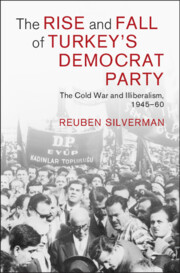
More than sixty years after Turkey's Democrat Party was removed from office by a military coup and three of its leaders hanged, it remains controversial. For some, it was the defender of a more democratic political order and founder of a dominant center-right political coalition; for others, it ushered in an era of corruption, religious reaction, and subordination to American influence. This study moves beyond such stark binaries. Reuben Silverman details the party's establishment, development, rule, and removal from power, showing how its leaders transformed themselves from champions of democracy and liberal economics to advocates of illiberal policies. To understand this change, Silverman draws on periodicals and archival documents to detail the Democrat Party's continuity with Turkey's late Ottoman and early republican past as well as the changing nature of the American-led Cold War order in which it actively participated.