To save content items to your account,
please confirm that you agree to abide by our usage policies.
If this is the first time you use this feature, you will be asked to authorise Cambridge Core to connect with your account.
Find out more about saving content to .
To save content items to your Kindle, first ensure no-reply@cambridge.org
is added to your Approved Personal Document E-mail List under your Personal Document Settings
on the Manage Your Content and Devices page of your Amazon account. Then enter the ‘name’ part
of your Kindle email address below.
Find out more about saving to your Kindle.
Note you can select to save to either the @free.kindle.com or @kindle.com variations.
‘@free.kindle.com’ emails are free but can only be saved to your device when it is connected to wi-fi.
‘@kindle.com’ emails can be delivered even when you are not connected to wi-fi, but note that service fees apply.
In 2018, the AOC Archaeology Group unearthed a unique Roman figurine in Sandy, Bedfordshire, likely an offering in a domestic shrine or lararium. The figurine features a distinctive Gallic cloak, similar to those found on copper-alloy figurines in Trier and Cambridgeshire and on numerous relief sculptures. It may be related to the hooded garment known as the birrus mentioned in Diocletian's Edict on Maximum Prices of a.d. 301, including the expensive Birrus Britannicus.
Human osteoarchaeology, the study of human skeletal remains from archaeological contexts, has a long history in Greece. This review paper examines the developments that have occurred in the field over the past decade using case studies published from 2015 onwards. These studies have been selected to demonstrate the wealth of osteoarchaeological research, geographically and temporally, and are organized based on the themes of mobility, diet, palaeopathology, activity patterns, and funerary archaeology. The final part of the paper discusses some of the key challenges that human osteoarchaeology in Greece faces. Most prominent among these challenges is the limited financial support for the humanities, the few national-level training opportunities in human osteoarchaeology in higher education, the lack of a national association within the field that could promote standardized practices and collaboration, and the fact that most osteoarchaeological material has come to light through rescue excavations. In association with these challenges, the future prospects of osteoarchaeology in Greece are briefly discussed.
Questions about authorship have plagued the corpus of Demosthenic orations since antiquity. In particular, scholars often assign certain speeches (usually 46, 49, 50, 52, 53 and 59; sometimes also 47 and 51) to Apollodorus, son of Pasion. We apply an innovative approach to the problem, using morphosyntactic information from dependency treebanks. From the treebank annotation we create input data for various well-established computational approaches to authorship attribution. The usefulness of the input data is first tested with clustering algorithms. We then make finer distinction with a logistic regression classifier. All steps are explained in detail for the benefit of those unfamiliar with computational stylometry. In broadest terms, our results are remarkably consistent with the common opinion about the orations, identifying 49, 50, 52 and 53 as written by a single author, who was not Demosthenes (presumably Apollodorus). We also discuss syntactic traits that are peculiarly ‘Apollodoran’ or ‘Demosthenic’. However, we demonstrate that the data point away from both authors for Dem. 46 and 51, while conclusions about 47 and 59 are ambiguous.
Oxford University Press is the largest university press in the world. It has been in continuous operation since 1586, making it the second oldest university press after Cambridge University Press (1534). From its imposing complex in Jericho, the stylish suburb of Oxford, and its many satellite offices around the world, including Delhi, Chennai, Kolkata, Karachi, Hong Kong, Cape Town, Nairobi, Dar es Salaam, Melbourne, Toronto and New York — the overlap with former territories of the British Empire is conspicuous — it produces an unparalleled number of academic publications every year and occupies a dominant position in the authentication of knowledge and its dissemination across the globe. In 2022–23, for example, the press published no fewer than 1,777 new academic titles, available in 193 countries and translated into 45 languages (including Somali and Quechua, as the press's 2022–23 Annual Report breathlessly announces). And revenues are substantial: £825,000,000 in sales last year alone. A bastion of prestige, global in reach but with a clear centre, and sitting comfortably within the inner citadel of a hierarchical, worldwide ecosystem of knowledge-making, Oxford University Press can be seen as a quasi-imperial operation in its own right.
In premodernity, a time when human milk was the only safe means of infant nutrition, and in societies, such as those of classical antiquity and early Byzantium, where breastfeeding was considered servile work, wet-nursing was both a necessary and widespread occupation. Despite the social demand for the profession, public discourses around wet nurses were mostly negative, while their work was treated with both admiration and scorn. In an attempt to understand ancient and early Byzantine approaches to the wet nurse, this article takes a matricentric perspective. It investigates various discourses (rhetorical, moralist, philosophical, theological, hagiographical, medical and contractual) which establish the wet nurse as an essential part of the institution of motherhood, as a social and moral category whose work, way of life and behaviour are constantly defined, controlled and regulated. These discourses nevertheless tell us much more about the anxieties and preoccupations of the societies that produced them and much less about actual contemporary wet nurses. The choice of an investigation encompassing antiquity up to early Byzantium, an extension rarely seen in existing studies, further illuminates the mechanics and dynamics of the ideologies around the wet nurse, as these are preserved or evolve in time.
This article, based on an oral presentation in virtual format by the author at its Annual General Meeting in February 2024, summarizes the activities of the British School at Athens with a focus on the calendar year 2023. It gives us great pleasure to present the innovative and varied work of BSA sponsored field and research projects, the Fitch Laboratory, Knossos Research Centre, archive, and library as well as the inspiring work of the School students, post docs, and fellows.
This report presents the first in-depth publication of preliminary data from Oued Beht, northwest Morocco, a remarkable site initially identified in the 1930s and now newly investigated. It is based on fieldwork undertaken in 2021–2022 (photogrammetry, survey and excavation), and associated study and analyses. Oued Beht is shown to be a large site of ca. 9–10 hectares in main extent, with many deep pits and convincing evidence for a full package of domesticated crops and animals. Its material culture is abundant and dense, comprising ceramics (including a local painted tradition hitherto barely attested in northwest Africa but comparable to finds in Iberia), numerous polished stone axes, grinding stones and other macrolithics, and a chipped-stone industry. Radiocarbon dates so far cluster at ca. 3400–2900 BC, but there are also indications of earlier and later prehistoric activity. What social activities Oued Beht reflects remains open to interpretation, but it emerges as a phenomenon of strong comparative interest for understanding the wider dynamics of north Africa and the Mediterranean during the fourth and third millennia BC.
Is an account of hair or nails as negotiable as one of the Demiurge? It should not be. The aim of this paper is to supplement existing interpretations of Timaeus’ eikōs logos in order to provide well-grounded answers to this and similar questions. More specifically, I shall demonstrate that Timaeus’ account cannot be confined to a single epistemological field, namely that of unstable likeliness, because it exhibits a much more nuanced and graduated structure, just as do the realities it deals with, and, as a whole, leaves minimal room for refutation and scepticism.
This paper revisits the history of Christianity in the country of ‘Castîliya’, subsequently called the Djerid region located in the southwest of Tunisia, to re-evaluate and add to the large body of documentation that appeared almost a century ago. Excavations carried out by INP researchers in this region located on the limes of Roman Africa have added new data. The information provided either by written sources, notably Christian sources, or by archaeological excavations, suggests that the region of Djerid was Christianized from the fifth century. Indeed, the four main oases (Tusuros, Nepte, Thiges and Aquae) are all bishoprics belonging to the ecclesiastical province of Byzacene and their bishops, converted either to the Donatist or Catholic schism, are almost always present in the provincial gatherings of the church of Africa, usually held in Carthage. Finally, this research tries to answer the following question, what is the fate of the last indigenous Christian communities of Djerid after the Arab-Muslim invasion?
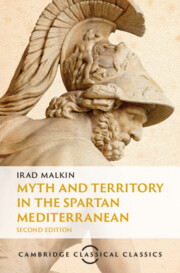
Greek attitudes to settlement and territory were often articulated through myths and cults. This book emphasizes less the poetic, timeless qualities of the myths than their historical function in the archaic and Classical periods, covering the spectrum from explicit charter myths legitimating conquest, displacement, and settlement to the 'precedent-setting' and even aetiological myths, rendering new landscapes 'Greek'. This spectrum is broadest in the world of Spartan colonization – the Spartan Mediterranean – where the greater challenges to territorial possession and Sparta's acute self-awareness of its relative national youthfulness elicited explicit responses in the form of charter myths. The concept of a Spartan Mediterranean, in contrast to the image of a land-locked Sparta, is a major contribution of this book. This revised edition contains a substantial new Introduction which engages with critical and scholarly developments on Sparta since the original publication.
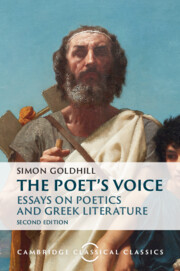
How are poetry and the figure of the poet represented, discussed, contested within the poetry of ancient Greece? From what position does a poet speak? With what authority? With what debts to the past? With what involvement in the present? Through a series of interrelated essays on Homer, lyric poetry, Aristophanes, Theocritus and Apollonius of Rhodes, this landmark volume discusses key aspects of the history of poetics: tale-telling and the representation of man as the user of language; memorial and praise; parody, comedy and carnival; irony, masks and desire; the legacy of the past and the idea of influence. Detailed readings of major works of Greek literature and liberal use of critical writings from outside Classics help to align modern and ancient poetics in enlightening ways. This revised edition contains a substantial new Introduction which engages with critical and scholarly developments in Greek literature since the original publication.