To save content items to your account,
please confirm that you agree to abide by our usage policies.
If this is the first time you use this feature, you will be asked to authorise Cambridge Core to connect with your account.
Find out more about saving content to .
To save content items to your Kindle, first ensure no-reply@cambridge.org
is added to your Approved Personal Document E-mail List under your Personal Document Settings
on the Manage Your Content and Devices page of your Amazon account. Then enter the ‘name’ part
of your Kindle email address below.
Find out more about saving to your Kindle.
Note you can select to save to either the @free.kindle.com or @kindle.com variations.
‘@free.kindle.com’ emails are free but can only be saved to your device when it is connected to wi-fi.
‘@kindle.com’ emails can be delivered even when you are not connected to wi-fi, but note that service fees apply.
Acid activation of clay minerals is one of the most effective methods for production of materials with increased acidity and porosity. In this review, the benefits of infrared (IR) spectroscopy in studies of acid-treated clay minerals are demonstrated. Protons penetrating into the clay mineral layers evoke structural modifications that can be followed readily by changes in the characteristic absorption bands attributed to the vibrations of the OH and Si–O groups. In the first part of the review the effect of the clay mineral type, composition, layer charge, non-swelling layers, and organo-modification on the dissolution rate is reported. The identification of the acid sites via pyridine adsorption also included. The purpose was to gather the IR results published in previous studies in a single summary paper. In the second part select recent studies reporting the utilization of IR spectroscopy for the characterization of acid-activated clay minerals, mainly applied as catalysts or adsorbents, are discussed. IR spectroscopy as a simple and non-destructive technique deserves attention also today.
Determining the chemical composition of sub-micrometer rock-forming minerals is still a challenging task. The electron probe micro-analyzer (EPMA) is considered the most accurate analytical way to obtain chemical data on amorphous and crystalline materials. However, performing EPMA analyses on sub-micrometer-sized grains is uncertain not recommended as the risk of obtaining analyses contaminated from the surrounding phases. A transmission electron microscope (TEM) equipped with an energy dispersive X-ray spectrometer (EDS) provides a greater spatial resolution, making it possible to obtain trustworthy chemical information on sub-micrometer-sized material. In this work, we present a fast and cheap data-reduction protocol for TEM-EDS chemical analysis, where k-factors derived experimentally for each element of interest and absorption correction are implemented. The results are compared with those determined using standardless and non-corrected TEM-EDS protocols. The k-factor for oxygen plays a fundamental role and its value should be calculated from compounds similar to the phase of interest. For absorption correction, the contribution of hydrogen during structural formula recalculation is taken into account, like a lower net valence of oxygen. The robustness of this protocol was tested by performing TEM-EDS analyses on white mica grains from metapelites, belonging to the Internal Ligurian Units exposed in the Northern Apennines, the chemical composition of which is well constrained. Such a protocol has proven to provide high-quality results from both statistical and crystallo-chemical perspectives. Remarkably, the tested data-reduction protocol for TEM-EDS analysis provided chemical compositions consistent with the EPMA results previously obtained from the same samples.
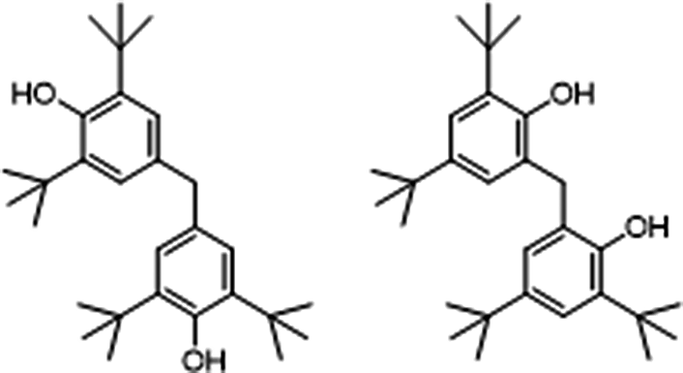
The March 2, 2022, United Nations Environment Assembly Resolution 5/14: “End plastic pollution: Toward an international legally binding instrument by 2024” provides an important path for addressing global plastic pollution, from monomer design and production through the value chain to the final fate of plastic products, including resource recovery. Of the goals set for this effort, simplifying the polymer and additive universe is among the most significant. One primary obstacle to resource recovery from plastic waste is polymer variability, which renders post-use plastic inherently waste-like. While simplification will not address microplastics and leaching of chemicals during use, these measures simplify the plastic universe and mitigate leakage which is critical to ensuring circular plastic use. This study provides a pathway for simplification of formulations through the elimination of problematic additives and revealing paths toward simplifying and reducing the variability in polymers, waste streams and pollution, while preserving critical uses. This study focuses on phenolic antioxidants to support this concept; however, these principles can be applied to other additive classes. The results show extensive duplication of chemical species with different trade names and the appearance of only minor changes to species with the intention of evergreening patents for improved marketability.
This book examines how, and under what conditions, states – in collaboration with non-state actors – can govern a societal transformation toward large-scale decarbonization in line with the goals of the Paris Agreement. It advances an innovative analytical framework on how the state governs through collaborative climate governance to foster cooperation, deliberation, and consensus between state and non-state actors. The book focuses on Sweden, which aims to become a fossil-free state. The chapters analyze Sweden's progress toward net-zero emissions, its role in international climate governance, and how the COVID-19 pandemic affected climate networks. Providing valuable policy insights for other countries endeavoring to decarbonize, this book is a useful reference for graduate students and researchers in climate governance, political science, and international relations. It is one of a series of publications associated with the Earth System Governance Project. For more publications, see www.cambridge.org/earth-system-governance. This title is also available as Open Access on Cambridge Core.
The total 2pN net shifts per orbit and the orbital precessions are calculated as the sum of two contributions: the direct ones due to the 2pN acceleration and the mixed, or indirect, ones caused by the 1pN instantaneous shifts during the orbital revolution. A comparison with other approaches existing in the literature is made.
Edited by
Ottavio Quirico, University of New England, University for Foreigners of Perugia and Australian National University, Canberra,Walter Baber, California State University, Long Beach
The spherical Couette system consists of two differentially rotating concentric spheres with the space in between filled with fluid. We study a regime where the outer sphere is rotating rapidly enough so that the Coriolis force is important and the inner sphere is rotating either slower or in the opposite direction with respect to the outer sphere. We numerically study the sudden transition to turbulence at a critical differential rotation seen in experiments at BTU Cottbus-Senftenberg, Germany, and investigate its cause. We find that the source of turbulence is the boundary layer on the inner sphere, which becomes centrifugally unstable. We show that this instability leads to generation of small-scale structures which lead to turbulence in the bulk, dominated by inertial waves, a change in the force balance near the inner boundary, the formation of a mean flow through Reynolds stresses and, consequently, to an efficient angular momentum transport. We compare our findings with axisymmetric simulations and show that there are significant similarities in the nature of the flow in the turbulent regimes of full three-dimensional and axisymmetric simulations but differences in the evolution of the instability that leads to this transition. We find that a heuristic argument based on a Reynolds number defined using the thickness of the boundary layer as a length scale helps explain the scaling law of the variation of critical differential rotation for transition to turbulence with rotation rate observed in the experiments.
Edited by
Ottavio Quirico, University of New England, University for Foreigners of Perugia and Australian National University, Canberra,Walter Baber, California State University, Long Beach
This chapter explores a core question in astrobiology: what is the future of life on Earth and beyond? The first part describes the cessation of habitable conditions in Earth’s distant future (about a billion years hereafter), and the myriad risks that apparently confront humanity on shorter timescales, ranging from wars and artificial intelligence to asteroid impacts and massive volcanoes. The second segment outlines the possibility of humans migrating to other worlds in the solar system, and the numerous technological and logistical challenges expected to arise during this endeavour. The even more daunting notion of interstellar travel is also touched upon, and the propulsion systems and spacecraft advanced in this regard are sketched. The textbook comes to a close by taking stock of the fates that might await humankind.
Mars has always been one of the most promising targets in the search for current or extinct extraterrestrial life. The chapter commences with a brief summary of Mars’ basic characteristics, before describing its potential for instantaneous habitability (e.g., energy sources, bioessential elements), with an emphasis on the availability of water. This is followed by an exposition of how several aspects of Martian habitability have diminished over time, ranging from extensive atmospheric loss to the shutdown of its dynamo, both of which might have contributed to the emergence of its cold and arid climate today. Nevertheless, some specialised abodes where life may have persisted are touched upon (e.g., deep subsurface). In the last part of the chapter, the contentious history of life detection on Mars – the Viking mission experiments in the 1970s and the meteorite ALH84001 – is reviewed, and forthcoming missions to Mars are surveyed.
Edited by
Ottavio Quirico, University of New England, University for Foreigners of Perugia and Australian National University, Canberra,Walter Baber, California State University, Long Beach
The role of judges in implementing climate policies has become a crucial component of the existing governance framework regulating climate change action. Litigation focusing on more ambitious climate action is trending globally. Individuals, local authorities and NGOs are bringing lawsuits against national governments, holding them accountable to their legal obligations and engendering policy change. Due to the constitutional doctrine of the separation of powers, the justiciability of climate policy is questioned. Disagreements exist between advocates of an activist judicial role and those in favour of legislative and executive discretion. The main question is to what extent the judiciary can oblige other government branches to take urgent preventative action, particularly to implement or adjust climate policies. Their role in implementing climate policies is analysed from a comparative perspective, considering theoretical debates on the doctrine of the separation of powers in different legal systems and relevant case-law. The chapter connects international and domestic issues and highlights recommendations to foster effective implementation of more ambitious climate policies.
Icy worlds with subsurface oceans are potentially among the most common repositories of liquid water in the Universe. Moreover, the solar system is confirmed to host a number of such worlds, notably: Europa, Enceladus, and Titan. Motivated by these considerations, this chapter examines the habitability of icy worlds from a general standpoint. The oceanic properties of Europa, Enceladus, and Titan are reviewed, followed by a simple analysis of the physical conditions in which subsurface oceans may be supported. The pathways for the formation of the building blocks of life, their assembly into polymers, and subsequent delivery to the subsurface ocean are elucidated. The possible constraints on the availability of energy sources and bioessential elements are delineated, as well as the types of organisms and ecosystems that could exist. The chapter concludes by briefly speculating about the trajectories of biological evolution conceivable on icy worlds.
This chapter on continental strike-slip faults and shear zones explores some of the largest faults on Earth, and also faults that represent the greatest seismic hazards. The structural pattern associated with continental strike-slip faults is presented, including strike-slip duplexes, riedel-shears, transpressional and transtensional fold and fault structures, and the chapter discusses how some large faults of this kind appear to transect the entire lithosphere. Shear wave splitting data are briefly presented as a type of data that gives information of the deeper part of continental strike-slip faults, with the Great Glen fault as an example. The well-known San Andreas Fault in the western US, the Dead Sea Fault, The Alpine fault in New Zealand and the Turkish Anatolian Fault are presented as examples of large faults of this kind and how they represent plate boundaries in continental crust. Continental strike-slip structures that do not represent plate boundaries are also discussed, with the active strike-slip faults along the Tibetan plateau and much older and deeply eroded examples from Gondwana (Brazil-Africa) and Canada.
Edited by
Ottavio Quirico, University of New England, University for Foreigners of Perugia and Australian National University, Canberra,Walter Baber, California State University, Long Beach