To save content items to your account,
please confirm that you agree to abide by our usage policies.
If this is the first time you use this feature, you will be asked to authorise Cambridge Core to connect with your account.
Find out more about saving content to .
To save content items to your Kindle, first ensure no-reply@cambridge.org
is added to your Approved Personal Document E-mail List under your Personal Document Settings
on the Manage Your Content and Devices page of your Amazon account. Then enter the ‘name’ part
of your Kindle email address below.
Find out more about saving to your Kindle.
Note you can select to save to either the @free.kindle.com or @kindle.com variations.
‘@free.kindle.com’ emails are free but can only be saved to your device when it is connected to wi-fi.
‘@kindle.com’ emails can be delivered even when you are not connected to wi-fi, but note that service fees apply.
The research aims to reconstruct a transnational history of Finn Malmgren’s contribution to the exploration of the Arctic, with a specific focus on the polar air expeditions of Norge (1926) and Italia (1928). The analysis of archive sources consulted in Italy, Norway, and Sweden sheds light on some key aspects of these two expeditions. In particular, the study of numerous unpublished documents – from the correspondence with personalities such as Umberto Nobile and Anna Nordenskjöld to the contemporary testimonies of Adalberto Mariano and Filippo Zappi – offers new insights into issues such as the international meteorological cooperation during the preparation of the Norge expedition and the march on the pack of Malmgren, Mariano and Zappi.
A limitation in fine-tuned tree-ring radiocarbon (14C) data is normally associated with overall data uncertainty. Tree-ring 14C data variance as a result of sample heterogeneity can be reduced by adopting best practices at the time of sample collection and subsequent preparation and analysis. Variance-reduction of 14C data was achieved by meticulous sample handling during increment core or cross-sectional cuttings, in-laboratory wood reductions, and cellulose fiber homogenization of whole rings. To demonstrate the performance of those procedures to final 14C results, we took advantage of the replicated data from assigned calendar years of two Pantropical post-1950 AD tree-ring 14C reconstructions. Two Cedrela fissilis Vell. trees spaced 22.5 km apart, and two trees of this species together with one Peltogyne paniculata Benth tree spaced 0.2 to 5 km apart were sampled in a tropical dry and moist forest, respectively. Replicate 14C data were then obtained from grouped tree-ring samples from each site. A total of 88% of the replicated 14C results fell into a remarkably consistent precision/accuracy range of 0.3% or less, even though multiple tree species were used as pairs/sets. This finding illustrates how adopting a few simple strategies, in tandem with already established chemical extraction procedures and high-precision 14C analysis, can improve 14C data results of tropical trees.
Coastlines worldwide are coming under increasing pressure due to climate change and human activity. Data on shoreline change are essential for coastal managers and when no long-term monitoring programs are implemented and shoreline change is typically on the order of less than 1 m/yr., as observed in Ireland, aerial photography is the most valuable source of information. A well-established literature exists for automated vegetation extraction from digital images based on the near infrared reflectance, but there is less research available on spectrally limited colour photography. This study develops a methodology for automating vegetation line extraction from a series of historical aerial photography of the Cork coastline in the South-West of Ireland. The approach relies on the Normalised Green–Blue Difference Index (NGBDI), which is versatile enough to discriminate disparate coastal vegetation environments, at different resolutions and in various lighting and seasonal conditions. An iterative optimal threshold process and the use of LiDAR ancillary datasets resulted in an automated vegetation line measurement with uncertainties estimated to be between 0.6 and 1.2 m. Change rates derived from the vegetation lines extracted present uncertainties in the range of ±0.27 m/yr. This robust and repeatable method provides a valuable alternative to time-consuming and subjective manual digitisation.
Determining a reliable method to detect life on another planet is an essential first step in the pursuit of discovering extraterrestrial life. Polyhydroxyalkanoates (PHAs), bioplastic polymers created by microorganisms, are strong candidates for defining the presence of extraterrestrial life due to their water insolubility, strong ultraviolet resistance, high melting points and high crystallinity, amongst other qualities. PHAs are abundant on Earth, and their chemical properties can easily be distinguished from non-biological matter. Their widespread distribution and conferred resistance to astrobiologically relevant extreme environments render PHAs highly favourable candidates for astrobiological detection. Integrating detection of PHA biosignatures into current and future life-detection instruments would be useful for the planetary search for life. PHAs are analysed and characterized in laboratories by gas chromatography-mass spectrometry, infrared spectroscopy, Raman spectroscopy and immunoassay analysis in addition to other methods. We outline a path forward to integrate PHA detection in astrobiology missions to aid the search for extraterrestrial life.
Almost half of the global population lives with inadequate or unsafe water, sanitation or hygiene (WASH) services. The consequences of this situation include negative impacts on individual and public health, the environment and economic production. The WASH sector is linked with other international development sectors and is embedded within complex social, environmental and governance structures. This complexity led us to reflect on how WASH sector practitioners and researchers are applying systems thinking tools and techniques to progress an agenda of sustainable and universal WASH services. From this perspective, we then discuss the near- and long-term future needs of the sector in coming to a comprehensive understanding and application of systems thinking to progress the ultimate aim of universal access to safely managed, accessible and abundant water, sanitation and hygiene services.
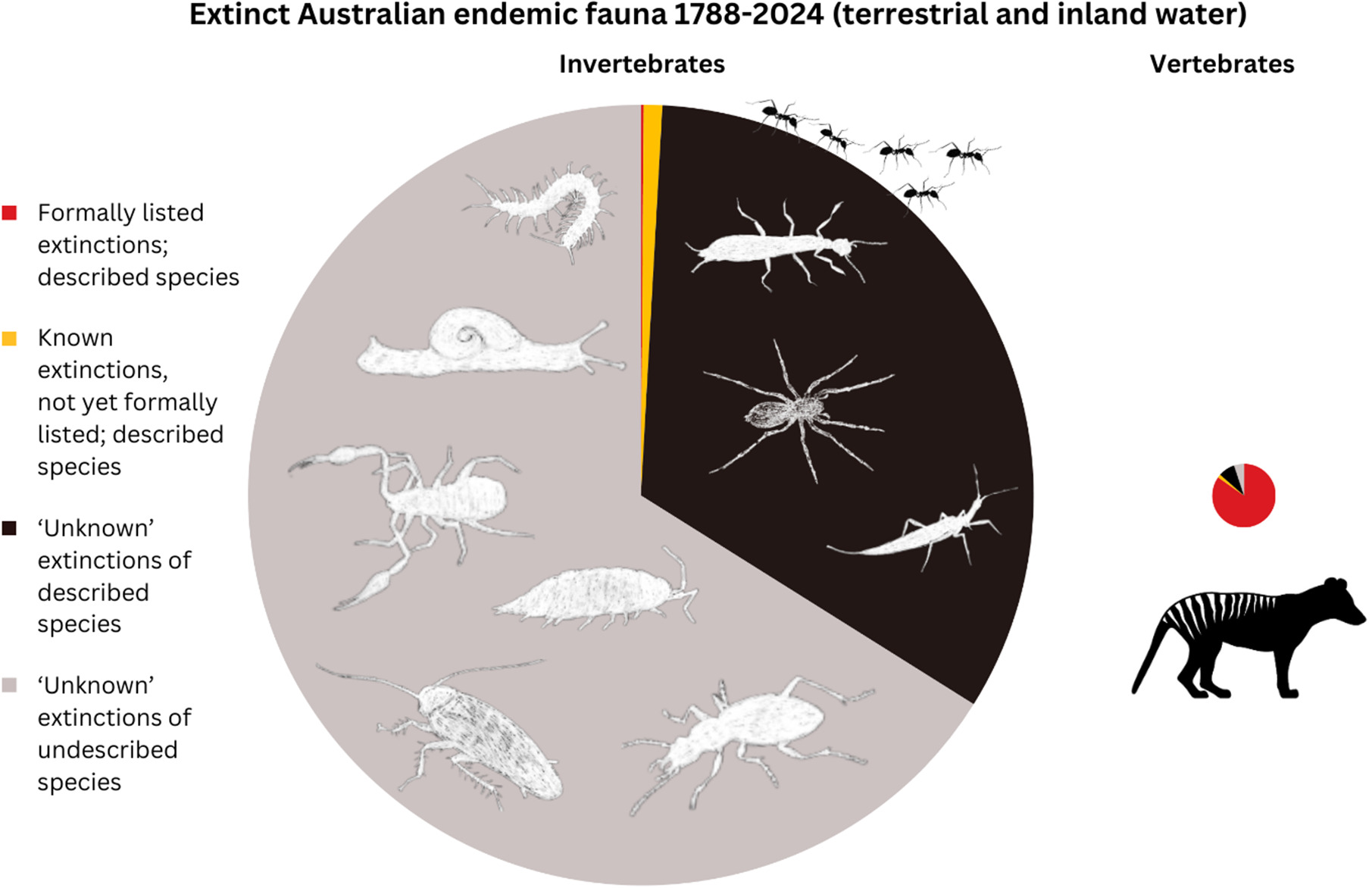
Biodiversity is in rapid decline, but the extent of loss is not well resolved for poorly known groups. We estimate the number of extinctions for Australian non-marine invertebrates since the European colonisation of the continent. Our analyses use a range of approaches, incorporate stated uncertainties and recognise explicit caveats. We use plausible bounds for the number of species, two approaches for estimating extinction rate, and Monte Carlo simulations to select combinations of projected distributions from these variables. We conclude that 9,111 (plausible bounds of 1,465 to 56,828) Australian species have become extinct over this 236-year period. These estimates dwarf the number of formally recognised extinctions of Australian invertebrates (10 species) and of the single invertebrate species listed as extinct under Australian legislation. We predict that 39–148 species will become extinct in 2024. This is inconsistent with a recent pledge by the Australian government to prevent all extinctions. This high rate of loss is largely a consequence of pervasive taxonomic biases in community concern and conservation investment. Those characteristics also make it challenging to reduce that rate of loss, as there is uncertainty about which invertebrate species are at the most risk. We outline conservation responses to reduce the likelihood of further extinctions.
The existence of Ordovician Peruvian cephalopods has been known since at least the 1910s. However, they have not been effectively documented previously with only a few described taxa listed in open nomenclature. Here, we describe a cephalopod assemblage at the finest taxonomic level possible. The specimens were collected from the Floian section (Baltograptus minutus graptolite Zone) of the San José Formation from the Kimbiri area, northwest of Cuzco (= Cusco), and from a section along the Inambari River, southeastern Peru. The dark mudstone-siltstone of the San José Formation was deposited within the Central Andean Basin. The assemblage contains five species of small orthoceracones belonging to four families and three orders, consisting of one indeterminate dissidocerid, one bathmoceratid (Saloceras sp.), one rioceratid (Rioceras? sp.), and two baltoceratids belonging to Annbactroceras grecicostatum (Kobayashi, 1937), and Bactroceras cocafolium new species. The dominance of small orthoceracones is typical for early Paleozoic pelagic cephalopod assemblages. One species, A. grecicostatum, is known from elsewhere in the Central Andean Basin. The other taxa indicate a peri-Gondwana-Avalonia paleogeographical relationship of the cephalopod fauna, which is consistent with previously published data from brachiopods and trilobites.
We investigate the concentration fluctuations of passive scalar plumes emitted from small, localised (point-like) steady sources in a neutrally stratified turbulent boundary layer over a rough wall. The study utilises high-resolution large-eddy simulations for sources of varying sizes and heights. The numerical results, which show good agreement with wind-tunnel studies, are used to estimate statistical indicators of the concentration field, including spectra and moments up to the fourth order. These allow us to elucidate the mechanisms responsible for the production, transport and dissipation of concentration fluctuations, with a focus on the very near field, where the skewness is found to have negative values – an aspect not previously highlighted. The gamma probability density function is confirmed to be a robust model for the one-point concentration at sufficiently large distances from the source. However, for ground-level releases in a well-defined area around the plume centreline, the Gaussian distribution is found to be a better statistical model. As recently demonstrated by laboratory results, for elevated releases, the peak and shape of the pre-multiplied scalar spectra are confirmed to be independent of the crosswind location for a given downwind distance. Using a stochastic model and theoretical arguments, we demonstrate that this is due to the concentration spectra being directly shaped by the transverse and vertical velocity components governing the meandering of the plume. Finally, we investigate the intermittency factor, i.e. the probability of non-zero concentration, and analyse its variability depending on the thresholds adopted for its definition.
Fossil egg capsules of chimaeroids (holocephalian fishes), although rare, have been known for more than 150 years (Bessels, 1869; Meunier, 1891a) and have been found in rocks as old as Upper Triassic (Gottfried and Fordyce, 2014). Egg capsules of extant chimaeroids are spindle shaped, with a smooth central body where the embryo develops, an elongate anterior beak through which the hatchling emerges, and an elongate posterior pedicle. The capsules are flanked by a lateral membrane or web on both sides, and the web is reinforced with branching or unbranching rib-like costae that extend laterally from the central body, beak, and pedicle. Specimens are typically about 10–30 cm long. Egg capsules of extant chimaeroids are made of collagen (Hamlett et al., 2005) and as fossils, chimaeroid egg capsules are typically preserved as external casts (Fischer et al., 2014).
A small trilobite assemblage, including Parabolina (Neoparabolina) frequens, assignable to the Parabolina Fauna, has been recovered from the Furongian (Cambrian Stage 10) Sah Member of the Mila Formation in the Tuyeh–Darvar section, the eastern Alborz Mountains, north Iran. The assemblage includes eight genera and species; two of them, Niobella darvarensis n. sp. and Macropyge (Promacropyge) sahensis n. sp., are new to science. The incursion of a Parabolina fauna into Alborz is confined to a significant drowning event with associated dark-gray shale deposition, which most probably occurred in the lower part of the Cordylodus proavus conodont Zone. While the generic composition of the assemblage is mostly cosmopolitan with the exception of the endemic Alborsella, the occurrence of Indiligens, Macropyge (Promacropyge) sahensis n. sp., Agnostotes sp. aff. A. sulcatus, and Leiagnostus bexelli indicates faunal links with South China and Tarim. Parabolina (Neoparabolina) frequens is widespread mainly in offshore deposits from temperate Gondwana (Armorican terrane assemblage, Argentina) and Baltica of about that age.
Predation is a behavior that is commonly unsuccessful, but the cause of failure is often difficult to determine in the fossil record. Here, we report on gastropod drill holes in two Plio- and Miocene bivalve specimens from the Netherlands created from the inner side of the bivalve prey's shell, which we call reverse drill holes. These holes are unequivocally caused by failure of the gastropod drilling predators to make effective use of their chemoreception and mechanoreception sensory adaptations. We hypothesize that the diffuse nature of chemical cues emanating from dense aggregations of living prey could have confused foraging predators and stimulated them to initiate the drilling process on empty valves. Poor decision making due to hunger is an alternative hypothesis. These traces represent the first reported examples of reverse gastropod drill holes from the fossil record, and the first attributed to Naticidae. Compared to other types of failed predation (incomplete drill holes and drill holes in multiply-drilled specimens) in the two assemblages studied, reverse drill holes are rare (< 1% of drill holes). This result implies that the driller's sensory and decision-making processes were generally reliable at distinguishing dead from live prey.
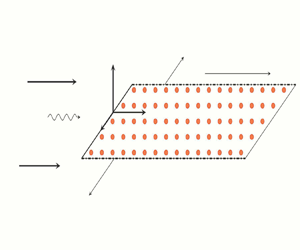
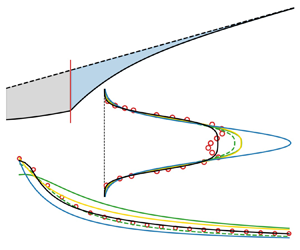
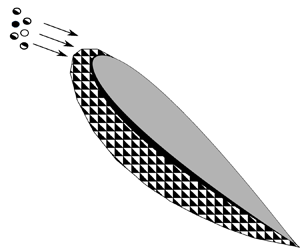
Leading-edge noise is a complex phenomenon that occurs when a turbulent fluid encounters a solid object, and is a notable concern in various engineering applications. This study enhances a mathematical leading-edge noise model (Hales et al., J. Fluid Mech., vol. 970, 2023, A29) for anisotropic flow and porous boundaries. The model has two key components. First, we adjust the velocity spectrum to account for the possibility of anisotropy in the flow. This paper rigorously introduces a third dimension for the turbulence spectrum that preserves the turbulence kinetic energy and mathematical definitions for integral length scales. Second, we adapt the fully analytical acoustic transfer function to account for different boundaries by implementing convective impedance boundary conditions when formulating the gust-diffraction problem. This problem is then solved using the Wiener–Hopf technique. We discuss important aspects of this method, including the factorisation of a non-trivial scalar kernel function and the application of suitable edge conditions for the problem. Each modification is inspired by experimental leading-edge noise data using a series of different porous leading edges and anisotropic turbulence generated by a cylinder upstream of the edge. Experimental data demonstrate the interplay between anisotropy and leading-edge modifications while achieving the characteristic mid-frequency noise reduction expected from porous leading edges. Our model is adapted to best fit the trends of the data via a tailored impedance function, leading to good agreement with all datasets across an extended frequency range. This tailored function is used to successfully validate the model against other datasets from a different set of experiments.
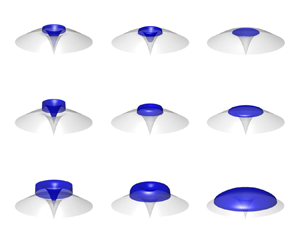
Viscous gravity currents play a fundamental role in many natural and industrial applications, where practical scenarios often involve the current propagating over rigid curvilinear surfaces. In this study, we employ lubrication theory to develop low-dimensional models for such two-dimensional and axisymmetric propagation, resulting from the release of a finite volume of viscous fluid. A key dimensionless parameter is identified, representing the volume ratio between the released fluid and the curvilinear surface, which governs the current evolution. By simplifying the curvilinear surface with linear–exponential and sinusoidal shapes, we observe distinct flow behaviours. Over linear–exponential surfaces, the current may become trapped, bypass the peak or flow downward, while over sinusoidal surfaces, the propagation is hindered compared with the behaviour over horizontal straight surfaces. The low-dimensional models are validated using the volume of fluid method in computational fluid dynamics, showing consistent predictions of the current evolution over rigid curvilinear surfaces.
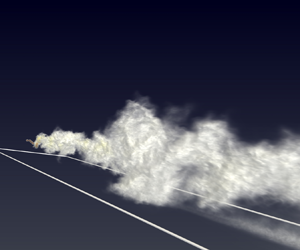
Describing the evolution of a wind turbine's wake from a top-hat profile near the turbine to a Gaussian profile in the far wake is a central feature of many engineering wake models. Existing approaches, such as super-Gaussian wake models, rely on a set of tuning parameters that are typically obtained from fitting high-fidelity data. In the current study, we present a new engineering wake model that leverages the similarity between the shape of a turbine's wake normal to the streamwise direction and the diffusion of a passive scalar from a disk source. This new wake model provides an analytical expression for a streamwise scaling function that ensures the conservation of linear momentum in the wake region downstream of a turbine. The model also considers the different rates of wake expansion that are known to occur in the near- and far-wake regions. Validation is presented against high-fidelity numerical data and experimental measurements from the literature, confirming a consistent good agreement across a wide range of turbine operating conditions. A comparison is also drawn with several existing engineering wake models, indicating that the diffusion-based model consistently provides more accurate wake predictions. This new unified framework allows for extensions to more complex wake profiles by making adjustments to the diffusion equation. The derivation of the proposed model included the evaluation of analytical solutions to several mathematical integrals that can be useful for other physical applications.
AMS radiocarbon ages of organic matter from ice wedges and enclosing peat were determined for the polygonal peatland at the Lorino site on the eastern coast of the Chukchi Peninsula. The study’s goal was to fill a knowledge gap about the dynamics of polygonal peatlands with ice wedges and winter climate conditions during the Holocene in this easternmost region of the Russian Arctic. It has been found that peatland accumulated during the Younger Dryas and early Holocene, mostly between 14 and 9.9 cal ka BP, while ice wedges were dated from 7.7 to 6.6 cal ka BP. Since ice wedges have features of syngenetic growth, the discrepancy in the age of ice wedges and enclosing peatland may result from the significant presence of early and pre-Holocene peat. It is assumed that the older polygonal peatland deeply thawed during the Holocene optimum, and subsequently, when the permafrost aggraded, a new generation of ice wedges was formed. The AMS 14C age (18.1 cal ka BP) of the ice wedge exposed below the peat indicates the presence of a Late Pleistocene generation of ice wedges at the study site. Paleotemperature reconstructions based on the stable isotope composition of ice wedges show that the mean January air temperature during the Northgrippian stage of the Holocene varied from –27 to –23°C, and at the end of the Late Pleistocene, from –32 to –26°C.
Ecuador is a key area in South America when it comes to understanding the economic, social and archaeological aspects of pre-Hispanic cultures in the northwestern region of the Andes. Among the most complex societies to have inhabited this territory is the so-called Manteño culture (AD ∼800–1530), which spanned across most of Ecuador’s central Pacific coast. Ongoing research at the site of Ligüiqui (Manta, Manabí) has enabled us to obtain a more complete overview of the chronological sequence of the Manteño period as well as contributing further data on the advanced stage of social development reached during the period; characterized by the hierarchical arrangement of sites, the use of extensive settlement models, and semi-circular stone fish traps (corrales). In order to understand the role played by this coastal site in the complex Manteño culture, a detailed radiocarbon study was performed in the sequence of the Ligüiqui site. In addition, using a detailed review of available Manteño settlement radiocarbon data (13 sites and 64 dates), we established a chronostratigraphic framework for the culture. Our data indicate that Ligüiqui probably acted as a supply centre for marine-origin products from the twelfth century onwards with activity peaking during the Late Manteño period. A multisite comparison using Bayesian modeling indicates an early onset of the Manteño culture in Ligüiqui around AD 700, and a general demise in most of the sites AD ∼1500 or slightly before. This culture finally collapsed before AD ∼1600 during the early Spanish colonial period. Only one site, La Libertad, shows potential evidence of having remained a Manteño settlement after that date.
A long-wave asymptotic model is developed for a viscoelastic falling film along the inside of a tube; viscoelasticity is incorporated using an upper convected Maxwell model. The dynamics of the resulting model in the inertialess limit is determined by three parameters: Bond number Bo, Weissenberg number We and a film thickness parameter $a$. The free surface is unstable to long waves due to the Plateau–Rayleigh instability; linear stability analysis of the model equation quantifies the degree to which viscoelasticity increases both the rate and wavenumber of maximum growth of instability. Elasticity also affects the classification of instabilities as absolute or convective, with elasticity promoting absolute instability. Numerical solutions of the nonlinear evolution equation demonstrate that elasticity promotes plug formation by reducing the critical film thickness required for plugs to form. Turning points in travelling wave solution families may be used as a proxy for this critical thickness in the model. By continuation of these turning points, it is demonstrated that in contrast to Newtonian films in the inertialess limit, in which plug formation may be suppressed for a film of any thickness so long as the base flow is strong enough relative to surface tension, elasticity introduces a maximum critical thickness past which plug formation occurs regardless of the base flow strength. Attention is also paid to the trade-off of the competing effects introduced by increasing We (which increases growth rate and promotes plug formation) and increasing Bo (which decreases growth rate and inhibits plug formation) simultaneously.
Ice-crystal icing (ICI) in aircraft engines is a major threat to flight safety. Due to the complex thermodynamic and phase-change conditions involved in ICI, rigorous modelling of the accretion process remains limited. The present study proposes a novel modelling approach based on the physically observed mixed-phase nature of the accretion layers. The mathematical model, which is derived from the enthalpy change after accretion (the enthalpy model), is compared with an existing pure-phase layer model (the three-layer model). Scaling laws and asymptotic solutions are developed for both models. The onset of ice accretion, the icing layer thickness and solid ice fraction within the layer are determined by a set of non-dimensional parameters including the Péclet number, the Stefan number, the Biot number, the melt ratio and the evaporative rate. Thresholds for freezing and non-freezing conditions are developed. The asymptotic solutions present good agreement with numerical solutions at low Péclet numbers. Both the asymptotic and numerical solutions show that, when compared with the three-layer model, the enthalpy model presents a thicker icing layer and a thicker water layer above the substrate due to mixed-phased features and modified Stefan conditions. Modelling in terms of the enthalpy poses significant advantages in the development of numerical methods to complex three-dimensional geometrical and flow configurations. These results improve understanding of the accretion process and provide a novel, rigorous mathematical framework for accurate modelling of ICI.
Paraquat, one of the most widely utilized herbicides globally, causes a significant environmental challenge due to its poor degradation rate and tendency to adsorb into clay interlayers. Several remediation methods have been proposed but their effectiveness remains suboptimal. The primary reason for this is the lack of microscopic understanding of paraquat–montmorillonite interactions. In this work molecular dynamics simulations were applied to study the interlayer structures and mobility of paraquat intercalated montmorillonite. Two stable hydration states were identified from the calculated immersion energy curve, which corresponded to a water content of 185 mgwater/gclay and 278 mgwater/gclay (the most stable). Paraquats remained in direct contact with the clay surface in both the anhydrous and hydrated states. At the water content of 185 mgwater/gclay, paraquats formed π-π stacking while at 278 mgwater/gclay, they were separated by a layer of water. Paraquat showed very small self-diffusion coefficients in the interlayer space of montmorillonite, indicating rather limited motions. The results in this work provide a basis for a better understanding of the interaction of paraquat with clay minerals.