Refine search
Actions for selected content:
178625 results in Earth and Environmental Sciences
7 - Instantaneous Habitability
- from Part III - Habitability
-
- Book:
- From Stars to Life
- Published online:
- 22 November 2024
- Print publication:
- 05 December 2024, pp 147-172
-
- Chapter
- Export citation
Documents
-
- Book:
- Implementing Climate Change Policy
- Published online:
- 22 November 2024
- Print publication:
- 05 December 2024, pp 331-357
-
- Chapter
-
- You have access
- Open access
- HTML
- Export citation
Subject Index
-
- Book:
- General Post-Newtonian Orbital Effects
- Published online:
- 28 November 2024
- Print publication:
- 05 December 2024, pp 270-282
-
- Chapter
- Export citation
1 - The Earth’s Climate and Ongoing Global Change
- from Part I - Comparing Climate Policies
-
-
- Book:
- Implementing Climate Change Policy
- Published online:
- 22 November 2024
- Print publication:
- 05 December 2024, pp 7-20
-
- Chapter
-
- You have access
- Open access
- HTML
- Export citation
Radiocarbon dating of the Church of St. Margaret of Antioch in Kopčany (Slovakia): International consortium results
-
- Journal:
- Radiocarbon / Volume 67 / Issue 1 / February 2025
- Published online by Cambridge University Press:
- 05 December 2024, pp. 135-154
- Print publication:
- February 2025
-
- Article
- Export citation
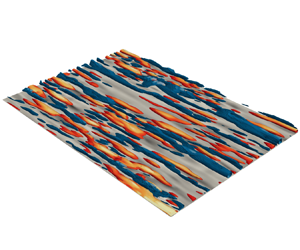
Informative and non-informative decomposition of turbulent flow fields
-
- Journal:
- Journal of Fluid Mechanics / Volume 1000 / 10 December 2024
- Published online by Cambridge University Press:
- 05 December 2024, A95
-
- Article
-
- You have access
- Open access
- HTML
- Export citation
-
Not all the information in a turbulent field is relevant for understanding particular regions or variables in the flow. Here, we present a method for decomposing a source field into its informative $\boldsymbol {\varPhi }_{I}(\boldsymbol {x},t)$ and residual $\boldsymbol {\varPhi }_{R}(\boldsymbol {x},t)$ components relative to another target field. The method is referred to as informative and non-informative decomposition (IND). All the necessary information for physical understanding, reduced-order modelling and control of the target variable is contained in $\boldsymbol {\varPhi }_{I}(\boldsymbol {x},t)$, whereas $\boldsymbol {\varPhi }_{R}(\boldsymbol {x},t)$ offers no substantial utility in these contexts. The decomposition is formulated as an optimisation problem that seeks to maximise the time-lagged mutual information of the informative component with the target variable while minimising the mutual information with the residual component. The method is applied to extract the informative and residual components of the velocity field in a turbulent channel flow, using the wall shear stress as the target variable. We demonstrate the utility of IND in three scenarios: (i) physical insight into the effect of the velocity fluctuations on the wall shear stress; (ii) prediction of the wall shear stress using velocities far from the wall; and (iii) development of control strategies for drag reduction in a turbulent channel flow using opposition control. In case (i), IND reveals that the informative velocity related to wall shear stress consists of wall-attached high- and low-velocity streaks, collocated with regions of vertical motions and weak spanwise velocity. This informative structure is embedded within a larger-scale streak–roll structure of residual velocity, which bears no information about the wall shear stress. In case (ii), the best-performing model for predicting wall shear stress is a convolutional neural network that uses the informative component of the velocity as input, while the residual velocity component provides no predictive capabilities. Finally, in case (iii), we demonstrate that the informative component of the wall-normal velocity is closely linked to the observability of the target variable and holds the essential information needed to develop successful control strategies.


Functional stasis and changing habitat preferences among mammalian communities from the PETM of the Bighorn Basin, Wyoming
-
- Journal:
- Cambridge Prisms: Extinction / Volume 2 / 2024
- Published online by Cambridge University Press:
- 05 December 2024, e20
-
- Article
-
- You have access
- Open access
- HTML
- Export citation
Appendix H - The Coefficients of the Tidal Orbital Precessions
-
- Book:
- General Post-Newtonian Orbital Effects
- Published online:
- 28 November 2024
- Print publication:
- 05 December 2024, pp 207-211
-
- Chapter
- Export citation
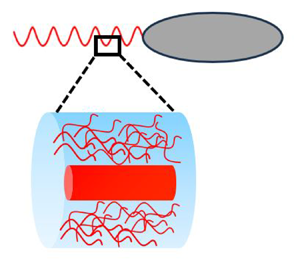
A swimming bacterium in a two-fluid model of a polymer solution
-
- Journal:
- Journal of Fluid Mechanics / Volume 1001 / 25 December 2024
- Published online by Cambridge University Press:
- 05 December 2024, A8
-
- Article
-
- You have access
- Open access
- HTML
- Export citation
-
We analyse the motion of a flagellated bacterium in a two-fluid medium using slender body theory. The two-fluid model is useful for describing a body moving through a complex fluid with a microstructure whose length scale is comparable to the characteristic scale of the body. This is true for bacterial motion in biological fluids (entangled polymer solutions), where the entanglement results in a porous microstructure with typical pore diameters comparable to or larger than the flagellar bundle diameter, but smaller than the diameter of the bacterial head. Thus, the polymer and solvent satisfy different boundary conditions on the flagellar bundle and move with different velocities close to it. This gives rise to a screening length $L_B$ within which the fluids exchange momentum and the relative velocity between the two fluids decays. In this work, both the solvent and polymer of the two-fluid medium are modelled as Newtonian fluids with different viscosities $\mu _s$ and $\mu _p$ (viscosity ratio $\lambda = \mu _p/\mu _s$), thereby capturing the effects solely introduced by the microstructure of the complex fluid. From our calculations, we observe an increased drag anisotropy for a rigid, slender flagellar bundle moving through this two-fluid medium, resulting in an enhanced swimming velocity of the organism. The results are sensitive to the interaction between the bundle and the polymer, and we discuss two physical scenarios corresponding to two types of interaction. Our model provides an explanation for the experimentally observed enhancement of swimming velocity of bacteria in entangled polymer solutions and motivates further experimental investigations.


12 - Detecting and Characterising Exoplanets
- from Part IV - Astrobiological Targets
-
- Book:
- From Stars to Life
- Published online:
- 22 November 2024
- Print publication:
- 05 December 2024, pp 266-290
-
- Chapter
- Export citation
Part II - Earth
-
- Book:
- From Stars to Life
- Published online:
- 22 November 2024
- Print publication:
- 05 December 2024, pp 73-74
-
- Chapter
- Export citation
5 - The USA and Climate Policies
- from Part I - Comparing Climate Policies
-
-
- Book:
- Implementing Climate Change Policy
- Published online:
- 22 November 2024
- Print publication:
- 05 December 2024, pp 80-93
-
- Chapter
-
- You have access
- Open access
- HTML
- Export citation
9 - pK Tidal Effects: Distant 3rd Body
-
- Book:
- General Post-Newtonian Orbital Effects
- Published online:
- 28 November 2024
- Print publication:
- 05 December 2024, pp 155-164
-
- Chapter
- Export citation
Abbreviations
-
- Book:
- Implementing Climate Change Policy
- Published online:
- 22 November 2024
- Print publication:
- 05 December 2024, pp xiii-xviii
-
- Chapter
-
- You have access
- Open access
- HTML
- Export citation
Contents
-
- Book:
- General Post-Newtonian Orbital Effects
- Published online:
- 28 November 2024
- Print publication:
- 05 December 2024, pp vii-xii
-
- Chapter
- Export citation
3 - Heat, Isostasy, Petrology, and Basins
-
- Book:
- Plate Tectonics
- Published online:
- 24 January 2025
- Print publication:
- 05 December 2024, pp 35-66
-
- Chapter
- Export citation
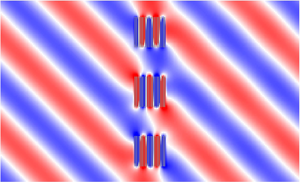
Wave scattering by plate array metacylinders of arbitrary cross-section
-
- Journal:
- Journal of Fluid Mechanics / Volume 1001 / 25 December 2024
- Published online by Cambridge University Press:
- 05 December 2024, A6
-
- Article
-
- You have access
- Open access
- HTML
- Export citation
Part III - Habitability
-
- Book:
- From Stars to Life
- Published online:
- 22 November 2024
- Print publication:
- 05 December 2024, pp 145-146
-
- Chapter
- Export citation
3 - Environmental Constitutionalism
- from Part I - Comparing Climate Policies
-
-
- Book:
- Implementing Climate Change Policy
- Published online:
- 22 November 2024
- Print publication:
- 05 December 2024, pp 47-66
-
- Chapter
-
- You have access
- Open access
- HTML
- Export citation
References
-
- Book:
- From Stars to Life
- Published online:
- 22 November 2024
- Print publication:
- 05 December 2024, pp 353-391
-
- Chapter
- Export citation
