To save content items to your account,
please confirm that you agree to abide by our usage policies.
If this is the first time you use this feature, you will be asked to authorise Cambridge Core to connect with your account.
Find out more about saving content to .
To save content items to your Kindle, first ensure no-reply@cambridge.org
is added to your Approved Personal Document E-mail List under your Personal Document Settings
on the Manage Your Content and Devices page of your Amazon account. Then enter the ‘name’ part
of your Kindle email address below.
Find out more about saving to your Kindle.
Note you can select to save to either the @free.kindle.com or @kindle.com variations.
‘@free.kindle.com’ emails are free but can only be saved to your device when it is connected to wi-fi.
‘@kindle.com’ emails can be delivered even when you are not connected to wi-fi, but note that service fees apply.
Chapter 6 covers continental rifting and rift-related processes that operate when continental lithosphere is thinned and broken. It covers the two fundamental modes of rift initiation; active and passive rifting. It also cover the role of mantle plumes and pre-rift structures that weaken the lithosphere. Magmatism typically varies along rift systems and is often related to plume influence during rift initiation. The main structural elements of rifts are presented, from rift transfer zones to fault relay ramps, together with the evolution of rifts in terms of fault growth, strain, crustal thinning and rift (a)symmetry. While some rifts open orthogonally, most rifts experience oblique rifting. Other rifts again show evidence of two or more phases of extension, and the interference between the two phases in terms of fault orientation and interaction is discussed. Different tectonic settings, such as back-arc rifting, transform fault settings, and orogen-related rifting are covered. The deposition of sediments in relation to structural elements is important, and both synrift and postrift sedimentation are discussed. Rifts also host important hydrocarbon and mineral resources, and examples from northern Europe and North America are provided in this chapter.
The Earth’s interior is the focus of this chapter, where we present the most important methods and data sources that allow us to gain information about the inside of our planet. Seismic waves give us refraction and reflection data and are used together with magnetic and gravity anomaly data in increasingly sophisticated ways. Seismic tomography is presented, which provides images and models of the interior. In this chapter it is shown how variations in S and P wave velocities are essential to our understanding of Earth’s interior, and how different kinds of geophysical data can be used to generate anomaly images that reflect rheologic variations, magma, partial melting and phase transformations. Some parts of the planet are dominated by descending cool lithosphere and mantle, while others are regions of net upwelling. The deep geodynamic processes are related to plate motions, but in a complex way that needs a better understanding.
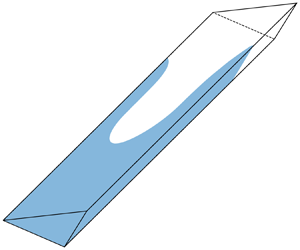
A model of imbibition dynamics in a channel of flattened triangular cross-section is presented, taking into account the liquid film flow in the corners of the channel. The quasi-analytical solutions are derived on the basis of a lubrication approximation. The analysis encompasses two imbibition scenarios corresponding to a constant flow rate or constant pressure imposed in the wetting fluid at the inlet of the channel. In the former case, the process starts with a liquid film flow regime in the corners that is followed by a bulk and corner film flow regime characterised by a triple point advancing (far) ahead of the bulk meniscus after its entrance in the channel. In the latter case, the occurrence of the bulk and corner film flow regime is conditioned by an imposed pressure yielding a capillary pressure at the inlet smaller than a threshold capillary pressure. Above this threshold, the liquid film regime remains. For both imbibition scenarios under concern, important features are highlighted, including (i) the time scalings of the dynamics of both the triple point and apex of the bulk meniscus (when it exists), (ii) the contrast in the positions of these two points showing that the classical Washburn approach, which neglects the effect of the corner films, overpredicts the dynamics of the bulk meniscus. The important consequence is an early wetting fluid breakthrough at the channel outlet much before the bulk meniscus arrival. Comparisons with experimental data available in the literature are provided, validating the approach proposed in this work.
In this first chapter, the concept of plate tectonics is briefly defined along with related terms such as tectonics, geotectonics, geodynamics and mantle dynamics. The uniqueness of Earth’s active plate tectonics is emphasized through comparisons with our neighboring planets, where asteroid impacts and volcanism tend to be important. Faults, folds and evidence of volcanism are common on many planets, but they are not related to plate tectonic processes. The Earth’s continents and oceans, zones of volcanism, seismic activity and topographic expression are not matched with any other planet in our solar system, and the chapter emphasizes that the plate tectonic model is able to explain first-order tectonic features and processes on Earth, and how it influences topography, climate and the evolution of life.
Edited by
Ottavio Quirico, University of New England, University for Foreigners of Perugia and Australian National University, Canberra,Walter Baber, California State University, Long Beach
Chapter 8 gives an overview of the general structure and composition of oceanic lithosphere – the most common type of lithosphere on Earth. Its thickness, layered structure, seismicity, variation in seafloor elevation, magnetic anomaly pattern and composition are put in context of oceanic spreading and associated processes. The range of spreading rates, from ultraslow to superfast, is discussed. Differences in spreading rate have implications for the size of the magma chamber under the spreading ridge and therefore for the thicknesses of the different oceanic crustal layers. Slow spreading also favors exhumation of mantle and the formation of extensional detachments and core complexes. In this chapter the crystallization of melt to form oceanic crust is discussed along with the formation of hydrothermal mineralization and smokers. Hydrothermal activity produces ores that represent important metal resources that may be mined in the future. This chapter also presents ophiolites, oceanic crust on land, and simple models for obduction.
The impact of the Newtonian quadrupolar acceleration, generalized also to the case of two bodies of comparable masses and quadrupole moments, is calculated for different types of observation-related quantities (Keplerian orbital elements, anomalistic, draconitic and sidereal orbital periods, two-body range and range rate, radial velocity curve and radial velocity semiamplitude of spectroscopic binaries, astrometric angles RA and dec., times of arrival of binary pulsars, characteristic timescales of transiting exoplanets and their sky-projected spin-orbit angle). The results are applied to a test particle orbiting a primary, a Sun-Jupiter exoplanet system, and to a S star in Sgr A*.
Edited by
Ottavio Quirico, University of New England, University for Foreigners of Perugia and Australian National University, Canberra,Walter Baber, California State University, Long Beach
Edited by
Ottavio Quirico, University of New England, University for Foreigners of Perugia and Australian National University, Canberra,Walter Baber, California State University, Long Beach
The first part of this chapter introduces and defines key concepts that are commonly encountered in this subject: astrobiology, habitability, and life; in doing so, it also clarifies the ambiguities inherent in these terms. The second part briefly chronicles the lengthy and rich history of speculations about the plurality of worlds and extraterrestrial life in myriad societies across different epochs. It concludes with a summary of developments in astrobiology in the early- and mid-twentieth century, and describes how the future of this field looks optimistic.
Edited by
Ottavio Quirico, University of New England, University for Foreigners of Perugia and Australian National University, Canberra,Walter Baber, California State University, Long Beach
Taking the European Union (EU) as a reference, this chapter critically examines the new landscape of ecolabelling and its relation to climate change. In particular, the focus is on the need to create a food environmental labelling that will play a fundamental role in future scenarios and also in business-to-consumer relations, in fulfilment of the objectives of the Paris Agreement, the United Nations (UN) Agenda 2030 for Sustainable Development and the European Green Deal. To achieve climate sustainability it is necessary to design future instruments that are in line with obligations such as the nutritional Front of Pack Labelling, progressively extending ecolabelling from non-food to food products, thus guaranteeing adequate consumer information.
This chapter elucidates the physical and chemical mechanisms involved in the formation of planets, the conventional abodes of life. The first part is devoted to protoplanetary discs, wherein planet formation unfolds. The topics covered include the minimum mass required for assembling the solar system (minimum mass solar nebula), the thermal and density structure of protoplanetary discs, and the rich chemistry that occurs in these settings. The second delves into the many stages of planet formation starting from the coagulation of dust to the hurdles encountered (e.g., metre barrier) in forming kilometre-sized planetesimals and subsequently to collisions between planetesimals engendering planetary cores and eventually terrestrial planets; a brief description of how giant planets are assembled is also delineated. The final part outlines how interactions between a given planet and its neighbouring gas or planetesimals can contribute to the migration of the former, as well as influence the delivery of water and other volatiles to the planet.
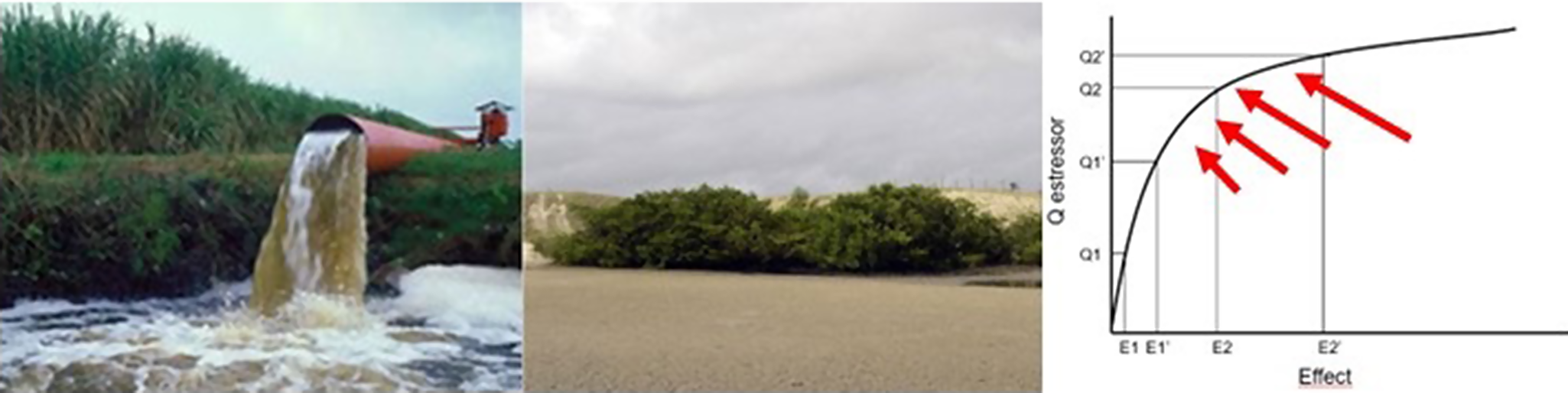
The semiarid northeast coast of Brazil harbours just less than 44,300 ha of mangroves, 4% of Brazilian total. Notwithstanding this relatively small area, these forests have high ecological and economic importance, sustaining traditional fisheries and protecting biodiversity, including many threatened species. They present unique biogeochemical characteristics resulting in distinct ecosystem functioning compared to mangroves located in humid areas. Semiarid mangroves present lower aboveground biomass compared to humid region mangroves but show similar belowground biomass. Whereas mangrove soils in humid areas are strongly influenced by sulphate reduction, iron geochemistry is a primary driver of soil characteristics in semiarid mangrove soils, suggesting different responses to climate change drivers between them. Although legally protected, they have incurred continuous degradation due to regional drivers, mostly aquaculture and river damming, which differs from those in humid coast mangroves. Semiarid mangroves are also particularly sensitive to drivers associated with global climate change (high temperatures, reduced rainfall and sea level rise). These conditions occur at a global scale; however, the impacts are worsened by the natural conditions of semiarid coastlines, which already provide biologically stressful conditions for mangroves. This article compares the impacts of such drivers in semiarid mangroves with those of humid mangroves, focusing on their biogeochemical response and eventual rehabilitation.
The ocellated shrimp goby, Tomiyamichthys russus was recorded from peninsular India based on a single specimen from Royapuram Fishing Harbour (13°07′24.49′′ N; 80°17′52.20′′E), Chennai, Southeast coast of India. The specimen was identified as the ocellated shrimp goby, T. russus by identification characteristics such as crosswise rows of small orange spots surrounded by minute dull black circles in the post-orbital and pre-dorsal region; posterior area of the gill membrane orange; operculum with pale violet traces. The morphometric characteristics were compared with the previous reports of ocellated shrimp goby. The present finding is the documentation of rare ocellated shrimp goby from the peninsular Indian coast.