To save content items to your account,
please confirm that you agree to abide by our usage policies.
If this is the first time you use this feature, you will be asked to authorise Cambridge Core to connect with your account.
Find out more about saving content to .
To save content items to your Kindle, first ensure no-reply@cambridge.org
is added to your Approved Personal Document E-mail List under your Personal Document Settings
on the Manage Your Content and Devices page of your Amazon account. Then enter the ‘name’ part
of your Kindle email address below.
Find out more about saving to your Kindle.
Note you can select to save to either the @free.kindle.com or @kindle.com variations.
‘@free.kindle.com’ emails are free but can only be saved to your device when it is connected to wi-fi.
‘@kindle.com’ emails can be delivered even when you are not connected to wi-fi, but note that service fees apply.
This chapter elucidates the physical and chemical mechanisms involved in the formation of planets, the conventional abodes of life. The first part is devoted to protoplanetary discs, wherein planet formation unfolds. The topics covered include the minimum mass required for assembling the solar system (minimum mass solar nebula), the thermal and density structure of protoplanetary discs, and the rich chemistry that occurs in these settings. The second delves into the many stages of planet formation starting from the coagulation of dust to the hurdles encountered (e.g., metre barrier) in forming kilometre-sized planetesimals and subsequently to collisions between planetesimals engendering planetary cores and eventually terrestrial planets; a brief description of how giant planets are assembled is also delineated. The final part outlines how interactions between a given planet and its neighbouring gas or planetesimals can contribute to the migration of the former, as well as influence the delivery of water and other volatiles to the planet.
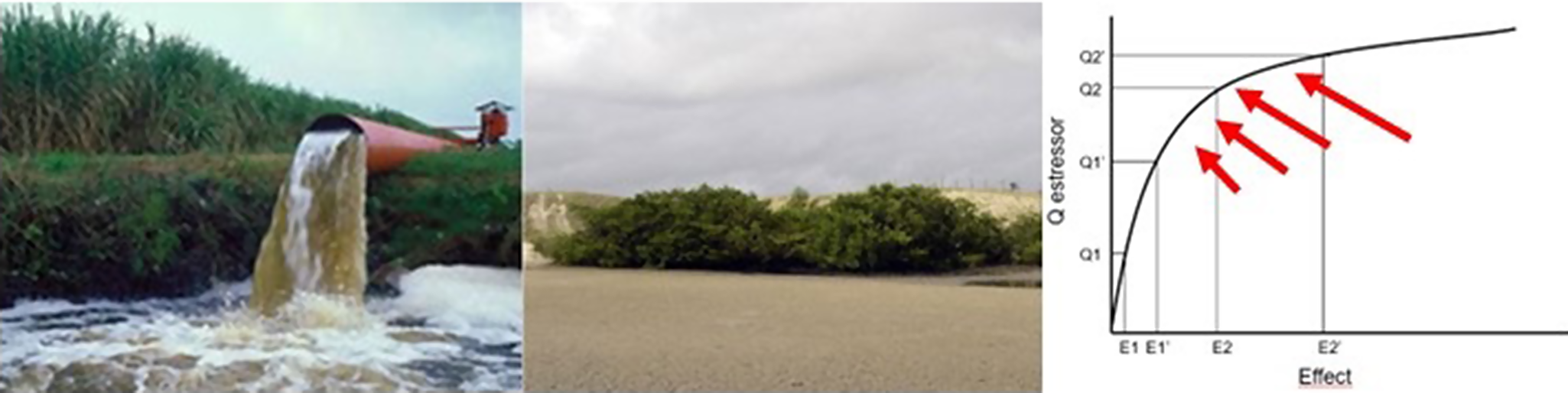
The semiarid northeast coast of Brazil harbours just less than 44,300 ha of mangroves, 4% of Brazilian total. Notwithstanding this relatively small area, these forests have high ecological and economic importance, sustaining traditional fisheries and protecting biodiversity, including many threatened species. They present unique biogeochemical characteristics resulting in distinct ecosystem functioning compared to mangroves located in humid areas. Semiarid mangroves present lower aboveground biomass compared to humid region mangroves but show similar belowground biomass. Whereas mangrove soils in humid areas are strongly influenced by sulphate reduction, iron geochemistry is a primary driver of soil characteristics in semiarid mangrove soils, suggesting different responses to climate change drivers between them. Although legally protected, they have incurred continuous degradation due to regional drivers, mostly aquaculture and river damming, which differs from those in humid coast mangroves. Semiarid mangroves are also particularly sensitive to drivers associated with global climate change (high temperatures, reduced rainfall and sea level rise). These conditions occur at a global scale; however, the impacts are worsened by the natural conditions of semiarid coastlines, which already provide biologically stressful conditions for mangroves. This article compares the impacts of such drivers in semiarid mangroves with those of humid mangroves, focusing on their biogeochemical response and eventual rehabilitation.
The ocellated shrimp goby, Tomiyamichthys russus was recorded from peninsular India based on a single specimen from Royapuram Fishing Harbour (13°07′24.49′′ N; 80°17′52.20′′E), Chennai, Southeast coast of India. The specimen was identified as the ocellated shrimp goby, T. russus by identification characteristics such as crosswise rows of small orange spots surrounded by minute dull black circles in the post-orbital and pre-dorsal region; posterior area of the gill membrane orange; operculum with pale violet traces. The morphometric characteristics were compared with the previous reports of ocellated shrimp goby. The present finding is the documentation of rare ocellated shrimp goby from the peninsular Indian coast.
Net zero as a policy for reducing atmospheric carbon emissions is relatively straightforward; however, the implementation of that policy is not, particularly in difficult-to-measure sectors such as agriculture. As strategies to reduce emissions are explored, multiple uncertainties in measuring these emissions are confronted. In this paper, we use the example of a coffee supply chain in Peru to illustrate the magnitude of potential variability in emissions accounting results, which represent a necessary first step in moving towards net zero. We show that scope boundaries and emissions factors chosen for carbon calculations significantly alter emissions outcomes and can result in discrepancies of over 77 million kg CO2e when scaled to a medium-size coffee trader. Net zero targets and efforts to reduce emissions may be over- or understated depending on subjective decisions that cause significant differences in emissions results. Although framework guidance exists, it is apparent that a greater set of micro-level agreements is needed for calculating the emissions of lesser-studied sectors, such as agricultural supply chains. This process is imperative to focus efforts on reducing emissions and on moving from net zero as a mere policy to action and implementation.
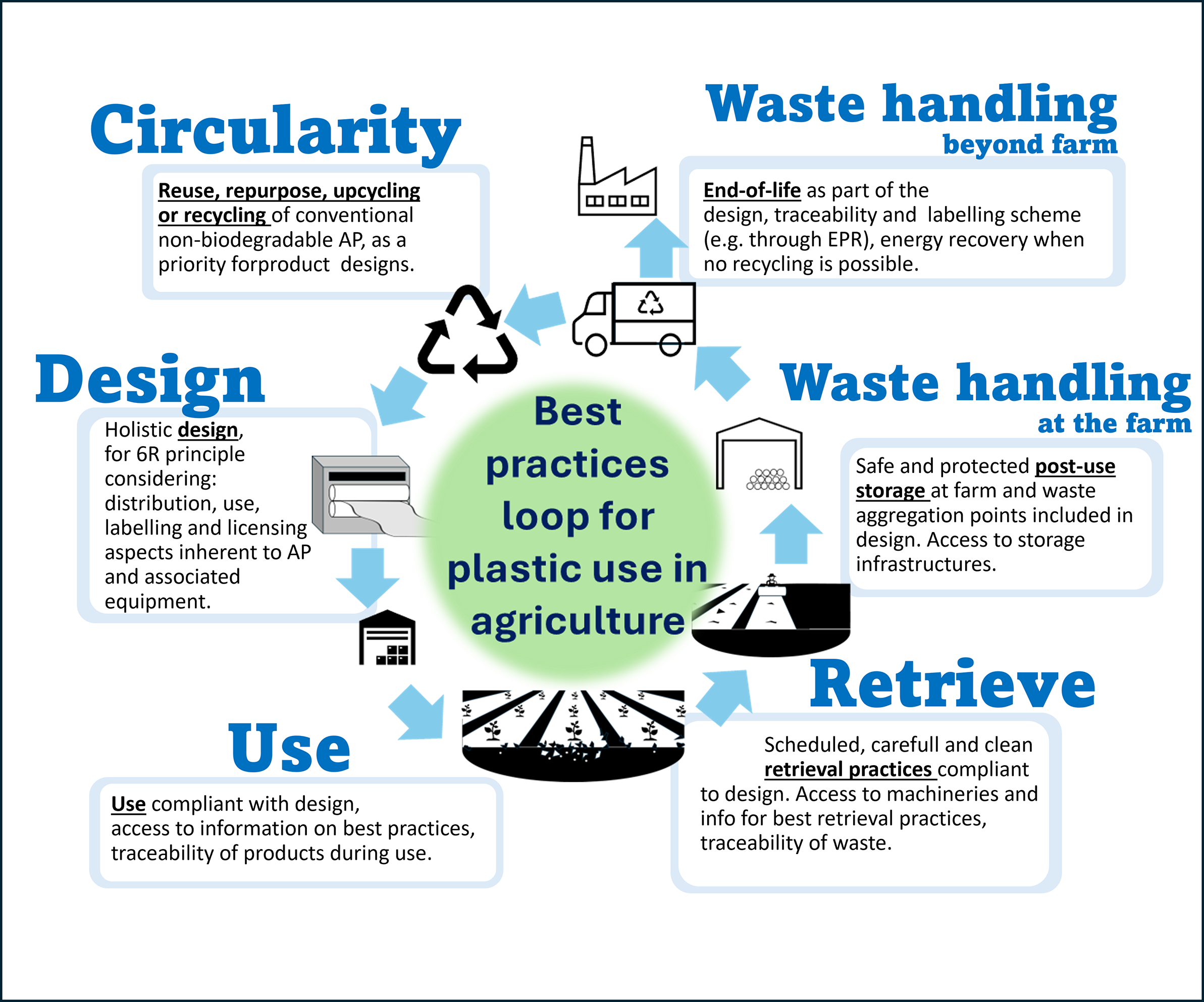
Plastics used in agriculture, commonly known as agriplastics (AP), offer numerous advantages in terrestrial agriculture, forestry, fisheries and aquaculture, but the diffusion of AP-intensive practices has led to extensive pollution. This review aims to synthesise scientific and policy discussions surrounding AP, examining evidence of their benefits and detrimental environmental and agricultural impacts. Following the proposal of a preliminary general taxonomy of AP, this paper presents the findings from a survey conducted among international experts from the plastic industry, farmer organisations, NGOs and environmental research institutes. This analysis highlights knowledge gaps, demands and perspectives for the sustainable future use of AP. Stakeholder positions vary on the options of ‘rejection’ or ‘reduction’ of AP, as well as the role of alternative materials such as (bio)degradable and compostable plastics. However, there is consensus on critical issues such as redesign, labelling, traceability, environmental safety standards, deployment and retrieval standards, as well as innovative waste management approaches. All stakeholders express concern for the environment. A ‘best practice’-based circular model was elaborated capturing these perspectives. In the context of global food systems increasingly reliant on AP, scientists emphasise the need to simultaneously preserve nature-based and traditional knowledge-based sustainable agricultural practices to enhance food system resilience.
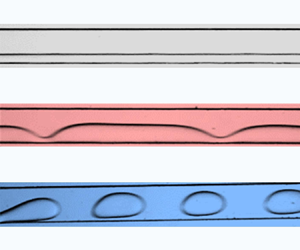
Understanding interfacial instability in a coflow system has relevance in the effective manipulation of small objects in microfluidic applications. We experimentally elucidate interfacial instability in stratified coflow systems of Newtonian and viscoelastic fluid streams in microfluidic confinements. By performing a linear stability analysis, we derive equations that describe the complex wave speed and the dispersion relationship between wavenumber and angular frequency, thus categorizing the behaviour of the systems into two main regimes: stable (with a flat interface) and unstable (with either a wavy interface or droplet formation). We characterize the regimes in terms of the capillary numbers of the phases in a comprehensive regime plot. We decipher the dependence of interfacial instability on fluidic parameters by decoupling the physics into viscous and elastic components. Remarkably, our findings reveal that elastic stratification can both stabilize and destabilize the flow, depending on the fluid and flow parameters. We also examine droplet formation, which is important for microfluidic applications. Our findings suggest that adjusting the viscous and elastic properties of the fluids can control the transition between wavy and droplet-forming unstable regimes. Our investigation uncovers the physics behind the instability involved in interfacial flows of Newtonian and viscoelastic fluids in general, and the unexplored behaviour of interfacial waves in stratified liquid systems. The present study can lead to a better understanding of the manipulation of small objects and production of droplets in microfluidic coflow systems.
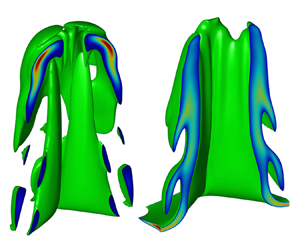
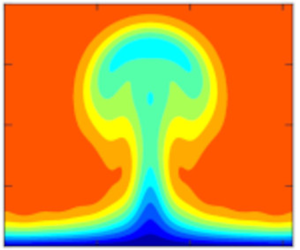
The self-generated magnetic field in three-dimensional (3-D) single-mode ablative Rayleigh–Taylor instability (ARTI) relevant to the acceleration phase of a direct-drive inertial confinement fusion (ICF) implosion is investigated. It is found that stronger magnetic fields up to a few thousand teslas can be generated by 3-D ARTI rather than by its two-dimensional (2-D) counterpart. The Nernst effects significantly alter the magnetic field convection and amplify the magnetic fields. The magnetic field of thousands of teslas yields the Hall parameter of the order of unity, leading to profound magnetized heat flux modification. While the magnetic field significantly accelerates the bubble growth in the short-wavelength 2-D modes through modifying the heat fluxes, the magnetic field mostly accelerates the spike growth but has little influence on the bubble growth in 3-D ARTI. The accelerated growth of spikes in 3-D ARTI is expected to enhance material mixing and degrade ICF implosion performance. This work is focused on a regime relevant to direct-drive ICF parameters at the National Ignition Facility, and it also covers a range of key parameters that are relevant to other ICF designs and hydrodynamic/astrophysical scenarios.
A case of hermaphrodism in a wild Pacific bluefin tuna Thunnus orientalis from the Sea of Japan is reported. Morphologically and macroscopically, the gonad seemed to have both ovarian and testicular surfaces. Histological analysis showed that the gonad consisted of only sexually mature testis in all the sections examined, suggesting that the individual was male. Genetic analysis, however, indicated that the tissue samples from this individual had no male-specific genome region, resulting in it being inferred as a female. The observed inconsistency between genetic and histological analysis could help future understanding of the sex development of tunas.
The grasslands of Central Anatolia in Türkiye, including the steppes and forest-steppes, are often mischaracterized as degraded ecosystems due to long-standing human activities, particularly agriculture and domestic grazing. However, palaeoecological evidence and recent research suggest that these grasslands are ancient, biodiversity-rich systems that have persisted through various climatic changes and disturbance regimes. This manuscript challenges the conventional view that Central Anatolian grasslands are secondary and degraded, arguing instead that they represent old-growth ecosystems that coexisted with forests as alternative biome states throughout history. We emphasize the need to re-evaluate current land management practices, particularly afforestation efforts, which may undermine the resilience of these ecosystems to climate change. By recognizing the ecological value of these old-growth grasslands and adopting a comprehensive conservation strategy, the conservation and restoration of these vital ecosystems can be improved, ensuring their resilience and biodiversity in the face of future environmental challenges.
An understanding of the growth and demise of ice sheets over North America is essential to inform future climate models. One poorly studied subject is the glacial dynamics during interstadial Marine Isotope Stage (MIS) 3 (57–29 ka). To better constrain the southern margin of the Laurentide Ice Sheet during this time period, we re-examined a stratigraphic sequence in southeast Manitoba, Canada, and provide robust evidence for advance and retreat of ice. Around 46.6 ± 5.1 ka (1σ error), fluvial sands were deposited under similar precipitation and significantly cooler summer temperatures than present-day. Ice then advanced south over the area, before retreating once again and a return to boreal forest and grassland conditions. The area was then covered by proglacial Lake Vita, dammed by ice to the north. Geochronology constraints indicate Lake Vita existed from ca. 44.3 ± 3.6 to 30.4 ± 2.3 ka (1σ error), although gaps in the optical and finite radiocarbon ages suggest either a lack of data or plausible temporary ice-margin advances during this time period. Ice covering most of Manitoba during MIS 3 is in line with global δ18O records, and glacially influenced sediment deposition in the Mississippi River basin.
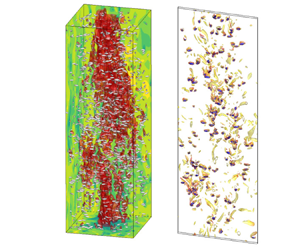
In this study we investigate the sedimentation of prolate spheroids in a quiescent fluid by means of the particle-resolved direct numerical simulation. With the increase of the particle volume fraction $\phi$ from $0.1\,\%$ to $10\,\%$, we observe a non-monotonic variation of the mean settling velocity of particles, $\langle V_s \rangle$. By virtue of the Voronoi analysis, we find that the degree of particle clustering is highest when $\langle V_s \rangle$ reaches the local maximum at $\phi =1\,\%$. Under the swarm effect, clustered particles are found to preferentially sample downward fluid flows in the wake regions, leading to the enhancement of the settling speed. As for lower or higher volume fractions, the tendency of particle clustering and the preferential sampling of downward flows are attenuated. The hindrance effect becomes predominant when the volume fraction exceeds 5 % and reduces $\langle V_s \rangle$ to less than the isolated settling velocity. Particle orientation plays a minor role in the mean settling velocity, although individual prolate particles still tend to settle faster in suspensions when they deviate more from the broad-side-on alignment. Moreover, we also demonstrate that particles are prone to form column-like microstructures in dilute suspensions under the effect of wake-induced hydrodynamic attractions. The radial distribution function is higher at a lower volume fraction. As a result, the collision rate scaled by the particle number density decreases with the increasing volume fraction. By contrast, as another contribution to the particle collision rate, the relative radial velocity for nearby particles shows a minor degree of variation due to the lubrication effect.
We study the generation, nonlinear development and secondary instability of unsteady Görtler vortices and streaks in compressible boundary layers exposed to free-stream vortical disturbances and evolving over concave, flat and convex walls. The formation and evolution of the disturbances are governed by the compressible nonlinear boundary-region equations, supplemented by initial and boundary conditions that characterise the impact of the free-stream disturbances on the boundary layer. Computations are performed for parameters typical of flows over high-pressure turbine blades, where the Görtler number, a measure of the curvature effects, and the disturbance Reynolds number, a measure of the nonlinear effects, are order-one quantities. At moderate intensities of the free-stream disturbances, increasing the Görtler number renders the boundary layer more unstable, while increasing the Mach number or the frequency stabilises the flow. As the free-stream disturbances become more intense, vortices over concave surfaces no longer develop into the characteristic mushroom-shaped structures, while the flow over convex surfaces is destabilised. An occurrence map identifies Görtler vortices or streaks for different levels of free-stream disturbances and Görtler numbers. Our calculations capture well the experimental measurements of the enhanced skin friction and wall-heat transfer over turbine-blade pressure surfaces. The time-averaged wall-heat transfer modulations, termed hot fingers, are elongated in the streamwise direction and their spanwise wavelength is half of the characteristic wavelength of the free-stream disturbances. Nonlinearly saturated disturbances are unstable to secondary high-frequency modes, whose growth rate increases with the Görtler number. A new varicose even mode is reported, which may promote transition to turbulence at the stem of nonlinear streaks.
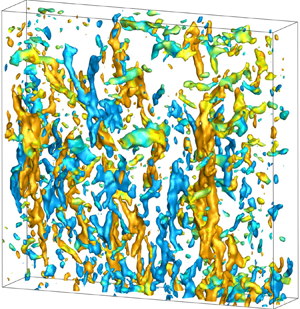
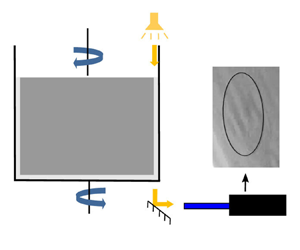
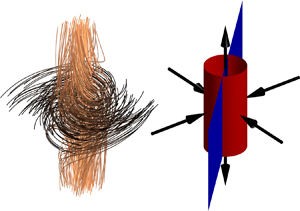
The coherent vortical structures in turbulent flow through a strong 16 : 1 three-dimensional contraction are studied using time-resolved volumetric measurements. Visualization using the vorticity magnitude criterion shows the emergence of long, stretched cylindrical vortices aligned with the mean flow. This alignment is quantified by probability density functions (p.d.f.s) of the direction cosines. We propose two measures to quantify the alignment, the peak height in the probability and a coefficient from the moment of the p.d.f., both of which reaffirm the strong streamwise alignment. The root mean square streamwise vorticity grows within the contraction to become 4.5 times larger than the transverse component, at the downstream location where the contraction ratio is $C=11$. The characteristic vortices become as long as the measurement volume, or more than 4 times the integral scale at the entrance to the contraction. We also characterize the vorticity enhancement along individual vortices, measuring 65 % strengthening over the distance where $C$ goes from 4 to 11. The prevalence of these coherent structures is estimated from 700 000 measured volumes, showing that near the outlet, it is more likely to have one or two of these structures present than none.
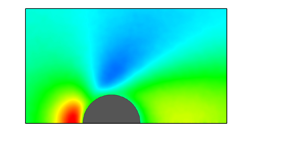
Aerothermodynamic characteristics of a sphere in a subsonic flow are calculated over a broad range of gas rarefaction by the direct simulation Monte Carlo method based on ab initio interatomic potentials and Cercignani–Lampis surface scattering kernel. Calculations of the drag and average energy transfer coefficients are performed for various noble gases in the range of Mach number from 0.1 to 1. The obtained results point out that the influence of the interatomic potential is weak in subsonic flows. A comparison of the present results with a linear theory shows that the numerical solutions at Mach number equal to 0.1 are close to those obtained from the linearized kinetic equation in the transitional and free-molecular regimes. In the near-continuum flow regime, the difference between the present solution and the linear theory is significant. To reveal the effects of the gas–surface accommodation, a few sets of the tangential momentum and normal energy accommodation coefficients are considered in simulations. It is shown that the effect of the accommodation coefficients on the sphere drag is not trivial, and, for non-diffuse scattering, the drag coefficient can be either larger or smaller than that for diffuse scattering. The effect of the sphere temperature is also investigated and the calculated values of the average energy transfer coefficient are used to find the Stanton number, recovery factor and adiabatic surface temperature. The numerical results for the sphere drag and energy transfer are compared with the semi-empirical fitting equations known from the literature.
Capsules, which are potentially active fluid droplets enclosed in a thin elastic membrane, experience large deformations when placed in suspension. The induced fluid–structure interaction stresses can potentially lead to rupture of the capsule membrane. While numerous experimental studies have focused on the rheological behaviour of capsules until rupture, there remains a gap in understanding the evolution of their mechanical properties and the underlying mechanisms of damage and breakup under flow. We here investigate the damage and rupture of bioartificial microcapsules made of ovalbumin reticulated with terephthaloyl chloride and placed in simple shear flow. We characterize damage by identifying how the surface shear modulus of the capsule membrane changes over time. Rupture is then characterized by comparing the number and size distribution of capsules before and after exposure to shear, while varying the shear rates and time during which capsules are sheared. Our findings reveal how the percentage of ruptured capsules increases with their size, exposure time to shear, and the ratio of viscous to elastic forces at rupture.
To address the issues of declining groundwater levels and the degradation of soil ecological functions caused by open-pit coal mining in China. Based on theoretical analysis, laboratory experiments, on-site monitoring, mathematical modeling, and other means, the concept of coal ecological protection mining of ‘damage reduction mining, three-dimensional protection, systematic restoration’ is proposed. The mining concept has achieved remarkable ecological restoration effects, leading the scientific and technological progress of safe, efficient and green mining in open-pit coal mines.
Technical summary
The mechanism of damage propagation among ‘rock-soil-water’ ecological elements in open-pit coal mining was revealed. Adopting comprehensive damage-reducing mining technology throughout the entire stripping process, mining and drainage, shengli open-pit coal mine has doubled its production capacity, and reduced the land excavation and damage by 60 mu/year, reduced the mining area by 1,128 mu, and raised the groundwater level by 2.6–6 m, and the ecological restoration of the drainage field was advanced by more than 1 year. Adopting the three-dimensional water storage technology involves underground reservoirs, aquifer reconstruction, and near-surface distributed water storage units, baorixile open-pit mine has built the world's first open-pit underground water reservoir, with a water storage capacity of 1.22 million m3, and the speed of groundwater level restoration has been increased by more than 70%. By adopting the systematic restoration technology of geomorphology-soil-vegetation in the discharge site, the soil water content in the demonstration area has been increased by 52%, the survival rate of plants has been increased by 34%, and the vegetation coverage has been increased by more than 40%.
Social media summary
Damage-reducing mining and systematic ecological restoration in open-pit coal mining are essential for the safe, efficient and green development of coal.
The velocity gradient tensor can be decomposed into normal straining, pure shearing and rigid rotation tensors, each with distinct symmetry and normality properties. We partition the strength of turbulent velocity gradients based on the relative contributions of these constituents in several canonical flows. These flows include forced isotropic turbulence, turbulent channels and turbulent boundary layers. For forced isotropic turbulence, the partitioning is in excellent agreement with previous results. For wall-bounded turbulence, the partitioning collapses onto the isotropic partitioning far from the wall, where the mean shearing is relatively weak. By contrast, the near-wall partitioning is dominated by shearing. Between these two regimes, the partitioning collapses well at sufficiently high friction Reynolds numbers and its variations in the buffer layer and the log-law region can be reasonably modelled as a function of the mean shearing strength. Altogether, our results highlight the expressivity and broad applicability of the velocity gradient partitioning as advantages for turbulence modelling.