Refine search
Actions for selected content:
178625 results in Earth and Environmental Sciences
Part II - Regulating Hydrogen Markets
-
- Book:
- The Cambridge Handbook of Hydrogen and the Law
- Published online:
- 28 November 2024
- Print publication:
- 28 November 2024, pp 113-170
-
- Chapter
-
- You have access
- Open access
- HTML
- Export citation
Acknowledgements
-
- Book:
- The Cambridge Handbook of Hydrogen and the Law
- Published online:
- 28 November 2024
- Print publication:
- 28 November 2024, pp xxi-xxii
-
- Chapter
-
- You have access
- Open access
- HTML
- Export citation
9 - The Role of Regional and Local Authorities in Developing a Regional Hydrogen Economy
- from Part II - Regulating Hydrogen Markets
-
-
- Book:
- The Cambridge Handbook of Hydrogen and the Law
- Published online:
- 28 November 2024
- Print publication:
- 28 November 2024, pp 129-141
-
- Chapter
-
- You have access
- Open access
- HTML
- Export citation
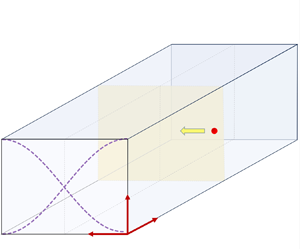
Fluid viscoelasticity affects ultrasound force field-induced particle transport
-
- Journal:
- Journal of Fluid Mechanics / Volume 1000 / 10 December 2024
- Published online by Cambridge University Press:
- 28 November 2024, A75
-
- Article
- Export citation
-
Ultrasonic standing wave technology offers an ideal platform for manipulating particles in microfluidics. We study how fluid viscoelasticity and acoustic boundary formation in micro-confinements affect ultrasound-induced perturbations. These perturbations influence acoustic energy density (AED) and consequently particle transport dynamics. Our approach combines theoretical, numerical and experimental methods. Using the Oldroyd-B model for viscoelastic fluids, we advance acoustic radiation force (ARF) formulations of Doinikov et al. (Phys. Rev. E, vol. 104, no. 6, 2021a; Phys. Rev. E, vol. 104, no. 6, 2021b) for particles much smaller than the acoustic wavelength. This improved approach allows us to decouple AED and acoustic contrast factor terms in the ARF expression. It also enables us to examine the effects of viscoelastic parameters: $\mu ^*$ (ratio of the viscosity of the viscoelastic fluid to that of base Newtonian fluid) and $De$ (product of fluid relaxation time and actuation frequency) on AED and particle migration. Remarkably, we show that increasing fluid elasticity or $De$ transitions viscoelastic fluids from the energy dissipation (relaxation) mode to the energy storage (frozen) mode, increasing AED. Conversely, increasing viscosity ( $\mu ^*$) reduces AED. Thus, our findings suggest that elastic effects accelerate particle migration, while viscous effects decelerate it. Consequently, a viscoelastic fluid-filled micro-confinement acts as an energy dissipation device at low $De$ and an energy storage device at high $De$. Particle migration can be controlled by adjusting viscoelastic and acoustic parameters, at a fixed power input. Our theoretical and numerical findings are validated with our experimental data. Our study advances the fundamental understanding of particle migration in viscoelastic fluids under ultrasound, and can significantly impact future studies on particle/cell migration in bio-fluids.


2 - The Interplay between the State and Non-state Actors in the Governance of Decarbonization: An Analytical Framework
-
-
- Book:
- The Politics and Governance of Decarbonization
- Published online:
- 05 December 2024
- Print publication:
- 28 November 2024, pp 18-40
-
- Chapter
-
- You have access
- Open access
- HTML
- Export citation
20 - The Regulation of Hydrogen in the Heating Markets
- from Part V - End Use of Hydrogen
-
-
- Book:
- The Cambridge Handbook of Hydrogen and the Law
- Published online:
- 28 November 2024
- Print publication:
- 28 November 2024, pp 291-305
-
- Chapter
-
- You have access
- Open access
- HTML
- Export citation
Index
-
- Book:
- The Politics and Governance of Decarbonization
- Published online:
- 05 December 2024
- Print publication:
- 28 November 2024, pp 219-222
-
- Chapter
-
- You have access
- Open access
- HTML
- Export citation
Part III - Regulating Hydrogen Production
-
- Book:
- The Cambridge Handbook of Hydrogen and the Law
- Published online:
- 28 November 2024
- Print publication:
- 28 November 2024, pp 171-214
-
- Chapter
-
- You have access
- Open access
- HTML
- Export citation
8 - The Plurality of Values
-
- Book:
- Ethics and the Environment
- Published online:
- 29 November 2024
- Print publication:
- 28 November 2024, pp 154-179
-
- Chapter
- Export citation
Part I - Current Hydrogen Regulation on the Continents
-
- Book:
- The Cambridge Handbook of Hydrogen and the Law
- Published online:
- 28 November 2024
- Print publication:
- 28 November 2024, pp 11-112
-
- Chapter
-
- You have access
- Open access
- HTML
- Export citation
1 - Introduction
-
-
- Book:
- The Cambridge Handbook of Hydrogen and the Law
- Published online:
- 28 November 2024
- Print publication:
- 28 November 2024, pp 1-10
-
- Chapter
-
- You have access
- Open access
- HTML
- Export citation
6 - All Aboard? Inclusiveness in Collaborative Governance among Swedish Municipalities
-
-
- Book:
- The Politics and Governance of Decarbonization
- Published online:
- 05 December 2024
- Print publication:
- 28 November 2024, pp 119-138
-
- Chapter
-
- You have access
- Open access
- HTML
- Export citation
Preface
-
- Book:
- Ethics and the Environment
- Published online:
- 29 November 2024
- Print publication:
- 28 November 2024, pp xiii-xvi
-
- Chapter
- Export citation
3 - Moral Philosophy
-
- Book:
- Ethics and the Environment
- Published online:
- 29 November 2024
- Print publication:
- 28 November 2024, pp 45-65
-
- Chapter
- Export citation
5 - Humans and Other Animals
-
- Book:
- Ethics and the Environment
- Published online:
- 29 November 2024
- Print publication:
- 28 November 2024, pp 87-104
-
- Chapter
- Export citation
Figures
-
- Book:
- The Cambridge Handbook of Hydrogen and the Law
- Published online:
- 28 November 2024
- Print publication:
- 28 November 2024, pp xi-xii
-
- Chapter
-
- You have access
- Open access
- HTML
- Export citation
16 - Goal-Setting Approaches to the Regulation of Hydrogen Transport
- from Part IV - Regulating Hydrogen Transport
-
-
- Book:
- The Cambridge Handbook of Hydrogen and the Law
- Published online:
- 28 November 2024
- Print publication:
- 28 November 2024, pp 233-245
-
- Chapter
-
- You have access
- Open access
- HTML
- Export citation
Abbreviations
-
- Book:
- The Politics and Governance of Decarbonization
- Published online:
- 05 December 2024
- Print publication:
- 28 November 2024, pp xiv-xvi
-
- Chapter
-
- You have access
- Open access
- HTML
- Export citation

Linear stability and spectral modal decomposition of three-dimensional turbulent wake flow of a generic high-speed train
-
- Journal:
- Journal of Fluid Mechanics / Volume 1000 / 10 December 2024
- Published online by Cambridge University Press:
- 28 November 2024, A64
-
- Article
- Export citation
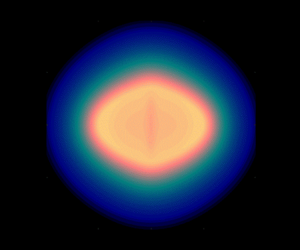
Modal analysis of screeching elliptical jets
-
- Journal:
- Journal of Fluid Mechanics / Volume 1000 / 10 December 2024
- Published online by Cambridge University Press:
- 28 November 2024, A68
-
- Article
-
- You have access
- Open access
- HTML
- Export citation
-
This work presents models for the behaviour of both upstream- and downstream-travelling waves in screeching elliptical jets. Proper orthogonal decomposition is performed on experimental velocity data in both the major and minor axis planes, for an aspect ratio $AR=2$ converging elliptical jet operating at nozzle pressure ratios of $2.6$ and $3.4$. From this decomposition, the radial and axial structure of the guided-jet mode (GJM) and the Kelvin–Helmholtz instability are educed. Linear-stability analysis (LSA) is performed using both the experimentally obtained mean flow, and one obtained using Reynolds-averaged Navier–Stokes (RANS) at matched conditions. It is shown that the wavenumber predicted by LSA for both waves are within the range of experimentally observed wavenumbers. Furthermore, the model accurately predicts the structure of these waves at multiple axial locations, using either the experimental or RANS mean flow. Most critically, it is demonstrated that the GJM is only predicted to be neutrally stable at the screech frequency for a relatively limited streamwise domain, the size and location of which is dependent on the nozzle pressure ratio. A comparison with the amplitude envelope for the GJM extracted from the experimental measurements indicates that the maximum fluctuations associated with the GJM are collocated with this region of the flow that is predicted to support the GJM. While there have been extensive discussions about the frequency dependence of the GJM, this is the first demonstration that its existence is highly dependent on streamwise position within the flow.


