Refine search
Actions for selected content:
212662 results in Engineering
4 - Algorithms for Maximum Likelihood Parameter Estimation
- from Part I - Stochastic Models and Bayesian Inference
-
- Book:
- Partially Observed Markov Decision Processes
- Published online:
- 16 May 2025
- Print publication:
- 05 June 2025, pp 71-90
-
- Chapter
- Export citation
12 - Monotonicity of Value Function for POMDPs
- from Part III - POMDP Structural Results
-
- Book:
- Partially Observed Markov Decision Processes
- Published online:
- 16 May 2025
- Print publication:
- 05 June 2025, pp 312-326
-
- Chapter
- Export citation
16 - Learning Hierarchical Refinement Models
- from Part V - Hierarchical Refinement Models
-
- Book:
- Acting, Planning, and Learning
- Published online:
- 19 May 2025
- Print publication:
- 05 June 2025, pp 380-388
-
- Chapter
- Export citation
Contents
-
- Book:
- Partially Observed Markov Decision Processes
- Published online:
- 16 May 2025
- Print publication:
- 05 June 2025, pp v-xi
-
- Chapter
- Export citation
5 - Multiagent Sensing: Social Learning and Data Incest
- from Part I - Stochastic Models and Bayesian Inference
-
- Book:
- Partially Observed Markov Decision Processes
- Published online:
- 16 May 2025
- Print publication:
- 05 June 2025, pp 91-113
-
- Chapter
- Export citation

Mass and momentum transfer at fluid–porous interfaces: jump boundary conditions for non-parallel flows
-
- Journal:
- Journal of Fluid Mechanics / Volume 1012 / 10 June 2025
- Published online by Cambridge University Press:
- 04 June 2025, A16
-
- Article
- Export citation
-
We derive boundary conditions for two-dimensional parallel and non-parallel flows at the interface of a homogeneous and isotropic porous medium and an overlying fluid layer by solving a macroscopic closure problem based on the asymptotic solution to the generalised transport equations (GTE) in the interfacial region. We obtained jump boundary conditions at the effective sharp surface dividing the homogeneous fluid and porous layers for either the Darcy or the Darcy–Brinkman equations. We discuss the choice of the location of the dividing surface and propose choices which reduce the distance with the GTE solutions. We propose an ad hoc expression of the permeability distribution within the interfacial region which enables us to preserve the invariance of the fluid-side-averaged velocity profile with respect to the radius $r_0$ of the averaging volume. Solutions to the GTE, equipped with the proposed permeability distribution, compare favourably with the averaged solutions to the pore-scale simulations when the interfacial thickness $\delta$ is adjusted to $r_0$. Numerical tests for parallel and non-parallel flows using the obtained jump boundary conditions or the generalised transport equations show quantitative agreement with the GTE solutions, with experiments and pore-scale simulations. The proposed model of mass and momentum transport is predictive, requiring solely information on the bulk porosity and permeability and the location of the solid matrix of the porous medium. Our results suggest that the Brinkman corrections may be avoided if the ratio $a=\delta /\delta _B$ of the thickness $\delta$ of the interfacial region to the Brinkman penetration depth $\delta _B$ is large enough, as the Brinkman sub-layer is entirely contained within the interfacial region in that case. Our formulation has been extended to anisotropic porous media and can be easily dealt with for three-dimensional configurations.


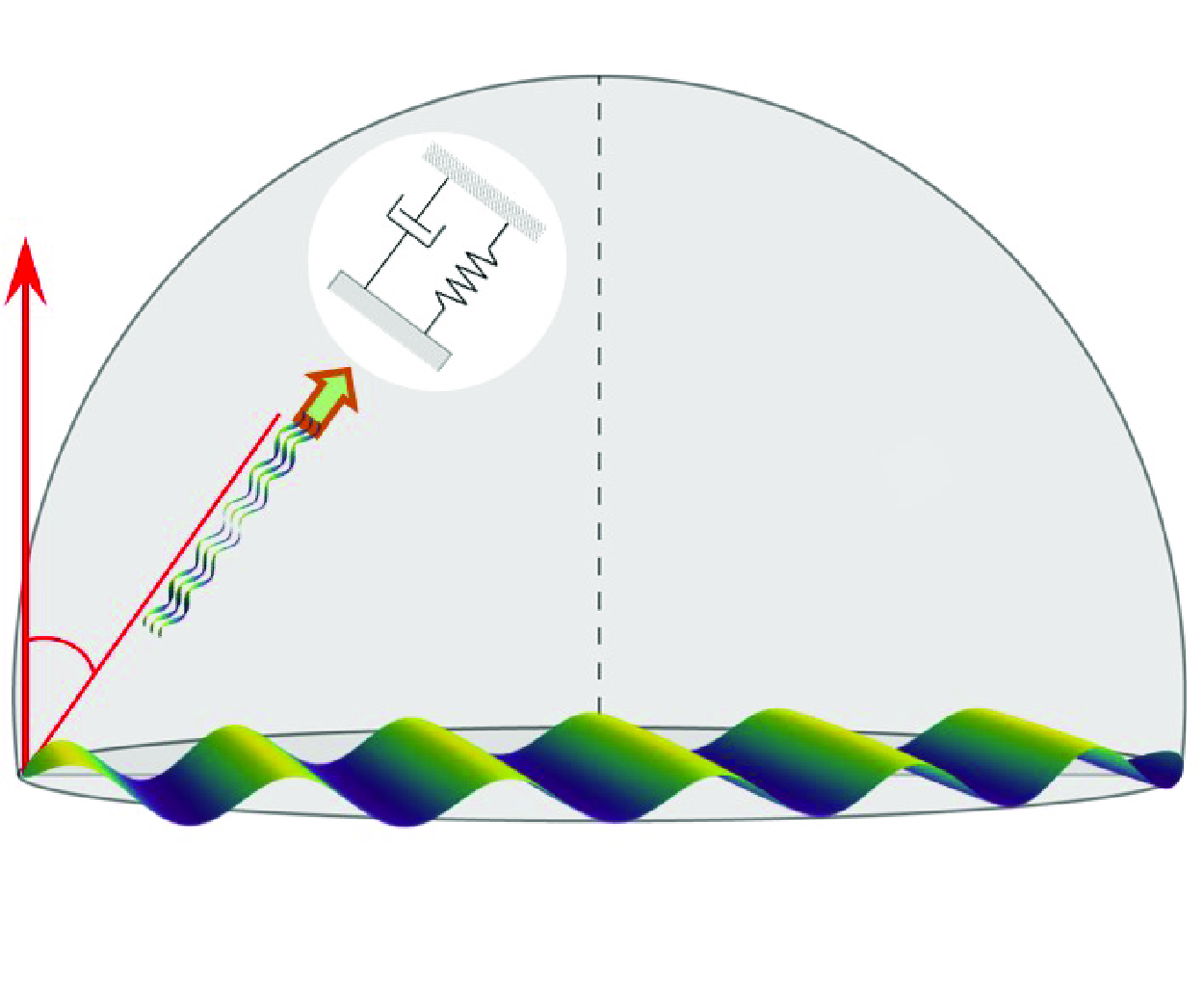
Acoustothermal effect: mechanism and quantification of the heat source
-
- Journal:
- Journal of Fluid Mechanics / Volume 1012 / 10 June 2025
- Published online by Cambridge University Press:
- 04 June 2025, A11
-
- Article
-
- You have access
- Open access
- HTML
- Export citation
Revisiting two-dimensional viscoelastic Kolmogorov flow: a centre-mode-driven transition – CORRIGENDUM
-
- Journal:
- Journal of Fluid Mechanics / Volume 1012 / 10 June 2025
- Published online by Cambridge University Press:
- 04 June 2025, E1
-
- Article
-
- You have access
- Open access
- HTML
- Export citation
Phase-changing droplet dynamics in idealised trailing vortex flows
-
- Journal:
- The Aeronautical Journal / Volume 129 / Issue 1339 / September 2025
- Published online by Cambridge University Press:
- 04 June 2025, pp. 2544-2555
-
- Article
-
- You have access
- Open access
- HTML
- Export citation
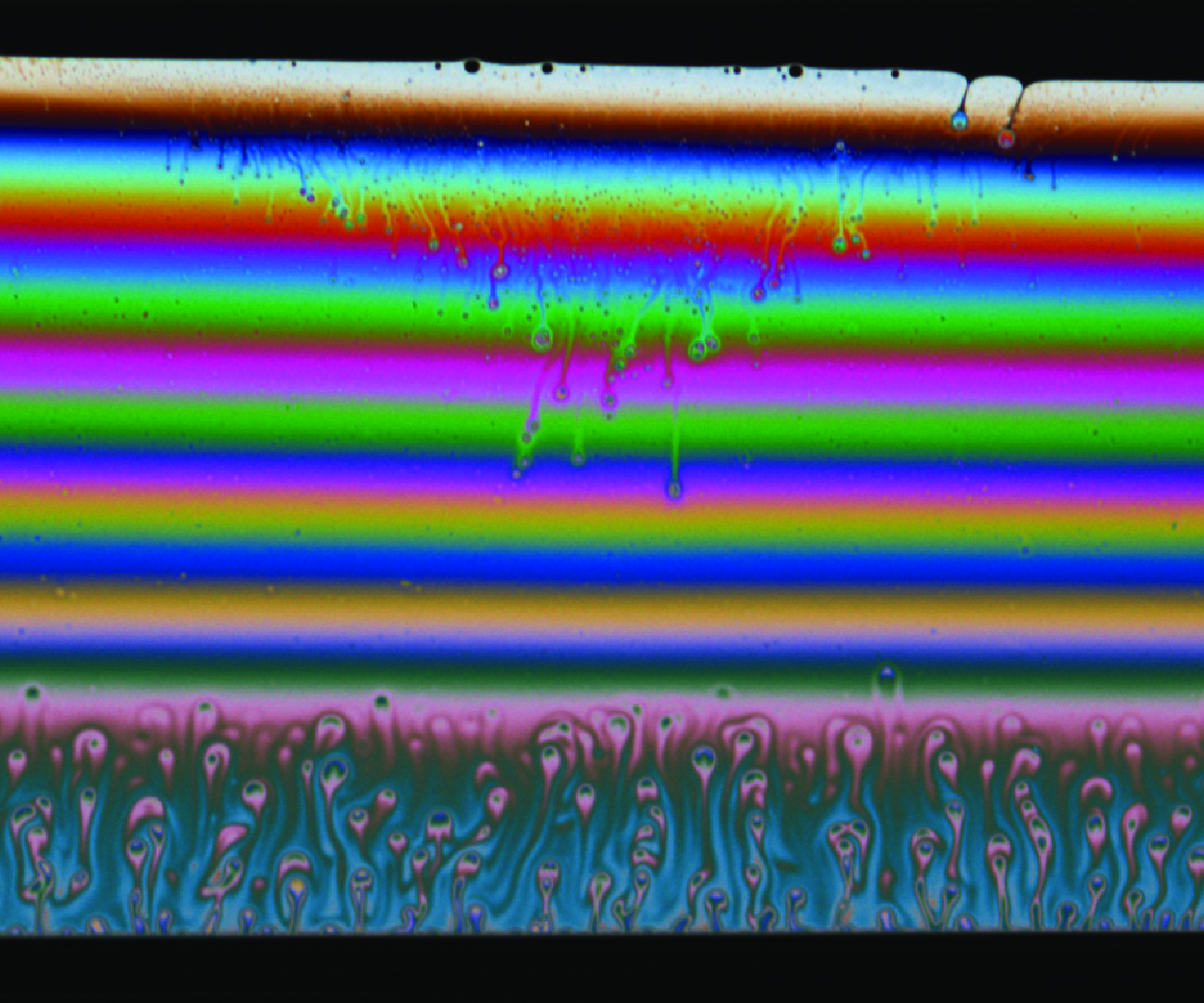
Drainage and lifetime of thin liquid films: the role of salinity and convective evaporation
-
- Journal:
- Journal of Fluid Mechanics / Volume 1012 / 10 June 2025
- Published online by Cambridge University Press:
- 04 June 2025, A18
-
- Article
-
- You have access
- Open access
- HTML
- Export citation

Method of aerodynamic noise source identification for cylinder flows
-
- Journal:
- Journal of Fluid Mechanics / Volume 1012 / 10 June 2025
- Published online by Cambridge University Press:
- 04 June 2025, A13
-
- Article
- Export citation

Basic Electronics
- Principles and Applications
-
- Published online:
- 03 June 2025
- Print publication:
- 01 March 2018
-
- Textbook
- Export citation

Strength of Materials
- Fundamentals and Applications
-
- Published online:
- 03 June 2025
- Print publication:
- 13 August 2018
-
- Textbook
- Export citation

Molecular streaming in a charged angstrom channel: a toy model
-
- Journal:
- Journal of Fluid Mechanics / Volume 1012 / 10 June 2025
- Published online by Cambridge University Press:
- 03 June 2025, A9
-
- Article
- Export citation
Recurring spoken term discovery in the zero-resource constraint using diagonal patterns
-
- Journal:
- Data-Centric Engineering / Volume 6 / 2025
- Published online by Cambridge University Press:
- 02 June 2025, e28
-
- Article
-
- You have access
- Open access
- HTML
- Export citation
High-power high-energy Yb-doped CaGdAlO4 regenerative amplifier with approximately 130 fs pulses – ERRATUM
-
- Journal:
- High Power Laser Science and Engineering / Volume 13 / 2025
- Published online by Cambridge University Press:
- 02 June 2025, e30
-
- Article
-
- You have access
- Open access
- HTML
- Export citation
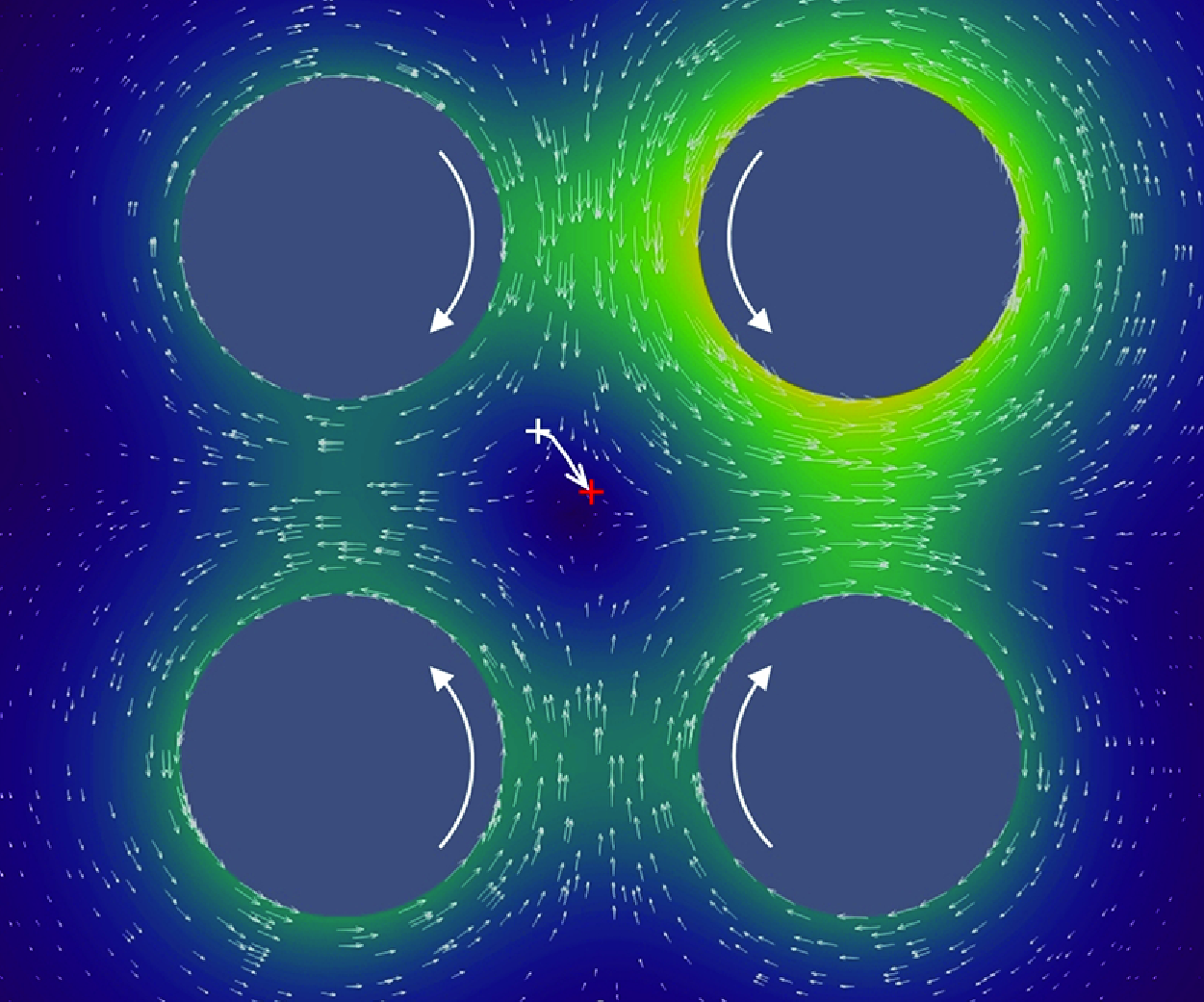
Reinforcement-learning-assisted control of four-roll mills: geometric symmetry and inertial effect
-
- Journal:
- Journal of Fluid Mechanics / Volume 1012 / 10 June 2025
- Published online by Cambridge University Press:
- 02 June 2025, A8
-
- Article
-
- You have access
- Open access
- HTML
- Export citation
-
Embedding the intrinsic symmetry of a flow system in training its machine learning algorithms has become a significant trend in the recent surge of their application in fluid mechanics. This paper leverages the geometric symmetry of a four-roll mill (FRM) to enhance its training efficiency. Stabilising and precisely controlling droplet trajectories in an FRM is challenging due to the unstable nature of the extensional flow with a saddle point. Extending the work of Vona & Lauga (Phys. Rev. E, vol. 104(5), 2021, p. 055108), this study applies deep reinforcement learning (DRL) to effectively guide a displaced droplet to the centre of the FRM. Through direct numerical simulations, we explore the applicability of DRL in controlling FRM flow with moderate inertial effects, i.e. Reynolds number $\sim \mathcal{O}(1)$, a nonlinear regime previously unexplored. The FRM’s geometric symmetry allows control policies trained in one of the eight sub-quadrants to be extended to the entire domain, reducing training costs. Our results indicate that the DRL-based control method can successfully guide a displaced droplet to the target centre with robust performance across various starting positions, even from substantially far distances. The work also highlights potential directions for future research, particularly focusing on efficiently addressing the delay effects in flow response caused by inertia. This study presents new advances in controlling droplet trajectories in more nonlinear and complex situations, with potential applications to other nonlinear flows. The geometric symmetry used in this cutting-edge reinforcement learning approach can also be applied to other control methods.


Inverse Problems and Applications
- Inside Out II
-
- Published online:
- 30 May 2025
- Print publication:
- 17 December 2012
JNM 2024 Special Issue
-
- Journal:
- International Journal of Microwave and Wireless Technologies / Volume 17 / Issue 6 / July 2025
- Published online by Cambridge University Press:
- 30 May 2025, p. 919
-
- Article
-
- You have access
- HTML
- Export citation
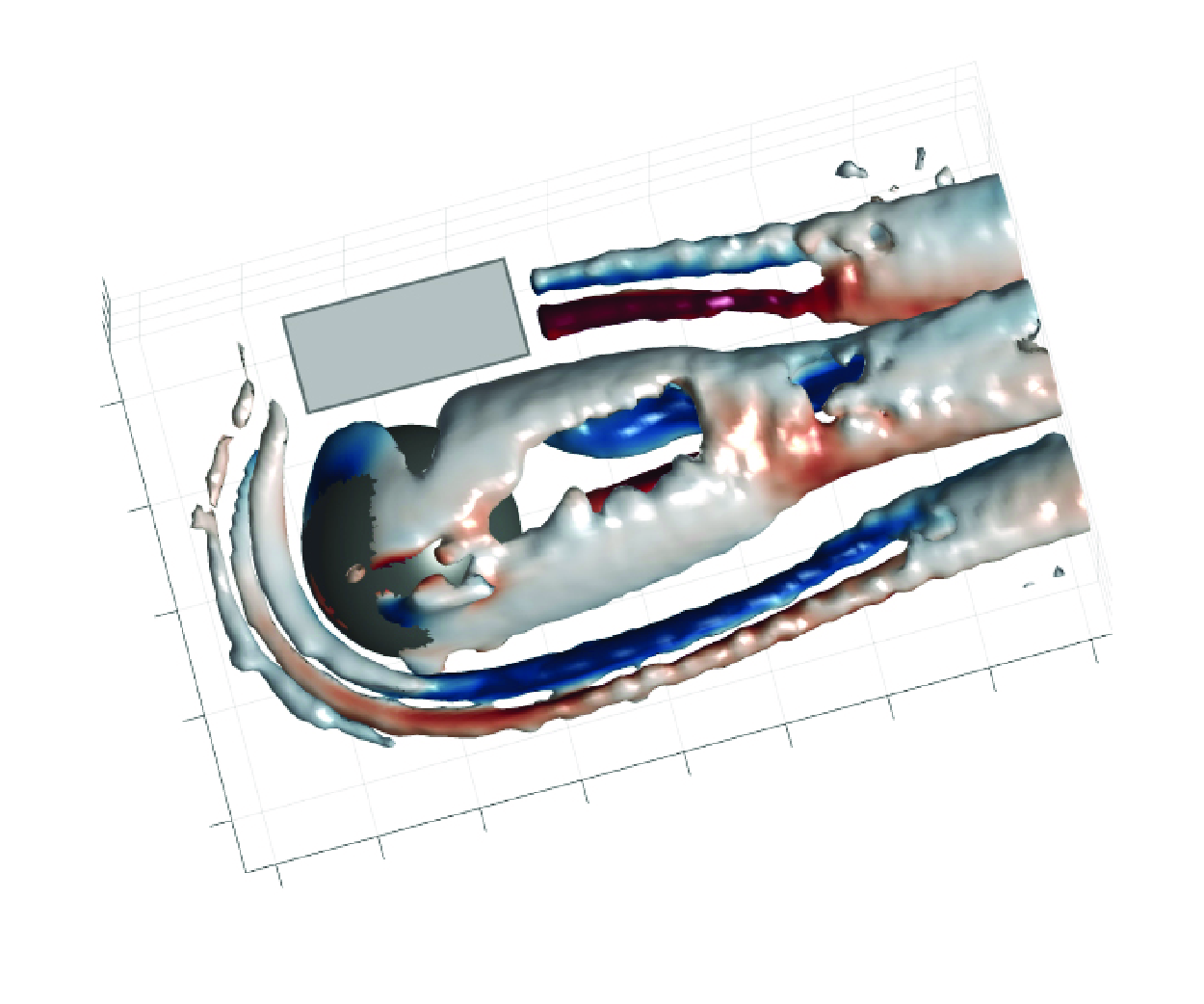
The near-wake vortex dynamics of a wall-mounted hemisphere measured with tomographic particle image velocimetry
-
- Journal:
- Journal of Fluid Mechanics / Volume 1012 / 10 June 2025
- Published online by Cambridge University Press:
- 30 May 2025, A7
-
- Article
- Export citation
