To save content items to your account,
please confirm that you agree to abide by our usage policies.
If this is the first time you use this feature, you will be asked to authorise Cambridge Core to connect with your account.
Find out more about saving content to .
To save content items to your Kindle, first ensure no-reply@cambridge.org
is added to your Approved Personal Document E-mail List under your Personal Document Settings
on the Manage Your Content and Devices page of your Amazon account. Then enter the ‘name’ part
of your Kindle email address below.
Find out more about saving to your Kindle.
Note you can select to save to either the @free.kindle.com or @kindle.com variations.
‘@free.kindle.com’ emails are free but can only be saved to your device when it is connected to wi-fi.
‘@kindle.com’ emails can be delivered even when you are not connected to wi-fi, but note that service fees apply.
Chapter 7 considers structural loading and response of horizontal-axis machines, with some theoretical background and illustrative measurements from different wind turbine types. The chapter begins with a recap on the dynamics of a single degree of freedom system, leading into a discussion of multi-DOF systems and modal analysis. The cyclic loads affecting a wind turbine structure are described including wind shear, tower shadow, and rotationally sampled turbulence. The concepts of stochastic and deterministic loading are explained and the principle of aerodynamic damping illustrated. Qualitative descriptions are given of gyroscopic, centrifugal, and electromechanical loading. The phenomenon of blade edgewise stall vibration is explained, with discussion of mechanical damper solutions. The last part of the chapter draws on an early experimental campaign in which the dynamic loading on a full scale wind turbine was measured and compared with the results of software simulation. Results from the same trials also demonstrate the difference in rotor thrust loading arising from positive and negative pitch control. The chapter concludes with a brief summary of fatigue prediction methods.
This chapter introduces communication and information theoretical aspects of molecular communication, relating molecular communication to existing techniques and results in communication systems. Communication models are discussed, as well as detection and estimation problems. The information theory of molecular communication is introduced, and calculation of the Shannon capacity is discussed.
This chapter considers the interface of a molecular communication network with an external environment: for example, an in-body molecular communication network with an external diagnostic and control system. The problem is defined, and engineering problems are discussed related to interfacing with biological cells. Applications to biological pattern formation are discussed.
The subject of this chapter is the quantum mechanical analysis of the interaction of electromagnetic radiation with atomic transitions. The analysis is based on the Schrödinger wave equation, and in the first section, the gauge-invariant form of the external electromagnetic field is introduced. The electric dipole interaction and the long-wavelength approximation for the analysis of this interaction are discussed. The perturbative analysis of both single-photon and two-photon electric dipole interactions is presented, and density matrix analysis is introduced. The interaction of radiation with the resonances of atomic hydrogen is then discussed. The analysis is performed for both coupled and uncoupled representations. In the last section of the chapter, the radiative interactions for multielectron atoms are discussed. The Wigner–Eckart theorem and selection rules for transitions between levels characterized by coupling are developed. The effect of hyperfine splitting on radiative transitions is also briefly discussed.
This chapter is a largely non-technical overview of economic and political aspects of wind energy policy. The cost of wind energy is assessed in terms of Levelised Cost of Energy (LCoE) with equations given in full and simplified form. Using a large database historic installed costs for UK wind both on- and offshore are given, from the earliest projects to the present day. The observed trends are discussed. Operational and balancing costs are outlined, the latter reflecting the intermittency of wind power. LCoE estimates are made for a range of installed costs and output capacity factors at typical discount rates, and compared with current generation prices. The chapter considers the economics of onsite generation with the example of a private business using wind energy to offset demand; the energy displacement and export statistics are extrapolated to compare with a national scenario for 100% renewable electricity generation. The topic of ownership is introduced and examined in the context of the UK’s first community-owned windfarm. The chapter concludes with a brief review of UK renewable energy policy, which originated with legislation to protect the nuclear power industry.
The chapter begins with the introduction of the two-particle Schrödinger wave equation (SWE) and the solution of this equation for the hydrogen atom. The orbital angular momentum of the electron results from the SWE solution. The Pauli spinors are introduced, and the SWE wavefunctions are modified to account for the spin of the electron. The structure of multielectron atoms is then discussed. The discussion is focused on low-Z atoms for which Russell–Saunders or LS coupling is appropriate. Alternate coupling schemes are briefly discussed. Angular momentum coupling algebra, the Clebsch–Gordan coefficients, and 3j symbols are then introduced. The Wigner–Eckart theorem is discussed, and the use of irreducible spherical tensors for evaluation of quantum mechanical matrix elements is discussed in detail.
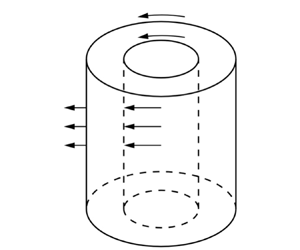
The stability of Taylor–Couette flow modulated by oscillatory wall suction/blowing is investigated using Floquet linear stability analysis. The growth rate and stability mode are obtained by numerical calculation and asymptotic expansion. By calculating the effect of wall suction/blowing on the critical mode of steady Taylor–Couette flow, it is found that for most suction/blowing parameters, the maximum disturbance growth rate of the critical mode decreases and the flow becomes more stable. Only in a very small parameter region, wall suction/blowing increases the maximum disturbance growth rate of the critical mode, resulting in flow instability when the gap between the cylinders is large. The asymptotic results for small suction/blowing amplitudes indicate that the change of flow instability is mainly due to the steady correction of the basic flow induced by the modulation. A parametric study of the critical inner Reynolds number and the associated critical wavenumber is performed. It is found that the flow is stabilized by the modulation for most of the parameter ranges considered. For a wide gap between the cylinders, it is possible for the system to be mildly destabilized by weak suction/blowing.
The final chapter takes a wider look at wind turbine technology in the context of a potential 100% renewable electricity supply at national or state level. The problem of intermittency is explained, together with the role of overcapacity and wind turbine power density in helping to solve it. A section on energy storage considers the theoretical storage capacity that would be needed at national level to enable wind power to serve all demand, with high level analysis using one year’s data from the UK national grid; a second case study considers the State of Texas again using measured hourly data. The potential to combine solar and wind power is examined for both case studies, in proportions so as to minimise the energy storage requirement. The economics of a wind/solar grid with storage are explored with LCOE analysis, and the results discussed in the context of different storage technologies, with a range of installed costs. The final section examines the sustainability of wind turbine manufacture, decommissioning, and disposal, with examples of new technology to reduce associated CO2 emissions. These include decarbonised steel production, recyclable blades and wood laminate towers.
This chapter introduces detailed mathematical modelling for diffusion-based molecular communication systems. Mathematical and physical aspects of diffusion are covered, such as the Wiener process, drift, first arrival time distributions, the effect of concentration, and Fick’s laws. Simulation of molecular communication systems is also discussed.
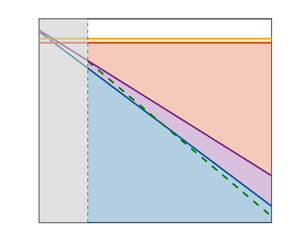
This work investigates heat transport in rotating internally heated convection, for a horizontally periodic fluid between parallel plates under no-slip and isothermal boundary conditions. The main results are the proof of lower bounds on the mean temperature, $\overline {{\langle {T} \rangle }}$, and the heat flux out of the bottom boundary, ${\mathcal {F}}_B$, at infinite Prandtl number, where the Prandtl number is the non-dimensional ratio of viscous to thermal diffusion. The lower bounds are functions of the Rayleigh number quantifying the ratio of internal heating to diffusion and the Ekman number, $E$, which quantifies the ratio of viscous diffusion to rotation. We utilise two different estimates on the vertical velocity, $w$, one pointwise in the domain (Yan, J. Math. Phys., vol. 45(7), 2004, pp. 2718–2743) and the other an integral estimate over the domain (Constantin et al., Phys. D: Non. Phen., vol. 125, 1999, pp. 275–284), resulting in bounds valid for different regions of buoyancy-to-rotation dominated convection. Furthermore, we demonstrate that similar to rotating Rayleigh–Bénard convection, for small $E$, the critical Rayleigh number for the onset of convection asymptotically scales as $E^{-4/3}$.
The challenging tracking control issue for a space manipulator subject to parametric uncertainty and unknown disturbance is addressed in this paper. An observer-based fixed-time terminal sliding mode control methodology is put forward. Firstly, a nonlinear disturbance observer is introduced for exactly reconstructing the lumped uncertainty without requiring any prior knowledge of the lumped uncertainty. Meanwhile, the estimation time’s upper bound is not only irrelevant to the initial estimation error but can be directly predicted in advance via a specific parameter in the observer. Invoking the estimated information, a fast fixed-time tracking controller with strong robustness is designed, where a novel sliding mode surface incorporated enables faster convergence. The globally fixed-time stability of the closed-loop tracking system is rigorously demonstrated through Lyapunov stability analysis. Finally, numerical simulations and comparisons verify the validity and superiority of the suggested controller.
Chapter 6 considers wind turbine control, including supervisory control, power limiting, starting and stopping, electrical power quality, and sector management. The importance of accurate yaw control is discussed in terms of energy capture and cyclic loading, and an active yaw system illustrated. The main focus of the chapter is real-time power control, and builds on the aerodynamic and electrical concepts covered previously in Chapters 3–5. The differences between stall and pitch regulation are explained, in the latter case in the context of both constant and variable speed operation. Power measurements from constant-speed and variable-speed pitch controlled machines illustrate the superior accuracy of the latter. Control block diagrams are given for both methods, with qualitative explanation of the principles. The procedure for starting and stopping different wind turbine types is explained, and the advantages of pitch control in this context are illustrated. The chapter includes a short description of sector management, a control strategy based on external factors such as wind speed and direction, and used for noise reduction, shadow flicker prevention, or fatigue mitigation.
Chapter 12 introduces offshore wind power, beginning with a historical overview from the first offshore wind turbine installed in 1990, to the gigawatt-scale arrays now under development. The technologogical progress of both fixed and floating arrays is described. Offshore wind characterisics are discussed and metocean data (including the influences of wind, wave, and currents) described. Wind conditions on- and offshore are compared. Wave characteristics are described in detail, based on linear wave theory and Jonswap spectral characteristics, with simple equations given for significant and maximum wave height, and wave and current velocity profiles. The combined forces on an offshore turbine stuctures are described with a worked example of wind, wave, and current loading on a monopile. Aspects of offshore wind turbine design are discussed, including marinisation, the influence of blade size, and drivetrain architecture, and a short section describes modern offshore installation vessels. The historic performance of offshore arrays is assessed with data for the UK and Danish sectors, and the chapter concludes with a review of environmental impact issues for offshore developments.
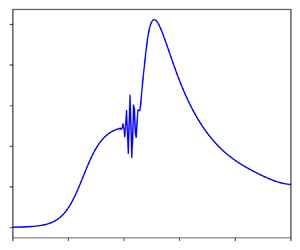
The problem of axisymmetric supersonic laminar flow separation over a compression corner has not been considered within the framework of triple-deck theory for several decades, despite significant advances in both theoretical methods and numerical techniques. In this study, we revisit the problem considered by Gittler & Kluwick (J. Fluid Mech., vol. 179, 1987, pp. 469–487), using the numerical method of Ruban (Zhurnal Vychislitel'noi Matematiki i Matematicheskoi Fiziki, vol. 18, issue 5, 1978, pp. 1253–1265) and Cassel et al. (J. Fluid Mech., vol. 300, 1995, pp. 265–285), termed the Ruban–Cassel method (RCM). The solution shows good agreement with the results of Gittler & Kluwick (J. Fluid Mech., vol. 179, 1987, pp. 469–487) for a scale external radius of 1 and scale angles from 1 to 6. However, for scale angles above 6.8, a wave packet appears. This wave packet is similar to that reported by Cassel et al. (J. Fluid Mech., vol. 300, 1995, pp. 265–285) for two-dimensional supersonic flow. As the external scale radius increases (from 1 to 10), the axisymmetric solution converges towards the two-dimensional solution for equivalent scale angle values. For a scale external radius of 10, the wave packet appears at a scale angle of 3.8, compared with the value of 3.9 by Cassel et al. (J. Fluid Mech., vol. 300, 1995, pp. 265–285). Inspection of the velocity profiles reveals that inflection points, while ubiquitous in shear flow, do not seem to play a relevant role in the appearance of the wave packet for the axisymmetric flow. Axisymmetric effects become more important as the scale external radius decreases below 0.5. A larger scale angle is necessary to produce a flow structure equivalent to that of the two-dimensional case. For scale external radius 0.1, the pressure gradient is substantially diminished and the solution is devoid of a second shear-stress minimum.