To save content items to your account,
please confirm that you agree to abide by our usage policies.
If this is the first time you use this feature, you will be asked to authorise Cambridge Core to connect with your account.
Find out more about saving content to .
To save content items to your Kindle, first ensure no-reply@cambridge.org
is added to your Approved Personal Document E-mail List under your Personal Document Settings
on the Manage Your Content and Devices page of your Amazon account. Then enter the ‘name’ part
of your Kindle email address below.
Find out more about saving to your Kindle.
Note you can select to save to either the @free.kindle.com or @kindle.com variations.
‘@free.kindle.com’ emails are free but can only be saved to your device when it is connected to wi-fi.
‘@kindle.com’ emails can be delivered even when you are not connected to wi-fi, but note that service fees apply.
This chapter summarises the key aerodynamic theory of horizontal-axis wind turbine rotors. The actuator disc concept leads to the relationships between induced velocity, axial thrust, and power extraction. The theory is extended to multiple streamtubes, which combined with 2D wing theory establish the basis of blade element momentum (BEM) theory. A straightforward mathematical treatment of BEM theory is included, with an iterative procedure suitable for coding. Measurements from a full-scale rotor illustrate the applicability of BEM theory but also its fundamental limitations: the latter are described, and measures outlined to compensate for them in practical BEM codes. Simple relationships are given for the axial and tangential load distributions on an optimal HAWT blade. The structure of the rotor wake is described, leading into a description of vortex-wake theory, which provides a more physically realistic description of the airflow. Vortex wake codes are described in non-mathematical terms. The chapter includes wake measurements from full-scale wind turbines and small models. Vorticity maps from the latter verify the underlying mathematical model of a helical vortex wake.
When they occur, azimuthal thermoacoustic oscillations can detrimentally affect the safe operation of gas turbines and aeroengines. We develop a real-time digital twin of azimuthal thermoacoustics of a hydrogen-based annular combustor. The digital twin seamlessly combines two sources of information about the system: (i) a physics-based low-order model; and (ii) raw and sparse experimental data from microphones, which contain both aleatoric noise and turbulent fluctuations. First, we derive a low-order thermoacoustic model for azimuthal instabilities, which is deterministic. Second, we propose a real-time data assimilation framework to infer the acoustic pressure, the physical parameters, and the model bias and measurement shift simultaneously. This is the bias-regularized ensemble Kalman filter, for which we find an analytical solution that solves the optimization problem. Third, we propose a reservoir computer, which infers both the model bias and measurement shift to close the assimilation equations. Fourth, we propose a real-time digital twin of the azimuthal thermoacoustic dynamics of a laboratory hydrogen-based annular combustor for a variety of equivalence ratios. We find that the real-time digital twin (i) autonomously predicts azimuthal dynamics, in contrast to bias-unregularized methods; (ii) uncovers the physical acoustic pressure from the raw data, i.e. it acts as a physics-based filter; (iii) is a time-varying parameter system, which generalizes existing models that have constant parameters, and capture only slow-varying variables. The digital twin generalizes to all equivalence ratios, which bridges the gap of existing models. This work opens new opportunities for real-time digital twinning of multi-physics problems.
This chapter introduces layered architecture for molecular communication. Inspired by, but distinct from, layered architecture in conventional communication networks, this chapter introduces a layered design that is appropriate for molecular communication applications. Models and functionalities of each layer are discussed.
This chapter discusses how molecular communication systems can be designed, using the various techniques described in the book. The chapter discusses system design in the context of four specific application areas: drug delivery, tissue engineering, lab-on-chip technology, and unconventional computation. In each case, the general application scenario is discussed, and specific design examples are presented.
Chapter 4 extends the aerodynamic discussions of Chapter 3 to show how the rotor net loads (power, thrust, and torque) are developed. The dimensionless power coefficient (Cp) curve is introduced, and the relationship between rotor tip speed ratio and optimum solidity is explained. The variation of thrust loading with wind speed on an ideal pitch-controlled rotor is explained from simple theory, and illustrated with measurements from a full-scale turbine. Equations governing the chord and twist distributions for an optimised blade are given and discussed in the context of some historic blade types, with illustrations. Rotor aerodynamic control is explained with reference to fixed-pitch stall regulation and variable blade pitch (both positive and negative). The influence of blade number is examined, with discussion of the advantages and disadvantages of one-, two-, and three-bladed wind turbines. The method by which annual energy capture is derived from the power curve and wind speed distribution is explained, with example. The chapter concludes with a brief overview of alternative aerodynamic control devices including tip vanes and ailerons, and downwind rotors (with examples).
Time-domain characterization of ultrashort pulses is essential for studying interactions between light and matter. Here, we propose and demonstrate an all-optical pulse sampling technique based on reflected four-wave mixing with perturbation on a solid surface. In this method, a weak perturbation pulse perturbs the four-wave mixing signal generated by a strong fundamental pulse. The modulation signal of the four-wave mixing, which is detected in the reflection geometry to ensure a perfect phase-matching condition, directly reflects the temporal profile of the perturbation pulse. We successfully characterized multi-cycle and few-cycle pulses using this method. The reliability of our approach was verified by comparing it to the widely employed frequency-resolved optical gating method. This technique provides a simple and robust method for characterizing ultrashort laser pulses.
The structure of diatomic molecules is discussed in this chapter. The electronic structure of diatomic molecules is then discussed in detail. The coupling of the orbital and spin angular momenta of electrons and the angular momentum associated with nuclear rotation are discussed, with an emphasis on Hund’s cases (a) and (b). The rotational wavefunctions for diatomic molecules in the limits of Hund’s cases (a) and (b) and in the case intermediate between Hund’s cases (a) and (b) are then discussed in detail. For molecules that are of importance in combustion diagnostics, such as OH, CH, CN, and NO, the electronic levels are intermediate between Hund’s cases (a) and (b). We use Hund’s case (a) as the basis wavefunctions, and linear combinations of these wavefunctions are used to represent wavefunctions for electronic levels intermediate between cases (a) and (b). The choice of case (a) wavefunctions as the basis set is typical in the literature although case (b) wavefunctions can also be used as a basis set.
Chapter 5 deals with electrical issues and is broadly divided in two. The first half explains the operating principles of the several different types of generator found on wind turbines, and their influence on dynamics and electrical power quality. Generator types are illustrated schematically and their characteristics explained using simple physical principles. Geared and gearless (direct drive) generators are discussed and there is a brief historical review of generator developments. The second half of the chapter deals with electrical networks and further examines the issue of power quality. The importance of reactive power is explained and how modern generators can manipulate it to aid voltage stability; the role of external devices such as Statcoms, SVCs, and pre-insertion resistors is also discussed in this context. Measurements from a MW-scale wind turbine illustrate voltage control via reactive power management over a period of several days. The challenge of low grid strength is illustrated with a practical example of a small wind farm development on a rural network with low fault level. The chapter concludes with a brief discussion of wind turbine lightning protection.
This chapter discusses experimental molecular communication at the macroscale, particularly low-cost “tabletop” experimental platforms. Several specific examples are given, such as tabletop molecular communication with alcohol vapour, and molecular MIMO systems.
Raman scattering spectroscopy is widely used in analytical chemistry, for structural analysis of materials and molecules and, most importantly for our purposes, as a gas-phase diagnostic technique. Raman scattering is a two-photon scattering process, and the mathematical treatment of Raman scattering is very similar to the mathematical treatment of two-photon absorption. Many of the molecules of interest for quantitative gas-phase spectroscopy are diatomic molecules with non-degenerate 1Σ ground electronic levels, including N2, CO, and H2. In this chapter, the theory of Raman scattering is developed based on Placzek polarizability theory and using irreducible spherical tensor analysis. Herman–Wallis effects are discussed in detail. The chapter concludes with detailed examples of Raman scattering signal calculations.
This chapter considers the coordination of the actions of bionanomachines, such as cluster formation. This task is important to applications such as drug delivery at tumour sites. Mathematical models of cluster formation and system designs are presented, along with computer simulation results demonstrating that bionanomachines can move collectively and form clusters.
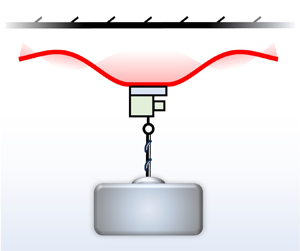
Developed in this study is a theoretical description of squeeze-film lubrication systems that involve the flexural oscillation of a thin plate near a parallel wall. Such systems were discovered in recent experiments to produce load-bearing attractive forces that are a thousandfold stronger than those generated by rigid oscillators, which typically favour repulsion. Analyses of squeeze-film gas flow driven by a presumed plate deformation reproduce the observed magnification of attractive load capacity, but exhibit serious discrepancies with crucial aspects of the experimental measurements – most importantly, the precise distribution of air pressure along the film. The discrepancies are resolved in this study by accounting for the presence of two-way-coupled fluid–structure interactions whereby the undulations of the plate, modelled here with use of the classical Kirchhoff–Love equation, are affected non-negligibly by the evolving pressure, described by a modified Reynolds lubrication equation that accounts for compressibility. The resulting problem of elastohydrodynamic lubrication is solved with use of perturbation methods that exploit the limit of small oscillation amplitudes. The analysis ultimately provides an explicit expression specifying the attractive load capacity of a squeeze-film system as a function of relevant operating parameters – including, in particular, the amplitude and frequency of the localized excitation force exerted on the plate. The rudimentary theory derived here may be readily generalized to guide the analysis and development of a wide variety of emerging engineering systems that exploit the vibration-induced squeeze-film effect – such as wall-climbing soft robots and contactless grippers.
We demonstrate the post-compression of the GW-level femtosecond pulse in a solid-state multi-pass cell (MPC) by the pre-chirp management method. When the laser pulse is positively pre-chirped, the 200 μJ 170 fs input pulse is compressed to 163 μJ 44 fs at the output, corresponding to a transmission of 81% and a pulse shortening factor of 3.86. When the laser pulse is negatively pre-chirped, the spectral evolution, as the pulse propagates in the MPC, is characterized and, eventually, the pulse duration is compressed to 51 fs, corresponding to a pulse shortening factor of 3.3. After the driving laser goes through the pre-chirp managed MPC device, the power stability and beam quality are almost preserved. The experimental results offer a viable path toward the post-compression of high-peak-power laser pulses.