Refine search
Actions for selected content:
212775 results in Engineering
Genetic algorithm-based path planning of quadrotor UAVs on a 3D environment
-
- Journal:
- The Aeronautical Journal / Volume 129 / Issue 1334 / April 2025
- Published online by Cambridge University Press:
- 16 December 2024, pp. 902-938
-
- Article
- Export citation
High-energy, high-peak-power, sub-nanosecond, spatial super-Gaussian 177 nm vacuum ultraviolet laser
-
- Journal:
- High Power Laser Science and Engineering / Volume 12 / 2024
- Published online by Cambridge University Press:
- 16 December 2024, e75
-
- Article
-
- You have access
- Open access
- HTML
- Export citation
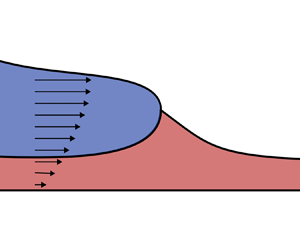
Dynamics of a thin film of fluid spreading over a lubricated substrate
-
- Journal:
- Journal of Fluid Mechanics / Volume 1001 / 25 December 2024
- Published online by Cambridge University Press:
- 16 December 2024, A47
-
- Article
-
- You have access
- Open access
- HTML
- Export citation
FLM volume 1000 Cover and Front matter
-
- Journal:
- Journal of Fluid Mechanics / Volume 1000 / 10 December 2024
- Published online by Cambridge University Press:
- 16 December 2024, p. f1
-
- Article
-
- You have access
- Export citation
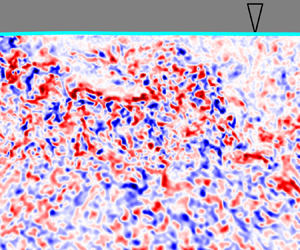
Structure and energy transfer in homogeneous turbulence below a free surface
-
- Journal:
- Journal of Fluid Mechanics / Volume 1001 / 25 December 2024
- Published online by Cambridge University Press:
- 16 December 2024, A46
-
- Article
-
- You have access
- Open access
- HTML
- Export citation
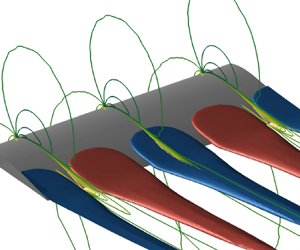
Linear stability analysis of turbulent mean flows based on a data-consistent Reynolds-averaged Navier–Stokes model: prediction of three-dimensional stall cells around an airfoil
-
- Journal:
- Journal of Fluid Mechanics / Volume 1001 / 25 December 2024
- Published online by Cambridge University Press:
- 16 December 2024, A41
-
- Article
-
- You have access
- Open access
- HTML
- Export citation
-
Stall cells are transverse cellular patterns that often appear on the suction side of airfoils near stalling conditions. Wind-tunnel experiments on a NACA4412 airfoil at Reynolds number ${Re}=3.5 \times 10^5$ show that they appear for angles of attack larger than $\alpha = 11.5^{\circ }\ (\pm 0.5^{\circ })$. Their onset is further investigated based on global stability analyses of turbulent mean flows computed with the Reynolds-averaged Navier–Stokes (RANS) equations. Using the classical Spalart–Allmaras turbulence model and following Plante et al. (J. Fluid Mech., vol. 908, 2021, A16), we first show that a three-dimensional stationary mode becomes unstable for a critical angle of attack $\alpha = 15.5^{\circ }$ which is much larger than in the experiments. A data-consistent RANS model is then proposed to reinvestigate the onset of these stall cells. Through an adjoint-based data-assimilation approach, several corrections in the turbulence model equation are identified to minimize the differences between assimilated and reference mean-velocity fields, the latter reference field being extracted from direct numerical simulations. Linear stability analysis around the assimilated mean flow obtained with the best correction is performed first using a perturbed eddy-viscosity approach which requires the linearization of both RANS and turbulence model equations. The three-dimensional stationary mode becomes unstable for angle $\alpha = 11^{\circ }$ which is in significantly better agreement with the experimental results. The interest of this perturbed eddy-viscosity approach is demonstrated by comparing with results of two frozen eddy-viscosity approaches that neglect the perturbation of the eddy viscosity. Both approaches predict the primary destabilization of a higher-wavenumber mode which is not experimentally observed. Uncertainties in the stability results are quantified through a sensitivity analysis of the stall cell mode's eigenvalue with respect to residual mean-flow velocity errors. The impact of the correction field on the results of stability analysis is finally assessed.


A 1.8 kW high power all-fiber Raman oscillator
-
- Journal:
- High Power Laser Science and Engineering / Volume 12 / 2024
- Published online by Cambridge University Press:
- 16 December 2024, e76
-
- Article
-
- You have access
- Open access
- HTML
- Export citation
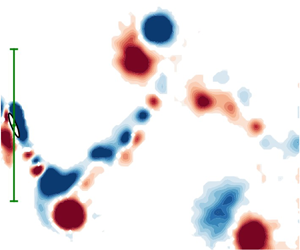
Data-driven active control of a thin elliptical cylinder undergoing transverse flow-induced vibrations
-
- Journal:
- Journal of Fluid Mechanics / Volume 1001 / 25 December 2024
- Published online by Cambridge University Press:
- 13 December 2024, A35
-
- Article
-
- You have access
- Open access
- HTML
- Export citation
-
This experimental study employs Bayesian optimisation to maximise the cross-flow (transverse) flow-induced vibration (FIV) of an elastically mounted thin elliptical cylinder by implementing axial (or angular) flapping motions. The flapping amplitude was in proportion to the vibration amplitude, with a relative phase angle imposed between the angular and transverse displacements of the cylinder. The control parameter space spanned over the ranges of proportional gain and phase difference of $0 \leq K_p^* \leq 5$ and $0 \leq \phi _d \leq 360^\circ$, respectively, over a reduced velocity range of $3.0 \leqslant {U^*} = U/({{f_{nw}}} b) \leqslant 8.5$. The corresponding Reynolds number range was $1250 \leqslant {{Re}} =(U b)/\nu \leqslant 3580$. Here, $U$ is the free stream velocity, $b$ is the major cross-sectional diameter of the cylinder, ${{f_{nw}}}$ is the natural frequency of the system in quiescent fluid (water) and $\nu$ is the kinematic viscosity of the fluid. It was found that the controlled body rotation extended the wake-body synchronisation across the entire ${U^*}$ range tested, with a larger amplitude response than the non-rotating case for all flow speeds. Interestingly, two new wake-body synchronisation regimes were identified, which have not been reported in previous studies. As this geometry acts as a ‘hard-oscillator’ for ${U^*} \geqslant 6.3$, an adaptive gain (i.e. one that varies as a function of oscillation amplitude) was also implemented, allowing the body vibration, achieved for a non-rotating cylinder using increasing ${U^*}$ increments, to be excited from rest. The findings of the present study hold potential implications for the use of FIV as a means to efficiently extract energy from free-flowing water sources, a topic of increasing interest over the last decade.


Independently tunable metamaterial inspired compact triband dual-sense circularly polarized antenna
-
- Journal:
- International Journal of Microwave and Wireless Technologies / Volume 17 / Issue 1 / February 2025
- Published online by Cambridge University Press:
- 13 December 2024, pp. 104-112
-
- Article
- Export citation
The transfer learning of uncertainty quantification for industrial plant fault diagnosis system design
-
- Journal:
- Data-Centric Engineering / Volume 5 / 2024
- Published online by Cambridge University Press:
- 13 December 2024, e41
-
- Article
-
- You have access
- Open access
- HTML
- Export citation
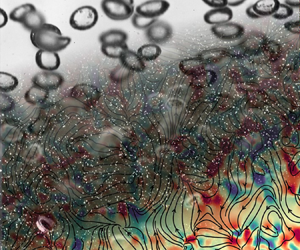
Velocity fluctuations for bubbly flows at small Re
-
- Journal:
- Journal of Fluid Mechanics / Volume 1001 / 25 December 2024
- Published online by Cambridge University Press:
- 13 December 2024, A34
-
- Article
-
- You have access
- Open access
- HTML
- Export citation
-
We experimentally investigate the effect of Reynolds number ( $Re$) on the turbulence induced by the motion of bubbles in a quiescent Newtonian fluid at small $Re$. The energy spectra, $E(k)$, are determined from the decaying turbulence behind the bubble swarm obtained using particle image velocimetry. We show that when $Re \sim O(100)$, the slope of the normalized energy spectra is no longer independent of the gas volume fraction and the $k^{-3}$ subrange is significantly narrower, where $k$ is the wavenumber. This is further corroborated using second-order longitudinal velocity structure function and spatial correlation of the velocity behind the bubble swarm. On further decreasing the bubble Reynolds number ( $O(1) < Re < O(10)$), the signature $k^{-3}$ of the energy spectra for the bubble-induced turbulence is replaced by $k^{-5/3}$ scaling. Thus, we provide experimental evidence to the claim by Mazzitelli et al. (Phys. Fluids, vol. 15, 2003, pp. L5–L8) that at low Reynolds numbers the normalized energy spectra of the bubble-induced turbulence will no longer show the $k^{-3}$ scaling because of the absence of bubble wake and that the energy spectra will depend on the number of bubbles, thus being non-universal.


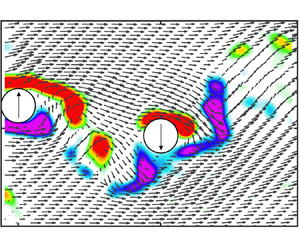
Mapping the properties of wake-induced vibration on a circular cylinder
-
- Journal:
- Journal of Fluid Mechanics / Volume 1001 / 25 December 2024
- Published online by Cambridge University Press:
- 13 December 2024, A33
-
- Article
- Export citation
Identifying damage to composite materials based on deep residual shrinkage network
-
- Journal:
- The Aeronautical Journal / Volume 129 / Issue 1331 / January 2025
- Published online by Cambridge University Press:
- 13 December 2024, pp. 156-168
-
- Article
- Export citation
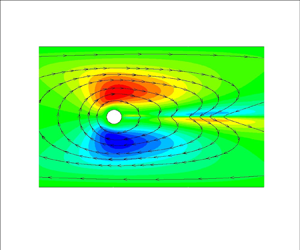
Viscoelastic flow around a confined cylinder: 2-D linear stability analysis leading to asymmetric flow
-
- Journal:
- Journal of Fluid Mechanics / Volume 1001 / 25 December 2024
- Published online by Cambridge University Press:
- 13 December 2024, A40
-
- Article
-
- You have access
- Open access
- HTML
- Export citation
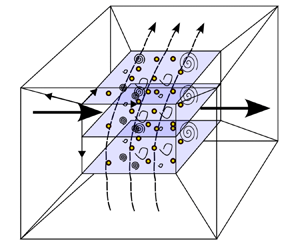
Developing a non-Newtonian fluid model for dust, for application to astrophysical flows
-
- Journal:
- Journal of Fluid Mechanics / Volume 1001 / 25 December 2024
- Published online by Cambridge University Press:
- 13 December 2024, A37
-
- Article
-
- You have access
- Open access
- HTML
- Export citation
Estimating the seasonal performance and electricity consumption of retrofitted heat pumps
- Part of
-
- Journal:
- Data-Centric Engineering / Volume 5 / 2024
- Published online by Cambridge University Press:
- 13 December 2024, e39
-
- Article
-
- You have access
- Open access
- HTML
- Export citation
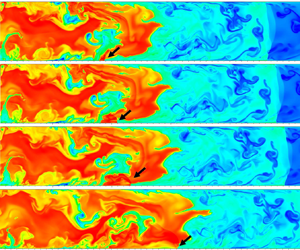
Flame acceleration and detonation transition in premixed and inhomogeneous supersonic flows
-
- Journal:
- Journal of Fluid Mechanics / Volume 1001 / 25 December 2024
- Published online by Cambridge University Press:
- 13 December 2024, A36
-
- Article
- Export citation
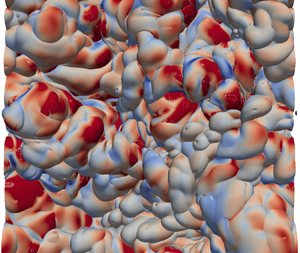
Temporal evolution of the turbulence interface of a turbulent plane jet
-
- Journal:
- Journal of Fluid Mechanics / Volume 1001 / 25 December 2024
- Published online by Cambridge University Press:
- 13 December 2024, A39
-
- Article
- Export citation
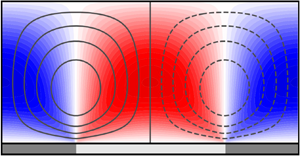
Linear models of strip-type roughness
-
- Journal:
- Journal of Fluid Mechanics / Volume 1001 / 25 December 2024
- Published online by Cambridge University Press:
- 13 December 2024, A38
-
- Article
-
- You have access
- Open access
- HTML
- Export citation
Concept for motion sensing using atomic optical memories
-
- Journal:
- Research Directions: Quantum Technologies / Volume 3 / 2025
- Published online by Cambridge University Press:
- 13 December 2024, e2
-
- Article
-
- You have access
- Open access
- HTML
- Export citation
