Refine search
Actions for selected content:
212786 results in Engineering
Fundamental considerations in the design and performance assessment of propulsive fuselage aircraft concepts
-
- Journal:
- The Aeronautical Journal / Volume 129 / Issue 1333 / March 2025
- Published online by Cambridge University Press:
- 28 November 2024, pp. 762-787
-
- Article
-
- You have access
- Open access
- HTML
- Export citation
Fluid viscoelasticity affects ultrasound force field-induced particle transport
-
- Journal:
- Journal of Fluid Mechanics / Volume 1000 / 10 December 2024
- Published online by Cambridge University Press:
- 28 November 2024, A75
-
- Article
- Export citation
-
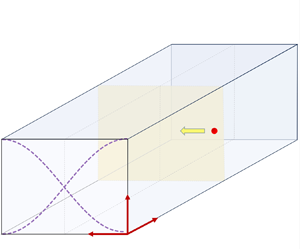
Ultrasonic standing wave technology offers an ideal platform for manipulating particles in microfluidics. We study how fluid viscoelasticity and acoustic boundary formation in micro-confinements affect ultrasound-induced perturbations. These perturbations influence acoustic energy density (AED) and consequently particle transport dynamics. Our approach combines theoretical, numerical and experimental methods. Using the Oldroyd-B model for viscoelastic fluids, we advance acoustic radiation force (ARF) formulations of Doinikov et al. (Phys. Rev. E, vol. 104, no. 6, 2021a; Phys. Rev. E, vol. 104, no. 6, 2021b) for particles much smaller than the acoustic wavelength. This improved approach allows us to decouple AED and acoustic contrast factor terms in the ARF expression. It also enables us to examine the effects of viscoelastic parameters: $\mu ^*$ (ratio of the viscosity of the viscoelastic fluid to that of base Newtonian fluid) and $De$ (product of fluid relaxation time and actuation frequency) on AED and particle migration. Remarkably, we show that increasing fluid elasticity or $De$ transitions viscoelastic fluids from the energy dissipation (relaxation) mode to the energy storage (frozen) mode, increasing AED. Conversely, increasing viscosity ( $\mu ^*$) reduces AED. Thus, our findings suggest that elastic effects accelerate particle migration, while viscous effects decelerate it. Consequently, a viscoelastic fluid-filled micro-confinement acts as an energy dissipation device at low $De$ and an energy storage device at high $De$. Particle migration can be controlled by adjusting viscoelastic and acoustic parameters, at a fixed power input. Our theoretical and numerical findings are validated with our experimental data. Our study advances the fundamental understanding of particle migration in viscoelastic fluids under ultrasound, and can significantly impact future studies on particle/cell migration in bio-fluids.


Can back exosuits simultaneously increase lifting endurance and reduce musculoskeletal disorder risk?
-
- Journal:
- Wearable Technologies / Volume 5 / 2024
- Published online by Cambridge University Press:
- 28 November 2024, e17
-
- Article
-
- You have access
- Open access
- HTML
- Export citation
Assessing evidence-based training in a collaborative virtual reality flight simulator
-
- Journal:
- The Aeronautical Journal / Volume 129 / Issue 1332 / February 2025
- Published online by Cambridge University Press:
- 28 November 2024, pp. 261-281
-
- Article
-
- You have access
- Open access
- HTML
- Export citation
Acknowledgements
-
- Book:
- Data Management
- Published online:
- 21 November 2024
- Print publication:
- 28 November 2024, pp xvii-xviii
-
- Chapter
- Export citation
Dual-band high isolation eight element MIMO antenna using self decoupling technique for 5G smartphone
-
- Journal:
- International Journal of Microwave and Wireless Technologies / Volume 16 / Issue 10 / December 2024
- Published online by Cambridge University Press:
- 28 November 2024, pp. 1756-1771
-
- Article
- Export citation

Linear stability and spectral modal decomposition of three-dimensional turbulent wake flow of a generic high-speed train
-
- Journal:
- Journal of Fluid Mechanics / Volume 1000 / 10 December 2024
- Published online by Cambridge University Press:
- 28 November 2024, A64
-
- Article
- Export citation
Modal analysis of screeching elliptical jets
-
- Journal:
- Journal of Fluid Mechanics / Volume 1000 / 10 December 2024
- Published online by Cambridge University Press:
- 28 November 2024, A68
-
- Article
-
- You have access
- Open access
- HTML
- Export citation
-
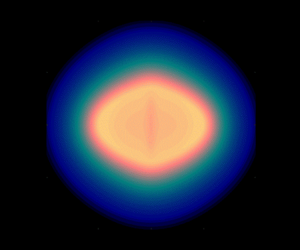
This work presents models for the behaviour of both upstream- and downstream-travelling waves in screeching elliptical jets. Proper orthogonal decomposition is performed on experimental velocity data in both the major and minor axis planes, for an aspect ratio $AR=2$ converging elliptical jet operating at nozzle pressure ratios of $2.6$ and $3.4$. From this decomposition, the radial and axial structure of the guided-jet mode (GJM) and the Kelvin–Helmholtz instability are educed. Linear-stability analysis (LSA) is performed using both the experimentally obtained mean flow, and one obtained using Reynolds-averaged Navier–Stokes (RANS) at matched conditions. It is shown that the wavenumber predicted by LSA for both waves are within the range of experimentally observed wavenumbers. Furthermore, the model accurately predicts the structure of these waves at multiple axial locations, using either the experimental or RANS mean flow. Most critically, it is demonstrated that the GJM is only predicted to be neutrally stable at the screech frequency for a relatively limited streamwise domain, the size and location of which is dependent on the nozzle pressure ratio. A comparison with the amplitude envelope for the GJM extracted from the experimental measurements indicates that the maximum fluctuations associated with the GJM are collocated with this region of the flow that is predicted to support the GJM. While there have been extensive discussions about the frequency dependence of the GJM, this is the first demonstration that its existence is highly dependent on streamwise position within the flow.


Unsteady evolution of slip and drag in surfactant-contaminated superhydrophobic channels
-
- Journal:
- Journal of Fluid Mechanics / Volume 1000 / 10 December 2024
- Published online by Cambridge University Press:
- 28 November 2024, A62
-
- Article
-
- You have access
- Open access
- HTML
- Export citation
10 - The Future of Computing: Synergies in Data Management and System Architecture
-
- Book:
- Data Management
- Published online:
- 21 November 2024
- Print publication:
- 28 November 2024, pp 266-269
-
- Chapter
- Export citation
9 - Ray Tracing Hardware in GPUs for Accelerated Computation
-
- Book:
- Data Management
- Published online:
- 21 November 2024
- Print publication:
- 28 November 2024, pp 237-265
-
- Chapter
- Export citation
3 - Main Memory: The Physical Space
-
- Book:
- Data Management
- Published online:
- 21 November 2024
- Print publication:
- 28 November 2024, pp 41-81
-
- Chapter
- Export citation
Modelling high-Reynolds-number effects in fully developed channel flows using a two-scale Reynolds stress model
-
- Journal:
- Journal of Fluid Mechanics / Volume 1000 / 10 December 2024
- Published online by Cambridge University Press:
- 28 November 2024, A65
-
- Article
- Export citation
-
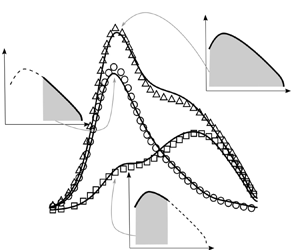
Reynolds-averaged models for solving the Navier–Stokes equations are implicitly based on Kolmogorov's theory for describing energy transfers between the different turbulent scales, which means that all the energy produced at large scales is transferred at a constant rate to the smallest turbulent scales where it is dissipated. As a result, these models use a single scale to describe the turbulence spectrum, which in cases of non-equilibrium turbulence does not provide an adequate description of the transfers actually observed. This is particularly the case for wall-bounded flows at high Reynolds numbers, such as turbulent channel flows. Taking up an approach developed by Schiestel (2007 Modeling and Simulation of Turbulent Flows, ISTE Ltd and John Wiley & Sons), which aims to define a Reynolds-averaged Navier–Stokes model transporting several scales of turbulence, a two-scale Reynolds stress model (RSM) was developed in order to take into account the interactions between the inner and outer regions of wall-bounded flows. The results obtained with the model are compared with the direct numerical simulations (DNS) of Lee & Moser (J. Fluid Mech., vol. 860, 2019, pp. 886–938) in a turbulent channel for several friction Reynolds numbers up to $Re_{\tau }=5200$, for which partial integrations in spectral space were carried out, highlighting distinct behaviours between small and large scales of turbulence. The model developed provides an accurate description of the contributions at small and large scales and thus reproduces the high-Reynolds-number effects observed in DNS data. In addition, comparisons with the DNS data served to validate a large part of the closure relations used for the various terms in the two-scale RSM.

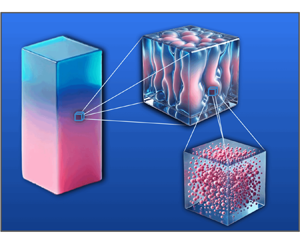
Delayed gravitational collapse of attractive colloidal suspensions
-
- Journal:
- Journal of Fluid Mechanics / Volume 1000 / 10 December 2024
- Published online by Cambridge University Press:
- 28 November 2024, A73
-
- Article
-
- You have access
- Open access
- HTML
- Export citation
Frontmatter
-
- Book:
- Data Management
- Published online:
- 21 November 2024
- Print publication:
- 28 November 2024, pp i-iv
-
- Chapter
- Export citation
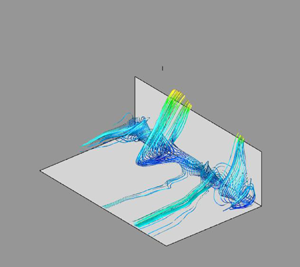
Low-dimensional analysis and modelling of the flow over a forward-facing step
-
- Journal:
- Journal of Fluid Mechanics / Volume 1000 / 10 December 2024
- Published online by Cambridge University Press:
- 28 November 2024, A69
-
- Article
- Export citation
6 - GPU Computing: A New Algorithm-to-Architecture Interaction
-
- Book:
- Data Management
- Published online:
- 21 November 2024
- Print publication:
- 28 November 2024, pp 122-166
-
- Chapter
- Export citation
Dedication
-
- Book:
- Data Management
- Published online:
- 21 November 2024
- Print publication:
- 28 November 2024, pp v-vi
-
- Chapter
- Export citation
Ultra-thin and flexible microwave metasurface absorbers based on resistive patches
-
- Journal:
- International Journal of Microwave and Wireless Technologies / Volume 16 / Issue 9 / November 2024
- Published online by Cambridge University Press:
- 28 November 2024, pp. 1451-1464
-
- Article
-
- You have access
- Open access
- HTML
- Export citation
-
We introduce a systematic approach for designing ultrathin, flexible, and polarization-insensitive metasurface absorbers (MSAs), suitable for aviation applications, such as radar cross-section reduction of unmanned aerial vehicles. Metal-backed resistive patches are arranged on a flexible polyethylene terephthalate substrate of thickness about 1/100 of the operating wavelength, classifying the absorbers as ultrathin. The ultralow weight of the proposed MSAs is crucial for the targeted aviation applications, to ensure airworthiness. A narrowband uniform MSA is designed to achieve maximum absorption and serves as a starting point to synthesize a broadband and polarization-insensitive $3 \times 3$ absorber supercell. The non-uniform absorber is systematically designed by a fast semi-analytical method. The proposed absorbers have been fabricated and experimentally tested both on flat and cylindrical curved surfaces, with measurements being in very good agreement with the corresponding simulations, and corroborate the high absorption and broadband behavior of the proposed non-uniform ultrathin and flexible absorber.

8 - GPU for Spatial Data: A Case Study in Pathology Imaging Applications
-
- Book:
- Data Management
- Published online:
- 21 November 2024
- Print publication:
- 28 November 2024, pp 203-236
-
- Chapter
- Export citation
