Refine search
Actions for selected content:
212786 results in Engineering
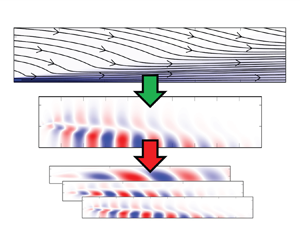
On the role of eddy viscosity in resolvent analysis of turbulent jets
-
- Journal:
- Journal of Fluid Mechanics / Volume 1000 / 10 December 2024
- Published online by Cambridge University Press:
- 27 November 2024, A51
-
- Article
- Export citation
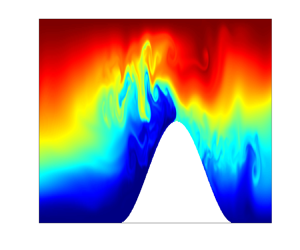
Energetics of mode-1 internal waves interacting with topographic ridges of varying height and slope
-
- Journal:
- Journal of Fluid Mechanics / Volume 1000 / 10 December 2024
- Published online by Cambridge University Press:
- 27 November 2024, A53
-
- Article
-
- You have access
- Open access
- HTML
- Export citation
-
Energetics of mode-1 internal waves interacting with topographic ridges are investigated using high-resolution two-dimensional simulations at spatial scales of $O(100)$ m that span between classical laboratory-scale ( $O(10)$ m) and field-scale simulations ( $O(1000\unicode{x2013}10\,000)$ m). This paper focuses on the energetics of wave–topography interaction, with emphasis on systematically examining the partitioning of the incident wave energy as a function of wave forcing and topographic parameters. Partitioning of energy into the transmitted, reflected and dissipated components is quantified as a function of wave Froude number $Fr=U_0/c_{ph}$ ( $U_0=$ velocity amplitude of forcing and $c_{ph}=$ internal wave celerity), slope criticality $=\gamma /s$, where $\gamma =$ topographic slope and $s=$ wave characteristic slope, and the ratio of topographic height $h_t$ to water depth $d$. As $Fr$ increases, dense fluid from the base of the stratified water column surges upslope with significant vertical inertia, leading to the formation of internal boluses that plunge over and onto the downstream side of the ridge, resulting in elevated dissipation. Results show that non-hydrostatic contributions to the total energy flux are significant (up to 50 %). Analysis of the energy flux budget shows that transmitted energy flux decreases monotonically as $\gamma /s$ increases for any given $Fr$ and $h_t/d$. At critical slopes ( $\gamma /s=1$), the transmitted energy flux scales as a linear function of $h_t/d$, with a mild dependence on $Fr$, a key result that can be useful in energy flux parameterizations. Reflected energy flux exhibits a nonlinear dependence on the ridge height, increasing sharply when $h_t/d > 0.5$. Dissipation is enhanced at critical slopes, with a plateau evident for $\gamma /s \ge 1$ and $h_t/d = 0.5$ for all $Fr$.
$Fr$.


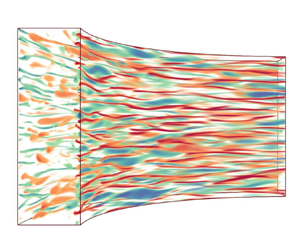
Keplerian turbulence in Taylor–Couette flow of dilute polymeric solutions
-
- Journal:
- Journal of Fluid Mechanics / Volume 1000 / 10 December 2024
- Published online by Cambridge University Press:
- 27 November 2024, R3
-
- Article
- Export citation
-
Turbulent flow induced by elastorotational instability in viscoelastic Taylor–Couette flow (TCF) with Keplerian rotation is analogous to a turbulent accretion disk destabilized by magnetorotational instability. We examine this novel viscoelastic Keplerian turbulence via direct numerical simulations (DNS) for the shear Reynolds number ( $Re$) ranging from $10^2$ to $10^4$. The observed characteristic flow structure consists of penetrating streamwise vortices with axial length scales much smaller than the gap width, distinct from the classic centrifugally induced Taylor vortices, which have axial lengths of the gap width. These intriguing vortices persist for the wide $Re$ range considered and give rise to intriguing scaling behaviour in key flow quantities. Specifically, the characteristic axial length of the penetrating vortices is shown to scale as $Re^{-0.22}$; the angular momentum transport scales as $Re^{0.42}$; the kinetic and elastic boundary-layer thicknesses based on angular velocity and hoop stress near the inner cylinder wall scale as $Re^{-0.48}$ and $Re^{-0.49}$, respectively. This implies that the viscoelastic Keplerian turbulence belongs to the classical turbulent regime of TCF with the Prandtl–Blasius-type boundary layer. Furthermore, we present an analytical relation between the viscous and elastic dissipation rates of kinetic energy and the angular momentum transport and in turn demonstrate its validity using our DNS data. This study has paved the way for future research to explore astrophysics-related Keplerian turbulence and angular momentum transport via the scaling relations of the analogous TCF of dilute polymeric solutions.


Convolutional kernel-based classification of industrial alarm floods
- Part of
-
- Journal:
- Data-Centric Engineering / Volume 5 / 2024
- Published online by Cambridge University Press:
- 27 November 2024, e30
-
- Article
-
- You have access
- Open access
- HTML
- Export citation
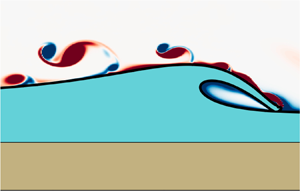
Modelling wind-induced changes to overturning wave shape
-
- Journal:
- Journal of Fluid Mechanics / Volume 1000 / 10 December 2024
- Published online by Cambridge University Press:
- 27 November 2024, A48
-
- Article
-
- You have access
- Open access
- HTML
- Export citation
On the origin of circular rolls in rotor-stator flow
-
- Journal:
- Journal of Fluid Mechanics / Volume 1000 / 10 December 2024
- Published online by Cambridge University Press:
- 27 November 2024, A47
-
- Article
- Export citation
-
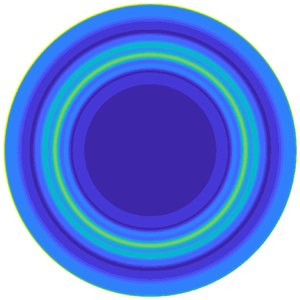
Rotor-stator flows are known to exhibit instabilities in the form of circular and spiral rolls. While the spirals are known to emanate from a supercritical Hopf bifurcation, the origin of the circular rolls is still unclear. In the present work we suggest a quantitative scenario for the circular rolls as a response of the system to external forcing. We consider two types of axisymmetric forcing: bulk forcing (based on the resolvent analysis) and boundary forcing using direct numerical simulation. Using the singular value decomposition of the resolvent operator the optimal response is shown to take the form of circular rolls. The linear gain curve shows strong amplification at non-zero frequencies following a pseudo-resonance mechanism. The optimal energy gain is found to scale exponentially with the Reynolds number $Re$ (for $Re$ based on the rotation rate and interdisc spacing $H$). The results for both types of forcing are compared with former experimental works and previous numerical studies. Our findings suggest that the circular rolls observed experimentally are the effect of the high forcing gain together with the roll-like form of the leading response of the linearised operator. For high enough Reynolds number it is possible to delineate between linear and nonlinear responses. For sufficiently strong forcing amplitudes, the nonlinear response is consistent with the self-sustained states found recently for the unforced problem. The onset of such non-trivial dynamics is shown to correspond in state space to a deterministic leaky attractor, as in other subcritical wall-bounded shear flows.


Linear stability analysis of a vertical liquid film over a moving substrate
-
- Journal:
- Journal of Fluid Mechanics / Volume 1000 / 10 December 2024
- Published online by Cambridge University Press:
- 27 November 2024, A57
-
- Article
- Export citation
-
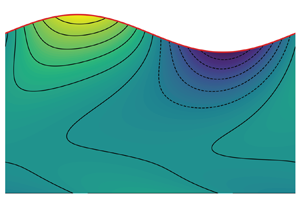
The stability of liquid-film flows is essential in many industrial applications. In the dip-coating process, a liquid film forms over a substrate extracted at a constant speed from a bath. We studied the linear stability of this film considering different thicknesses $\hat {h}$ for four liquids, spanning an extensive range of Kapitza numbers ( $Ka$). By solving the Orr–Sommerfeld eigenvalue problem with the Chebyshev–Tau spectral method, we calculated the threshold between growing and decaying perturbations, investigated the instability mechanism, and computed the absolute/convective threshold. The instability mechanism was studied by analysing the perturbations’ vorticity distribution and the kinetic energy balance. It was found that liquids with low $Ka$ (e.g. corn oil, $Ka = 4$) are stable for a smaller range of wavenumbers compared with liquid with high $Ka$ (e.g. liquid zinc, $Ka = 11\,525$). Surface tension has a stabilising and a destabilising effect. For long waves, it curves the vorticity lines near the substrate, reducing the flow under the crests. For short waves, it fosters vorticity production at the interface and creates a region of intense vorticity near the substrate. In addition, we discovered that the surface tension contributes to both the production and dissipation of perturbation's energy depending on the $Ka$ number. Regarding the absolute/convective threshold, we identified a window in the parameter space where unstable waves propagate throughout the entire domain (indicating absolute instability). Perturbations affecting Derjaguin's solution ( $\hat {h}=1$) for $Ka<17$ and the Landau–Levich–Derjaguin solution ( $\hat {h}=0.945 Re^{1/9}Ka^{-1/6}$), are advected by the flow (indicating convective instability).


The energetics and colour for linearised models of wall turbulence
-
- Journal:
- Journal of Fluid Mechanics / Volume 1000 / 10 December 2024
- Published online by Cambridge University Press:
- 26 November 2024, A42
-
- Article
-
- You have access
- Open access
- HTML
- Export citation
Transition to turbulence in rough plane Couette flow
-
- Journal:
- Journal of Fluid Mechanics / Volume 1000 / 10 December 2024
- Published online by Cambridge University Press:
- 26 November 2024, A40
-
- Article
-
- You have access
- Open access
- HTML
- Export citation
-
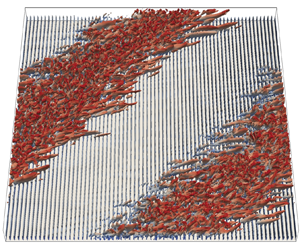
This DNS study considers transition to turbulence in plane Couette flow (pCf) with a rough stationary wall and a smooth moving wall. The roughness elements are square ribs of height $k=0.2h$ (where $h$ is the half-channel height). Two different pitch separations, $\lambda =2k$ and $10k$, are considered, i.e. d-type and k-type roughness, respectively. The transition in both rough pCf cases takes place through a stage of alternate laminar–turbulent bands aligned in an oblique fashion. However, roughness causes a shift in the transitional Reynolds number ( $Re$) range. In the k-type roughness, stable bands are observed in the range $Re \in [300, 325]$, which is a downwards shift from the transitional $Re$ range for the smooth pCf ( $Re \in [325,400]$). The d-type roughness, on the other hand, surprisingly shifts the transitional $Re$ range upwards to $Re \in [350,425]$. This peculiar behaviour is associated with the ability of the ribs to shed and regenerate vorticity. Large-scale components extracted using a filtering process relate to the transition bands and flow parallel to the oblique laminar–turbulent boundaries. Counter-rotating vortices are present in the turbulent regions of the flow field, which exist in tandem with the high- and low-velocity streaks. Another interesting observation is the secondary Reynolds shear stresses, $-\overline {v^{\prime }u^{\prime }}$ and $-\overline {w^{\prime }v^{\prime }}$, which are non-zero in the transitional regime, in contrast to the turbulent regime where they are negligible.


Ordinal pattern-based analysis of an opposition-controlled turbulent channel flow
-
- Journal:
- Journal of Fluid Mechanics / Volume 1000 / 10 December 2024
- Published online by Cambridge University Press:
- 26 November 2024, A43
-
- Article
- Export citation
-
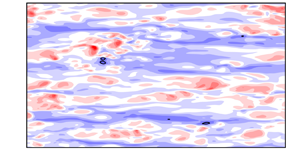
We conduct a numerical study on the drag-reduction mechanism of an opposition- controlled turbulent channel flow from the viewpoint of a symbolic dynamics approach. The effect of the virtual wall formed by the opposition control is maximised at the location of the detection plane $y_d^+ \approx 10$. At this wall-normal location, the local link strength of the self-loop of network nodes representing the negative correlation pattern between the streamwise and wall-normal velocity fluctuations is maximised in the uncontrolled flow. In the controlled case, the multiscale complexity–entropy causality plane and the spatial permutation entropy at $y_d^+ \approx 10$ indicate that the drag-reduction effect is attributed to the reduction of the region where streaks actively coalesce and separate and the suppression of the regeneration cycle in the region near the wall.


Gravity-driven motion of a highly viscous non-wetting drop on an inclined wall
-
- Journal:
- Journal of Fluid Mechanics / Volume 1000 / 10 December 2024
- Published online by Cambridge University Press:
- 26 November 2024, A16
-
- Article
-
- You have access
- Open access
- HTML
- Export citation
-
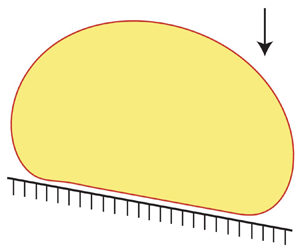
Extensive three-dimensional boundary-integral simulations are presented for the steady-state, low-Reynolds-number motion of a non-wetting deformable drop in another liquid on an inclined solid wall. The drop remains separated from the wall by a lubricating film. The boundary-integral formulation is based on the half-space Green function. The focus is on the challenging case of small tilt angles $\theta$ combined with high drop-to-medium viscosity ratios $\lambda$, when the drop travels with strong hydrodynamical interaction very close to the wall. Simulations to steady state have required ultrahigh drop surface resolutions (to $3\times 10^5$ boundary elements) achieved through multipole acceleration and combined with novel regularization to fully eliminate near-singular behaviour of the double-layer integrals due to small clearance. Non-dimensional drop speed $U$ is presented for $\theta \geq 7.5^\circ$, $\lambda \leq 300$ and in a broad range of Bond numbers $B$, covering from nearly spherical to strongly pancaked drops. The results are consistent with published experiments on liquid–liquid systems. At small $\theta$ and $\lambda \gg 1$, $U$ is a strong, decreasing function of $B$; the asymptotic regime $U\to 0$ at $B\to 0$ is not observed in the simulated range. For small $B$, the dimpled thin-film geometry is insensitive to $\lambda =1\unicode{x2013}300$. For pancaked drops, the lubrication film is much thicker for $\lambda =1$ than for $\lambda \gg 1$ drops. Approximate thin-film uniformity in the drop motion direction is confirmed for pancaked, but not for $B\ll 1$, drops. Kinematics of drop motion shows that neither perfect tank treading, nor perfect rolling can be approached for liquid–liquid systems in the purely hydrodynamical formulation. The methodology is applicable to other problems and can allow for direct inclusion of short-range colloidal forces in three-dimensional boundary-integral simulations.


Turbulence modulation in liquid–liquid two-phase Taylor–Couette turbulence
-
- Journal:
- Journal of Fluid Mechanics / Volume 999 / 25 November 2024
- Published online by Cambridge University Press:
- 26 November 2024, A98
-
- Article
- Export citation
-
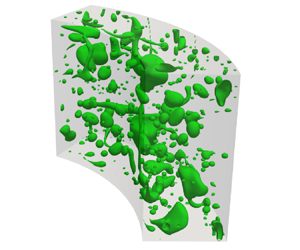
We investigate the coupling effects of the two-phase interface, viscosity ratio and density ratio of the dispersed phase to the continuous phase on the flow statistics in two-phase Taylor–Couette turbulence at a system Reynolds number of $6\times 10^3$ and a system Weber number of 10 using interface-resolved three-dimensional direct numerical simulations with the volume-of-fluid method. Our study focuses on four different scenarios: neutral droplets, low-viscosity droplets, light droplets and low-viscosity light droplets. We find that neutral droplets and low-viscosity droplets primarily contribute to drag enhancement through the two-phase interface, whereas light droplets reduce the system's drag by explicitly reducing Reynolds stress due to the density dependence of Reynolds stress. In addition, low-viscosity light droplets contribute to greater drag reduction by further reducing momentum transport near the inner cylinder and implicitly reducing Reynolds stress. While interfacial tension enhances turbulent kinetic energy (TKE) transport, drag enhancement is not strongly correlated with TKE transport for both neutral droplets and low-viscosity droplets. Light droplets primarily reduce the production term by diminishing Reynolds stress, whereas the density contrast between the phases boosts TKE transport near the inner wall. Therefore, the reduction in the dissipation rate is predominantly attributed to decreased turbulence production, causing drag reduction. For low-viscosity light droplets, the production term diminishes further, primarily due to their greater reduction in Reynolds stress, while reduced viscosity weakens the density difference's contribution to TKE transport near the inner cylinder, resulting in a more pronounced reduction in the dissipation rate and consequently stronger drag reduction. Our findings provide new insights into the physics of turbulence modulation by the dispersed phase in two-phase turbulence systems.

Turbulent spherical Rayleigh–Bénard convection: radius ratio dependence
-
- Journal:
- Journal of Fluid Mechanics / Volume 1000 / 10 December 2024
- Published online by Cambridge University Press:
- 26 November 2024, A41
-
- Article
-
- You have access
- Open access
- HTML
- Export citation
-
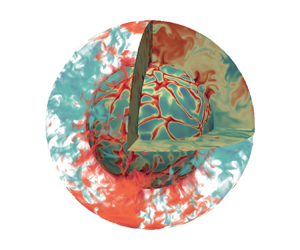
Direct numerical simulation (DNS) is performed to explore turbulent Rayleigh–Bénard convection in spherical shells. Our simulations cover six distinct values of radius ratio, $\eta = r_i/r_o = 0.2$, 0.3, 0.4, 0.5, 0.6 and 0.8, under the assumption of a centrally condensed mass with gravity profile $g \sim 1/r^{2}$; where $r_i$, $r_o$ and $r$ denote the inner shell radius, the outer shell radius and the local radial coordinate, respectively. The Prandtl number is kept constant at unity while the Rayleigh number ( $Ra$) is varied from $3 \times 10^{3}$ to $5 \times 10^8$. Our primary aim is to analyze how the radius ratio influences the global transport properties and flow physics. To gain insights into the scaling behaviour of the Nusselt number ( $Nu$) and the Reynolds number ( $Re$) with respect to $Ra$ and $\eta$, we apply the Grossmann–Lohse (GL) theory (Grossmann & Lohse, J. Fluid Mech., vol. 407, 2000, pp. 27–56) to the system. It is observed that the scaling exponents for $Nu$ and $Re$ in relation to $Ra$ are more significant for smaller $\eta$ values, suggesting that the simulations with smaller $\eta$ reach the classical $Nu\sim Ra^{1/3}$ regime at a relatively lower $Ra$. This observation could also imply the systems with smaller $\eta$ might transition to the ultimate regime earlier at a smaller $Ra$. Based on our extensive DNS data, we establish that the thickness of the inner thermal boundary, $\lambda _{\vartheta }^{i}$, follows a scaling relationship of $\lambda _{\vartheta }^{i} \sim \eta ^{1/2}$. This relationship, in turn, leads to a scaling law for $Nu$ in the form of $Nu \sim f(\eta ) Ra^{\gamma }$, where the function $f(\eta )$ is defined as $f(\eta ) = {\eta ^{1/2}}/{(1+\eta ^{4/3})}$, and the exponent $\gamma$ depends on both $Ra$ and $\eta$. Additionally, we characterize and explain the asymmetry in the velocity field by introducing the separate Reynolds numbers for the inner and outer shells. The asymmetry of the kinetic and thermal energy dissipation rates in the inner and outer boundary layers (BLs) is also quantified.


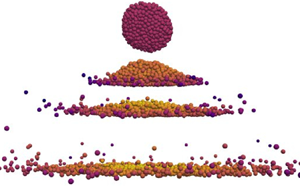
Breakage dynamics and scaling of wet aggregates of rigid particles
-
- Journal:
- Journal of Fluid Mechanics / Volume 1000 / 10 December 2024
- Published online by Cambridge University Press:
- 26 November 2024, A39
-
- Article
-
- You have access
- Open access
- HTML
- Export citation
-
The mechanical behaviour of wet particle aggregates is crucial in many granular processes such as wet granulation and soil degradation. However, the interplay of capillary and viscous forces for aggregate stability and breakage have remained elusive due to the complexity of granular dynamics. We use particle dynamics simulations to analyse the deformation and breakage of wet aggregates colliding with a flat wall. The aggregates are composed of spherical particles and the effect of liquid bonds is modelled through capillary and lubrication forces acting between particles. We perform an extensive parametric study by varying surface tension, impact velocity and liquid viscosity in a broad range of values. We show that when lubrication force is neglected, aggregate breakage is fully controlled by the reduced kinetic energy $\xi$, defined as the ratio of incident kinetic energy to the initial capillary energy. At low values of $\xi$, the aggregate deforms without breakage due to inelastic energy loss induced by rearrangements and loss of capillary bonds, whereas above a critical value of $\xi$ it breaks into smaller aggregates due to the transfer of kinetic energy from aggregate to fragments. In the presence of lubrication forces, the crossover from capillary to viscous regime is controlled by the capillary number, defined as the ratio of viscous dissipation to capillary energy. We find that the critical value of $\xi$ for aggregate breakage in the viscous regime increases as a power law with capillary number while the effective restitution coefficient follows the same trend as in the capillary regime.


On-demand beamforming and wide dynamic power range for WPT and EH applications
-
- Journal:
- International Journal of Microwave and Wireless Technologies / Volume 16 / Issue 6 / July 2024
- Published online by Cambridge University Press:
- 26 November 2024, pp. 903-918
-
- Article
-
- You have access
- Open access
- HTML
- Export citation
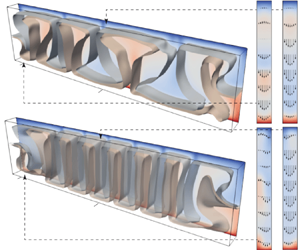
Quasi-steady transitions in confined convection
-
- Journal:
- Journal of Fluid Mechanics / Volume 1000 / 10 December 2024
- Published online by Cambridge University Press:
- 26 November 2024, A44
-
- Article
- Export citation
-
We study the effect of geometrical confinement on thermal convection by laboratory experiments and direct numerical simulations using Hele-Shaw geometries (typically the gap-to-height aspect ratio $0.12$) for the Prandtl number $Pr \geq 40$ and the Rayleigh number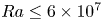 $Ra \leq 6 \times 10^7$. Under such strong unidirectional confinement, the convective flows are forced to squeeze within the narrow gap and exhibit unique spatiotemporal signatures, which contrast those in unconfined systems. With the increase of $Ra$, we identify that the system experiences five convective regimes that can be classified from two aspects, time dependency and flow dimensionality: (I) quasi-two-dimensional (quasi-2-D) steady flow; (II) quasi-2-D flow with oscillatory corner rolls; (III) three-dimensional (3-D) flow with oscillatory corner rolls; (IV) 3-D steady flow; and (V) 3-D time-dependent motion of plumes around sidewalls. Notably, unsteadiness does not emerge globally, but is localised near the sidewalls as oscillatory corner rolls, resulting in the regime transitions happening in a quasi-steady manner. We confirm that these regime transitions show less dependence on both $Pr$ and the other (wider) horizontal scale of the geometry. Moreover, we find that a recently proposed criterion ‘degree of confinement’ (Noto et al., Proc. Natl Acad. Sci. USA, vol. 121, issue 28, 2024, e2403699121) successfully explains the emergence of 3-D structures, expanding its applicable range to smaller $Ra$. This study deepens the comprehension of the thermal convection emerging in tight geometries, impacting across disciplines, such as Earth and planetary science, and thermal engineering.


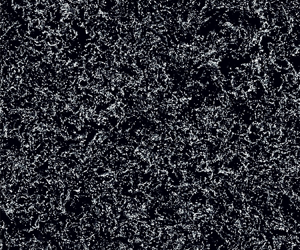
Homogeneous turbophoresis of heavy inertial particles in turbulent flow
-
- Journal:
- Journal of Fluid Mechanics / Volume 999 / 25 November 2024
- Published online by Cambridge University Press:
- 26 November 2024, A83
-
- Article
- Export citation
-
Heavy particles suspended in turbulent flow possess inertia and are ejected from violent vortical structures by centrifugal forces. Once piled up along particle paths, this small-scale mechanism leads to an effective large-scale drift. This phenomenon, known as ‘turbophoresis’, causes particles to leave highly turbulent regions and migrate towards calmer regions, explaining why particles transported by non-homogeneous flows tend to concentrate near the minima of turbulent kinetic energy. It is demonstrated here that turbophoretic effects are just as crucial in statistically homogeneous flows. Although the average turbulent activity is uniform, instantaneous spatial fluctuations are responsible for inertial-range inhomogeneities in the particle distribution. Direct numerical simulations are used to probe particle accelerations, specifically how they correlate to local turbulent activity, yielding an effective coarse-grained dynamics that accounts for particle detachment from the fluid and ejection from excited regions through a space- and time-dependent non-Fickian diffusion. This leads to cast fluctuations in particle distributions in terms of a scale-dependent Péclet number ${\textit {Pe}}_\ell$, which measures the importance of turbulent advection compared with inertial turbophoresis at a given scale $\ell$. Multifractal statistics of energy dissipation indicate that $ {\textit {Pe}}_\ell \sim \ell ^\delta /\tau _{p}$ with $\delta \approx 0.84$. Numerical simulations support this behaviour and emphasise the relevance of the turbophoretic Péclet number in characterising how particle distributions, including their radial distribution function, depends on $\ell$. This approach also explains the presence of voids with inertial-range sizes, and the fact that their volumes have a non-trivial distribution with a power-law tail $p(\mathcal {V}) \propto \mathcal {V}^{-\alpha }$, with an exponent $\alpha$ that tends to 2 as ${\textit {Pe}}_\ell \to 0$.


Lubrication-mediated rebounds off fluid baths
-
- Journal:
- Journal of Fluid Mechanics / Volume 1000 / 10 December 2024
- Published online by Cambridge University Press:
- 26 November 2024, R2
-
- Article
-
- You have access
- Open access
- HTML
- Export citation
Flow of viscoelastic films over grooved surfaces with partial wetting
-
- Journal:
- Journal of Fluid Mechanics / Volume 1000 / 10 December 2024
- Published online by Cambridge University Press:
- 25 November 2024, A10
-
- Article
-
- You have access
- Open access
- HTML
- Export citation
Resolving turbulence and drag over textured surfaces using texture-less simulations: the case of slip/no-slip textures
-
- Journal:
- Journal of Fluid Mechanics / Volume 1000 / 10 December 2024
- Published online by Cambridge University Press:
- 25 November 2024, A36
-
- Article
-
- You have access
- Open access
- HTML
- Export citation
-
We study the effect of surface texture on an overlying turbulent flow for the case of textures made of an alternating slip/no-slip pattern, a common model for superhydrophobic surfaces, but also a particularly simple form of texture. For texture sizes $L^+ \gtrsim 25$, we have previously reported that, even though the texture effectively imposes homogeneous slip boundary conditions on the overlying, background turbulence, this is not its sole effect. The effective conditions only produce an origin offset on the background turbulence, which remains otherwise smooth-wall-like. For actual textures, however, as their size increases from $L^+ \gtrsim 25$ the flow progressively departs from this smooth-wall-like regime, resulting in additional shear Reynolds stress and increased drag, in a non-homogeneous fashion that could not be reproduced by the effective boundary conditions. This paper focuses on the underlying physical mechanism of this phenomenon. We argue that it is caused by the nonlinear interaction of the texture-coherent flow, directly induced by the surface topology, and the background turbulence, as it acts directly on the latter and alters it. This does not occur at the boundary where effective conditions are imposed, but within the overlying flow itself, where the interaction acts as a forcing on the governing equations of the background turbulence, and takes the form of cross-advective terms between the latter and the texture-coherent flow. We show this by conducting simulations where we remove the texture and introduce additional, forcing terms in the Navier–Stokes equations, in addition to the equivalent homogeneous slip boundary conditions. The forcing terms capture the effect of the nonlinear interaction on the background turbulence without the need to resolve the surface texture. We show that, when the forcing terms are derived accounting for the amplitude modulation of the texture-coherent flow by the background turbulence, they quantitatively capture the changes in the flow up to texture sizes $L^+ \approx 70{-}100$. This includes not just the roughness function but also the changes in the flow statistics and structure.


