Refine search
Actions for selected content:
212786 results in Engineering
Turbulent/turbulent entrainment in a planar wake
-
- Journal:
- Journal of Fluid Mechanics / Volume 1000 / 10 December 2024
- Published online by Cambridge University Press:
- 25 November 2024, A26
-
- Article
-
- You have access
- Open access
- HTML
- Export citation
A pore-scale resolved direct numerical simulation study for scaling analysis of the solutal convection in porous media
-
- Journal:
- Journal of Fluid Mechanics / Volume 1000 / 10 December 2024
- Published online by Cambridge University Press:
- 25 November 2024, A21
-
- Article
- Export citation
-
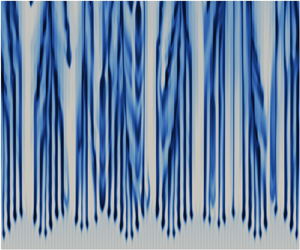
Understanding the solutal convection is a crucial step towards accurate prediction of CO $_2$ sequestration in deep saline aquifers. In this study, pore-scale resolved direct numerical simulations (DNS) are performed to analyse the scaling laws of the solutal convection in porous media. The porous media studied are composed of uniformly distributed square or circular elements. The Rayleigh numbers in the range $426 \le Ra \le 80\,000$, the Darcy numbers in the range $1.7\times 10^{-8} \le Da \le 8.8\times 10^{-6}$ and the Schmidt numbers in the range $250 \le Sc \le 10^4$ are considered in the DNS. The main time, length and velocity scales affecting the solutal convection are classified as the diffusive scales ( $t_I$, $l_I$ and $u_I$), the convective scales ( $t_{II}$, $l_{II}$ and $u_{II}$) and the shut-down scales ( $t_{III}$, $l_{III}$ and $u_{III}$). These scales determine the pore-scale Rayleigh number $Ra_K$ and the Rayleigh number $Ra$. Based on the DNS results, the scaling laws for the transient dissolution flux are proposed in the different regimes of convection. It is found that the onset time of convection ( $t_{oc}$) and the period of the flux-growth regime ( $\Delta t_{fg}$) vary linearly with the convective time scale $t_{II}$. The merging of the original plumes and the re-initiation of the new plumes start in the same period, resulting in the merging re-initiation regime. Horizontal dispersion plays an important role in plume merging. The dissolution flux $F$ and the time since the onset of convection $t^{\ast }$ have an $F / u_{II} \sim (t^{\ast }/ t_{II})^{-0.2}$ scaling in the later stage of the merging re-initiation regime. This scaling is caused by the merging of the low-wavenumber plumes. It becomes more pronounced with decreasing porosity and leads to the nonlinear relationship between the Sherwood number $Sh$ and $Ra$ when the domain is not high enough for the plumes to fully develop. According to the DNS results, a regime is expected that is independent of both $Ra$ and $Ra_K$, while the dimensionless constant flux $F_{cf}/u_{II}$ in this regime decreases with decreasing porosity. When the mean solute concentration reaches approximately 30 %, convection enters the shut-down regime. For large $Ra$, the dimensionless flux in the shut-down regime follows the scaling law $F/u_{III}\sim (t/t_{III})^{-1.2}$ at large porosity ( $\phi =0.56$) and $F/u_{III}\sim (t/t_{III})^{-1.5}$ at small porosity ( $\phi =0.36$ or $0.32$). The study shows the significant pore-scale effect on the convection. The DNS cases in this study are mainly for simplified geometries and large $Ra_K$. This can lead to uncertainties of the obtained scaling coefficients. It is important to determine the scaling coefficients for real geological formations to predict a real CO $_2$ sequestration process.


Instability evolution on a shock-accelerated cylindrical fluid layer with arbitrary Atwood numbers
-
- Journal:
- Journal of Fluid Mechanics / Volume 1000 / 10 December 2024
- Published online by Cambridge University Press:
- 25 November 2024, A9
-
- Article
- Export citation
-
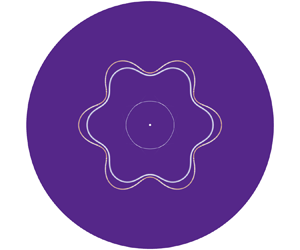
Developing a model to describe the shock-accelerated cylindrical fluid layer with arbitrary Atwood numbers is essential for uncovering the effect of Atwood numbers on the perturbation growth. The recent model (J. Fluid Mech., vol. 969, 2023, p. A6) reveals several contributions to the instability evolution of a shock-accelerated cylindrical fluid layer but its applicability is limited to cases with an absolute value of Atwood numbers close to $1$, due to the employment of the thin-shell correction and interface coupling effect of the fluid layer in vacuum. By employing the linear stability analysis on a cylindrical fluid layer in which two interfaces separate three arbitrary-density fluids, the present work generalizes the thin-shell correction and interface coupling effect, and thus, extends the recent model to cases with arbitrary Atwood numbers. The accuracy of this extended model in describing the instability evolution of the shock-accelerated fluid layer before reshock is confirmed via direct numerical simulations. In the verification simulations, three fluid-layer configurations are considered, where the outer and intermediate fluids remain fixed and the density of the inner fluid is reduced. Moreover, the mechanisms underlying the effect of the Atwood number at the inner interface on the perturbation growth are mainly elucidated by employing the model to analyse each contribution. As the Atwood number decreases, the dominant contribution of the Richtmyer–Meshkov instability is enhanced due to the stronger waves reverberated inside the layer, leading to weakened perturbation growth at initial in-phase interfaces and enhanced perturbation growth at initial anti-phase interfaces.

Identification of cross-frequency interactions in compressible cavity flow using harmonic resolvent analysis
-
- Journal:
- Journal of Fluid Mechanics / Volume 1000 / 10 December 2024
- Published online by Cambridge University Press:
- 25 November 2024, A13
-
- Article
-
- You have access
- Open access
- HTML
- Export citation
-
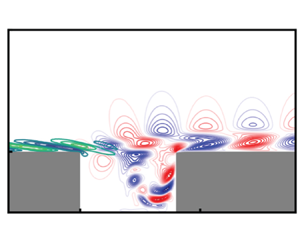
The resolvent analysis reveals the worst-case disturbances and the most amplified response in a fluid flow that can develop around a stationary base state. The recent work by Padovan et al. (J. Fluid Mech., vol. 900, 2020, A14) extended the classical resolvent analysis to the harmonic resolvent analysis framework by incorporating the time-varying nature of the base flow. The harmonic resolvent analysis can capture the triadic interactions between perturbations at two different frequencies through a base flow at a particular frequency. The singular values of the harmonic resolvent operator act as a gain between the spatiotemporal forcing and the response provided by the singular vectors. In the current study, we formulate the harmonic resolvent analysis framework for compressible flows based on the linearized Navier–Stokes equation (i.e. operator-based formulation). We validate our approach by applying the technique to the low-Mach-number flow past an airfoil. We further illustrate the application of this method to compressible cavity flows at Mach numbers of 0.6 and 0.8 with a length-to-depth ratio of $2$. For the cavity flow at a Mach number of 0.6, the harmonic resolvent analysis reveals that the nonlinear cross-frequency interactions dominate the amplification of perturbations at frequencies that are harmonics of the leading Rossiter mode in the nonlinear flow. The findings demonstrate a physically consistent representation of an energy transfer from slow-evolving modes toward fast-evolving modes in the flow through cross-frequency interactions. For the cavity flow at a Mach number of 0.8, the analysis also sheds light on the nature of cross-frequency interaction in a cavity flow with two coexisting resonances.

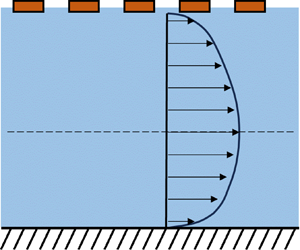
Turbulence statistics and structures in fully developed open channel flows with periodic surface coverages
-
- Journal:
- Journal of Fluid Mechanics / Volume 1000 / 10 December 2024
- Published online by Cambridge University Press:
- 25 November 2024, A6
-
- Article
-
- You have access
- Open access
- HTML
- Export citation
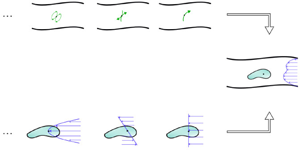
On the theory of body motion in confined Stokesian fluids
-
- Journal:
- Journal of Fluid Mechanics / Volume 1000 / 10 December 2024
- Published online by Cambridge University Press:
- 25 November 2024, A11
-
- Article
-
- You have access
- Open access
- HTML
- Export citation
Eye-tracking analysis to assess the mental load of unmanned aerial system operators: systematic review and future directions
-
- Journal:
- The Aeronautical Journal / Volume 129 / Issue 1333 / March 2025
- Published online by Cambridge University Press:
- 25 November 2024, pp. 529-558
-
- Article
- Export citation
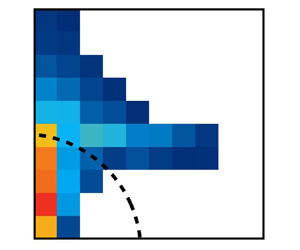
Correlation times of velocity and kinetic helicity fluctuations in non-helical hydrodynamic turbulence
-
- Journal:
- Journal of Fluid Mechanics / Volume 1000 / 10 December 2024
- Published online by Cambridge University Press:
- 25 November 2024, A17
-
- Article
-
- You have access
- Open access
- HTML
- Export citation
-
Non-helical turbulence within a linear shear flow has demonstrated efficient amplification of large-scale magnetic fields in numerical simulations, but its precise mechanism remains elusive. The incoherent $\alpha$ mechanism proposes that a zero-mean fluctuating transport coefficient $\alpha$ (linked to kinetic helicity) in the shear flow is a candidate driver. Previous renovating-flow models have proposed that the correlation time of helicity fluctuations must be sufficiently extended to overcome turbulent magnetic diffusivity, yet only empirical validation of this concept has been obtained. In this study, we conduct direct numerical simulations of weakly compressible non-helical hydrodynamic turbulence. We scrutinize the correlation times of velocity and kinetic helicity fluctuations in distinct flow configurations, including rotation, shearing and Keplerian flows, as well as the shearing burgulence counterpart. Our findings indicate that rotation contributes to a prolonged correlation time of helicity compared with velocity, particularly notable in auto-correlations of both volume-averaged quantities and individual Fourier modes due to the formation of large-scale vortices. In contrast, moderate shear strength does not exhibit significant scale separation, with shear flows elongating vortices in the shear direction. Shearing burgulence, characterized by shorter helicity correlation times, appears less conducive to hosting the incoherent $\alpha$ effect. Notably, at modest shear rates, only Keplerian flows exhibit sufficiently coherent helicity fluctuations, in contrast to shearing flows. However, the relative strength of helicity fluctuations compared with turbulent diffusivity is significantly lower, raising doubts about the viability of the incoherent $\alpha$ effect as a potential dynamo driver in the subsonic flows examined in this study.


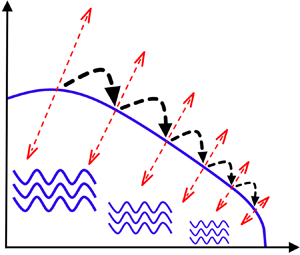
The turbulent cascade of inertia-gravity waves in rotating shallow water
-
- Journal:
- Journal of Fluid Mechanics / Volume 1000 / 10 December 2024
- Published online by Cambridge University Press:
- 25 November 2024, A30
-
- Article
- Export citation
-
In this work we study features of inertia-gravity wave turbulence in the rotating shallow water equations. On examining the dynamics of waves with varying rotation rates, we find that the turbulent cascade of waves is strongest at low rotation rates, forming a $k^{-2}$ energy spectrum, and a rich distribution of shocks in physical space. At high rotation rates, the forward cascade of waves weakens along with a steeper energy spectra and vanishing of shocks in physical space. The wave cascade is seen to be scale-local, resulting in a noticeable time interval for energy to get transferred from domain scale to dissipative scale. Furthermore, we find that the vortical flow has a non-negligible effect on the wave cascade, especially at high rotation rates. The vortical flow assists in the forward cascade of waves and shock formation at high rotation rates, while the waves by themselves in the absence of the vortical flow lack a forward cascade and shock formation at such high rotation rates. On investigating the physical space structures in the vortical flow and their connections to the wave cascade, we find that strain-dominant regions, that are located around the boundaries of coherent vortices, are the physical space regions that contribute majorly to the forward cascade of waves. Our results in general highlight intriguing features of dispersive inertia-gravity wave turbulence that are qualitatively similar to those seen in three-dimensional homogeneous isotropic turbulence and are beyond the predictions of asymptotic resonant wave interaction theory.

Data-driven stabilization of an oscillating flow with linear time-invariant controllers
-
- Journal:
- Journal of Fluid Mechanics / Volume 999 / 25 November 2024
- Published online by Cambridge University Press:
- 25 November 2024, A86
-
- Article
-
- You have access
- Open access
- HTML
- Export citation
-
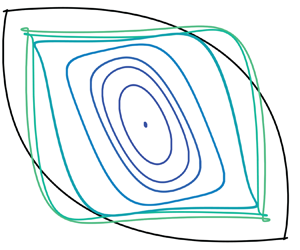
This paper presents advances towards the data-based control of periodic oscillator flows, from their fully developed regime to their equilibrium stabilized in closed loop, with linear time-invariant (LTI) controllers. The proposed approach directly builds upon the iterative method of Leclercq et al. (J. Fluid Mech., vol. 868, 2019, pp. 26–65) and provides several improvements for an efficient online implementation, aimed at being applicable in experiments. First, we use input–output data to construct an LTI mean transfer functions of the flow. The model is subsequently used for the design of an LTI controller with linear quadratic Gaussian synthesis, which is practical to automate online. Then, using the controller in a feedback loop, the flow shifts in phase space and oscillations are damped. The procedure is repeated until equilibrium is reached, by stacking controllers and performing balanced truncation to deal with the increasing order of the compound controller. In this article, we illustrate the method for the classic flow past a cylinder at Reynolds number $Re=100$. Care has been taken such that the method may be fully automated and hopefully used as a valuable tool in a forthcoming experiment.

Experimental characterization and similarity scaling of smooth-body flow separation and reattachment on a two-dimensional ramp geometry
-
- Journal:
- Journal of Fluid Mechanics / Volume 1000 / 10 December 2024
- Published online by Cambridge University Press:
- 25 November 2024, A12
-
- Article
-
- You have access
- Open access
- HTML
- Export citation
A brief history of aerospace engineering at the University of Glasgow
-
- Journal:
- The Aeronautical Journal , First View
- Published online by Cambridge University Press:
- 25 November 2024, pp. 1-3
-
- Article
-
- You have access
- HTML
- Export citation
Causal features in turbulent channel flow
-
- Journal:
- Journal of Fluid Mechanics / Volume 1000 / 10 December 2024
- Published online by Cambridge University Press:
- 25 November 2024, A4
-
- Article
-
- You have access
- Open access
- HTML
- Export citation
Viscous Marangoni migration of an inviscid bubble by surfactant spreading: an exactly solvable model
-
- Journal:
- Journal of Fluid Mechanics / Volume 1000 / 10 December 2024
- Published online by Cambridge University Press:
- 25 November 2024, A7
-
- Article
-
- You have access
- Open access
- HTML
- Export citation
Flow structures and combustion regimes in an axisymmetric scramjet combustor with high Reynolds number
-
- Journal:
- Journal of Fluid Mechanics / Volume 1000 / 10 December 2024
- Published online by Cambridge University Press:
- 25 November 2024, A3
-
- Article
- Export citation
-
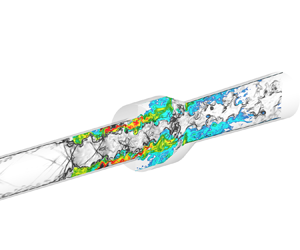
This study investigates the flow structures and combustion regimes in an axisymmetric cavity-based scramjet combustor with a total temperature of 1800 K and a high Reynolds number of approximately 1 × 10⁷. The hydroxyl planar laser-induced fluorescence technique, along with the broadband flame emission and CH* chemiluminescence, is employed to visualize the instantaneous flame structure in the optically accessible cavity. The jet-wake flame stabilization mode is observed, with intense heat release occurring in the jet wake upstream of the cavity. A hybrid Reynolds-averaged Navier–Stokes/large-eddy simulation approach is performed for the 0.18-equivalent-ratio case with a pressure-corrected flamelet/progress variable model. The combustion regime is identified mainly in the corrugated or wrinkled flamelet regime (approximately 102 < Da < 104, 103 < Ret < 105 where $Da$ is the Damköhler number and $Re_t$ is the turbulent Reynolds number). The combustion process is jointly dominated by supersonic combustion (which accounts for approximately 58 %) and subsonic combustion, although subsonic combustion has a higher heat release rate (peak value exceeding 1 × 10⁹ J (m3s)−1). A partially premixed flame is observed, where the diffusion flame packages a considerable quantity of twisted premixed flame. The shockwave plays a critical role in generating vorticity by strengthening the volumetric expansion and baroclinic torque term, and it can facilitate the chemical reaction rates through the pressure and temperature surges, thereby enhancing the combustion. Combustion also shows a remarkable effect on the overall flow structures, and it drives alterations in the vorticity of the flow field. In turn, the turbulent flow facilitates the combustion and improves the flame stabilization by enhancing the reactant mixing and increasing the flame surface area.


Dynamic hysteresis of an oscillatory contact line
-
- Journal:
- Journal of Fluid Mechanics / Volume 1000 / 10 December 2024
- Published online by Cambridge University Press:
- 25 November 2024, A34
-
- Article
-
- You have access
- Open access
- HTML
- Export citation
Turbulence distortion and blockage in the induction zone of a horizontal axis turbine
-
- Journal:
- Journal of Fluid Mechanics / Volume 1000 / 10 December 2024
- Published online by Cambridge University Press:
- 25 November 2024, A25
-
- Article
-
- You have access
- Open access
- HTML
- Export citation
A universal scaling for the length scales of shock-induced separation
-
- Journal:
- Journal of Fluid Mechanics / Volume 1000 / 10 December 2024
- Published online by Cambridge University Press:
- 25 November 2024, A5
-
- Article
- Export citation
-
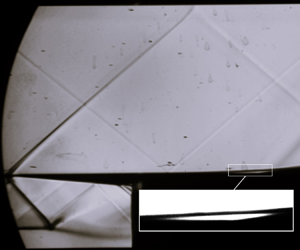
Experiments of transitional shock wave–boundary layer interactions (SBLIs) over 6 $^\circ$ and 10 $^\circ$ compression ramps were performed at Mach number 1.65. The unit Reynolds number was varied by a factor of two between 5.6 million per metre and 11 million per metre. Schlieren flow visualization was performed, and mean flow measurements were made using Pitot probes. Free interaction theory was verified from pressure measurements for all operating conditions. A new non-dimensional parameter was developed for scaling the strength of the imposed shock, which was based on the pressure required to separate a boundary layer. The validity of this new scaling was supported by the reconciliation of large discrepancies in a diverse collection of experimental results on the length scales of transitional interactions. This non-dimensional scaling was also applied to turbulent interactions, where different models were used to determine the pressure required to separate a turbulent boundary layer. Finally, a direct comparison between transitional and turbulent SBLIs was made, which revealed new insights into the evolution of length scales based on the state of the boundary layer.


Swirling instability of viscous liquid jets with axial shear effect in gas surroundings
-
- Journal:
- Journal of Fluid Mechanics / Volume 1000 / 10 December 2024
- Published online by Cambridge University Press:
- 25 November 2024, A32
-
- Article
- Export citation
Active wake-flow control for a notchback Ahmed body driven by a genetically inspired optimization
-
- Journal:
- Journal of Fluid Mechanics / Volume 1000 / 10 December 2024
- Published online by Cambridge University Press:
- 25 November 2024, A20
-
- Article
-
- You have access
- Open access
- HTML
- Export citation
