Refine search
Actions for selected content:
212822 results in Engineering

The establishment of JFM Perspectives
-
- Journal:
- Journal of Fluid Mechanics / Volume 1000 / 10 December 2024
- Published online by Cambridge University Press:
- 22 November 2024, E5
-
- Article
-
- You have access
- Open access
- HTML
- Export citation
Center of mass acceleration during walking: comparison between IMU and camera-based motion capture methodologies
-
- Journal:
- Wearable Technologies / Volume 5 / 2024
- Published online by Cambridge University Press:
- 22 November 2024, e16
-
- Article
-
- You have access
- Open access
- HTML
- Export citation
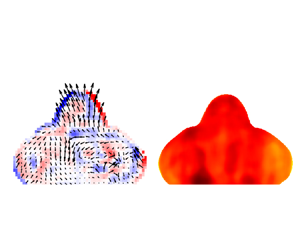
Experimental investigation of velocity and temperature distribution inside single droplet impingement on a heated substrate
-
- Journal:
- Journal of Fluid Mechanics / Volume 999 / 25 November 2024
- Published online by Cambridge University Press:
- 22 November 2024, A93
-
- Article
- Export citation
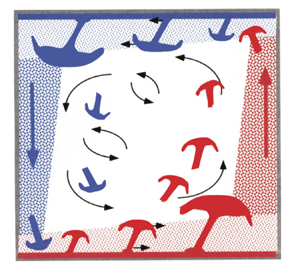
Asking the right questions on Rayleigh–Bénard turbulence
-
- Journal:
- Journal of Fluid Mechanics / Volume 1000 / 10 December 2024
- Published online by Cambridge University Press:
- 22 November 2024, F3
-
- Article
-
- You have access
- Open access
- HTML
- Export citation
-
The paper by Castaing et al. (J. Fluid Mech., vol. 204, 1989, pp. 1–30) on turbulent Rayleigh–Bénard convection has been one of the most impactful papers on the subject – not by giving the right and complete answers but by developing versatile concepts and by asking the right questions, namely: (i) What is the overall flow organization? (ii) What is the dependence of the Nusselt number ${\textit {Nu}}$ (the dimensionless heat transport) on the Rayleigh number ${\textit {Ra}}$ (the thermal driving strength)? (iii) What is the ultimate state of turbulence for extremely large ${\textit {Ra}}$? Thanks to Castaing et al. having asked the right questions, the field has made tremendous progress over the last 35 years.


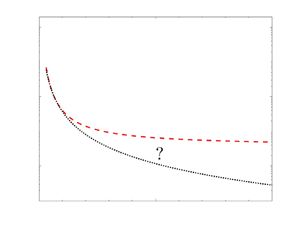
Log at first sight
-
- Journal:
- Journal of Fluid Mechanics / Volume 1000 / 10 December 2024
- Published online by Cambridge University Press:
- 22 November 2024, F6
-
- Article
-
- You have access
- HTML
- Export citation
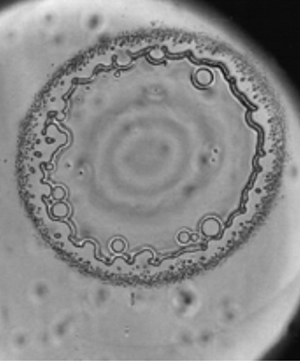
Ultra-fast imaging reveals
-
- Journal:
- Journal of Fluid Mechanics / Volume 1000 / 10 December 2024
- Published online by Cambridge University Press:
- 22 November 2024, F8
-
- Article
-
- You have access
- Open access
- HTML
- Export citation
Human-in-the-loop optimization of wearable device parameters using an EMG-based objective function
-
- Journal:
- Wearable Technologies / Volume 5 / 2024
- Published online by Cambridge University Press:
- 22 November 2024, e15
-
- Article
-
- You have access
- Open access
- HTML
- Export citation
Timed array architectures and integrated true-time delay elements for wideband millimeter-wave antenna arrays
-
- Journal:
- International Journal of Microwave and Wireless Technologies / Volume 17 / Issue 2 / March 2025
- Published online by Cambridge University Press:
- 22 November 2024, pp. 190-201
-
- Article
-
- You have access
- Open access
- HTML
- Export citation
Bridging the gap: Integrating cutting-edge techniques into biological imaging with deepImageJ
-
- Journal:
- Biological Imaging / Volume 4 / 2024
- Published online by Cambridge University Press:
- 22 November 2024, e14
-
- Article
-
- You have access
- Open access
- HTML
- Export citation
A dual-frequency measurement setup with fully integrated SiGe-based radar sensors for the size estimation of particulate matter
-
- Journal:
- International Journal of Microwave and Wireless Technologies / Volume 17 / Issue 2 / March 2025
- Published online by Cambridge University Press:
- 22 November 2024, pp. 365-372
-
- Article
-
- You have access
- Open access
- HTML
- Export citation
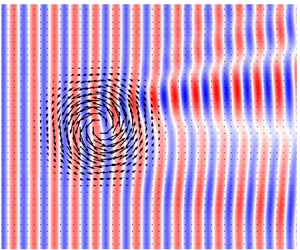
Wave scattering by an isolated cyclogeostrophic vortex
-
- Journal:
- Journal of Fluid Mechanics / Volume 999 / 25 November 2024
- Published online by Cambridge University Press:
- 22 November 2024, A100
-
- Article
-
- You have access
- Open access
- HTML
- Export citation
-
The propagation paths of oceanic internal tides are influenced by their interactions with vortices. We examine the scattering effect that an isolated vortex in (cyclo)geostrophic balance has on a rotating shallow-water plane wave. We run a suite of simulations in which we vary the non-dimensional vorticity of the vortex, $Ro$, the relative scale of the vortex size to the Rossby radius of deformation, $Bu$, and the size of the vortex compared with the plane wave wavelength, $K$. We compare the scattered wave flux pattern with ray-tracing predictions. Ray-tracing predictions are relatively insensitive to $K$ in the $1< K<4$ range we investigate; however, they generally underestimate the broad angles of the shallow-water wave scattering patterns, especially for the lower end of the $K$ range. We then measure the ratio of the scattered wave energy flux to the incoming wave energy flux, denoted by $S$, for each simulation. We find that $S$ follows a power law $S \propto (FrK)^2$ when $S < 0.2$, where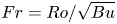 $Fr = Ro/\sqrt {Bu}$ is the Froude number. When $S>0.2$, it starts plateauing.


Thermal effect in shock-induced gas filtration through porous media
-
- Journal:
- Journal of Fluid Mechanics / Volume 999 / 25 November 2024
- Published online by Cambridge University Press:
- 22 November 2024, A91
-
- Article
- Export citation
Sorting capsules in microfluidic devices
-
- Journal:
- Journal of Fluid Mechanics / Volume 1000 / 10 December 2024
- Published online by Cambridge University Press:
- 22 November 2024, F10
-
- Article
-
- You have access
- Open access
- HTML
- Export citation
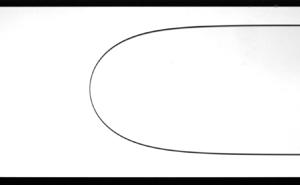
Bubbling forth on thin films
-
- Journal:
- Journal of Fluid Mechanics / Volume 1000 / 10 December 2024
- Published online by Cambridge University Press:
- 22 November 2024, F1
-
- Article
-
- You have access
- Open access
- HTML
- Export citation
Rotating attosecond electron sheets and ultra-brilliant multi-MeV γ-rays driven by intense laser pulses
-
- Journal:
- High Power Laser Science and Engineering / Volume 12 / 2024
- Published online by Cambridge University Press:
- 22 November 2024, e69
-
- Article
-
- You have access
- Open access
- HTML
- Export citation
-
Isolated multi-MeV $\gamma$-rays with attosecond duration, high collimation and beam angular momentum (BAM) may find many interesting applications in nuclear physics, astrophysics, etc. Here, we propose a scheme to generate such $\gamma$-rays via nonlinear Thomson scattering of a rotating relativistic electron sheet driven by a few-cycle twisted laser pulse interacting with a micro-droplet target. Our model clarifies the laser intensity threshold and carrier-envelope phase effect on the generation of the isolated electron sheet. Three-dimensional numerical simulations demonstrate the $\gamma$-ray emission with 320 attoseconds duration and peak brilliance of $9.3\times 10^{24}$ photons s ${}^{-1}$ mrad ${}^{-2}$ mm ${}^{-2}$ per 0.1 $\%$ bandwidth at 4.3 MeV. The $\gamma$-ray beam carries a large BAM of $2.8 \times 10^{16}\mathrm{\hslash}$, which arises from the efficient BAM transfer from the rotating electron sheet, subsequently leading to a unique angular distribution. This work should promote the experimental investigation of nonlinear Thomson scattering of rotating electron sheets in large laser facilities.


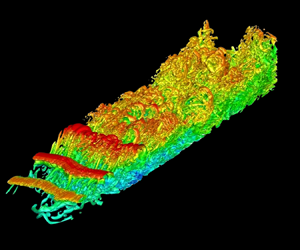
Low-frequency unsteadiness in laminar separation bubbles
-
- Journal:
- Journal of Fluid Mechanics / Volume 999 / 25 November 2024
- Published online by Cambridge University Press:
- 22 November 2024, A99
-
- Article
- Export citation
-
Low-frequency phenomena in an incompressible pressure-induced laminar separation bubble (LSB) on a flat plate is investigated using direct numerical simulation. The LSB configuration of Spalart and Strelets (J. Fluid Mech., vol. 403, 2000, pp. 329–349) is used. Wall pressure spectra indicate low-frequency-flapping $(St \sim 0.08)$ and high-frequency-shedding $(St \sim 1.52)$ regimes. Conditional velocity averages based on the fraction of reversed flow reveal the low frequency as an expansion/contraction of the LSB. While the high frequency only exhibits exponential growth within the LSB up to breakdown of the spanwise rollers, the low frequency and velocity fluctuations exhibit exponential growth upstream of separation. Instantaneous flow fields reveal large streamwise streaky structures forming within the LSB and extending past reattachment, much like high and low speed streaks in turbulent boundary layers. A predominance of sweep-like events ( $Q4$) is observed during contraction and of ejection-like events ( $Q2$) during expansion. These motions appear as dominant low-frequency modes in three-dimensional proper orthogonal and dynamic mode decompositions, exhibiting spatial amplification from separation to reattachment. The advection of a group of spanwise alternating streaky structures past the LSB results in an overall contraction after which the bubble expands to its ‘unforced’ state in the absence of the streaks. The low frequency then corresponds to the time it takes for streaks to form, amplify and advect past the LSB from separation to reattachment. This behaviour is linked to the mean flow deformation reported by Marxen and Rist (J. Fluid Mech., vol. 660, 2010, pp. 37–54), where the presence of streaks results in reduced mean bubble size. The formation of these streaky structures, in the absence of free stream turbulence, may be attributed to an absolute instability of the LSB due to the development of a secondary bubble within the primary.



JFM in the electronic age
-
- Journal:
- Journal of Fluid Mechanics / Volume 1000 / 10 December 2024
- Published online by Cambridge University Press:
- 22 November 2024, E4
-
- Article
-
- You have access
- Open access
- HTML
- Export citation
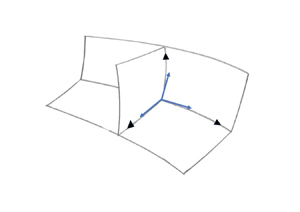
Streamline coordinates in three-dimensional turbulent flows
-
- Journal:
- Journal of Fluid Mechanics / Volume 999 / 25 November 2024
- Published online by Cambridge University Press:
- 22 November 2024, A101
-
- Article
-
- You have access
- Open access
- HTML
- Export citation

Introducing the JFM ‘Outstanding reviewers’ initiative
-
- Journal:
- Journal of Fluid Mechanics / Volume 999 / 25 November 2024
- Published online by Cambridge University Press:
- 22 November 2024, E1
-
- Article
-
- You have access
- HTML
- Export citation

Reflections on the build-up to the first volume of JFM in 1955 and to the G.K. Batchelor Prize in the 2000s
-
- Journal:
- Journal of Fluid Mechanics / Volume 1000 / 10 December 2024
- Published online by Cambridge University Press:
- 22 November 2024, E3
-
- Article
-
- You have access
- Open access
- HTML
- Export citation
