Refine search
Actions for selected content:
212822 results in Engineering
Frontmatter
-
- Book:
- Thermal Radiation
- Published online:
- 31 October 2024
- Print publication:
- 14 November 2024, pp i-iv
-
- Chapter
- Export citation
The global properties of nocturnal stable atmospheric boundary layers
-
- Journal:
- Journal of Fluid Mechanics / Volume 999 / 25 November 2024
- Published online by Cambridge University Press:
- 14 November 2024, A60
-
- Article
- Export citation
-
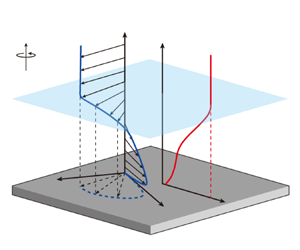
Accurate prediction of the global properties of wall-bounded turbulence holds significant importance for both fundamental research and engineering applications. In atmospheric boundary layers, the relationship between friction drag and geostrophic wind is described by the geostrophic drag law (GDL). We use carefully designed large-eddy simulations to study nocturnal stable atmospheric boundary layers (NSBLs), which are characterized by a negative potential temperature flux at the surface and neutral stratification higher up. Our simulations explore a wider range of the Kazanski–Monin parameter, $\mu = L_f / L_s = [16.7, 193.3]$, with $L_f$ the Ekman length scale and $L_s$ the surface Obukhov length. We show collapse of the GDL coefficients onto single curves as functions of $\mu$, thereby validating the GDL's applicability to NSBLs over a very wide $\mu$ range. We show that the boundary-layer height $h$ scales with $\sqrt {L_f L_s}$, while both the streamwise and spanwise wind gradients scale with $u_*^2 / (h^2 f)$, where $u_*$ represents the friction velocity and $f$ the Coriolis parameter. Leveraging these insights, we developed new analytical expressions for the GDL coefficients, significantly enhancing our understanding of the GDL for turbulent boundary layers. These formulations facilitate the analytical prediction of the geostrophic drag coefficient and cross-isobaric angle.


Nonlinear unsteady behaviour study for jet transport aircraft response to serious atmosphere turbulence
-
- Journal:
- The Aeronautical Journal / Volume 129 / Issue 1332 / February 2025
- Published online by Cambridge University Press:
- 14 November 2024, pp. 432-456
-
- Article
- Export citation

Dynamic large-eddy simulation of hypersonic transition delay over broadband wall impedance
-
- Journal:
- Journal of Fluid Mechanics / Volume 999 / 25 November 2024
- Published online by Cambridge University Press:
- 14 November 2024, A41
-
- Article
- Export citation
-
Three-dimensional numerical simulations of hypersonic boundary layer transition delay due to porosity representative of carbon-fibre-reinforced carbon-matrix ceramics (C/C) were carried out on a 7 $^{\circ {}}$ half-angle cone for unit Reynolds numbers $Re_m=2.43 \times 10^6$– $6.40\times 10^6\ \text {m}^{-1}$, at the free-stream Mach number $M_\infty =7.4$, for both sharp and 2.5 mm nose tip radii. A broadband time-domain impedance boundary condition was used to model the acoustic effects of the porous surface on the flow field. A quasi-spectral sub-filter-scale dynamic closure was adopted to stabilize the computations upon turbulent breakdown under extreme cooling conditions, with wall-to-adiabatic temperature ratio of $T_{w}/ T_{ad} \simeq 0.08 $, while accurately recovering the growth rates of the unstable modes present in the early transition stages. Good agreement is observed with the reference experimental data, both in terms of the predicted extent of the transition delay and the measured second-mode frequency spectrum. The latter is strongly modulated by the formation of near-wall low-temperature three-dimensional streaks. Pressure disturbances concentrate in corridors of locally thickened boundary layer, with frequencies lower than what predicted by linear theory. Here, trapped wavetrains are formed, which can persist long into the turbulent region. Finally, it is shown that the presence of a porous wall simply shifts the onset of turbulence downstream, without affecting its structure.


The confined stresslet for suspensions in a spherical cavity. Part 1. Traceless elements
-
- Journal:
- Journal of Fluid Mechanics / Volume 999 / 25 November 2024
- Published online by Cambridge University Press:
- 14 November 2024, A38
-
- Article
- Export citation
Healing Materialities: framing Biodesign’s potential for conventional and regenerative sustainability
-
- Journal:
- Research Directions: Biotechnology Design / Volume 2 / 2024
- Published online by Cambridge University Press:
- 14 November 2024, e21
-
- Article
-
- You have access
- Open access
- HTML
- Export citation
Part II - Micro/Nanoscale Thermal Radiation
-
- Book:
- Thermal Radiation
- Published online:
- 31 October 2024
- Print publication:
- 14 November 2024, pp 117-118
-
- Chapter
- Export citation
Part I - General Principles of Thermal Radiation and Applications
-
- Book:
- Thermal Radiation
- Published online:
- 31 October 2024
- Print publication:
- 14 November 2024, pp 1-2
-
- Chapter
- Export citation
Influence of spanwise wall vibration on non-modal perturbations subject to freestream vortical disturbances in hypersonic boundary layers
-
- Journal:
- Journal of Fluid Mechanics / Volume 999 / 25 November 2024
- Published online by Cambridge University Press:
- 14 November 2024, A57
-
- Article
- Export citation
10 - Manipulation of Thermal Radiative Properties in Micro/Nanoscale
-
- Book:
- Thermal Radiation
- Published online:
- 31 October 2024
- Print publication:
- 14 November 2024, pp 331-362
-
- Chapter
- Export citation

Bubble dissolution in Taylor–Couette flow
-
- Journal:
- Journal of Fluid Mechanics / Volume 999 / 25 November 2024
- Published online by Cambridge University Press:
- 14 November 2024, A39
-
- Article
-
- You have access
- Open access
- HTML
- Export citation
-
We perform direct numerical simulations of soluble bubbles dissolving in a Taylor–Couette (TC) flow reactor with a radius ratio of $\eta =0.5$ and Reynolds number in the range $0 \leq Re \leq 5000$, which covers the main regimes of this flow configuration, up to fully turbulent Taylor vortex flow. The numerical method is based on a geometric volume-of-fluid framework for incompressible flows coupled with a phase-change solver that ensures mass conservation of the soluble species, whilst boundary conditions on solid walls are enforced through an embedded boundary approach. The numerical framework is validated extensively against single-phase TC flows and competing mass transfer in multicomponent mixtures for an idealised infinite cylinder and for a bubble rising in a quiescent liquid. Our results show that when bubbles in a TC flow are mainly driven by buoyancy, theoretical formulae derived for spherical interfaces on a vertical trajectory still provide the right fundamental relationship between the bubble Reynolds and Sherwood numbers, which reduces to $Sh \propto \sqrt {Pe}$ for large Péclet values. For bubbles mainly transported by TC flows, the dissolution of bubbles depend on the TC Reynolds number and, for the turbulent configurations, we show that the smallest characteristic turbulent scales control mass transfer, in agreement with the small-eddy model of Lamont & Scott (AIChE J., vol. 16, 1970, pp. 513–519). Finally, the interaction between two aligned bubbles is investigated and we show that a significant increase in mass transfer can be obtained when the rotor of the apparatus is operated at larger speeds.


Wavelet-based resolvent analysis of non-stationary flows
-
- Journal:
- Journal of Fluid Mechanics / Volume 999 / 25 November 2024
- Published online by Cambridge University Press:
- 14 November 2024, A53
-
- Article
- Export citation
7 - Theoretical Fundamentals of Micro/Nanoscale Thermal Radiation
-
- Book:
- Thermal Radiation
- Published online:
- 31 October 2024
- Print publication:
- 14 November 2024, pp 137-236
-
- Chapter
- Export citation
Stochastic modal velocity field in rough-wall turbulence
-
- Journal:
- Journal of Fluid Mechanics / Volume 999 / 25 November 2024
- Published online by Cambridge University Press:
- 14 November 2024, A56
-
- Article
-
- You have access
- Open access
- HTML
- Export citation
-
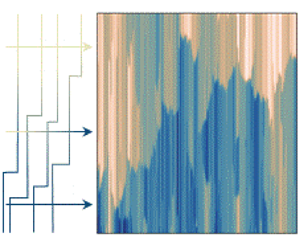
Stochastically generated instantaneous velocity profiles are used to reproduce the outer region of rough-wall turbulent boundary layers in a range of Reynolds numbers extending from the wind tunnel to field conditions. Each profile consists in a sequence of steps, defined by the modal velocities and representing uniform momentum zones (UMZs), separated by velocity jumps representing the internal shear layers. Height-dependent UMZ is described by a minimal set of attributes: thickness, mid-height elevation, and streamwise (modal) and vertical velocities. These are informed by experimental observations and reproducing the statistical behaviour of rough-wall turbulence and attached eddy scaling, consistent with the corresponding experimental datasets. Sets of independently generated profiles are reorganized in the streamwise direction to form a spatially consistent modal velocity field, starting from any randomly selected profile. The operation allows one to stretch or compress the velocity field in space, increases the size of the domain and adjusts the size of the largest emerging structures to the Reynolds number of the simulated flow. By imposing the autocorrelation function of the modal velocity field to be anchored on the experimental measurements, we obtain a physically based spatial resolution, which is employed in the computation of the velocity spectrum, and second-order structure functions. The results reproduce the Kolmogorov inertial range extending from the UMZ and their attached-eddy vertical organization to the very-large-scale motions (VLSMs) introduced with the reordering process. The dynamic role of VLSM is confirmed in the $-u^{\prime }w^{\prime }$ co-spectra and in their vertical derivative, representing a scale-dependent pressure gradient contribution.

8 - Numerical Methods for Micro/Nanoscale Thermal Radiation
-
- Book:
- Thermal Radiation
- Published online:
- 31 October 2024
- Print publication:
- 14 November 2024, pp 237-291
-
- Chapter
- Export citation
References
-
- Book:
- Thermal Radiation
- Published online:
- 31 October 2024
- Print publication:
- 14 November 2024, pp 421-490
-
- Chapter
- Export citation

New understanding of the regimes and controlling mechanisms in a falling curtain of particles
-
- Journal:
- Journal of Fluid Mechanics / Volume 999 / 25 November 2024
- Published online by Cambridge University Press:
- 14 November 2024, A50
-
- Article
-
- You have access
- Open access
- HTML
- Export citation
-
A stream of free-falling particles from a rectangular hopper, hereafter called a ‘curtain’, was characterised systematically using a well-resolved, non-intrusive optical shadowgraphic method, to reveal both an additional axial region and an additional dilute region distributed laterally on either side of the curtain, relative to those identified previously. The effects of particle size and hopper outlet thickness on the evolution of the particle curtain were separately isolated, whilst measuring particle mass flow rate. The curtains were characterised into four distinct axial regions, namely a near-field expansion region near to the hopper exit, a neck zone where the curtain contracts, a region of intermediate-field expansion and a far field with particles reaching terminal velocity. The initial expansion half-angle, $2.3^{\circ } \le \alpha \le 4.8^{\circ }$, was found to be insensitive to particle size, but to increase with hopper outlet thickness. The ‘trough’ in the neck zone was deduced to be caused by a pressure gradient driven by particle acceleration. The curtain expansion rate at the intermediate field was found to increase with a decrease in particle size and hopper outlet thickness. The outermost dilute-particle region was deduced to be caused by collisions, induced by gradients in the velocity profile near to the hopper exit. New dimensionless analysis reveals that the dynamics of curtains can be characterised broadly into two regimes, one in which the aerodynamics is dominant and the other where it is weak. Curtain transmittance was found to scale with the Froude number, highlighting the importance of particle momentum.

Contents
-
- Book:
- Thermal Radiation
- Published online:
- 31 October 2024
- Print publication:
- 14 November 2024, pp v-viii
-
- Chapter
- Export citation
11 - Applications of Micro/Nanoscale Thermal Radiation
-
- Book:
- Thermal Radiation
- Published online:
- 31 October 2024
- Print publication:
- 14 November 2024, pp 363-420
-
- Chapter
- Export citation
Exploring self-supervised learning biases for microscopy image representation
-
- Journal:
- Biological Imaging / Volume 4 / 2024
- Published online by Cambridge University Press:
- 14 November 2024, e12
-
- Article
-
- You have access
- Open access
- HTML
- Export citation
