Refine search
Actions for selected content:
212822 results in Engineering
Dedication
-
- Book:
- Population Balance of Particles in Flows
- Published online:
- 14 November 2024
- Print publication:
- 21 November 2024, pp v-vi
-
- Chapter
- Export citation
References
-
- Book:
- Population Balance of Particles in Flows
- Published online:
- 14 November 2024
- Print publication:
- 21 November 2024, pp 350-378
-
- Chapter
- Export citation
A high FBR low SAR and AMC-backed compact wearable antenna array for WBAN applications
-
- Journal:
- International Journal of Microwave and Wireless Technologies / Volume 16 / Issue 9 / November 2024
- Published online by Cambridge University Press:
- 20 November 2024, pp. 1499-1509
-
- Article
- Export citation
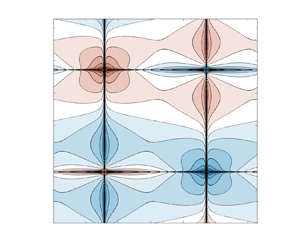
On the inviscid instability of the 2-D Taylor–Green vortex
-
- Journal:
- Journal of Fluid Mechanics / Volume 999 / 25 November 2024
- Published online by Cambridge University Press:
- 20 November 2024, A64
-
- Article
-
- You have access
- Open access
- HTML
- Export citation
A revisit to the “Rigorous study of propagation in metallic circular waveguide filled with anisotropic metamaterial”
-
- Journal:
- International Journal of Microwave and Wireless Technologies / Volume 16 / Issue 8 / October 2024
- Published online by Cambridge University Press:
- 20 November 2024, pp. 1439-1440
-
- Article
-
- You have access
- HTML
- Export citation
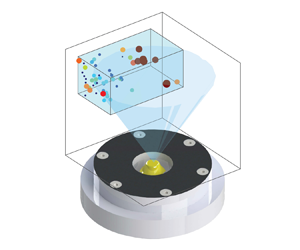
Three-dimensional clustering characteristics of large-Stokes-number dilute sprays interacting with turbulent swirling co-flows
-
- Journal:
- Journal of Fluid Mechanics / Volume 999 / 25 November 2024
- Published online by Cambridge University Press:
- 20 November 2024, A73
-
- Article
-
- You have access
- Open access
- HTML
- Export citation
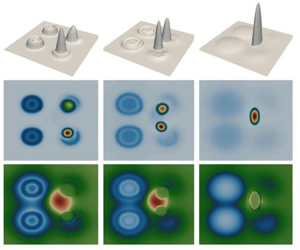
Mean field control of droplet dynamics with high-order finite-element computations
-
- Journal:
- Journal of Fluid Mechanics / Volume 999 / 25 November 2024
- Published online by Cambridge University Press:
- 20 November 2024, A76
-
- Article
- Export citation
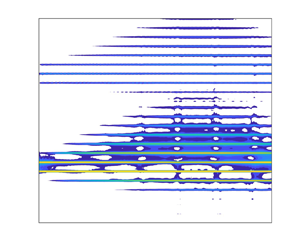
New 2-D horizontal free-surface-flow models with applications for water waves
-
- Journal:
- Journal of Fluid Mechanics / Volume 999 / 25 November 2024
- Published online by Cambridge University Press:
- 20 November 2024, A32
-
- Article
-
- You have access
- Open access
- HTML
- Export citation
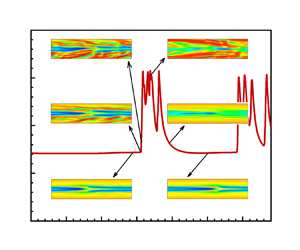
The minimal flow unit and origin of two-dimensional elasto-inertial turbulence
-
- Journal:
- Journal of Fluid Mechanics / Volume 999 / 25 November 2024
- Published online by Cambridge University Press:
- 20 November 2024, A82
-
- Article
- Export citation
-
The research on elasto-inertial turbulence (EIT), a new type of turbulent flow, has reached the stage of identifying the minimal flow unit (MFU). On this issue, direct numerical simulations of FENE-P fluid flow in two-dimensional channels with variable sizes are conducted in this study. We demonstrate with the increase of channel length that the simulated flow experiences several different flow patterns, and there exists an MFU for EIT to be self-sustained. At Weissenberg number ( $Wi$) higher than the one required to excite EIT, when the channel length is relatively small, a steady arrowhead regime (SAR) flow structure and a laminar-like friction coefficient is achieved. However, as the channel length increases, the flow can fully develop into EIT characterized with high flow drag. Close to the size of the MFU, the simulated flow behaves intermittently between the SAR state with low drag and EIT state with high drag. The flow falling back to ‘laminar flow’ is caused by the insufficient channel size below the MFU. Furthermore, we give the relationship between the value of the MFU and the effective $Wi$, and explain its physical reasons. Moreover, the intermittent flow regime obtained based on the MFU gives us an opportunity to look into the origin and exciting process of EIT. Through capturing the onset process of EIT, we observed that EIT originates from the sheet-like extension structure located near the wall, which is maybe related to the wall mode rather than the centre mode. The fracture and regeneration of this sheet-like structure is the key mechanism for the self-sustaining of EIT.


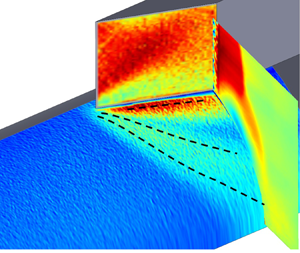
High-bandwidth pressure field imaging of fin-generated shock wave–boundary layer interactions
-
- Journal:
- Journal of Fluid Mechanics / Volume 999 / 25 November 2024
- Published online by Cambridge University Press:
- 19 November 2024, A80
-
- Article
-
- You have access
- Open access
- HTML
- Export citation
-
The dynamics of a shock-induced separation unit generated by a 20 $^\circ$ sharp fin placed on a cylindrical surface in a Mach 2.5 flow was investigated. Specifically, the present work investigated the mechanisms that govern the mid-frequency range of separation shock unsteadiness in the fin shock wave–boundary layer interaction (SBLI) unit. Two-dimensional pressure fields were obtained over the cylinder surface spanning the entire fin SBLI unit using high-bandwidth pressure-sensitive paint at 40 kHz imaging rate that allowed probing the low- through mid-frequency ranges of the separation shock unsteadiness. The mean pressure field showed a progressive weakening of the separation shock with downstream distance, which is an artifact of the three-dimensional relief offered by the curved mounting surface. The root-mean-square (r.m.s.) pressure field exhibited a banded structure with elevated $p_{r.m.s.}$ levels beneath the intermittent region, separation vortex and adjacent to the fin root. The power spectral density (PSD) of the surface pressure fluctuations obtained beneath the intermittent region revealed that the separation shock oscillations exhibited the mid-frequency content over the majority of its length. Interestingly, neither the PSD nor the length of the intermittent region varied noticeably with downstream distance, revealing a constant separation shock foot velocity along the entire SBLI. The pressure fluctuation PSD beneath the separation vortex also exhibited the broadband peak at the mid-frequency range of the separation shock motions over the majority of its length within the measurement domain. By contrast, the region adjacent to the fin root exhibited pressure oscillations at a substantially lower frequency compared with the separation shock and the separation vortex. Two-point coherence and cross-correlation analysis provided unique insights into the critical sources and mechanisms that drive the separation shock unsteadiness. The separation vortex and separation shock dynamics were found to be driven by a combination of convecting perturbations that originated from the vicinity of the fin leading edge and the local interactions of the separated flow with the incoming boundary layer. The boundary layer locally strengthened or weakened the convecting pressure perturbations depending on the local momentum fluctuations within the boundary layer.


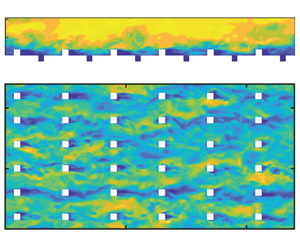
Rough surfaces in underexplored surface morphology space and their implications on roughness modelling
-
- Journal:
- Journal of Fluid Mechanics / Volume 999 / 25 November 2024
- Published online by Cambridge University Press:
- 19 November 2024, A78
-
- Article
-
- You have access
- Open access
- HTML
- Export citation
-
We report direct numerical simulations results of the rough-wall channel, focusing on roughness with high $k_{rms}/k_a$ statistics but small to negative $Sk$ statistics, and we study the implications of this new dataset on rough-wall modelling. Here, $k_{rms}$ is the root mean square, $k_a$ is the first-order moment of roughness height, and $Sk$ is the skewness. The effects of packing density, skewness and arrangement of roughness elements on mean streamwise velocity, equivalent roughness height ( $z_0$) and Reynolds and dispersive stresses have been studied. We demonstrate that two-point correlation lengths of roughness height statistics play an important role in characterizing rough surfaces with identical moments of roughness height but different arrangements of roughness elements. Analysis of the present as well as historical data suggests that the task of rough-wall modelling is to identify geometric parameters that distinguish the rough surfaces within the calibration dataset. We demonstrate a novel feature selection procedure to determine these parameters. Further, since there is no finite set of roughness statistics that distinguish between all rough surfaces, we argue that obtaining a universal rough-wall model for making equivalent sand-grain roughness ( $k_s$) predictions would be challenging, and that each rough-wall model would have its applicable range. This motivates the development of group-based rough-wall models. The applicability of multi-variate polynomial regression and feedforward neural networks for building such group-based rough-wall models using the selected features has been shown.


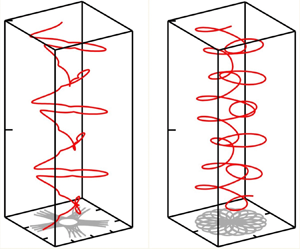
U-shaped disks in Stokes flow: chiral sedimentation of a non-chiral particle
-
- Journal:
- Journal of Fluid Mechanics / Volume 999 / 25 November 2024
- Published online by Cambridge University Press:
- 19 November 2024, A71
-
- Article
-
- You have access
- Open access
- HTML
- Export citation
On statistical zonostrophic instability and the effect of magnetic fields
-
- Journal:
- Journal of Fluid Mechanics / Volume 999 / 25 November 2024
- Published online by Cambridge University Press:
- 19 November 2024, A77
-
- Article
-
- You have access
- Open access
- HTML
- Export citation
On the origin of counter-gradient transport in turbulent scalar flux: physics interpretation and adjoint data assimilation
-
- Journal:
- Journal of Fluid Mechanics / Volume 999 / 25 November 2024
- Published online by Cambridge University Press:
- 19 November 2024, A81
-
- Article
- Export citation
Friction drag reduction of Taylor–Couette flow over air-filled microgrooves
-
- Journal:
- Journal of Fluid Mechanics / Volume 999 / 25 November 2024
- Published online by Cambridge University Press:
- 19 November 2024, A63
-
- Article
- Export citation
-
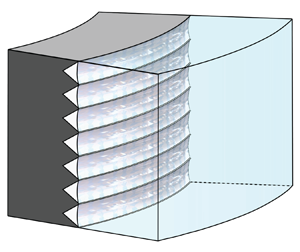
Reducing drag under high turbulence is a critical but challenging issue that has engendered great concern. This study utilizes hydrophilic tips in superhydrophobic (SHP) grooves to enhance the stability of plastron, which results in a considerable drag reduction ( $DR$) up to 62 %, at Reynolds number ( $Re$) reaching $2.79 \times 10^{4}$. The effect of the spacing width $w$ of the microgrooves on both $DR$ and flow structures is investigated. Experimental results demonstrate that $DR$ increases as either microgroove spacing $w$ or $Re$ increases. The velocity fields obtained using particle image velocimetry indicate that the air-filled SHP grooves induce a considerable wall slip. This slip significantly weakens the intensity of Taylor rolls, reduces local momentum transport, and consequently lowers drag. This phenomenon becomes more pronounced with increasing $w$. Furthermore, to quantify the multiscale relationship between global response and geometrical as well as driving parameters, $DR\sim (w, \phi _s, Re)$, a theoretical model is established based on angular momentum defect theory and magnitude estimate. It is demonstrated that a decrease in the surface solid fraction can reduce wall shear, and an increase in the groove width can weaken turbulence kinetic energy production, rendering enhanced slip and drag reduction. This research has implications for designing and optimizing turbulent-drag-reducing surfaces in various engineering applications, such as transportation and marine engineering.


Curved detonation equations with analysis and its applications
-
- Journal:
- Journal of Fluid Mechanics / Volume 999 / 25 November 2024
- Published online by Cambridge University Press:
- 19 November 2024, A79
-
- Article
- Export citation
The effect of foil proximity on shear-layer instability around oscillating foils
-
- Journal:
- Journal of Fluid Mechanics / Volume 999 / 25 November 2024
- Published online by Cambridge University Press:
- 19 November 2024, A70
-
- Article
-
- You have access
- Open access
- HTML
- Export citation
-
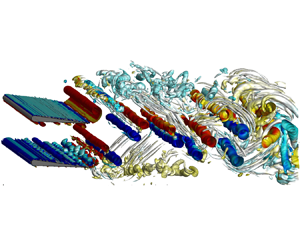
Three-dimensional vortex dynamics around two pitching foils arranged in side-by-side (parallel) configurations is numerically examined at a range of separation (gap) distances ( $0.5c \leqslant y^* \leqslant 1.5c$). In-phase ( $\phi =0$) and out-of-phase ( $\phi ={\rm \pi}$) motions are considered for Strouhal numbers of $0.3$ and $0.5$ at a Reynolds number of $8000$. In this work, we show that the foil proximity effect, defined as the influence of one foil on the flow characteristics around the other, induces a spanwise instability in the braids of trailing-edge vortices (TEVs) during their roll-up. This is a newly identified instability that manifests itself in the form of secondary vortical structures with opposite circulation compared with the TEVs formed on the foils, which leads to the formation of double necking on the braids of the TEVs. We provide quantitative evidence linking the formation of these secondary structures to the braid instability. The first neck merges with the TEV, while the second neck detaches from the braid region and moves downstream independently. As the foil proximity effect intensifies (spacing between the foils decreases), secondary vortical structures, as well as the necks, become more prominent, leading to the emergence of three-dimensional wake features. Lastly, the influence of kinematics of the foils on three-dimensionality of the wake is investigated. At higher Strouhal numbers, broader regions of high strain are developed near the trailing edge, associated with the detachment of stronger structures from the braids of TEVs. The characterized instability demonstrates consistent properties for in-phase and out-of-phase motions, albeit with specific differences in dynamics of leading-edge vortices.


FSBrick: an information model for representing fault-symptom relationships in heating, ventilation, and air conditioning systems
- Part of
-
- Journal:
- Data-Centric Engineering / Volume 5 / 2024
- Published online by Cambridge University Press:
- 18 November 2024, e33
-
- Article
-
- You have access
- Open access
- HTML
- Export citation
Effect of filter type on the topology of the eigenframe of the subfilter stress tensor and interscale energy transfer
-
- Journal:
- Journal of Fluid Mechanics / Volume 999 / 25 November 2024
- Published online by Cambridge University Press:
- 18 November 2024, A67
-
- Article
- Export citation
-
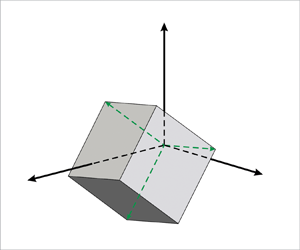
Effects of different filter kernels, namely, spectral cutoff ( $\mathcal {S}$-filter) and Gaussian ( $\mathcal {G}$-filter), on the geometrical properties of the subfilter stress (SFS) tensor and the filtered strain-rate (FSR) tensor are analysed in a forced homogeneous isotropic turbulence. Utilizing the Euler angle–axis methodology, it is observed that despite similar mean behaviour, the eigenframe alignment between SFS and FSR exhibits a non-trivially different statistical distribution for two different filters. Besides the eigenframe alignment, the eigenstructure of these tensors is also investigated. It is found that in contrast to the eigenstructure of the FSR which does not show sensitive dependence on the filter kernel type, the eigenstructure of the SFS tensor is significantly influenced by the filter type. Subsequently, the impact of different filter kernels on the subfilter energy flux (SFEF) is investigated. It is observed that energy transfer in $\mathcal {G}$-filtering is preferably distributed over the forward region, whereas for the $\mathcal {S}$-filter, the SFEF is more evenly distributed over both forward–backward regions, leading to a heavy energy transfer cancellation. Additionally, by decomposing the SFEF into different partial energy fluxes, it is found that the impact of the $\mathcal {S}$-filtering on the eigenstructure of the SFS leads to the amplification of the backward energy transfer. Conversely, the $\mathcal {G}$-filtering amplifies the forward energy transfer by producing a more pronounced alignment between the contractive–extensive eigenvectors.


A dual-wideband bandpass filter with closely spaced passbands using coupled lines and shunt transmission lines loaded with end-connected coupled lines
-
- Journal:
- International Journal of Microwave and Wireless Technologies / Volume 16 / Issue 8 / October 2024
- Published online by Cambridge University Press:
- 18 November 2024, pp. 1405-1413
-
- Article
- Export citation
