To save content items to your account,
please confirm that you agree to abide by our usage policies.
If this is the first time you use this feature, you will be asked to authorise Cambridge Core to connect with your account.
Find out more about saving content to .
To save content items to your Kindle, first ensure no-reply@cambridge.org
is added to your Approved Personal Document E-mail List under your Personal Document Settings
on the Manage Your Content and Devices page of your Amazon account. Then enter the ‘name’ part
of your Kindle email address below.
Find out more about saving to your Kindle.
Note you can select to save to either the @free.kindle.com or @kindle.com variations.
‘@free.kindle.com’ emails are free but can only be saved to your device when it is connected to wi-fi.
‘@kindle.com’ emails can be delivered even when you are not connected to wi-fi, but note that service fees apply.
The development and appraisal of renewable energy schemes is described. The phases of project development are explained, as well as the importance of careful assessment of the renewable energy resource. The use of a special purpose vehicle (SPV) for the development of projects is discussed and the agreements and contracts that are required for a scheme are listed. Simple discounted cash flow calculations are used for the economic appraisal of a renewable energy scheme. The importance of the Environmental Impact Assessment and the production of an Environmental Statement are emphasized. The chapter is supported by 1 example, 7 questions with answers and full solutions in the accompanying online material. Further reading is identified.
Radiation from the sun ultimately drives most of the forms of renewable energy discussed in this book, and this chapter describes the solar energy resource and how it is quantified. Direct and diffuse radiation are described with examples of irradiance and insolation (irradiation). The motion of the earth around the sun is described and the position of the sun as seen from the earth is illustrated. The geocentric or earth-centred representation of earth–sun geometry is used to explain the optimal orientation of a solar energy collector. Equations are provided to determine the location of the sun from a point on the earth. The solar spectrum is described and the air mass concept explained. This short chapter is supported by 4 examples, 10 questions with answers and full solutions in the accompanying online material. Further reading and online resources are identified.
The Euler–Lagrange (EL) approach is also often referred to as the point-particle approach, since the particles are taken to be point masses, as far as their interactions with the surrounding continuous phase are concerned. In the particle-resolved approach, the presence of the particles was fed back to the surrounding continuous phase through the no-slip, no-penetration, isothermal or adiabatic, and other boundary conditions. These boundary conditions, without additional closure assumptions, directly controlled the mass, momentum, and energy exchanges between the particles and the surrounding fluid. Furthermore, these exchanges, which are in the form of tractional force, heat, and mass transfer, are properly distributed around the surfaces of the particles, and they accurately account for the presence of boundary layers, wakes, and other microscale features around the particles.
Multiphase flow is a branch of fluid mechanics that has grown rapidly over the past few decades. The term phase in “multiphase” refers to the solid, liquid, or gaseous state of matter. Thus, a multiphase flow is one that involves more than one phase. Multiphase flow can be a gas–solid flow, as in the case of a sand storm or pneumatic transport of powder.
The second edition of this popular textbook has been extensively revised and brought up-to-date with new chapters addressing energy storage and off-grid systems. It provides a quantitative yet accessible overview of the renewable energy technologies that are essential for a net-zero carbon energy system. Covering wind, hydro, solar thermal, photovoltaic, ocean and bioenergy, the text is suitable for engineering undergraduates as well as graduate students from other numerate degrees. The technologies involved, background theory and how projects are developed, constructive and operated are described. Worked examples demonstrate the simple calculation techniques used and engage students by showing them how theory relates to real applications. Tutorial chapters provide background material supporting students from a range of disciplines, and there are over 150 end-of-chapter problems with answers. Online resources, restricted to instructors, provide additional material, including copies of the diagrams, full solutions to the problems and examples of extended exercises.
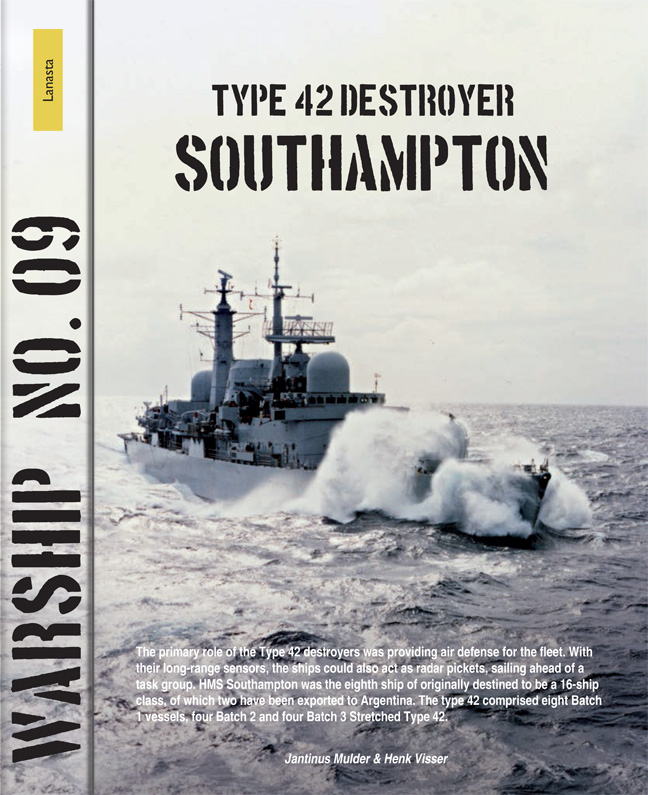
The primary role of the Type 42 destroyers was providing air defense for the fleet. With their long-range sensors, the ships could also act as radar pickets, sailing ahead of a task group. HMS Southampton was the eighth ship originally destined to be a 16-ship class - two of these ships have been exported to Argentina. The type 42 comprised eight Batch 1 vessels, four Batch 2 and four Batch 3 Stretched Type 42.
HMS Leander was completed in 1963 as the first ship of the Leander Class Improved Type 12 General Purpose Frigates. In 1974, she joined the 3rd Frigate Squadron, which included other Leander-class frigates. The design was the most successful Western frigate of its time and led to several new international designs.
Built by Boeing, designated as B-47 and named the Stratojet, this plane was quantum leap in aircraft development. Initially Boeing entered the unknown when they started this project, but soon it would be evident that Strategic Air Command would have its multi-engine jet bomber with a speed performance similar to the latest jet fighters.
After World War II, the Royal Netherlands Navy ordered new ships to counter the growing threat coming from the Soviet submarines. These ships were classified as ASW destroyers (onderzeebootjagers), but close to contemporary destroyers in terms of specifications. The national industry designed and constructed two classes of these ships. Drenthe was of the more capable Type 47B series.
The six Frigate Panters were all built in the USA with MDAP funds. They were designed to escort slow coastal convoys in the Channel and North Sea areas and were operated as a single squadron by the Royal Netherlands Navy. They proved useful in a number of peacetime tasks, especially fishery protection, and some retained this role in the North Sea until the mid-1980s.
The CW-21 was designed during the late 1930s. It combined light weight construction with a powerful engine, which resulted in an excellent rate of climb and manoeuvrability, allowing the fighter to quickly reach the height of attacking enemy aircraft, and attack them. The prototype was sent to China as a demonstration copy and an order for three aircraft, plus a further 32 as kits, followed. These would be assembled locally. Only the three production machines arrived in the chaos of war and would never see actual combat. A second modified variant was ordered by the Dutch government and 24 were delivered to the Netherlands Indies. The CW-21s were outnumbered and outgunned when the Japanese launched their attack on the Netherlands Indies. Despite the poor outlook, the pilots flying them put up a good fight.
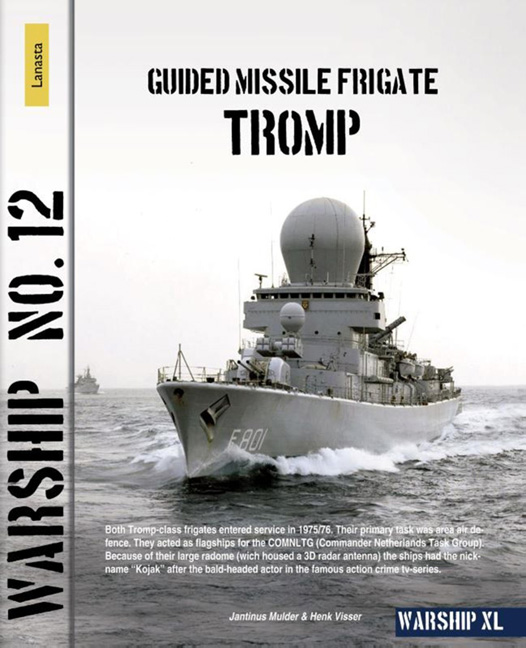
Both Tromp-class frigates entered service in 1975-76. Their primary task was area air defense. They acted as flagships for the COMNLTG (Commander Netherlands Task Group). Their large radome (which housed a 3D radar antenna) is why the ships had the nickname 'Kojak', after the bald-headed actor in the famous crime tv-series.
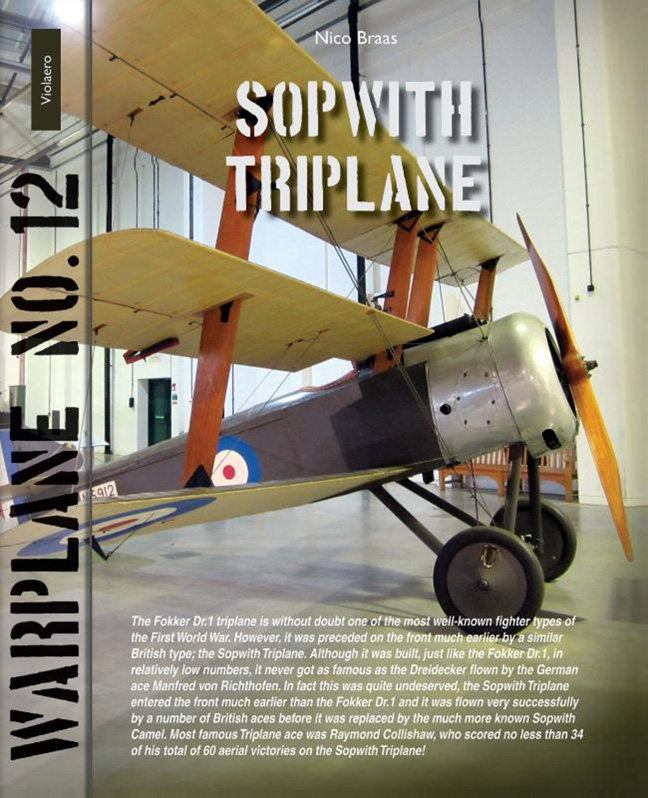
The Sopwith Triplane was a British single seat fighter aircraft designed and manufactured by the Sopwith Aviation Company during the First World War. It has the distinction of being the first military triplane to see operational service.
HNLMS Kortenaer was torpedoed by the Japanese cruiser Haguro in the Battle of the Java Sea on February 27, 1942. An eyewitness recorded that 'Kortenaer, about 700 yards bearing 80° relative, was struck on the starboard quarter by a torpedo, blew up, turned over, and sank at once leaving only a jackknifed bow and stern a few feet above the surface.'.
HNLMS Zuiderkruis (1975-2012) was the second Fast Combat Support Ship of the Royal Netherlands Navy. It was primarily intended for Replenishment At Sea, fueling task groups and NATO units. As a modern design Zuiderkruis enabled a 'one stop replenishment' and also carried AVCAT, fresh water and spare parts. A helicopter deck facilitated vertical replenishment.
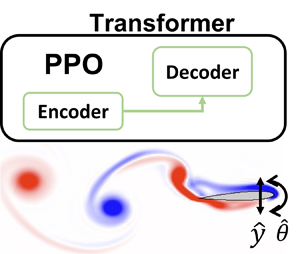
To optimize flapping foil performance, in the current study we apply deep reinforcement learning (DRL) to plan foil non-parametric motion, as the traditional control techniques and simplified motions cannot fully model nonlinear, unsteady and high-dimensional foil–vortex interactions. Therefore, a DRL training framework is proposed based on the proximal policy optimization algorithm and the transformer architecture, where the policy is initialized from the sinusoidal expert display. We first demonstrate the effectiveness of the proposed DRL-training framework, learning the coherent foil flapping motion to generate thrust. Furthermore, by adjusting reward functions and action thresholds, DRL-optimized foil trajectories can gain significant enhancement in both thrust and efficiency compared with the sinusoidal motion. Last, through visualization of wake morphology and instantaneous pressure distributions, it is found that DRL-optimized foil can adaptively adjust the phases between motion and shedding vortices to improve hydrodynamic performance. Our results give a hint of how to solve complex fluid manipulation problems using the DRL method.
Dr. Jie Zhang, a distinguished physicist, has made significant contributions in the fields of high-energy-density physics and inertial confinement fusion. Because of these, he was elected academician of the Chinese Academy of Sciences in 2003, academician of the German National Academy of Sciences in 2007, Fellow of the Academy of Sciences for the Developing World (TWAS) in 2008, foreign member of the Royal Academy of Engineering in the United Kingdom in 2011 and foreign associate of the National Academy of Sciences in the United States in 2012. In 2015, he was awarded the prestigious Edward Teller Medal, the most important international award in inertial confinement fusion and high-energy-density physics. In 2021, he was awarded the Future Science Prize in Physical Sciences.