Refine search
Actions for selected content:
212937 results in Engineering
Lagrangian approach to nonlinear waves in non-dispersive and dispersive rotating shallow water magnetohydrodynamics
-
- Journal:
- Journal of Fluid Mechanics / Volume 983 / 25 March 2024
- Published online by Cambridge University Press:
- 22 March 2024, A42
-
- Article
- Export citation
Joint multitemporal SAR and optical mapping of urban changes
-
- Journal:
- International Journal of Microwave and Wireless Technologies / Volume 16 / Issue 3 / April 2024
- Published online by Cambridge University Press:
- 22 March 2024, pp. 359-370
-
- Article
-
- You have access
- Open access
- HTML
- Export citation
Rheology of dilute bubble suspensions in unsteady shear flows
-
- Journal:
- Journal of Fluid Mechanics / Volume 983 / 25 March 2024
- Published online by Cambridge University Press:
- 21 March 2024, A39
-
- Article
- Export citation
-
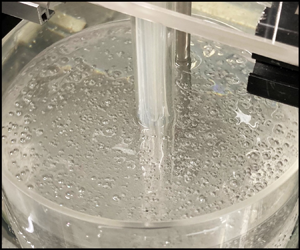
The viscoelasticity of a dilute bubble suspension is theoretically derived from the constitutive equation originally for a dilute emulsion proposed by Frankel & Acrivos (J. Fluid Mech., vol. 44, issue 1, 1970, pp. 65–78). Non-dimensionalization of the original tensor equation indicates that the viscoelasticity is systematized for a given void fraction by the capillary number $Ca$ and dynamic capillary number $Cd$, representing the bubble deformability and unsteadiness of bubble deformation. Comprehensive evaluation of the viscoelasticity according to the volume fraction, $Ca$ and $Cd$ reveals that whether the viscosity increases or decreases depends on whether $Ca$ or $Cd$ exceeds a common critical value. In addition, it is indicated that the bubble suspension has the most prominent viscoelasticity when the time scale of the shear deformation is the same as the relaxation time of the suspended bubble and when the bubbles keep a spherical shape, that is, $Ca \ll 1$ and $Cd = 1$. The applicability of this theory in flow prediction was examined in a Taylor–Couette system, and experimentally good agreement was confirmed.


Polydispersity effect on dry and immersed granular collapses: an experimental study
-
- Journal:
- Journal of Fluid Mechanics / Volume 983 / 25 March 2024
- Published online by Cambridge University Press:
- 21 March 2024, A40
-
- Article
-
- You have access
- Open access
- HTML
- Export citation
-
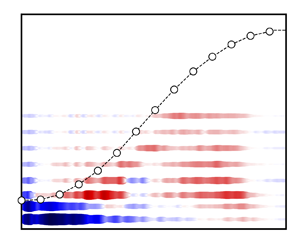
The column collapse experiment is a simplified version of natural and industrial granular flows. In this set-up, a column built with grains collapses and spreads over a horizontal plane. Granular flows are often studied with a monodisperse distribution; however, this is not the case in natural granular flows where a variety of grain sizes, known as polydispersity, is a common feature. In this work, we study the effect of polydispersity, and of the inherent changes that polydispersity causes in the initial packing fraction, in dry and immersed columns. We show that dry columns are not significantly affected by polydispersity, reaching similar distances at similar times. In contrast, immersed columns are strongly affected by the polydispersity and packing fraction, and the collapse sequence is linked to changes of the basal pore fluid pressure $P$. At the collapse initiation, negative changes of $P$ beneath the column produce a temporary increase of the column strength. The negative change of $P$ lasts longer in polydisperse columns than in monodisperse columns, delaying the collapse sequence. Conversely, during the column spreading, positive changes of $P$ lead to a decrease of the shear strength. For polydisperse collapses, the excess of $P$ lasts longer, allowing the material to reach farther distances, compared with the collapses of monodisperse materials. Finally, we show that a mobility model that scales the final runout with the collapse kinetic energy remains true for different polydispersity levels in a three-dimensional configuration, capturing the scaling between the micro to macro controlling features.


Time-resolved wave packet development in highly cooled hypersonic boundary layers
-
- Journal:
- Journal of Fluid Mechanics / Volume 983 / 25 March 2024
- Published online by Cambridge University Press:
- 21 March 2024, A36
-
- Article
-
- You have access
- Open access
- HTML
- Export citation
-
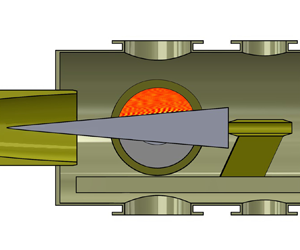
Boundary-layer disturbances are analysed on a $5^{\circ }$ half-angle blunted cone in Mach 5, high-enthalpy flow ( $h_0 = 9\ {\rm MJ}\ {\rm kg}^{-1}$) with a low wall-to-edge temperature ratio,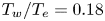 $T_w/T_e = 0.18$. Schlieren and focused laser differential interferometry (FLDI) are utilized to assess the structures and frequency content associated with disturbances. Wave packets are identified from bursts of modal content on time-resolved spectrograms. Bandpass filtering, proper orthogonal decomposition (POD) and space–time POD are then applied to the schlieren data. Bandpass filtering suggests the presence of wave packet dispersion and elongation indicative of slow-acoustic-wave synchronization. Modal reconstruction techniques indicate the radiation of content outside the boundary layer and distinct orientation changes within disturbances, potentially the first experimental evidence of the supersonic-mode instability in such a flow field. Cross-bicoherence computations are carried out for discrete time segments of data from both schlieren and FLDI data. They demonstrate that the most dominant nonlinear interactions are the fundamental–first-harmonic and the fundamental–low-frequency interactions.

Unified gas-kinetic wave–particle method for polydisperse gas–solid particle multiphase flow
-
- Journal:
- Journal of Fluid Mechanics / Volume 983 / 25 March 2024
- Published online by Cambridge University Press:
- 21 March 2024, A37
-
- Article
- Export citation
An applicator for high-power rock comminution using microwave technology in the megawatt range
-
- Journal:
- International Journal of Microwave and Wireless Technologies / Volume 16 / Issue 10 / December 2024
- Published online by Cambridge University Press:
- 21 March 2024, pp. 1665-1670
-
- Article
-
- You have access
- Open access
- HTML
- Export citation
-
The mining industry is heavily dependent on energy-intensive processes, such as rock breakage, which leads to significant operational costs. This paper explores microwave-assisted rock breakage as an innovative method to enhance the efficiency of comminution within the mining industry. It introduces a system that employs a Klystron microwave power source with a maximum output of 7.5 MW, using a $\mathrm{TM}_{010}$ single-mode cavity at 3 GHz, to channel energy inside a specially designed rock cavity. The paper emphasizes the importance of designing an efficient microwave cavity for this system, focusing on the cavity’s design and simulation. Through both simulated results (using HFSS software) and experimental observations, the study reveals the promising application of microwave technology in the field of mining. The simulated frequency response of the designed cavity (S11) is −22 dB, it demonstrates significant potential for reducing both energy consumption and associated costs. Additionally, the designed cavity is fabricated from aluminum and filled with polyether ether ketone material. The measured frequency response (S11) of the cavity at 3 GHz is −17 dB.

Validity of estimating center of pressure during walking and running with plantar load from a three-sensor wireless insole – ERRATUM
-
- Journal:
- Wearable Technologies / Volume 5 / 2024
- Published online by Cambridge University Press:
- 21 March 2024, e8
-
- Article
-
- You have access
- Open access
- HTML
- Export citation
On the streamwise velocity, temperature and passive scalar fields in compressible turbulent channel flows: a viewpoint from multiphysics couplings
-
- Journal:
- Journal of Fluid Mechanics / Volume 983 / 25 March 2024
- Published online by Cambridge University Press:
- 21 March 2024, A38
-
- Article
-
- You have access
- Open access
- HTML
- Export citation
-
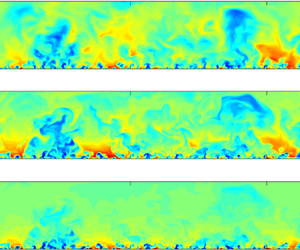
It is generally believed that the velocity and passive scalar fields share many similarities and differences in wall-bounded turbulence. In the present study, we conduct a series of direct numerical simulations of compressible channel flows with passive scalars and employ the two-dimensional spectral linear stochastic estimation and the correlation function as diagnostic tools to shed light on these aspects. Particular attention is paid to the relevant multiphysics couplings in the spectral domain, i.e. the velocity–temperature ( $u-T$), scalar–temperature ( $g-T$) and velocity–scalar ( $u-g$) couplings. These couplings are found to be utterly different at a given wall-normal position in the logarithmic and outer regions. Specifically, in the logarithmic region, the $u-T$ and $u-g$ couplings are tight at the scales that correspond to the attached eddies and the very large-scale motions (VLSMs), whereas the $g-T$ coupling is robust in the whole spectral domain. In the outer region, $u-T$ and $u-g$ couplings are only active at the scales corresponding to the VLSMs, whereas the $g-T$ coupling is diminished but still strong at all scales. Further analysis indicates that although the temperature field in the vast majority of zones in a channel can be roughly treated as a passive scalar, its physical properties gradually deviate from those of a pure passive scalar as the wall-normal height increases due to the enhancement of the acoustic mode. Furthermore, the deep involvement of the pressure field in the self-sustaining process of energy-containing motions also drives the streamwise velocity fluctuation away from a passive scalar. The current work is an extension of our previous study (Cheng & Fu, J. Fluid Mech., vol. 964, 2023, A15), and further uncovers the details of the multiphysics couplings in compressible wall turbulence.


Nonlinear ice sheet/liquid interaction in a channel with an obstruction
-
- Journal:
- Journal of Fluid Mechanics / Volume 983 / 25 March 2024
- Published online by Cambridge University Press:
- 21 March 2024, A41
-
- Article
- Export citation
Evaporation of binary liquids from a capillary tube
-
- Journal:
- Journal of Fluid Mechanics / Volume 983 / 25 March 2024
- Published online by Cambridge University Press:
- 21 March 2024, A21
-
- Article
-
- You have access
- Open access
- HTML
- Export citation
-
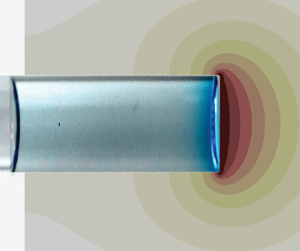
Evaporation of multi-component liquid mixtures in confined geometries, such as capillaries, is crucial in applications such as microfluidics, two-phase cooling devices and inkjet printing. Predicting the behaviour of such systems becomes challenging because evaporation triggers complex spatio-temporal changes in the composition of the mixture. These changes in composition, in turn, affect evaporation. In the present work, we study the evaporation of aqueous glycerol solutions contained as a liquid column in a capillary tube. Experiments and direct numerical simulations show three evaporation regimes characterised by different temporal evolutions of the normalised mass transfer rate (or Sherwood number $Sh$), namely $Sh (\tilde{t} ) = 1$, $Sh \sim 1/\sqrt {\tilde{t} }$ and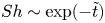 $Sh \sim \exp (-\tilde{t} )$, where $\tilde {t}$ is a normalised time. We present a simplistic analytical model that shows that the evaporation dynamics can be expressed by the classical relation $Sh = \exp ( \tilde{t} )\,\mathrm {erfc} ( \sqrt {\tilde{t} })$. For small and medium $\tilde{t}$, this expression results in the first and second of the three observed scaling regimes, respectively. This analytical model is formulated in the limit of pure diffusion and when the penetration depth $\delta (t)$ of the diffusion front is much smaller than the length $L(t)$ of the liquid column. When $\delta \approx L$, finite-length effects lead to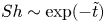 $Sh \sim \exp (-\tilde{t} )$, i.e. the third regime. Finally, we extend our analytical model to incorporate the effect of advection and determine the conditions under which this effect is important. Our results provide fundamental insights into the physics of selective evaporation from a multi-component liquid column.



Multi-scale invariant solutions in plane Couette flow: a reduced-order model approach
-
- Journal:
- Journal of Fluid Mechanics / Volume 983 / 25 March 2024
- Published online by Cambridge University Press:
- 20 March 2024, A33
-
- Article
-
- You have access
- Open access
- HTML
- Export citation
-
Plane Couette flow at Reynolds number $Re=1200$ (based on the channel half-height and half the velocity difference between the top and bottom plates) is investigated with a spatial domain designed to retain only two spanwise integral length scales. In this system, the computation of invariant solutions that are physically representative of the turbulent state has been understood to be challenging. To address this challenge, our approach is to employ an accurate reduced-order model with 600 degrees of freedom (Cavalieri & Nogueira, Phys. Rev. Fluids, vol. 7, 2022, L102601). Using the two-scale energy budget and the temporal cross-correlation of key observables, it is first demonstrated that the model contains most of the multi-scale physical processes identified recently (Doohan et al., J. Fluid Mech., vol. 913, 2021, A8); i.e. the large- and small-scale self-sustaining processes, the energy cascade for turbulent dissipation, and an energy-cascade mediated small-scale production mechanism. Invariant solutions of the reduced-order model are subsequently computed, including 96 equilibria and 43 periodic orbits. It is found that none of the computed equilibrium solutions are able to reproduce an accurate energy balance associated with the multi-scale dynamics of the turbulent state. Incorporation of unsteadiness into invariant solutions is seen to be essential for a sensible description of the multi-scale turbulent dynamics and the related energetics, at least in this type of flow, as periodic orbits with a sufficiently long period are mainly able to describe the complex spatio-temporal dynamics associated with the known multi-scale phenomena.

Flow-induced rearrangement of a poroelastic cluster
-
- Journal:
- Journal of Fluid Mechanics / Volume 983 / 25 March 2024
- Published online by Cambridge University Press:
- 20 March 2024, A34
-
- Article
-
- You have access
- Open access
- HTML
- Export citation
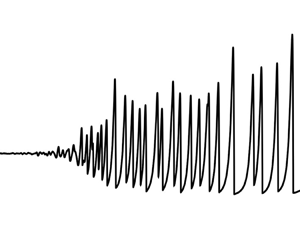
Roll waves in a predictive model for open-channel flows in the smooth turbulent case
-
- Journal:
- Journal of Fluid Mechanics / Volume 983 / 25 March 2024
- Published online by Cambridge University Press:
- 20 March 2024, A31
-
- Article
- Export citation
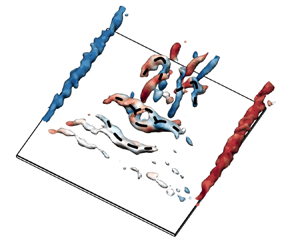
Tip effects on three-dimensional flow structures over low-aspect-ratio plates: mechanisms of spanwise fluid transport
-
- Journal:
- Journal of Fluid Mechanics / Volume 983 / 25 March 2024
- Published online by Cambridge University Press:
- 20 March 2024, A35
-
- Article
- Export citation
-
Three-dimensional flows over low-aspect-ratio rectangular flat plates ( ${A{\kern-4pt}R} = 1.00$– $1.50$) are investigated using tomographic and planar particle image velocimetry techniques. The chord-based Reynolds number is $5400$, and the angle of attack is fixed at $6^\circ$. This study reveals for the first time the interplay between spanwise fluid transport and downwash, both originating from the tip effects. Spanwise fluid transport promotes the formation and subsequent coherent development of leading-edge vortices, whereas downwash stabilizes the flow. Specifically, two mechanisms related to spanwise fluid transport are revealed. First, the spanwise fluid transport enhances the intensity of the reversed flow, promoting the shear layer roll-up and vortex shedding. Second, the near-wall spanwise flow interacts with the shed C-shape vortices, thereby strengthening the vortex heads. In particular, through these interactions, spanwise fluid transport can sustain the coherence of the C-shape vortices until the vortex heads split in a regular fashion. Consequently, the C-shape vortices are transformed into novel Þ-shape vortices for the plates of ${A{\kern-4pt}R} \leq 1.25$, which supplements the previously discovered transformation from C-shape to M-shape vortices for larger ${A{\kern-4pt}R}$ plates. Downstream of this novel vortex-splitting transformation, two fundamental processes contribute to the formation of hairpin vortices. The above comprehensive understanding of complete vortex evolution routine provides valuable insights into the tip effects on the formation of three-dimensional flows over low- ${A{\kern-4pt}R}$ plates.



Computational Principles of Mobile Robotics
-
- Published online:
- 19 March 2024
- Print publication:
- 08 February 2024
-
- Textbook
- Export citation

Sedimentation of spheroids in Newtonian fluids with spatially varying viscosity
-
- Journal:
- Journal of Fluid Mechanics / Volume 983 / 25 March 2024
- Published online by Cambridge University Press:
- 19 March 2024, A28
-
- Article
-
- You have access
- Open access
- HTML
- Export citation
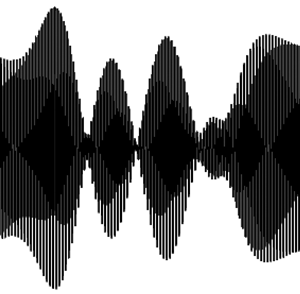
On elementary four-wave interactions in dispersive media
-
- Journal:
- Journal of Fluid Mechanics / Volume 983 / 25 March 2024
- Published online by Cambridge University Press:
- 19 March 2024, A27
-
- Article
-
- You have access
- Open access
- HTML
- Export citation
Aeroelastic tailoring of stiffened cantilever plate using composites and structural layouts: A parametric study
-
- Journal:
- The Aeronautical Journal / Volume 128 / Issue 1327 / September 2024
- Published online by Cambridge University Press:
- 19 March 2024, pp. 2073-2091
-
- Article
- Export citation
-
This paper studies the aeroelasticity of a stiffened cantilever plate using composite material and novel structural layouts. A comprehensive parametric study is conducted to determine the influence of different design parameters on the aeroelastic boundaries. Design parameters include plate sweep angle, ply orientation, stringer cross-section and stringer sweep angle. Nastran is used to run the aeroelastic analysis, and the process is automated using ${\rm{Matla}}{{\rm{b}}^{}}$. The structure of the plate is modelled using laminate elements whereas the stringers are modelled using the Euler-Bernoulli beam elements. The unsteady aerodynamic loads are modelled using doublet-lattice method (DLM) and the structural and aerodynamic meshes are connected using an infinite plate surface (IPS) spline. A mesh sensitivity analysis is conducted to ensure fine meshes for the aerodynamics and structure. The study’s findings demonstrate the benefits of employing forward swept (Fw) stringers since it increases flutter speed by almost 38% compared to the unswept stringers case and prevents divergence. Moreover, the static aeroelastic analysis illustrates that the utilisation of Fw swept stringers can reduce the average tip displacement and tip twist effectively. T-shaped stringers are recommended to stiffen the plate due to their lower impact on the total mass of the plate. In some configurations, the structural layout has a much higher effect on the aeroelastic instabilities when compared to the material effect (ply orientation). However, results suggest combining both for some cases to get balanced washin and washout effects.

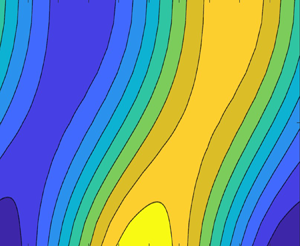
Pore-scale mushy layer modelling
-
- Journal:
- Journal of Fluid Mechanics / Volume 983 / 25 March 2024
- Published online by Cambridge University Press:
- 19 March 2024, A30
-
- Article
-
- You have access
- Open access
- HTML
- Export citation
