Refine search
Actions for selected content:
212948 results in Engineering
Nonlinear ice sheet/liquid interaction in a channel with an obstruction
-
- Journal:
- Journal of Fluid Mechanics / Volume 983 / 25 March 2024
- Published online by Cambridge University Press:
- 21 March 2024, A41
-
- Article
- Export citation
Evaporation of binary liquids from a capillary tube
-
- Journal:
- Journal of Fluid Mechanics / Volume 983 / 25 March 2024
- Published online by Cambridge University Press:
- 21 March 2024, A21
-
- Article
-
- You have access
- Open access
- HTML
- Export citation
-
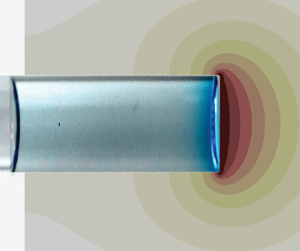
Evaporation of multi-component liquid mixtures in confined geometries, such as capillaries, is crucial in applications such as microfluidics, two-phase cooling devices and inkjet printing. Predicting the behaviour of such systems becomes challenging because evaporation triggers complex spatio-temporal changes in the composition of the mixture. These changes in composition, in turn, affect evaporation. In the present work, we study the evaporation of aqueous glycerol solutions contained as a liquid column in a capillary tube. Experiments and direct numerical simulations show three evaporation regimes characterised by different temporal evolutions of the normalised mass transfer rate (or Sherwood number $Sh$), namely $Sh (\tilde{t} ) = 1$, $Sh \sim 1/\sqrt {\tilde{t} }$ and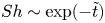 $Sh \sim \exp (-\tilde{t} )$, where $\tilde {t}$ is a normalised time. We present a simplistic analytical model that shows that the evaporation dynamics can be expressed by the classical relation $Sh = \exp ( \tilde{t} )\,\mathrm {erfc} ( \sqrt {\tilde{t} })$. For small and medium $\tilde{t}$, this expression results in the first and second of the three observed scaling regimes, respectively. This analytical model is formulated in the limit of pure diffusion and when the penetration depth $\delta (t)$ of the diffusion front is much smaller than the length $L(t)$ of the liquid column. When $\delta \approx L$, finite-length effects lead to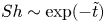 $Sh \sim \exp (-\tilde{t} )$, i.e. the third regime. Finally, we extend our analytical model to incorporate the effect of advection and determine the conditions under which this effect is important. Our results provide fundamental insights into the physics of selective evaporation from a multi-component liquid column.



Multi-scale invariant solutions in plane Couette flow: a reduced-order model approach
-
- Journal:
- Journal of Fluid Mechanics / Volume 983 / 25 March 2024
- Published online by Cambridge University Press:
- 20 March 2024, A33
-
- Article
-
- You have access
- Open access
- HTML
- Export citation
-
Plane Couette flow at Reynolds number $Re=1200$ (based on the channel half-height and half the velocity difference between the top and bottom plates) is investigated with a spatial domain designed to retain only two spanwise integral length scales. In this system, the computation of invariant solutions that are physically representative of the turbulent state has been understood to be challenging. To address this challenge, our approach is to employ an accurate reduced-order model with 600 degrees of freedom (Cavalieri & Nogueira, Phys. Rev. Fluids, vol. 7, 2022, L102601). Using the two-scale energy budget and the temporal cross-correlation of key observables, it is first demonstrated that the model contains most of the multi-scale physical processes identified recently (Doohan et al., J. Fluid Mech., vol. 913, 2021, A8); i.e. the large- and small-scale self-sustaining processes, the energy cascade for turbulent dissipation, and an energy-cascade mediated small-scale production mechanism. Invariant solutions of the reduced-order model are subsequently computed, including 96 equilibria and 43 periodic orbits. It is found that none of the computed equilibrium solutions are able to reproduce an accurate energy balance associated with the multi-scale dynamics of the turbulent state. Incorporation of unsteadiness into invariant solutions is seen to be essential for a sensible description of the multi-scale turbulent dynamics and the related energetics, at least in this type of flow, as periodic orbits with a sufficiently long period are mainly able to describe the complex spatio-temporal dynamics associated with the known multi-scale phenomena.

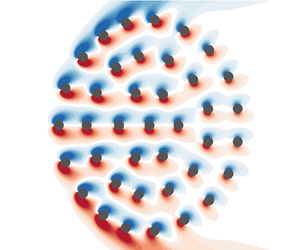
Flow-induced rearrangement of a poroelastic cluster
-
- Journal:
- Journal of Fluid Mechanics / Volume 983 / 25 March 2024
- Published online by Cambridge University Press:
- 20 March 2024, A34
-
- Article
-
- You have access
- Open access
- HTML
- Export citation
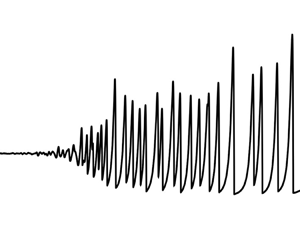
Roll waves in a predictive model for open-channel flows in the smooth turbulent case
-
- Journal:
- Journal of Fluid Mechanics / Volume 983 / 25 March 2024
- Published online by Cambridge University Press:
- 20 March 2024, A31
-
- Article
- Export citation
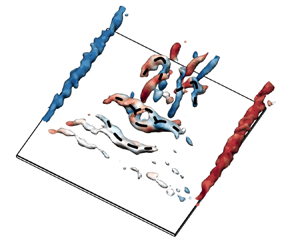
Tip effects on three-dimensional flow structures over low-aspect-ratio plates: mechanisms of spanwise fluid transport
-
- Journal:
- Journal of Fluid Mechanics / Volume 983 / 25 March 2024
- Published online by Cambridge University Press:
- 20 March 2024, A35
-
- Article
- Export citation
-
Three-dimensional flows over low-aspect-ratio rectangular flat plates ( ${A{\kern-4pt}R} = 1.00$– $1.50$) are investigated using tomographic and planar particle image velocimetry techniques. The chord-based Reynolds number is $5400$, and the angle of attack is fixed at $6^\circ$. This study reveals for the first time the interplay between spanwise fluid transport and downwash, both originating from the tip effects. Spanwise fluid transport promotes the formation and subsequent coherent development of leading-edge vortices, whereas downwash stabilizes the flow. Specifically, two mechanisms related to spanwise fluid transport are revealed. First, the spanwise fluid transport enhances the intensity of the reversed flow, promoting the shear layer roll-up and vortex shedding. Second, the near-wall spanwise flow interacts with the shed C-shape vortices, thereby strengthening the vortex heads. In particular, through these interactions, spanwise fluid transport can sustain the coherence of the C-shape vortices until the vortex heads split in a regular fashion. Consequently, the C-shape vortices are transformed into novel Þ-shape vortices for the plates of ${A{\kern-4pt}R} \leq 1.25$, which supplements the previously discovered transformation from C-shape to M-shape vortices for larger ${A{\kern-4pt}R}$ plates. Downstream of this novel vortex-splitting transformation, two fundamental processes contribute to the formation of hairpin vortices. The above comprehensive understanding of complete vortex evolution routine provides valuable insights into the tip effects on the formation of three-dimensional flows over low- ${A{\kern-4pt}R}$ plates.



Computational Principles of Mobile Robotics
-
- Published online:
- 19 March 2024
- Print publication:
- 08 February 2024
-
- Textbook
- Export citation

Sedimentation of spheroids in Newtonian fluids with spatially varying viscosity
-
- Journal:
- Journal of Fluid Mechanics / Volume 983 / 25 March 2024
- Published online by Cambridge University Press:
- 19 March 2024, A28
-
- Article
-
- You have access
- Open access
- HTML
- Export citation
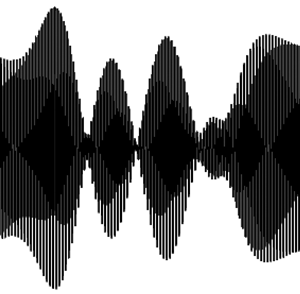
On elementary four-wave interactions in dispersive media
-
- Journal:
- Journal of Fluid Mechanics / Volume 983 / 25 March 2024
- Published online by Cambridge University Press:
- 19 March 2024, A27
-
- Article
-
- You have access
- Open access
- HTML
- Export citation
Aeroelastic tailoring of stiffened cantilever plate using composites and structural layouts: A parametric study
-
- Journal:
- The Aeronautical Journal / Volume 128 / Issue 1327 / September 2024
- Published online by Cambridge University Press:
- 19 March 2024, pp. 2073-2091
-
- Article
- Export citation
-
This paper studies the aeroelasticity of a stiffened cantilever plate using composite material and novel structural layouts. A comprehensive parametric study is conducted to determine the influence of different design parameters on the aeroelastic boundaries. Design parameters include plate sweep angle, ply orientation, stringer cross-section and stringer sweep angle. Nastran is used to run the aeroelastic analysis, and the process is automated using ${\rm{Matla}}{{\rm{b}}^{}}$. The structure of the plate is modelled using laminate elements whereas the stringers are modelled using the Euler-Bernoulli beam elements. The unsteady aerodynamic loads are modelled using doublet-lattice method (DLM) and the structural and aerodynamic meshes are connected using an infinite plate surface (IPS) spline. A mesh sensitivity analysis is conducted to ensure fine meshes for the aerodynamics and structure. The study’s findings demonstrate the benefits of employing forward swept (Fw) stringers since it increases flutter speed by almost 38% compared to the unswept stringers case and prevents divergence. Moreover, the static aeroelastic analysis illustrates that the utilisation of Fw swept stringers can reduce the average tip displacement and tip twist effectively. T-shaped stringers are recommended to stiffen the plate due to their lower impact on the total mass of the plate. In some configurations, the structural layout has a much higher effect on the aeroelastic instabilities when compared to the material effect (ply orientation). However, results suggest combining both for some cases to get balanced washin and washout effects.

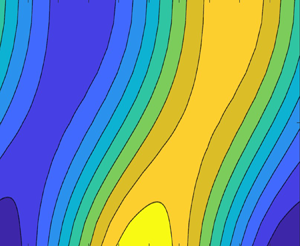
Pore-scale mushy layer modelling
-
- Journal:
- Journal of Fluid Mechanics / Volume 983 / 25 March 2024
- Published online by Cambridge University Press:
- 19 March 2024, A30
-
- Article
-
- You have access
- Open access
- HTML
- Export citation
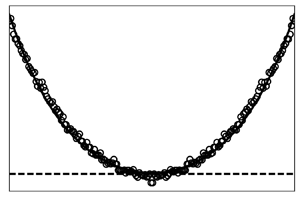
Derivation of extended-OBurnett and super-OBurnett equations and their analytical solution to plane Poiseuille flow at non-zero Knudsen number
-
- Journal:
- Journal of Fluid Mechanics / Volume 983 / 25 March 2024
- Published online by Cambridge University Press:
- 19 March 2024, A29
-
- Article
-
- You have access
- Open access
- HTML
- Export citation
Reinforcement learning-based adaptive spiral-diving Manoeuver guidance method for reentry vehicles subject to unknown disturbances
-
- Journal:
- The Aeronautical Journal / Volume 128 / Issue 1328 / October 2024
- Published online by Cambridge University Press:
- 19 March 2024, pp. 2218-2234
-
- Article
- Export citation
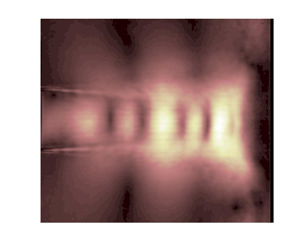
Experimental study on acoustic resonance of subsonic and slightly underexpanded impinging jets
-
- Journal:
- Journal of Fluid Mechanics / Volume 983 / 25 March 2024
- Published online by Cambridge University Press:
- 19 March 2024, A32
-
- Article
- Export citation
-
The aeroacoustic feedback loops in high-speed circular jets that impinge on a large flat plate are investigated via acoustic measurements and schlieren visualizations. In the present experiments, the nozzle pressure ratio ranges from 1.39 to 2.20, the corresponding ideally expanded jet Mach number $M_j$ is from 0.70 to 1.12 and the nozzle-to-plate distance ( $H$) is from 4.0 $D$ to 6.0 $D$, where $D$ is the nozzle exit diameter. The results of acoustic measurements show that the strongest tones are generated in a limited frequency band. The empirical dispersion relations obtained from the fluctuating greyscales along the jet centreline of time-resolved schlieren images have good agreement with the dispersion relations from the vortex-sheet model. The coherent flow structures at tonal frequencies are extracted by spectral proper orthogonal decomposition and are analysed in detail. For the $M_j<0.82$ jets, the upstream-propagating guided jet mode is progressively confined to the potential core of jets with increasing tonal frequency, which provides the first direct experimental support for theoretical results. The evolution in the structures of acoustic resonance loops is studied along a single frequency stage of axisymmetric impinging tones. When the acoustic resonance between the upstream- and downstream-propagating guided jet modes is formed at tonal frequencies, the impinging tones are intenser. Slightly underexpanded impinging jets can simultaneously produce impingement tones and screech tones. Shock-cell structures have modulatory effects on the downstream-propagating Kelvin–Helmholtz wavepacket and the upstream- and downstream-propagating guided jet modes. Due to the interaction between the flow structures at the frequencies of impinging and screech tones, tones of axisymmetric modes can be produced outside the frequency ranges in which the axisymmetric upstream-propagating guided jet modes are supported by jets.


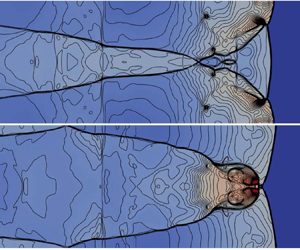
Eulerian discrete kinetic framework in comoving reference frame for hypersonic flows
-
- Journal:
- Journal of Fluid Mechanics / Volume 983 / 25 March 2024
- Published online by Cambridge University Press:
- 18 March 2024, A11
-
- Article
-
- You have access
- Open access
- HTML
- Export citation
-
Flow physics vary in different regimes across the full Mach number range, with our knowledge being particularly poor about the hypersonic regime. An Eulerian realization of the particles on demand method, a kinetic model formulated in the comoving reference frame, is proposed to simulate hypersonic compressible flows. The present model allows for flux evaluation in different reference frames, in this case rescaled and shifted by local macroscopic quantities, i.e. fluid speed and temperature. The resulting system of coupled hyperbolic equations is discretized in physical space with a finite volume scheme ensuring exact conservation properties. Regularization via Grad expansion is introduced to implement distribution function and flux transformation between different reference frames. It is shown that the proposed method possesses Galilean invariance at a Mach number up to $100$. Different benchmarks including both inviscid and viscous flows are reproduced with the Mach number up to $198$ and pressure ratio up to $10^5$. Finally, the new model is demonstrated to be capable of simulating hypersonic reactive flows, including one-dimensional and two-dimensional detonations. The developed methodology opens up possibilities for the simulation of the full range of compressible flows, without or with chemical reactions, from the subsonic to hypersonic regimes, leading to enhanced understanding of flow behaviours across the full Mach number range.


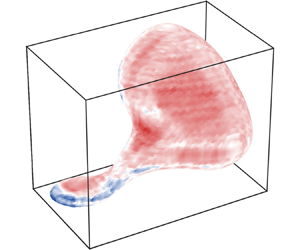
Breaking bubbles across multiple time scales in turbulence
-
- Journal:
- Journal of Fluid Mechanics / Volume 983 / 25 March 2024
- Published online by Cambridge University Press:
- 18 March 2024, A24
-
- Article
-
- You have access
- Open access
- HTML
- Export citation
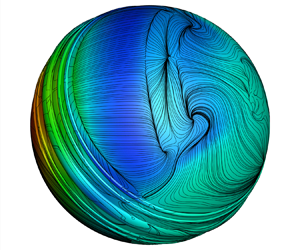
Swing and reverse swing of a cricket ball: laminar separation bubble, secondary vortex and wing-tip-like vortices
-
- Journal:
- Journal of Fluid Mechanics / Volume 983 / 25 March 2024
- Published online by Cambridge University Press:
- 18 March 2024, A23
-
- Article
-
- You have access
- Open access
- HTML
- Export citation
-
Large eddy simulation of flow past a cricket ball with its seam at $30^\circ$ to the free stream is carried out for $5 \times 10^4 \le Re \le 4.5 \times 10^5$. Three regimes of flow are identified on the basis of the time-averaged swing force coefficient ( $\bar {C}_Z$) – no swing (NS), conventional swing (CS, $\bar {C}_Z>0$) and reverse swing (RS, $\bar {C}_Z<0$). The effect of seam on the boundary layer is investigated. Contrary to the popular belief, the boundary layer does not transition to a turbulent state in the initial stages of CS. The seam energizes the laminar boundary layer and delays its separation. The delay is significantly larger in a region near the poles, whose extent increases with an increase in $Re$ causing $\bar {C}_Z$ to increase. Here $\bar {C}_Z$ assumes a near constant value in the later stage of CS. The boundary layer transitions to a turbulent state via formation of a laminar separation bubble (LSB) in the equatorial region and directly, without a LSB, in the polar region. The extent of the LSB shrinks while the region of direct transition near the poles increases with an increase in $Re$. A LSB forms on the non-seam side of the ball in the RS regime. A secondary vortex is observed in the wake bubble. While it exists on the non-seam side for the entire range of $Re$ considered, the mixing in the flow introduced by the seam causes it to disappear beyond a certain $Re$ on the seam side. The pressure difference between the seam and non-seam sides sets up wing-tip-like vortices. Their polarity reverses with the switch from the CS to RS regime.


New insights into head-on bouncing of unequal-size droplets on a wetting surface
-
- Journal:
- Journal of Fluid Mechanics / Volume 983 / 25 March 2024
- Published online by Cambridge University Press:
- 18 March 2024, A25
-
- Article
-
- You have access
- Open access
- HTML
- Export citation
An acceleration method employing sparse sensing matrix for fast analysis of the wide-angle electromagnetic problems based on compressive sensing
-
- Journal:
- International Journal of Microwave and Wireless Technologies / Volume 16 / Issue 4 / May 2024
- Published online by Cambridge University Press:
- 18 March 2024, pp. 645-650
-
- Article
- Export citation
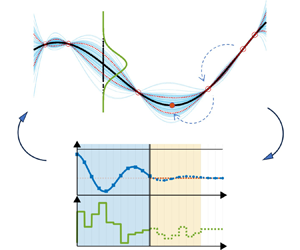
Self-tuning model predictive control for wake flows
-
- Journal:
- Journal of Fluid Mechanics / Volume 983 / 25 March 2024
- Published online by Cambridge University Press:
- 18 March 2024, A26
-
- Article
-
- You have access
- Open access
- HTML
- Export citation
