To save content items to your account,
please confirm that you agree to abide by our usage policies.
If this is the first time you use this feature, you will be asked to authorise Cambridge Core to connect with your account.
Find out more about saving content to .
To save content items to your Kindle, first ensure no-reply@cambridge.org
is added to your Approved Personal Document E-mail List under your Personal Document Settings
on the Manage Your Content and Devices page of your Amazon account. Then enter the ‘name’ part
of your Kindle email address below.
Find out more about saving to your Kindle.
Note you can select to save to either the @free.kindle.com or @kindle.com variations.
‘@free.kindle.com’ emails are free but can only be saved to your device when it is connected to wi-fi.
‘@kindle.com’ emails can be delivered even when you are not connected to wi-fi, but note that service fees apply.
By combining the technique of energy selective surface and frequency selective rasorber, an energy selective rasorber is proposed, which performs selective energy protection in the low communication frequency band (0.8–2 GHz) and wave-absorbing property in the high-frequency band (6–18 GHz). The design consists of two layers, of which the bottom one contains a lumped diode structure for energy selection function in the transmission band, while together with the top layer, they perform a wideband wave absorbing function. The simulated and measured results agree well with each other, and both show good absorption in 6–18 GHz and energy-selective property around 1.86 GHz. That is, when the incident power changes from −30 to 14 dBm, the reflection coefficient changes from below −22 dB to above −2 dB, while the transmission coefficient changes from above −3 dB to below −17 dB.
This paper presents a low-profile six-beam antenna implemented by a compact two-layer 6 × 6 beamforming network (BFN) and a 6 × 2 slot antenna in substrate integrated waveguide (SIW) technology. The main components of the proposed 6 × 6 BFN are 3 × 3 multi-aperture couplers, interlayer hybrid couplers, and several phase shifters which are embedded on two microwave substrates. The proposed antenna has been designed, simulated, and fabricated for the frequency range of 28–32 GHz. The size of this antenna is 82 × 31.8 × 0.787 mm3, which can be a suitable choice for 5G applications due to its compact dimensions compared to similar works. Prototype testing shows that the proposed structure presents a stable beamforming performance both in simulation and measurement with good agreement. The antenna generates six radiation beams in directions ±9°, ±30°, and ±54° with good return losses and isolations.
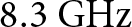
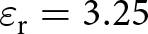
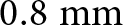
With the rapid development of communication technology, the researches of multi-band filtering circuits have become more and more important. Multimode resonator (MMR) is one of the vital methods to provide multi-resonant modes within a single design. In this paper, a dual-band ultra-wideband bandpass filter (UWB-BPF) using stepped impedance stub-loaded resonators (SI-SLR) is presented. The main advantage of using SI-SLR is to have better performance with multimode behavior and more parameters to control resonant modes. SI-SLR combines the advantages of SIR and SLR structures, which gives a compact, high-performance multiband filter. The proposed filter design has compact size, sharp and flat response with low insertion loss (IL), low return loss (RL), and high band-to-band rejection. The filter is designed for UWB communication in wireless body area networks and fabricated on Arlon substrate with relative permittivity ${\varepsilon_{\textrm{r}}} = 3.25$, thickness $0.8\;{\textrm{mm}}$. The resulted dual-bands are centered at $4{\textrm{ GHz}}$ and $8.3{\textrm{ GHz}}$ with fractional bandwidths $37{\textrm{% }}$ and $48{\textrm{%}}$. The simulation was carried out using CST Microwave Studio. The filter provides good passband performances, with IL 0.49 dB and 0.31 dB at the center frequency of lower and higher bands, respectively. The band-to-band 40 dB rejection is realized by adding circular spiral at the input/output of the filter.

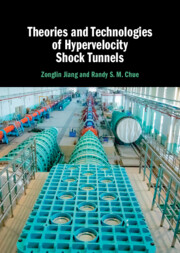
Learn to design and improve state-of-the-art aerodynamic ground testing facilities in this comprehensive reference book, with particular focus on high-enthalpy shock tunnels. Including the latest advances in detonation-driven high-enthalpy shock tunnels, readers will discover how to extend test time with brand new concepts and duplicate real hypersonic flight test conditions. Through a systematic approach, the book describes technologies for a variety of different drivers in hypersonic and high-enthalpy shock tunnels. The fundamental theories for hypersonic and high-enthalpy shock tunnels are described step-by-step, with examples throughout, providing an accessible introduction. Built on years of real-world experience, this book examines in detail the advantages and challenges of improving test flow qualities, including increasing total pressure and enthalpy, model scale amplification and test-time extending for different types of shock tunnel drivers. This is an ideal companion handbook for aerospace engineers as well as graduate students.
This accessible and self-contained guide provides a comprehensive introduction to the popular programming language Python, with a focus on applications in chemistry and chemical physics. Ideally suited to students and researchers of chemistry learning to employ Python for problem-solving in their research, this fast-paced primer first builds a solid foundation in the programming language before progressing to advanced concepts and applications in chemistry. The required syntax and data structures are established, and then applied to solve problems computationally. Popular numerical packages are described in detail, including NumPy, SciPy, Matplotlib, SymPy, and pandas. End of chapter problems are included throughout, with worked solutions available within the book. Additional resources, datasets, and Jupyter Notebooks are provided on a companion website, allowing readers to reinforce their understanding and gain confidence applying their knowledge through a hands-on approach.
Virtual reality (VR) is a powerful technology that promises to transform our lives. This balanced and interdisciplinary text blends the key components from computer graphics, perceptual psychology, human physiology, behavioral science, media studies, human-computer interaction, optical engineering, and sensing and filtering, showing how each contributes to engineering perceptual illusions. Steven LaValle draws on his unique experience as a teacher, researcher, and early founder of Oculus VR, to demonstrate how the best practices and insights from industry are built on fundamental computer science principles. Topics include media history, geometric modeling, optical systems, displays, eyes, ears, low-level perception, neuroscience of vision, graphical rendering, tracking systems, interaction mechanisms, audio, evaluating VR systems, and mitigating side effects. Students, researchers, and developers will gain a clear understanding of timeless foundations and new applications, enabling them to make innovative contributions to this growing field as scientists, engineers, business developers, and content makers.
Edited by
Jong Chul Ye, Korea Advanced Institute of Science and Technology (KAIST),Yonina C. Eldar, Weizmann Institute of Science, Israel,Michael Unser, École Polytechnique Fédérale de Lausanne
A simple and compact three-way planar power divider, which avoids the floating common node of the isolation resistors, is presented. The proposed structure exhibits a wideband operation (measured frequency range of 1.6–3.3 GHz and bandwidth of 69.4%) with good return loss and isolation characteristics. Transmission line theory is used for the mathematical analysis and extraction of design equations, followed by simulations and experimental measurements that confirm the predicted results. The proposed divider achieves an equal power split (∼32%, −4.9 ± 0.4 dB insertion loss) between the input and each output port. The measured return loss is better than −10 dB at all ports, and the measured maximum isolation is close to −30 dB. The proposed design exhibits a fully planar structure, thus eliminating the need for a floating common node for the isolation resistors. Additionally, its structure is much simpler (i.e., no coupled lines, crossovers, or lumped capacitors are required) than other designs, achieves wideband operation, and provides design simplicity, flexibility, and easy implementation. Despite its simple noncomplicated structure, the proposed three-way planar divider achieves similar (or in some cases, better) performance and size than other more complicated structures. Furthermore, it can be expanded to an n-way structure.
Edited by
Jong Chul Ye, Korea Advanced Institute of Science and Technology (KAIST),Yonina C. Eldar, Weizmann Institute of Science, Israel,Michael Unser, École Polytechnique Fédérale de Lausanne
We provide a short, self-contained introduction to deep neural networks that is aimed at mathematically inclined readers. We promote the use of a vect--matrix formalism that is well suited to the compositional structure of these networks and that facilitates the derivation/description of the backpropagation algorithm. We present a detailed analysis of supervised learning for the two most common scenarios, (i) multivariate regression and (ii) classification, which rely on the minimization of least squares and cross-entropy criteria, respectively.
Edited by
Jong Chul Ye, Korea Advanced Institute of Science and Technology (KAIST),Yonina C. Eldar, Weizmann Institute of Science, Israel,Michael Unser, École Polytechnique Fédérale de Lausanne
Since the groundbreaking performance improvement by AlexNet at the ImageNet challenge, deep learning has provided significant gains over classical approaches in various fields of data science including imaging reconstruction. The availability of large-scale training datasets and advances in neural network research have resulted in the unprecedented success of deep learning in various applications. Nonetheless, the success of deep learning appears very mysterious. The basic building blocks of deep neural networks are convolution, pooling, and nonlinearity, which are primitive tools of mathematics. Interestingly, the cascaded connection of these primitive tools results in superior performance over traditional approaches. To understand this mystery, one can go back to the basic ideas of the classical approaches to understand the similarities and differences from modern deep-neural-network methods. In this chapter, we explain the limitations of the classical machine learning approaches, and provide a review of mathematical foundations to understand why deep neural networks have successfully overcome their limitations.
Edited by
Jong Chul Ye, Korea Advanced Institute of Science and Technology (KAIST),Yonina C. Eldar, Weizmann Institute of Science, Israel,Michael Unser, École Polytechnique Fédérale de Lausanne
Inspired by the success of deep learning in computer vision tasks, deep learning approaches for various MRI problems have been extensively studied in recent years. Early deep learning studies for MRI reconstruction and enhancement were mostly based on image-domain learning. However, because the MR signal is acquired in the k-space domain, researchers have demonstrated that deep neural networks can be directly designed in k-space to utilize the physics of MR acquisition. In this chapter, the recent trend of k-space deep learning for MRI reconstruction and artifact removal are reviewed. First, scan-specific k-space learning, which is inspired by parallel MRI, is covered. Then we provide an overview of data-driven k-space learning. Subsequently, unsupervised learning for MRI reconstruction and motion artifact removal are discussed.
Edited by
Jong Chul Ye, Korea Advanced Institute of Science and Technology (KAIST),Yonina C. Eldar, Weizmann Institute of Science, Israel,Michael Unser, École Polytechnique Fédérale de Lausanne
Edited by
Jong Chul Ye, Korea Advanced Institute of Science and Technology (KAIST),Yonina C. Eldar, Weizmann Institute of Science, Israel,Michael Unser, École Polytechnique Fédérale de Lausanne
Edited by
Jong Chul Ye, Korea Advanced Institute of Science and Technology (KAIST),Yonina C. Eldar, Weizmann Institute of Science, Israel,Michael Unser, École Polytechnique Fédérale de Lausanne
Ultrasound imaging (US) is susceptible to several types of artifacts. Most artifacts appear because of transducer limitations and simplified assumptions on the wave propagation. The artifacts are sometimes used as a component that contains tissue information; however, they often lead to a misinterpretation in the clinical diagnosis. Therefore, to improve the clinical utility of ultrasound in difficult-to-image patients and settings, a number of artifact removal methods have been proposed that aim at boosting image quality. Classical optimization-based methods have severe limitations due to their limited performance and high computation requirements. Furthermore, it is difficult to obtain parameters for producing high-quality output. A quick remedy for the aforementioned issues is the deep learning approach, which offers high performance compared with the traditional methods despite the significantly reduced runtime complexity. Another big advantage is that the same parameters as those learned during the training phase can be used to process different input images. This has motivated the scientific community to design deep-neural-network-based approaches for US artifact removal tasks.
Edited by
Jong Chul Ye, Korea Advanced Institute of Science and Technology (KAIST),Yonina C. Eldar, Weizmann Institute of Science, Israel,Michael Unser, École Polytechnique Fédérale de Lausanne
Edited by
Jong Chul Ye, Korea Advanced Institute of Science and Technology (KAIST),Yonina C. Eldar, Weizmann Institute of Science, Israel,Michael Unser, École Polytechnique Fédérale de Lausanne
Edited by
Jong Chul Ye, Korea Advanced Institute of Science and Technology (KAIST),Yonina C. Eldar, Weizmann Institute of Science, Israel,Michael Unser, École Polytechnique Fédérale de Lausanne
In this chapter, we provide an overview of a recent image-reconstruction method that uses a deep generative algorithm for dynamic magnetic resonance-imaging (dMRI). We begin by briefly introducing the imaging modality of dMRI, the associated image-reconstruction problem, and existing reconstruction approaches. Next, we introduce the time-dependent deep image prior (TD-DIP), which exploits the structure of convolutional neural networks (CNNs) as a regularizing prior. We show some representative results and discuss the pros and cons of this regularizing paradigm. Finally, we discuss a few potential remaining limitations.
Edited by
Jong Chul Ye, Korea Advanced Institute of Science and Technology (KAIST),Yonina C. Eldar, Weizmann Institute of Science, Israel,Michael Unser, École Polytechnique Fédérale de Lausanne
CryoGAN uses ideas from deep generative adversarial learning to perform image reconstruction in single-particle cryo-electron microscopy (cryo-EM). In this chapter, we begin by introducing single-particle cryo-EM. We then formulate the associated image-reconstruction problem and discuss the main solutions found in the literature. Next, we describe the CryoGAN algorithm and show some representative results. Finally, we discuss what our experiences with Cryo-GAN suggest about the advantages and disadvantages of such deep generative adversarial methods in single-particle cryo-EM and beyond.
Edited by
Jong Chul Ye, Korea Advanced Institute of Science and Technology (KAIST),Yonina C. Eldar, Weizmann Institute of Science, Israel,Michael Unser, École Polytechnique Fédérale de Lausanne
Quantitative phase imaging (QPI) refers to label-free techniques that produce images containing morphological information. In this chapter, we focus on 2D phase imaging with a holographic setup. In such a setting, the complex-valued measurements contain both intensity and phase information. The phase is related to the distribution of the refractive index of the underlying specimen. In practice, the collected phase happens to be wrapped (i.e., modulo 2π of the original phase) and one gains quantitative information on the sample only once the measurements are unwrapped. The process of phase unwrapping relies on the solution of an inverse problem, for which numerous methods exist. However, it is challenging to unwrap the phases of particularly complex or thick specimens such as organoids. Under such extreme conditions, classical methods often exhibit unwrapping errors. In this chapter we first formulate the problem of phase unwrapping and review the existing methods to solve it. Then, we present an application of a regularizing neural network to phase unwrapping, which allows us to outline the advantages of a training-free approach, i.e., a deep image prior, over classical methods or supervised learning.
Edited by
Jong Chul Ye, Korea Advanced Institute of Science and Technology (KAIST),Yonina C. Eldar, Weizmann Institute of Science, Israel,Michael Unser, École Polytechnique Fédérale de Lausanne