To save content items to your account,
please confirm that you agree to abide by our usage policies.
If this is the first time you use this feature, you will be asked to authorise Cambridge Core to connect with your account.
Find out more about saving content to .
To save content items to your Kindle, first ensure no-reply@cambridge.org
is added to your Approved Personal Document E-mail List under your Personal Document Settings
on the Manage Your Content and Devices page of your Amazon account. Then enter the ‘name’ part
of your Kindle email address below.
Find out more about saving to your Kindle.
Note you can select to save to either the @free.kindle.com or @kindle.com variations.
‘@free.kindle.com’ emails are free but can only be saved to your device when it is connected to wi-fi.
‘@kindle.com’ emails can be delivered even when you are not connected to wi-fi, but note that service fees apply.
Among many conundrums in Isaiah Berlin's thought are the apparent tension between a strongly “personalist” approach to ideas and appreciation for Romanticism, and his warnings against the identification of freedom with human perfection and of politics with aesthetic projects, and aversion to any form of excessive “zeal,” as potentially oppressive, callous, and cruel. Berlin the moderate, skeptical liberal coexisted with Berlin the enthusiast and hero-worshipper. This article argues that, over the course of his writing career—both in early, largely unknown writings on contemporary musicians, and in better-known work on the history of ideas and “personal impressions” of contemporaries—Berlin brought these disparate elements of his outlook together through an aesthetizing of heroism, and a close identification of the aesthetic with the ethical. It concludes by suggesting that Berlin's way of understanding heroism may have something to tell us about how commitment to liberalism and appreciation for heroism may coexist and intertwine in ways that contribute to a greater appreciation, and more compelling defense, of liberalism.
This article explores the roles imperial women played in the practices and systems of the northern states during the Sixteen Kingdoms (304–439) and Northern Dynasties periods (386–581), two of the most politically turbulent periods in Chinese history. The article will focus particularly on the absence of crown princesses and intermarriage practice in Northern Wei, and the appearance of coterminous empresses in Former Zhao and Northern Zhou. While a vast scholarship has viewed the rulership strategies and policies of the Northern Dynasties as a process of Sinicization, or one-sided acculturation, this article considers the perspective of the northern rulers who were aware of a multicultural populace. In an effort to shore up their power in court and rule effectively over a dispersed, heterogenous population, these northern rulers enforced agendas employing imperial women as the medium through which to engage elites of diverse backgrounds and tie these groups to their imperial families. Imperial women served in critical roles that brought to the court a delicate balance among various powerful factions, lending stability to the reigns of emperors and promoting cosmopolitanism in a period prior to Tang (618–907).
Since 1930s scholarship, the historiography of Kitan Liao has increasingly interpreted ethnicity as a factor in polity and policy, an interpretation that has depended upon retrospective constructions of Liao and Jin by, largely, the Qing imperial court of the eighteenth century. Archaeological evidence now demonstrates that the documentation itself was fragmentary and in all likelihood unrepresentative of the identity concepts that prevailed at various class strata of the Kitan Liao empire. On the ground, prominent aristocrats, including many from the lineage of Han Derang (or the Han of Jizhou), are shown to be derived from the status and wealth of each man in his own time. Identities drawn from ancestry, language, place of origin, or folk customs were characteristic of dependent populations, not of aristocrats. Stratified identities, by horizontal rank and not partitioned vertically by imputed ethnicity, appear to be evident in many histories of northeast Asian regimes from Northern Wei to the very early Qing. They were characterized by a continuous cultural tradition with complex elements, consistent among them reading and writing multiple languages and literatures, horse training and hunting pastimes, and shamanic religious and political practices. Because these elements are associated in modern discourse with distinct language and cultural traditions, this aristocratic culture tends to be seen as variegated and ‘cosmopolitan’ rather than as coherent and continuous.
Since 2013, the female playwright Li Jing has presented to the public a number of dramatic works which number among the most discussed plays in Chinese theatre circles. This article sketches an approach to her first work, Daxiansheng, which is based, thematically, on the life and work of the modern Chinese writer Lu Xun. By focusing on dramaturgical aspects of this play, such as the material and perspective selected for the story; the interweaving of all kinds of texts; the fragmentation and reassembling of the characters; the design of various contrasting modes and atmospheres; as well as the method of participation of both author and audiences, this article foregrounds the aspects of cosmopolitan theatre displayed both by Li Jing’s work and by contemporary Chinese drama more broadly.
With the establishment of the treaty ports in 1842, contact between China and the Western world intensified. In Shanghai, the most extensive exchange of knowledge and ideas took place between the missionaries of the London Missionary Society and their Chinese assistants. By working and translating for the missionaries, these traditionally educated men gained intimate insights into the West and Western learning and established close personal relationships with the missionaries. But in the process, they also became outcasts, as working for Westerners was viewed critically by their contemporaries. This article sets out to analyse the way in which Jiang Dunfu 蔣敦復 (1808–1867) and Wang Tao 王韜 (1828–1897) processed and accommodated these cosmopolitan experiences in Shanghai in their prose autobiographies.
Japan's Kobe City Museum holds a unique yet overlooked xylographic print of an early seventeenth-century composition that centres on a Chinese-language world map, mounted as a scroll. At first glance, the scroll seems to contain a copy of a well-known composition attributed to the Jesuit Giulio Aleni that is extant at two Italian libraries. It is known in the literature as Wanguo quantu 萬國全圖, after the title of only one of three constitutive parts. Detailed comparison shows that the hitherto unstudied Kobe sheet is significantly older. This observation initiates a discussion of the contents and materiality of the Kobe sheet in three steps. First, a reconstruction of intertextual connections to late Ming books based on the introductory text illustrates the function of the sheet map. Second, the origins of the maps proper are investigated, which, unlike the introductory text, can be traced back to a collaborative book project. In a last step, the afterlife of these map sheets is discussed, further illuminating the genealogy of maps that facilitated the production of the Kobe sheet. Throughout, this article highlights the local co-creation of map artefacts and the necessity to study maps in context, beyond the analysis of their cartographic contents.
Historians have written copiously about the shift to ‘germ theories’ of disease around the turn of the twentieth century, but in these accounts an entire continent has been left out: Antarctica. This article begins to rebalance our historiography by bringing cold climates back into the story of environmental medicine and germ theory. It suggests three periods of Antarctic (human) microbial research – heroic sampling, systematic studies, and viral space analogue – and examines underlying ideas about ‘purity’ and infection, the realities of fieldwork, and the use of models in biomedicine. It reveals Antarctica not as an isolated space but as a deeply complex, international, well-networked node in global science ranging from the first international consensus on pandemic-naming through to space flight.
The pervasive use of media at current-day festivals thoroughly impacts how these live events are experienced, anticipated, and remembered. This empirical study examined eventgoers’ live media practices – taking photos, making videos, and in-the-moment sharing of content on social media platforms – at three large cultural events in the Netherlands. Taking a practice approach (Ahva 2017; Couldry 2004), the author studied online and offline event environments through extensive ethnographic fieldwork: online and offline observations, and interviews with 379 eventgoers. Analysis of this research material shows that through their live media practices eventgoers are continuously involved in mediated memory work (Lohmeier and Pentzold 2014; Van Dijck 2007), a form of live storytelling that revolves around how they want to remember the event. The article focuses on the impact of mediated memory work on the live experience in the present. It distinguishes two types of mediatised experience of live events: live as future memory and the experiential live. The author argues that memory is increasingly incorporated into the live experience in the present, so much so that, for many eventgoers, mediated memory-making is crucial to having a full live event experience. The article shows how empirical research in media studies can shed new light on key questions within memory studies.
Qin imperial unification in 221 bce is often conceived of as the ‘unification of China’. Although from the long-term perspective of Chinese history this view is surely valid, it obscures some of the major trends of the Warring States period (453–221 bce). Back then, the Zhou (‘Chinese’) world was moving in the direction of the internal consolidation of large territorial states amid increasing political and cultural separation from their neighbours. This process unmistakably recalls similar developments in early modern Europe, where, as is well known, these resulted in the formation of nation-states. In China, by contrast, the development trajectory was markedly different. The potential transformation of the competing Warring States into fully fledged separate entities never materialized. The unified empire was eventually accepted as the sole legitimate solution to political turmoil, whereas individual states were denied the right to exist. Why, despite strong parallels, did the Chinese development trajectory ultimately diverge so conspicuously from what happened in modern Europe?
In search of an answer, this article focuses on the extraordinary role played by politically active intellectuals of the Warring States period. By prioritizing the common good of ‘All-under-Heaven’ over that of an individual polity, by denigrating local identities, and by rejecting the legitimacy of regional states, these intellectuals paved the way for the political unification of the Zhou world long before it occurred. This article addresses the idealistic and egoistic reasons for this choice and explores the cosmopolitan undertones of the universalist outlook of the Warring States-period intellectuals.
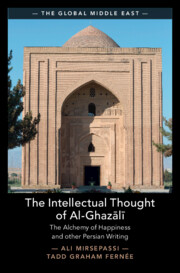
Abu Hamid Muhammad al-Ghazālī (1058–1111) was one of the most influential philosophers of the classical Islamic period, with his intellectual innovations spanning the fields of theology, logic, and law. Despite this, contemporary assessments of Ghazālī often present him as hostile to rationality, and a guardian of dogma and orthodoxy. This study provides an innovative reassessment of Ghazālī's legacy, offering a compelling depiction of a reformer in his own time with increasing relevance to the issues gripping multicultural and globalized societies today. Ali Mirsepassi and Tadd Graham Fernée closely study Ghazālī's major Persian-language text Kīmīyā-e saʿādat (The Alchemy of Happiness) and its scholarly reception, alongside his lesser-read works, arguing that Ghazālī shared a message of reform, and critique of Abbasid institutions. Ghazālī's critical stance is revealed as both pragmatic and cosmopolitan in its recognition of autonomy from religion in many aspects of life, and in the value placed upon scientific contribution.
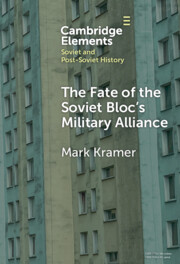
When Mikhail Gorbachev became the leader of the Soviet Union in 1985, the Warsaw Pact was a robust military alliance. It was capable of waging a large-scale war in Europe and was an instrument of Soviet hegemony in Eastern Europe, keeping orthodox Communist regimes in power. The alliance over the years had also become an effective mechanism of political coordination and consultation. In April 1985, the Warsaw Pact leaders met in Warsaw and renewed the Pact for another thirty years. Yet only six years later, the alliance was disbanded, having been rendered obsolete by the political transformation of Eastern Europe in 1989–1990. This monograph recounts what happened to the Warsaw Pact during its final years and explains why the organization ceased to exist in 1991.