To save content items to your account,
please confirm that you agree to abide by our usage policies.
If this is the first time you use this feature, you will be asked to authorise Cambridge Core to connect with your account.
Find out more about saving content to .
To save content items to your Kindle, first ensure no-reply@cambridge.org
is added to your Approved Personal Document E-mail List under your Personal Document Settings
on the Manage Your Content and Devices page of your Amazon account. Then enter the ‘name’ part
of your Kindle email address below.
Find out more about saving to your Kindle.
Note you can select to save to either the @free.kindle.com or @kindle.com variations.
‘@free.kindle.com’ emails are free but can only be saved to your device when it is connected to wi-fi.
‘@kindle.com’ emails can be delivered even when you are not connected to wi-fi, but note that service fees apply.
For decades, transnational knowledge circulation in relation to schooling in Ireland has been a neglected area of study among historians. This paper provides new insights through a transnational lens on primary, secondary, and vocational curriculum developments in the first decade following the advent of national independence in the country in 1922. During this period, key policy-makers largely rejected progressive educational ideas circulating internationally and promoted curricula and pedagogy in primary and secondary schools that reflected the new nation’s deeply conservative Catholic nature and nationalist ethos. While initial signs indicated that developments in vocational education might head in a different direction, ultimately, more progressive educational ideas circulating internationally were excluded from that sector as well. At all levels of the education system, the hegemony of the Catholic Church and other contextual factors resulted in traditional and conservative curricula that underpinned policy and practice until the 1960s.
Resurrecting the lost voices of Chinese scouts, who served society in the early stage of China’s War of Resistance, this article examines the militarization and politicization of Chinese scouting. After 1927, international scouting adapted to the militant and quasi-fascist ideologies promoted by the Chinese Nationalist Party (Guomindang or GMD). This, in turn, prompted a radicalization of the concept of citizenship among the scouts. The article illuminates this shift and reveals that the ultra-nationalistic sentiment cultivated by the GMD resulted in some scouts compelling ordinary people to behave patriotically. The scouts’ voluntary service worked hand in hand with the GMD’s authoritarian influence in Shanghai’s foreign concessions. They played a vanguard role in the early months of the war, working as kidnappers and intimidators for the GMD. The scouts’ violent and coercive tactics contradicted the long-held principles laid down by Robert Baden-Powell. Their actions outside of the civilian roles assigned to them disillusioned expatriate observers.
We ask (1) why the United States adopted the car more quickly than other countries before 1929, and (2) why in the United States the car changed from a luxury to a mass-market good between 1909 and 1919. The answer is in part the success of the Model T in the United States. Mass production of the Model T began in 1913; by 1917, more than 40 percent of U.S. cars were Model Ts. Tariffs and difficulties producing outside Detroit made the U.S. success of the Model T difficult to replicate abroad.
The year 2025 marks the 120th anniversary of Lochner v. New York, a 1905 U.S. Supreme Court decision striking down legislative limits on work hours in the baking industry. U.S. scholars generally agree this decision harmed workers and was a setback to the labor movement in the United States. The essay borrows from some of the historian E.P. Thompson’s writings on the relationship between historical inquiry and normative values in order to reflect on Lochner and the relative consensus among scholars opposing the decision. That reflection in turn serves as a point of entry for thinking about the role of normative values in doing labor history, what values we propound in the present by writing and teaching about the history of working-class people, and how those issues relate to different ways labor historians can understand what is arguably our field’s central category, class. The essay suggests that, with regard to the Lochner decision and in general, labor history is something of a different activity if the field’s orientation is toward the amelioration of time- and place-specific problems in working-class people’s lives, toward class as inherently a category of violence and injustice, or both.
This article focuses on the intellectual efforts made by a South African activist named Alice Kinloch, one of the first people to openly criticize the violence perpetrated against black mineworkers in Kimberley's compound system, at the end of nineteenth century. In the first section, we focus on Alice Kinloch's early life, her involvement in early Pan-Africanism in Britain, and the beginning of her efforts to denounce the compound system. In section two, we shift our analysis to the interaction between missionaries working in the compounds, and the colonialist discourse on “civilizing the natives”. As representatives of the Christian faith, in which Alice Kinloch also was brought up, missionaries play a central role in her critique, which takes aim at their collaboration, as Christians, with a system of racist violence that, in Kinloch's eyes, had nothing to do with the “civilization” it claimed to bring. The conclusions Alice Kinloch drew on observing the compound system were published in Manchester in 1897. In the third section we dive into her pamphlet Are South African Diamonds Worth Their Cost?, in which she condemned the hypocrisy inherent in the compound system and laments its effects on the black mineworkers subjected to a horrible regime.
English Catholic history continues to tread new ground, revisit old theories, and draw together theoretical and geographical frameworks. However, it continues to struggle to be accepted as part of the “mainstream” narrative of English history. In this review essay, I explore three key areas of growth related to the study of sixteenth-century English Catholicism: returning Catholics to the “high politics” of England; a renewed emphasis on gender, particularly the role of religious women; and an international/transnational orientation that reaffirms the close ties between Britain and the Continent. Recently reviewed works include Lillian Lodine-Chaffey, A Weak Woman in a Strong Battle: Women and Public Execution in Early Modern England (2022); Michael Questier, Catholics and Treason: Martyrology, Memory, and Politics in the Post-Reformation (2022); Susan Cogan, Catholic Social Networks in Early Modern England (2021); Javier Burguillo and María José Vega, eds., Épica y conflicto religioso en el siglo XVI: Anglicanismo y luteranismo desde el imaginario hispánico, (2021); Cormac Begadon and James E. Kelly, eds., British and Irish Religious Orders in Europe, 1560–1800: Conventuals, Mendicants and Monastics in Motion (2022); Frederick Smith, Transnational Catholicism in Tudor England: Mobility, Exile, and Counter-Reformation, 1530–1580 (2022); Alexander Samson, Mary and Philip: The Marriage of Tudor England and Habsburg Spain (2020); Deborah Forteza, The English Reformation in the Spanish Imagination: Rewriting Nero, Jezebel, and the Dragon (2022); Liesbeth Corens, Confessional Mobility and English Catholics in Counter-Reformation Europe (2019) as well as work by Michael Questier and Peter Lake.
In 1962, Spain implemented significant banking law changes to boost competition. This study investigates their impact on provincial banking concentration from 1964 to 1975, utilising novel provincial-level private bank balance sheet data and including savings banks. Results show a substantial decline in concentration across most provinces. Panel data models identify the determinants of banking concentration: larger populations and higher gross domestic product per capita correlate with lower concentration, while agrarian-focused provinces exhibit higher concentration. The provincial financial sector’s structure also matters, with a higher number of branches and headquarters per capita associated with reduced banking concentration. These findings refine existing literature and provide new insights into the intricate relationship between banking concentration and regional economies in Spain.
Between 1817 and 1831, four German scientists – Karl von Martius, Georg Langsdorff, Ludwig Riedel, and Friedrich Sello – undertook expeditions in Brazil with the goal of collecting natural specimens, particularly focusing on Brazilian cinchona plants. Renowned for their medicinal properties, especially in the treatment of fever diseases, cinchona specimens were extensively utilized by local Brazilian communities. The widespread use of cinchona raises important questions regarding how German scientists acquired knowledge of the therapeutic properties of plants, previously unknown within German pharmacology. This paper argues that the German understanding of Brazil's cinchona trees was situated within an imperialist endeavor that not only appropriated indigenous knowledge but also involved conducting experiments on these plants and their effects on local populations. This hybridization of knowledge about cinchona was characterized by an asymmetrical dominance of German pharmacological experimentation, which sought to enhance organic life and establish utopian, “healthy” German societies, in both German territories and Brazil. Consequently, German chemical experiments with Brazilian cinchona specimens intersected with biopolitical practices, aimed at manipulating both plant and human life through therapeutic interventions.
Esta investigación plantea que el espacio urbano contribuye a la caracterización de movimientos sociales urbanos. Para ello, hace un análisis espacial cartográfico del Paro Nacional de 2021 en Bogotá y Cali (Colombia), el cual se realizó a partir de un mapeo de los lugares y tipos de protesta mediante revisión de prensa y redes sociales. Se encontraron patrones que permiten evidenciar estrategias de ocupación espacial de la protesta, así como una dispersión que caracteriza la agencia ciudadana. También se evidenció cómo la pobreza determina la selección de lugares por proximidad y visibilidad, mas no intersección, y que los sistemas de transporte guían la dispersión en función de su significado como materialidad del Estado. Finalmente, se identificó cómo tensiones sobre los bordes territoriales consolidan desplazamiento de las acciones del interior de los barrios o a los límites, lo que apoya procesos de territorialización que identifican a los movimientos sociales urbanos emergentes.
This article examines the translation of foreign films in cosmopolitan Shanghai from 1896 to 1949. Silent films were introduced to China at the end of the nineteenth century, and live narration was provided to allow Chinese audiences to better understand Western shadow plays. With an increasing number of foreign films exhibited in Shanghai theatres, distributors and exhibitors made printed film plot sheets and experimented with the use of subtitles. With the arrival of sound cinema, experiments with techniques such as simultaneous interpretation, voiceover, and dubbing were also conducted. At this time, Shanghai was a semi-colonial city, where the languages spoken included the Shanghai dialect, Cantonese, standard Mandarin, and English, among others, and where the written Chinese language was transitioning from classical Chinese to vernacular Chinese. Film translation is perceived as a space where the mediation between the foreign and the local is materialized. Using materials such as official regulations, newspapers, memoirs, and archives, this article examines various modes of foreign film translation in Republican Shanghai to demonstrate the ways in which the vibrant translation activities of early cinema mediated between languages and cultures, connected local audiences with the foreign, and constructed a cosmopolitan cultural scene.
This article describes the results of the Progetto di ricerca di interesse nazionale (Research Project of National Interest [PRIN]) ‘Il brigantaggio rivisitato’ (‘“Brigantaggio” Revisited’), which investigated the practices and imagery of brigandage (and the fight against it) in modern and contemporary Italy from a Euro-Atlantic perspective. A large community of scholars, both within Italy and further afield, tackled numerous historiographical issues: forms of rural criminality in the modern age; the profile of the brigands (both male and female); their level of politicisation and relationship with the Legitimists and the Catholic Church; the reaction of the security forces and the unification movement; the evolving definition of the word ‘brigand’; the politics and military strategy of the post-unification anti-brigandry campaign; and the interaction between the local dimension and global view of banditry and irregular warfare. In-depth work was also conducted on the image of the bandits spread through visual and material culture by the media and on their performative consequences in different eras, through to their present-day reuse.
This contribution summarises the scientific discussions that developed during a one-year cycle of international and interdisciplinary seminars focusing on the relationship between migration and citizenship in Italy. We considered human mobilities in their relation to the politico-administrative institutions of the state and observed the latter's attempt to define and govern them. The relative marginality of the Italian case in the literature about state building, nation building and citizenship is an opportunity to examine these processes with fresh eyes. The first section is a critical analysis of the policies regulating access to Italian citizenship. The second examines the entanglement between external and internal migrations and how they are governed, considering various administrative borders and statuses such as Italian municipal residency. The third section addresses the role of different field actors (from street-level bureaucrats to legal practitioners and activists) in shaping or negotiating the borders of citizenship while implementing the law.
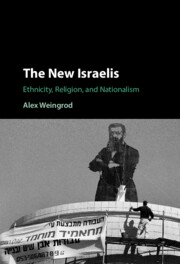
Following successive immigration waves, the military occupation of the West Bank and the emergence of a high-tech based economy, Israeli society has become increasingly complex and divided. In this timely study, Alex Weingrod utilizes ground-breaking ethnographic research to unpack Israel's diverse communities and cultures, arguing that there are several different versions of “being Israeli” that influence and contest with one another. Covering a fascinating range of topics from shifting ethnic group identities to the reinvented Hebrew language and Israeli popular music, Weingrod discusses minority groups including Ethiopian Israelis, the LGBTQ community, migrant workers and the growing, changing Ultra-Orthodox haredi communities alongside Israeli Palestinians who are marginalized and yet resilient. Culminating in an analysis of the unprecedented 2023 political-cultural schism that divided the society between supporters and protesting opponents of government legislation, Weingrod brings the discussion of Israeli divisions, discontents, and paradoxes up to date.
Karakorum, in present-day Mongolia, was the first capital of Mongol empire and has often been portrayed as the cosmopolitan city par excellence of its era. This portrayal is primarily based on the description of the city as a multicultural community in a travelogue written by the Franciscan monk William of Rubruck, who spent some time there in 1254. This understanding of cosmopolitanism stems from a colloquial sense of the term and does not take into account its history and layered meanings. Based on a discussion of the term, this article presents an approach to cosmopolitanism suitable for archaeology, namely by examining the practices of ‘lived cosmopolitanism’. Taking the archaeological evidence from Karakorum as a case study, the author explores the cultural fields of city layout and architecture, cuisine, religion, and funerary rites to answer the question of whether and how the people of Karakorum were cosmopolitan. The discussion shows that it is of the utmost importance to distinguish between social groups and their status. While the Great Khans can be viewed as cosmopolitans of their time, the commoner population of Karakorum appears rather to have been segregated into different groups. The material evidence so far points to low degrees of engagement among different groups within the city. Yet, the discussion of cosmopolitanism reveals deeper insights into the social realities of the city’s inhabitants and unresolved questions in the study of this important city.
Scholarship on brewing in early modern London is torn between two irreconcilable stories, one positing stunning growth before 1560 and the other insignificant change until after 1720. Careful attention to company and court records as well as state papers, however, reveals that by 1600 London brewing had boomed, likely making it Europe’s largest brewing centre, led by individual houses operating on scales close to the largest of the mid-eighteenth century. Such breweries were accurately perceived to be large scale and highly profitable, clustered along the Thames in urban industrial zones.