To save content items to your account,
please confirm that you agree to abide by our usage policies.
If this is the first time you use this feature, you will be asked to authorise Cambridge Core to connect with your account.
Find out more about saving content to .
To save content items to your Kindle, first ensure no-reply@cambridge.org
is added to your Approved Personal Document E-mail List under your Personal Document Settings
on the Manage Your Content and Devices page of your Amazon account. Then enter the ‘name’ part
of your Kindle email address below.
Find out more about saving to your Kindle.
Note you can select to save to either the @free.kindle.com or @kindle.com variations.
‘@free.kindle.com’ emails are free but can only be saved to your device when it is connected to wi-fi.
‘@kindle.com’ emails can be delivered even when you are not connected to wi-fi, but note that service fees apply.
In considering Huo Tao’s Family Admonitions, a text included in a lineage genealogy of the early sixteenth century, this article investigates its five constituent logics (Confucian propriety, bureaucratic division of responsibility, subsistence agriculture, wealth creation, and punitive patriarchy). It explains what sorts of expert abilities Huo considered necessary and what relations of authority (defined as power over others that they accept) those abilities entailed. Huo’s plan relies not only on the expertise of lineage members, but also on the abilities of hired workers and bondservants/slaves who held their positions for a long time. Their positions gave them authority in the workspace over the lineage members who outranked them legally, calling into question the utility of simple categories of “social status.” Because the text was later copied repeatedly into other lineages’ compilations, Huo’s plan must have made sense to Ming and Qing lineage leaders, so it may illuminate how they constructed relations of authority and social status.
In 1775, during the process of collecting books for the Siku quanshu project, an empire-wide literary inquisition was imposed on the deceased monk Jinshi Dangui (1614–80). As the curious case of censorship developed, the trials not only diminished a major Cantonese monastic community and an old bannermen family but also inspired several imperially commissioned historiographical projects. Exploring the historical significance of the Dangui case at the nexus of early Qing Buddhist networks, Qing imperial control, and the politics of historical memory, this study unravels a multi-layered story of the posthumous censorship of Monk Dangui. It cross-examines a broad range of sources including imperial archives, gazetteers, biji, personal records, and literary anthologies to reconstruct a remarkable moment in High Qing censorship and to present a history of a displaced Buddhist community during the Ming–Qing transition; both became obscured after the Qianlong reconstruction of the imperial order.
This article primarily concentrates on the theoretical and intellectual dimensions of nature cure, particularly efforts to revive it during the second half of the nineteenth century. Little is known about specific medical professionals or theories concerning the Victorian philosophy of nature cure, although this philosophy is mentioned in general terms in studies on alternative medicine and hygiene. This article illuminates a Victorian nature cure philosophy through the works of Edward W. Lane (1823–1889). As a physician and hydropathist, Lane aspired to create a new form of medical system, ‘hygienic medicine’, seeking answers to the questions ‘What is disease?’ and ‘What is medicine?’ throughout his career. Lane was among many physicians interested in nature’s healing power during his time. However, few undertook as thorough a theorisation of nature cure philosophy as Lane did in the latter half of the nineteenth century, a period that presented unprecedented challenges in reconciling medicine with nature. This study explores the subtle nuances of the concepts that Lane actively used in his theoretical explanations, including ‘nature’, ‘laws of health’ and ‘vital force’, interpreting his efforts as a reconciliation between Romantic naturalism and laboratory medicine. The aim of this study is not to re-evaluate the significance of Lane’s medical theory itself. It rather uses Lane as a lens to reveal the intricacies of Victorian nature cure philosophy.
The last 15 years have witnessed a wave of nostalgia for the recent past in Greece. This nostalgia is boosted by social media, especially Facebook, and revolves around the rising counsumer standards that the country experiences in the first three decades after its entry in the European Economic Community (EEC) in 1981. Drawing on media material and surveys, this article discusses this phenomenon, focusing on whether this nostalgia represents a cultural response to Europe and Europanization. Through a historically empathetic analysis, the article argues that this critique focuses on participation in the Economic and Monetary Union (EMU), a choice that Greek society largely sees as harmful. In this vein, the drachma, Greece’s currency until 2002, is viewed nostalgically and identified with prosperity.
In the late twelfth century, four Chinese stonemasons migrated to Japan from the Chinese coastal city of Ningbo. They participated in the most important contemporary building project in Japan—the reconstruction of the prestigious Tōdaiji monastery in Nara following the Genpei War. Drawing on Chinese and Japanese textual records, archaeological evidence from the quarry sites, and the existing stone works, this study investigates the network that facilitated the movement of the artisans and their materials between China and Japan and sheds light on the relationship between artisans and religious monuments from a transnational perspective. This study explores how the migrant artisans’ expertise and connections enabled them to establish roots in a new society. Additionally, it examines the timing of the artisans’ migration within the broader context of Japan’s societal transformations, aiming to highlight the connectivity fostered by maritime networks in premodern East Asia.
The remains of Dutch East India Company forts are scattered throughout littoral Asia and Africa. But how important were the specific characteristics of European bastion-trace fortifications to Early-Modern European expansion? Was European fortification design as important for Early-Modern expansion as has been argued? This book takes on these questions by studying the system of fortifications built and maintained by the Dutch East India Company (VOC) in present-day India and Sri Lanka. It uncovers the stories of the forts and their designers, arguing that many of these engineers were in fact amateurs and their creations contained serious flaws. Subsequent engineers were hampered by their disagreement over fortification design: there proved not to be a single 'European school' of fortification design. The study questions the importance of fortification design for European expansion, shows the relationship between siege and naval warfare, and highlights changing perceptions by the VOC of the capabilities of new polities in India in the late eighteenth century.
Situated at the crossroads of the Indian and Pacific Oceans, the Spanish Philippines offer historians an intriguing middle ground of connected histories that raises fundamental new questions about conventional ethnic, regional and religious identities. This volume adds a new global perspective to the history of the Philippines by juxtaposing Iberian, Chinese and Islamic perspectives. By navigating various underexplored archival resources, senior and junior scholars from Asia, Europe and the Americas explore the diverse cultural, religious, and economic flows that shaped the early modern Philippine milieu. By zooming in from the global to the local, this book offers eleven fascinating Philippine case studies of early modern globalization.
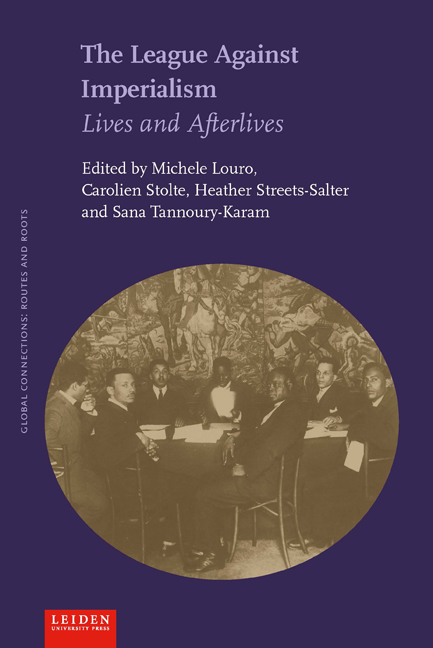
The League against Imperialism: Lives and Afterlives explores the dramatic and engaging story of a global institution that brought together activists across geographical and political borders for the goal of eradicating colonial rule worldwide. The League against Imperialism attracted anticolonial activists like India's Jawaharlal Nehru, Indonesia's Sukarno, and Kenya's Jomo Kenyatta, as well as prominent figures like Albert Einstein, Ernst Toller, Romain Rolland, Upton Sinclair, Mohandas Gandhi, and Madame Sun Yat-Sen. This volume is the first to capture the global history of the LAI by bringing together contributions by scholars researching the movement from various regions, languages, and archives. Told primarily from the perspectives of those on the peripheries of empires, the volume argues that interwar anti-imperialism was central to the story of transnational activism during the interwar years and remained an inspiration for many who took on leadership roles during decolonization across the global south.
During the American Civil War, President Abraham Lincoln's administration engaged in protracted negotiations with representatives of the Netherlands to aid in the voluntarily colonization of free African Americans to Suriname. Scores of diplomatic letters in Dutch, English, and French, dating to the period 1862 to 1866 attest to the very real possibility that such migration stream could have become a reality. They also indicate reasons why this scheme failed: it was bogged down by differences of opinion, mail delays, and ultimately a reluctance of any African Americans to migrate. Previously unpublished and unknown, these letters have been transcribed and translated here for the first time. The sources provide a rare look inside the minds of liberal government officials during the age of emancipation in the Atlantic World. They demonstrate the officials' humanitarian concerns, their racial prejudices, respect for legal order and process, and faith in governments to solve international problems.
This book explores Critical Race Theory, tracing its origins, problems and potential, and critiquing liberal and conservative perspectives. Centring marginalized voices, it emphasizes their role as change agents rejected by both sides. A unique resource for understanding and dismantling systemic racism.
Across the twentieth century, hundreds of women worked as nurses, cooks, cleaners, and teachers on Mexico’s railroads. They have been overlooked in histories of the railroads and Mexican industrialization more broadly, their limited number perhaps suggesting that their work is not of analytical importance in understanding processes of economic development and class formation. On the contrary, these women’s work constituted many of the most coveted labor rights of the postrevolutionary railroad workforce, itself a symbolic vanguard of Mexico’s working class and one of the most important beneficiaries of the expansion of social and economic rights ushered in by the Mexican Revolution. The gendered division of labor characteristic of the railroads was neither accidental nor insignificant. Railroads used the feminization of the work of social reproduction to write off structural failures and predictable shortcomings in welfare provision as failures of femininity. Women became scapegoats for the consistent violation of workers’ rights through underfunding and understaffing. In tracing this process, the article models a historiographical and methodological intervention with broader relevance. It suggests that the social and labor rights that expanded around the world in the late-nineteenth and early-twentieth centuries must be studied not only from the vantage of legal or political history, but as themselves questions of social and labor history. Making these rights real depended on socially reproductive work that has often been marginal in accounts of industrialization and economic development. It is impossible to understand the political economy of social and economic rights without understanding women’s work.
The third and final volume of The Cambridge History of the Vietnam War examines key domestic, regional, and international developments in the period before and after the war's end, including its legal, environmental, and memorial legacies. The latter stages of the Vietnam War witnessed its apex as a Cold War crucible. The Sino-Soviet dispute, Sino-American rapprochement, Soviet-American détente, and global counter-culturalism served in various ways to elevate the already high profile and importance of the conflict, as did its expansion into Cambodia and Laos. After the “fall” of Saigon to communist-led forces and Vietnam's formal reunification in 1975-76, Hanoi's persecution of former enemies, discrimination against ethnic Chinese, and economic mismanagement triggered a massive migratory crisis that redefined international refugee policies. In time, the migration changed the demographic landscape of cities across North America and Europe and continued to impact our world long after the conflict ended.
In great depth, Volume II examines the escalation of the Vietnam War and its development into a violent stalemate, beginning with the overthrow of the Ngô Đình Diệm in 1963 to the aftermath of the 1968 Tết Offensive. This five-year period was, for the most part, the fulcrum of a three-decades-long struggle to determine the future of Vietnam and was marked by rival spirals of escalation generated by the Democratic Republic of Vietnam and the United States. The volume explores the war's military aspects on all sides, the politics of war in the two Vietnams and the United States, and the war's international and transnational dimensions in politics, protest, diplomacy, and economics, while also paying close attention to the agency of historical actors on both sides of the conflict in South Vietnam.
When, how, and why did the Vietnam War begin? Although its end is dated April 30, 1975, there is no agreement as to when it began. The Vietnam War was an enormously complex conflict and while any comprehensive reckoning must include the role of the US, it was not an 'American War'. This volume presents the scholarship that has flourished since the 1990s to situate the war and its origins within longer chronologies and larger interpretative perspectives. The Vietnam War was a war for national liberation and an episode of major importance in the global Cold War. Yet it was also a civil war, and civil warfare was a defining feature from the outset. Understanding the Vietnamese and Indochinese origins of the Vietnam War is a critical first step toward reckoning with the history of this violent, costly, and complex war.
David Hume's Essays, which were written and published at various junctures between 1741 and his death in 1776, offer his most accessible and often most profound statements on a range of subjects including politics, philosophy, aesthetics, and political economy. In Hume's lifetime, the readable and wide-ranging Essays acquired considerable fame throughout Europe and North America, influencing the writings of such diverse figures as James Madison and William Paley, yet they have not been given the same scholarly attention as his more famous philosophical works. This Critical Guide provides a series of in-depth studies of the Essays, as well as an account of the state of scholarship on the work. Thirteen chapters examine the Essays from historical, political and philosophical perspectives, with the aim of restoring the work to its rightful place among Hume's works and in intellectual history more broadly.
First ladies have always received a great deal of attention and are among the most recognizable figures of any presidential administration. They're often treated as celebrities, making them some of the most prominent women of their eras. Yet many of their stories and contributions have been overlooked. Through a collection of thematic essays, The Cambridge Companion to US First Ladies provides a thorough and compelling examination of the development of the first lady institution, and the political, social, and cultural influence of the women who've served in this role. Topics covered include the evolution of various first lady roles, such as hostess, campaigner, surrogate, diplomat, social advocate, and trendsetter; how first ladies have been political assets and liabilities; the impact of first ladies' speeches and media usage; first ladies during wartime and presidential deaths; the contributions of first lady stand-ins; how presidential spouses have been represented in films; and how these women are memorialized and remembered-or forgotten.
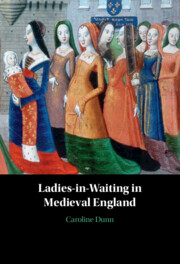
Ladies-in-Waiting in Medieval England examines female attendants who served queens and aristocratic women during the late medieval period. Using a unique set of primary source based statistics, Caroline Dunn reveals that the lady-in-waiting was far more than a pretty girl sewing in the queen's chamber while seeking to catch the eye of an eligible bachelor. Ladies-in-waiting witnessed major historical events of the era and were sophisticated players who earned significant rewards. They had both family and personal interests to advance – through employment they linked kin and court, and through marriage they built bridges between families. Whether royal or aristocratic, ladies-in-waiting worked within gendered spaces, building female-dominated social networks, while also operating within a masculine milieu that offered courtiers of both sexes access to power. Working from a range of sources wider than the subjective anecdote, Dunn presents the first scholarly treatment of medieval English ladies-in-waiting.