To save content items to your account,
please confirm that you agree to abide by our usage policies.
If this is the first time you use this feature, you will be asked to authorise Cambridge Core to connect with your account.
Find out more about saving content to .
To save content items to your Kindle, first ensure no-reply@cambridge.org
is added to your Approved Personal Document E-mail List under your Personal Document Settings
on the Manage Your Content and Devices page of your Amazon account. Then enter the ‘name’ part
of your Kindle email address below.
Find out more about saving to your Kindle.
Note you can select to save to either the @free.kindle.com or @kindle.com variations.
‘@free.kindle.com’ emails are free but can only be saved to your device when it is connected to wi-fi.
‘@kindle.com’ emails can be delivered even when you are not connected to wi-fi, but note that service fees apply.
To estimate the within-households association between change in income over time and food purchases in a national panel of households. The need to shift towards healthy and sustainable diets is widely recognised, thus the importance of identifying the factors that influence food purchase decisions.
Design:
Longitudinal observational study; for each of the thirty-three food items queried, we ran a conditional logistic fixed-effect regression model to evaluate the association between change in income per-capita and food purchases (yes/no) during the past week, adjusted by covariates.
Setting:
Mexican Family Life Survey.
Participants:
6008 households that participated in the survey for at least two of the three available waves of study (2002, 2005 and 2009).
Results:
Within-households, the OR (95 % CI) of purchasing the food in the past week for an increase in 1 sd of income was 1·09 (1·02, 1·16) for rarer fruits (other than bananas, apples and oranges); 1·11 (1·04, 1·18) for beef; 1·06 (1·00, 1·13) for canned tuna/sardines; 1·09 (1·02, 1·18) for fish/shellfish; 1·08 (1·02, 1·16) for discretionary packaged products and 1·15 (1·08, 1·23) for soft drinks. There were some differences by urban/rural area or socio-economic status (SES); mainly, those with lower SES had increased odds of purchasing the food item in more cases (ten out of thirty-three food items).
Conclusions:
Households’ income growth can have mixed effects on the healthiness and sustainability of food purchases. Public policies to improve the food environment and nutrition education are necessary to enhance the positive and counteract the negative effect of income.
To determine the prevalence and characteristics of plant-based patterns in the Spanish population and assess their potential impact on individuals with similar socio-demographic backgrounds.
Design:
We estimated vegetarian and vegan individuals’ national and regional prevalence and analysed their socio-demographic characteristics and weekly dietary intake patterns. Individuals with a plant-based dietary pattern were matched to a control group (1:4) with similar socio-demographic characteristics. Associations with the prevalence risk of common chronic diseases, self-reported health status, lifestyle and healthcare use were analysed with unadjusted and adjusted logistic regression models.
Setting:
A population-based survey of individuals residing in Spain.
Participants:
Data from 22 072 participants were examined.
Results:
The prevalence of plant-based diets was 5·62‰ (95 % CI: 4·33, 7·28), and adherents were female (68·6 %), single (62·3 %) and university-educated 41·8 %) (P < 0·001). They reported higher rates of ‘never’ consuming snacks (50 % v. 35 %), fast food (58 % v. 36 %) and sweets (33 % v. 14 %). Lifestyle factors did not differ between the plant-based and omnivorous groups; however, adherence to plant-based diets was associated with a prevalence risk of depressive symptoms (OR 2·58, 95 % CI: 1·00, 6·65), stroke (OR 7·08, 95 % CI: 1·27, 39·46) and increased consultations for mental health and complementary medicine (OR 3·21, 95 % CI: 1·38, 7·43).
Conclusions:
Plant-based diets are uncommon and are associated with specific socio-demographic profiles, particularly sex. When comparing individuals with similar socio-demographic characteristics, individuals with plant-based diets and omnivores had similar lifestyles. Addressing patient concerns regarding diet and personal well-being might prioritise healthy behaviours over specific dietary patterns.
This study aims to explore the perspectives of urban and regional living Aboriginal and Torres Strait Islander adults and children regarding Bush Foods, nutrition and health to advocate for future culturally informed programmes and policy.
Design:
The qualitative study conducted nine Yarning sessions, which were recorded and transcribed verbatim. An inductive, reflexive thematic analysis using a codebook was employed to analyse the data.
Setting:
All Yarns were conducted face-to-face in various locations across Southeast Queensland.
Participants:
Yarning sessions were conducted with Aboriginal and Torres Strait Islander participants (n 20), including ten adults and ten children. Participants resided in areas classified as inner regional, outer regional and major cities.
Results:
Five interconnected themes were generated concerning participants’ perspectives on Bush Foods, nutrition and health. These themes included the effects of colonisation and bureaucratic impositions, socio-environmental factors influencing food provision, the significance of Bush Foods in cultural connection and nutritional health, the importance of reciprocity in communities and the nuanced role of agency influenced by education.
Conclusions:
The findings were synthesised into two overarching concepts: the role of family, kin and culture at the individual and community level, aligning with cultural determinants of Indigenous health, and the broader socio-political influences of colonialism, capitalism and power imbalances, reflecting social determinants of Indigenous health. This research highlights a need for culturally informed health policies guided by consideration of cultural, social and commercial determinants that support an Indigenised food system and Bush Food reintegration for urban-living Aboriginal and Torres Strait Islander adults and children.
This systematic review aimed to explore the impact of food voucher schemes during pregnancy and early life on fruit and vegetable (F&V) consumption and explore experiences of schemes.
Design:
Six electronic databases and grey literature sources were searched. Interventional, observational, qualitative and mixed methods studies published from January 2000 to April 2024 in English were included.
Setting:
Food voucher interventions targeting F&V intake.
Participants:
Low-income pregnant women and families with young children (aged under 5 years).
Results:
7344 peer reviewed records and 103 grey literature documents were screened. Sixteen peer reviewed studies (across eighteen reports) and eight grey literature documents met the inclusion criteria. All studies took place in the UK or the USA. There was a lack of consistency across primary quantitative outcomes. Overall, F&V voucher schemes did appear to increase fruit and/or vegetable consumption, but confidence in this finding was low. Qualitative data were more consistent. F&V vouchers were used in three main ways; as a financial benefit to subsidise food already being purchased, to increase the quantity or variety of F&V purchased, or as a safety net, to be used to ensure that the family had something to eat.
Conclusions:
F&V vouchers may increase F&V intake and are positively received by recipients. This review also highlights some of the difficulties that researchers face in evaluating the impact of public health measures to improve population health. It is clear that more high-quality research is required to better understand the impacts of F&V vouchers on individual outcomes.
To present a tool and examine the minimum cost of a healthy and diverse diet that meets the daily requirements of essential nutrients for the people of India, using interactive web-based tools.
Design:
Linear-programming algorithms were adapted into two web-based tools: a Food Optimisation for Population (FOP) tool and a Diet Optimisation Tool (DOT). The FOP optimises daily food choices at a population level, considering local food consumption patterns. The DOT focuses on household or individual food selection.
Setting:
India, with consideration of locally produced and consumed foods.
Participants:
The two optimisation tools are demonstrated for the state of Bihar: the FOP tool at the population level, exemplified by diet optimisation for children aged 1–3 years, and DOT at the household level, demonstrated through diet optimisation for a household of four members.
Results:
Both tools provide cost-effective, optimised food plans, respecting cultural preferences. Based on food prices from June 2022, the FOP tool generated optimised diets for 1–3-year-old Bihari children priced at INR 26·8 (USD 0·32 converted as of January 2024 rate)/child/day. By applying a milk subsidy, this cost could drop to INR 23·7 (USD 0·28). The DOT was able to formulate a vegetarian diet for a family of four at INR 204 (USD 2·45)/day.
Conclusions:
These web-based tools offer diet plans optimised to meet macro- and micronutrient requirements at population and/or individual/household levels, at minimum cost. This tool can be used by policymakers to design food-focused strategies that can meet nutritional needs at local price points, while considering food preferences.
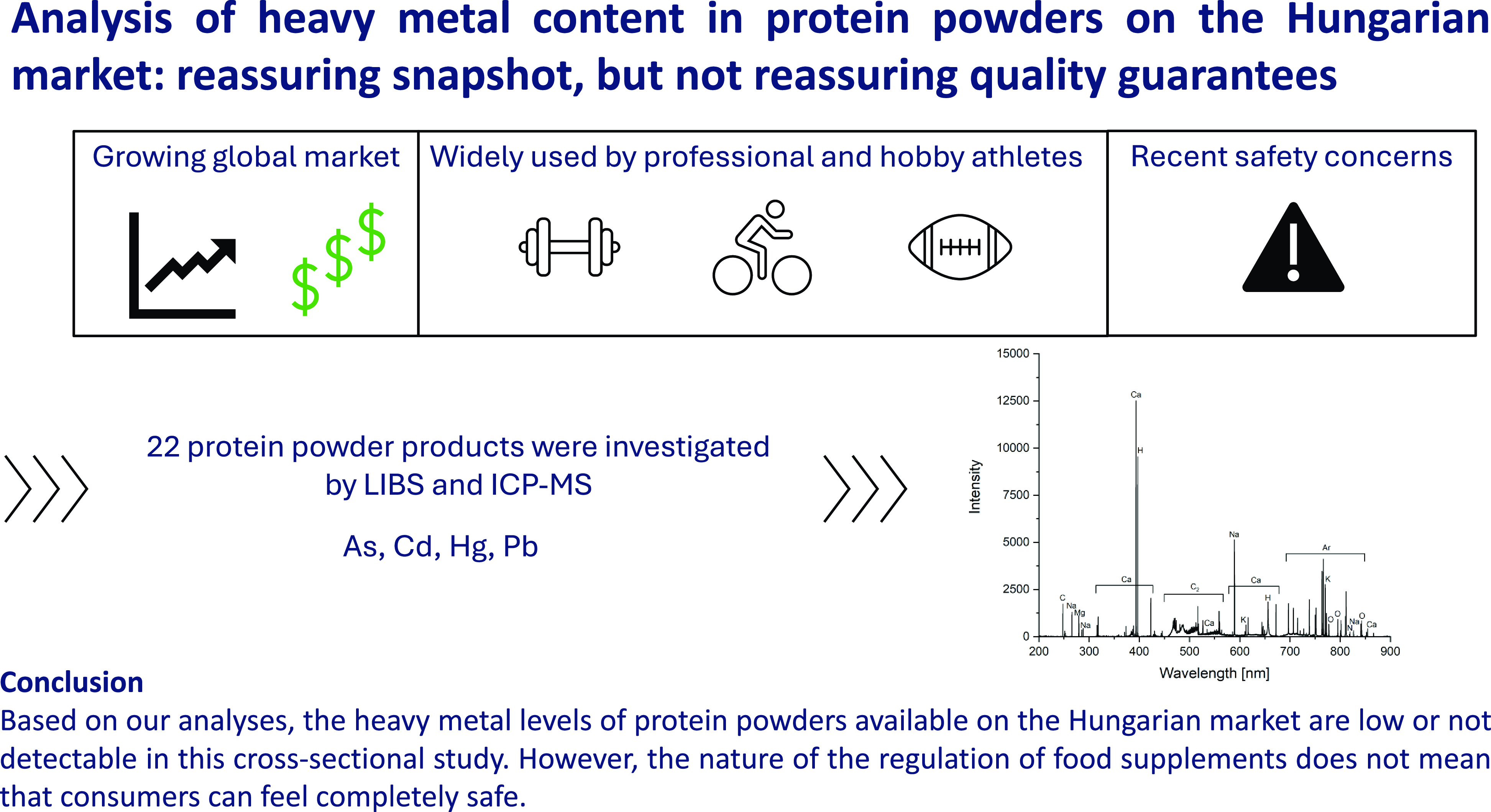
Amateur and professional athletes often consume protein supplements to accelerate muscle gain; however, it has been suggested that these products not only are associated with risks when consumed excessively. Several recent reports have indicated that certain products are contaminated with heavy metals. Therefore, in this study, we aimed to investigate protein powders in Hungary for heavy metal contamination. A total of 22 commercially available protein powders (including whey, vegan, and beef based) were purchased on the internet for testing. We analysed the samples using laser-induced breakdown spectroscopy (LIBS) and inductively coupled plasma mass spectrometry (ICP-MS) to assess heavy metal contamination. The products were analysed for the presence of 16 elements (Be, Al, Cr, Mn, Co, Ni, Cu, As, Se, Rb, Cd, Sb, Cs, Ba, Hg, and Pb). The LIBS spectral analysis revealed the characteristics of the protein elements (C, C2, H, N, and O) and alkaline metals (Ca, Na, K, and Mg), which were consistent with the previous results. Neither LIBS nor ICP-MS measurements detected significant heavy metal content in the investigated samples above the limit specified in the regulations. Heavy metal contamination of protein supplements can be a serious health threat. Based on the varied results of the previous studies, it is prudent to include testing for heavy metals as part of the routine and mandatory quality control of these products.
Overconsumption of unhealthy, discretionary, foods and beverages are associated with an increased risk of weight gain and non-communicable diseases, including diabetes, heart disease, and cancer. This cross-sectional study explored preferences for setting goals to reduce discretionary food and beverage consumption. The online survey included items about discretionary food and beverage intake, goal setting preferences to reduce intake, habit strength, personality traits, and demographic characteristics. A total of 2664 Australian adults completed the survey. The sample was mostly female (65.9%), half (52.8%) were aged between 30–49 years, and the median intake of discretionary food and beverages was 4.9 (IQR: 3.6 to 7.2) serves per day. Multinomial logistic regression and ordinal logistic regression models were used to explore demographic and psychological predictors of the helpfulness of long-term and short-term goals, elimination and gradual goals, specific food goals, specific eating occasion and food goals, self-set goals, collaboratively set goals, and assigned goals. The results showed participants with higher habit strength had greater odds of finding short-term (OR 1.40, 95% CI 1.06–1.86), gradual (OR 1.14, 95% CI 1.01–1.29), specific (OR 1.35, 95% CI 0.84–1.76), assigned (OR 1.38, 95% CI 1.14–1.66) and collaborative goals (OR 1.24, 95% CI 1.01–1.53) helpful. The results also indicated that age and gender were important predictors of goal setting preferences, particularly for long-term goals, elimination goals, broad goals, and collaborative goals. Interventions to reduce discretionary food and beverage intake are needed and consideration of goal setting preferences could be a novel way to developing more tailored and effective dietary interventions.
Nutrition education is crucial for improving nutritional knowledge. This study aims to evaluate the impact of healthy nutrition education on hedonic hunger, adherence to the Mediterranean diet and self-efficacy for healthy eating among early adolescence. This one-group, pre-test-post-test, quasi-experimental study included 202 middle-school students. Data were collected using a researcher-designed survey that included demographic variables, the Children’s Power of Food Scale, the Self-Efficacy for Healthy Eating Scale, the Mediterranean Diet Score and the Brief Nutritional Knowledge Assessment Form. Anthropometric measurements (weight, height, waist circumference, hip circumference and neck circumference) were also taken. After the pre-test, each student received 2 h of healthy nutrition education. A follow-up survey was administered 4 weeks later. The study revealed that most early adolescents exhibited unhealthy dietary habits, such as skipping main meals (15·3 % all the time and 60·2 % occasionally), snacking on sweet treats (33·3 %) and having irregular eating patterns (47·4 %). Additionally, the early adolescents had higher weights, BMI, neck circumferences and heights compared with reference values (P < 0·01). Significant changes were observed post-intervention: lower hedonic hunger scores (beginning: 2·90 (sd 0·68), follow-up: 2·70 (sd 0·76), P < 0·01), decreased self-efficacy for healthy eating (beginning: 5·41 (sd 3·50), follow-up: 4·33 (sd 3·61), P < 0·01) and increased knowledge about healthy nutrition (beginning: 67·23 (sd 14·39), follow-up: 80·00 (sd 17·22), P < 0·01). This study highlighted that healthy nutrition education enhances nutritional knowledge and decreases hedonic dietary tendencies among early adolescents. Continued nutrition education may further improve children’s preferences for healthy foods.
Using a behavioural intervention to target nutrition during pregnancy may be key in meeting recommendations for healthy eating. The aim was to assess the use of a short-term dietary intake measurement tool (3-day food intake record) to infer long-term habitual dietary intake during pregnancy (using a short-form FFQ). A convenience sample (n 90) between 12- and 18-weeks’ gestation was recruited from a larger randomised controlled trial for cross-sectional analysis. Participants completed a forty-four-item FFQ and 3-day food intake record. Using the participant food intake record, the investigator blindly completed a second frequency questionnaire. The frequency questionnaires were scored using dietary quality scores (DQS) and compared. Aggregate data were evaluated using a Wilcoxon signed rank test, and individual-level data were evaluated using a Bland–Altman plot. No significant difference was observed in the scores (Z = –1·88, P = 0·06), with small effect size (r= 0·19). The Bland–Altman plot showed that comparing the DQS derived from the two different dietary assessments underestimated scores by a mean difference of 0·4 points (95 % limits of agreement: −3·50 to 4·26). The data points were evenly spread suggesting no systematic variation for over- or underestimation of scores. Minimal difference was observed between the functionality of the two assessment instruments. However, the food intake record can be completed by pregnant individuals to estimate short-term nutrient intake and then scored by the investigator to estimate long-term dietary quality. Combining these two instruments may best capture the most accurate representation of dietary habits over time.
A Rank Forum was convened to discuss the evidence around food insecurity (FIS), its impact on health, and interventions which could make a difference both at individual and societal level, with a focus on the UK. This paper summarises the proceedings and recommendations. Speakers highlighted the growing issue of FIS due to current economic and social pressures. The health implications of FIS vary geographically since food insecure women in higher income regions tend to be living with overweight or obesity, in contrast to those living in low-to-middle-income countries. This paradox could be due to stress and/or metabolic or behavioural responses to an unpredictable food supply. The gut microbiota may play a role given the negative effects of low fibre diets on bacterial diversity. Solutions to FIS involve individual behavioural change, targeted services and societal/policy change. Obesity-related services are currently difficult to access. Whilst poverty is the root cause of FIS, it cannot be solved solely by making healthy food cheaper due to ingrained beliefs, attitudes and behaviours in target groups. Person-centred models, such as Capability-Opportunity-Motivation Behavioural Change Techniques and Elicit-Provide-Elicit communication techniques, are recommended. Societal change or improved resilience through psychological support may be more equitable ways to address FIS. They can combine with fiscal or food environment policies to shift purchasing towards healthier foods. Policy implementation can be slow to enact due to the need for strong evidence, consultation and political will. Eradicating FIS must involve co-creation of interventions and policies to ensure a consensus on solutions.
This review highlights the importance of dietary fibres (DF) intake and its interconnection with the gut microbiome and psychological well-being, while also exploring the effects of existing DF interventions on these aspects in adults. The gut microbiota is a complex and diverse ecosystem in which microbial species interact, influencing the human host. DF are heterogeneous, requiring different microbial species to degrade the complex DF structures. Emerging evidence suggests that microbial fermentation of DF produces short-chain fatty acids (SCFA), which may play a role in regulating psychological well-being by affecting neurotransmitter levels, including serotonin. The effectiveness of DF interventions depends on factors such as baseline gut microbiota composition, the dosage and the source of DF consumed. Although the gut microbiota of adults is relatively stable, studies have shown that the abundance of the species in the gut microbiota can change within 24 h of an intervention and may return to baseline following the termination of DF intervention. This review underscores the need for larger and well-powered dietary clinical trials incorporating longitudinal biological sample collections, advanced sequencing and omic techniques (including novel dietary biomarkers and microbial metabolites), validated subjective questionnaires and dietary records. Furthermore, mechanistic studies driven by clinical observations are crucial to understanding gut microbiota function and its underlying biological pathways, informing targeted dietary interventions.
Metabolic syndrome (MetS) is associated with an increased risk of CVD, type 2 diabetes and death from all causes. Dietary factors correlate with MetS, making diet a potential target for intervention. We used data from the 2012–2016 Korea National Health and Nutrition Examination Survey (KNHANES, n 12 122) to identify a dietary pattern (DP) using thirty-nine predefined food groups as predictors. MetS components were used as the response variable with the food groups in reduced rank regression followed by stepwise linear regression analyses. We then verified the Korean status of the DP externally in the Cardiovascular Disease Association Study (CAVAS) (n 8277) and the Health EXAminees (HEXA) study (n 48 610). The DP score, which included twenty food groups, showed significant positive associations with all MetS components and a higher prevalence ratio in KNHANES participants (P < 0·0001). Although the score was NS in CAVAS (P = 0·0913), it showed a strong positive association with MetS prevalence in HEXA (P < 0·0001). We identified and tested a DP associated with MetS in Korean populations. This DP may be a useful tool for assessing MetS risk. Although the score was linked to higher MetS risk, particularly in the predominantly urban population of the HEXA study, further validation in more diverse populations is needed.
Nutrition intervention is an effective way to improve flesh qualities of fish. The effect of feed supplementation with glutamate (Glu) on flesh quality of gibel carp (Carassius gibelio) was investigated. In trial 1, the fish (initial weight: 37.49 ± 0.08 g) were fed two practical diets with 0 and 2% Glu supplementation. In trial 2, the fish (37.26 ± 0.04 g) were fed two purified diets with 0 and 3% Glu supplementation. The results after feeding trials showed that dietary Glu supplementation increased the hardness and springiness of muscle, whether using practical or purified diets. Glu-supplemented diets increased the thickness and density of myofibres and collagen content between myofibres. Furthermore, Glu promoted muscle protein deposition by regulating the IGF-1-AKT-mTOR signalling pathway, and enhanced the myofibre hypertrophy by upregulating genes related to myofibre growth and development (mef2a, mef2d, myod, myf5, mlc, tpi and pax7α). The protein deposition and myofibre hypertrophy in turn improved the flesh texture. In addition, IMP content in flesh increased when supplementing Glu whether to practical or to purified diet. Metabolomics confirmed that Glu promoted the deposition of muscle-flavoured substances and purine metabolic pathway most functioned, echoed by the upregulation of key genes (ampd, ppat and adsl) in purine metabolism. The sensory test also clarified that dietary Glu improved the flesh quality by enhancing the muscle texture and flavour. Conclusively, dietary Glu supplementation can improve the flesh quality in this fish, which can further support evidence from other studies more generally that improve flesh quality of cultured fish.
The NutriLight system presents a novel dietary approach designed to enhance health communication, promote sustainable eating habits, and address limitations in existing dietary patterns. Using a traffic light scoring system, it simplifies dietary recommendations, making them more accessible and adaptable across diverse populations. Unlike rigid diets, NutriLight categorises foods into green, yellow, and red groups, encouraging balance rather than restriction. This flexibility allows for cultural adaptations, ensuring relevance in different dietary contexts while supporting planetary health. Additionally, NutriLight mitigates the risk of nutrient deficiencies by emphasising whole, minimally processed foods and reducing overconsumption of unhealthy options. While promising, its effectiveness depends on proper implementation, localised adaptation, and long-term evaluation to confirm its health benefits. By bridging the gap between nutritional science and practical application, NutriLight has the potential to serve as an effective tool in public health nutrition, fostering healthier and more sustainable dietary choices worldwide.
In recognition of the impact of current dietary patterns on human and environmental health, dietary shifts towards sustainable diets are considered crucial to adequately feed a growing global population within planetary boundaries. Whilst the composition of sustainable diets varies to account for regional specificity, consensus exists on the need to reduce meat and increase plant protein intakes in sustainable dietary patterns for high-income settings. Due to the high environmental impact resulting from meat production and observational evidence of higher risks of negatives health outcomes associated with excess red and processed meat, a reduction in meat consumption is considered a ‘win-win’ for both people and the planet. However, meat is an important contributor to dietary protein and micronutrient intakes and plays an important sociocultural role, particularly in the UK and Ireland. Whilst a strong evidence-base exists on the environmental and health benefits associated with increased consumption of whole plant foods such as legumes, nuts and seeds, these foods may not address the barriers associated with lower meat diets. Plant-based meat alternatives (PBMAs) are products created to replicate the taste, texture, appearance and functionality of meat and therefore may provide an acceptable means of facilitating the shift to healthy and more sustainable diets. However, less is known about the health and environmental impact of substituting meat with PBMAs. Therefore, this review summarises the literature on the nutritional, health and environmental impact of PBMAs to better understand the role of these products in healthy and sustainable diets for the UK and Ireland.
In individuals with irritable bowel syndrome (IBS), eliminating dietary triggers can alleviate symptoms but may lead to nutrient deficiencies and overall health decline. Although various nutritional supplements show promising results in relieving IBS symptoms due to their potential to alter the microbiome, conclusive scientific evidence remains lacking. This exploratory study aims to assess the bifidogenic properties of four nutritional supplement interventions and their impact on IBS-symptoms, faecal microbiota composition, faecal short-chain fatty acid (SCFA) concentrations, stool pattern, and quality of life (QoL), compared to a placebo control. Seventy subjects with IBS, meeting the ROME IV criteria, participated in this randomised, double-blind, placebo-controlled parallel intervention study. Subjects were assigned to one of the four treatment groups, receiving either resistant starch, pea fibre, chondroitin sulfate, protein hydrolysate, or placebo daily for four weeks. Daily reports on stool pattern and gastrointestinal complaints were collected. Stool samples and questionnaires on dietary intake, symptom severity, QoL, and anxiety and depression were collected at baseline and after the 4-week intervention. The results show no significant increase in Bifidobacterium abundance or faecal SCFA levels after the 4-week intervention with any of the four nutritional supplement interventions. While some improvements in symptom severity and QoL were observed within-groups, these were not significantly different from changes observed with placebo. In conclusion, the tested nutritional supplements did not increase Bifidobacterium abundance in subjects with IBS within four weeks. Furthermore, we conclude that future studies should consider a run-in period and a larger sample size to study improvements in IBS symptoms.