To save content items to your account,
please confirm that you agree to abide by our usage policies.
If this is the first time you use this feature, you will be asked to authorise Cambridge Core to connect with your account.
Find out more about saving content to .
To save content items to your Kindle, first ensure no-reply@cambridge.org
is added to your Approved Personal Document E-mail List under your Personal Document Settings
on the Manage Your Content and Devices page of your Amazon account. Then enter the ‘name’ part
of your Kindle email address below.
Find out more about saving to your Kindle.
Note you can select to save to either the @free.kindle.com or @kindle.com variations.
‘@free.kindle.com’ emails are free but can only be saved to your device when it is connected to wi-fi.
‘@kindle.com’ emails can be delivered even when you are not connected to wi-fi, but note that service fees apply.
Stocks that are expensive to borrow underperform significantly and for long periods of time. Every share must be held by an investor who does not lend it out and, hence, loses money. I find no evidence that investors hold these stocks in anticipation of lending them in the future. Instead, investors appear to hold these stocks for short-term trading. When turnover is high, high-fee stocks are overpriced and underperform. When turnover is low, high-fee stock prices are low, and they earn positive returns. More Robinhood investors hold shares when turnover is high than when it is low.
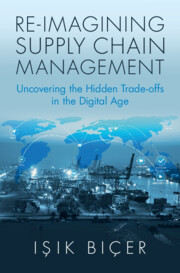
Supply chain management is a substantially complex area for many businesses due to its diverse set of actions, agents, decisions, risks, and uncertainties. Consequently, supply chains often break up in disarray due to their structural complexity coupled with risks and uncertainties in the absence of clear objectives. Işık Biçer addresses these issues by uncovering the fundamental trade-offs of supply chain management, their economic causes, and strategic implications. He offers a novel framework of supply chain management based on its role in economic systems. The framework shows four effective supply chain strategies according to business models and organizational sensitivity to operational trade-offs. Furthermore, it offers a detailed account of the digital transformation of supply chains, elaborating on crucial aspects of the design and implementation of digitalization. This is an indispensable source for supply chain professionals, consultants, economists, and policymakers with a keen interest in supply chain management.
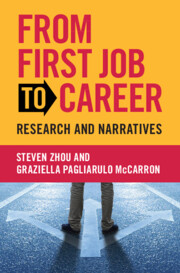
From First Job to Career is an anthology that weaves together inspiring first-job stories from people across diverse industries and backgrounds, offering career seekers of all ages the chance to connect with relatable experiences and hard-earned wisdom. This collection reveals the different paths people take in shaping their careers and serves as a resource for readers to identify with and learn from others' journeys. Paired with a comprehensive review of research in vocational psychology and career counseling, the book distills key principles and provides actionable resources for navigating the job search and building a meaningful career.
Following the recent resurgence of capitalism as a key subject in historical analysis, historians have highlighted the globally interconnected making and remaking of capitalism. Commodity-centered histories in global history have shown how to write locally grounded histories of global capitalism, emphasizing the complex and contingent relationship between the local and the global. In these accounts, however, businesses and global firms rarely appear as the analytical centerpiece. We argue that the globally active firm provides an ideal prism for writing locally grounded histories of global capitalism. Furthermore, drawing on recent usages of assemblage theory in economic history, we propose viewing “the global firm” as a “capitalist assemblage” in order to capture the spatiotemporally contingent processes through which capitalism and distinct ways of organizing business, labor, and life under capitalism emerged and evolved at specific sites and times. This approach will contribute to global studies and address limitations in business history’s treatment of the global firm.
Environmental, social, and governance (ESG) seems to grow in popularity by the day, but central considerations like best practices, standardized metrics, and a demonstrable positive impact on people and the environment are almost nonexistent. Yet, in the United States’ regulatory framework, one thing about ESG does seem clear—its instrumental role in value sustainability for investors. Drawing on postcolonial, decolonial, and radical Black theoretical perspectives, this article argues that the ability of ESG to capitalize on socioecological considerations is no accident. This critical analysis characterizes ESG as a paradigmatic example of the extractive nature of racial capitalist political economies like the United States. The article contends that ESG, much like the overarching liberal capitalist economy, is antithetical to the collective liberation project that is central to the radical Black tradition. In service of the imaginative worldmaking praxis that motivates this critical approach, the article offers a preliminary radical Black political economic framework.
Modern Slavery and the Governance of Global Value Chains provides an interdisciplinary analysis of the links between Global Value Chains (GVCs) governance, regulation, and vulnerability to severe forms of labour market exploitation by focusing on governance initiatives that seek to induce corporate action to end or mitigate modern slavery. The book brings together chapters by scholars from developed, developing, and emerging economies and from various disciplines to explore the complex relationship between global and local patterns of production and consumption, and severe forms of labour market exploitation. This title is also available as open access on Cambridge Core.
Upper echelons theory suggests that CEO values and personalities impact their actions, driving organizational performance. However, accessing the black box of a CEO’s values and personality is difficult. Numerous studies of senior leaders have informed research on discrete psychological characteristics such as drivers, risk, temporal focus, and emotionality. This study builds on this work by holistically sourcing these psychological characteristics through a LIWC (Linguistic Inquiry & Word Count) text analysis of top-ranked CEO Twitter (X) postings. These data were transformed via a principal component analysis into four distinct psychological profiles, termed by the authors ‘grey flannel suits’, ‘self-actualizers’, ‘empaths’, and ‘greyhounds’. Binary logistic regressions suggested divergence in CEO psychological profile occurrences based on firm size. The profile analysis failed to detect significant top CEO gender differences; however, some gender distinctions were discerned from follow-on t-tests of the profile’s underlying psychological characteristics. The paper concludes with a call for further top management team psychological profile-informed research.
Artificial intelligence (AI) is revolutionizing the way firms pursue technological diversification (TD), yet its distinct effects on related and unrelated diversification remain insufficiently explored. Based on the knowledge-based view, this study examines the distinct effects of AI on related and unrelated TD to elucidate AI’s specific role in facilitating both the optimization of existing knowledge and the exploration of new domains. Using a multi-period difference-in-differences model and panel data from China’s listed manufacturing firms (2013–2022), our empirical analysis demonstrates that AI significantly promotes firm TD, particularly in unrelated TD. Additionally, we identify that core-technology competence strengthens the positive effect of AI on unrelated TD, while knowledge stocks weaken it. These results contribute to the literature on TD by underscoring the role of AI. Practically, the study offers actionable insights for managers to harness AI in balancing exploration and exploitation within their TD strategies.
This article examines how hospital workers engage in embodied mobilizations drawing on the life-affirming power of death and love to resist the demise of the French public hospital system. Drawing on Butler’s work on “What is a livable life” (2022a, 2022b) and Notes toward a performative theory of assembly (2015), the study analyses a four-year data collection of Facebook posts, from two activist collectives of hospital workers. Our findings highlight three forms of ethical resistance. First, hospital workers mobilize the symbolism of death to denounce the erosion of public healthcare infrastructure and to urge the public to help save it. Second, they use this symbolism to shed light on the precariousness of their working conditions and to elicit compassionate care from citizens. Third, they make the symbolism of love for public healthcare visible, prompting reflection on the importance of public service values in a society rooted in solidarity and mutual care. This work contributes to the literature at the intersection of social mobilization and ethics of care: first, it brings to the front death and love as symbols that illuminate the radical political potential of care in social movements; second, it advances the theoretical construct of “ethics of publicness.”
We examine hidden orders usage by algorithmic traders (ATs) and nonATs. ATs extensively use hidden orders but of smaller size than nonATs, who are the primary contributors to hidden volume. ATs’ relative share of hidden volume decreases with volatility, adverse selection costs, and the relative tick-size. Proprietary ATs (HFTs), who differ from agency ATs (AATs) in their information sets and potential gains from trade, hide orders to reduce competition for liquidity provision, whereas AATs use hidden orders to conceal information in their more informed orders and manage picking-off risk. Finally, superior technology provides limited benefit for hidden order execution.
This study provides direct evidence of the association between debt–equity conflict and investment efficiency in financially distressed firms. Leveraging a unique institutional setting in Japan, we examine the impact of lender-affiliated directors on the managerial decisions of their borrowers. Although banker-directors do not influence firms at low risks of default, their presence leads to more conservative financial decisions in distressed firms, thereby mitigating shareholder exploitation. They also reduce information frictions to prevent overinvestment and underinvestment. However, despite within-firm efficiency gains, potential spillover effects on other stakeholders raise questions about the broader welfare implications of this debt–equity conflict mitigation.
Drawing on critical theories, real-world examples and personal insights, this book offers a fresh perspective on creating meaningful, inclusive change in diverse workplaces. It is an urgent call to action for those committed to true organizational transformation.
I came up with this word scenius – the intelligence of a whole operation or group of people. I think that's a more useful way to think about culture. Let us forget the idea of ‘genius’ for a little while, let us think about the whole ecology of ideas that give rise to good new thoughts and good new work.
Eno, 2009
Musician and producer Brian Eno's two quotes beautifully encapsulate the idea that creativity, originality or innovation seldom originate from the individual artist or genius but grow out of new connections and interactions among people in a community. In his book, A Year of Swollen Appendices, Eno refers to historical examples of the scenius from, for example, the New York City art scene in the 1970s or the Harlem Renaissance, where groups of artists, musicians, creatives and thinkers, through their interaction in physical common spaces, influenced and inspired each other to cultivate new cultural and artistic expressions.
This idea of scenius is alluring and an idea that fits well into how we should understand the potential of collaboration in systems. We can point to similar scenius movements outside the realm of the arts. A good example is the New Nordic Cuisine movement in Denmark that blossomed in the mid-2000s, where chefs and food experts met through creative experimentation and developed new values and practices around the meal. These new ideas of food were kicked off with the co-creation of the New Nordic Cuisine Manifesto in 2004 by frontrunners from the gastronomy scene who met to innovate and experiment on the future of Nordic food. The manifesto committed actors in the Danish food industry to promote local, natural and seasonal produce as a foundation for cooking in restaurants and at home.
In many cases the interwoven and intricate problems we refer to in this book are tied together so closely that we cannot find one end to start pulling in order to untie the, somewhat, Gordian knot. Even if we do, it might just tighten the knot and, to stay with the figurative speech, create new entanglements elsewhere.
At this point in the book, we have reached a third navigation point. We went through the importance of using our imagination to create new narratives and set a new shared direction to loosen the knot and see new paths in Navigating a New Story. Further, we have investigated another navigation point, Navigating Balance, describing the different attitudes and tensions we must embrace as pathfinders in order to skilfully discern which threads to pull. In this third navigation point, Navigating Experiments, we start intervening with the knot – pushing gently here, and pulling lightly there.
This navigation point is about experimenting to find new answers. Experiments – whether designed to make discoveries, test hypotheses or explore new possibilities – are vital for navigating societal transitions and for testing new methods and ideas.
As a pathfinder, being able to experiment entails a continuous openness, curiosity and responsiveness to the insights and developments that emerge during the course of actions.
Successfully embracing an experimental approach requires creativity, bravery and a shift in leadership style.
The blue light from the television fills the dark room, casting its fluorescent glow on our pale, weary faces. It is Sunday evening in October, and my husband and I are bracing ourselves for a new week ahead. It is my daughter's eighth birthday, and she and her elder brother sleep soundly after a long day of birthday celebrations. I sit on the sofa as the steady-toned journalist moves to the next headline in her list of the day's highlights.
14,500.
Fourteen thousand five hundred.
14,500 care workers who, each day, take on vital tasks in our healthcare system. Day after day, they provide care. Bathing your mother or father, tending to wounds, administering medicine, helping people restore physical abilities that have been lost. But beyond that, they offer something far more profound: the reassurance that we can live with dignity, comfort, and meaning.
14,500.
Fourteen thousand five hundred short.
This evening, Denmark's national broadcaster, Danmarks Radio, reports that if the new health reform is implemented, Denmark will lack 14,500 healthcare assistants needed to maintain services for the country's population by 2035. The heightened political focus following the health reform proposal of autumn 2024 has caused the media to intensify their coverage of the pressing issues that expose the growing cracks in our society.