Refine search
Actions for selected content:
106129 results in Materials Science
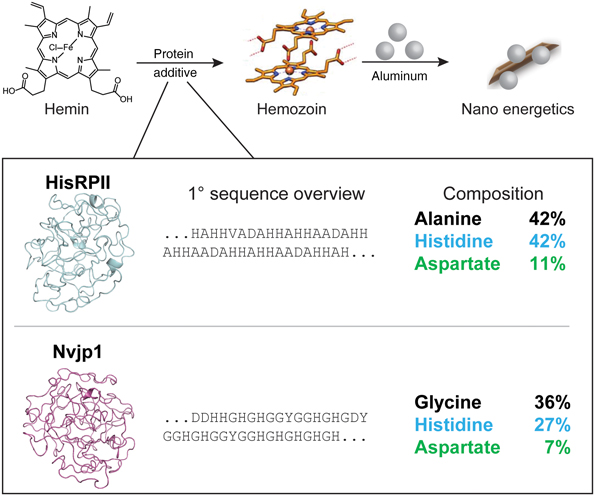
Identification of proteins for controlled nucleation of metal-organic crystals for nanoenergetics
-
- Journal:
- MRS Communications / Volume 9 / Issue 2 / June 2019
- Published online by Cambridge University Press:
- 24 April 2019, pp. 456-463
- Print publication:
- June 2019
-
- Article
- Export citation
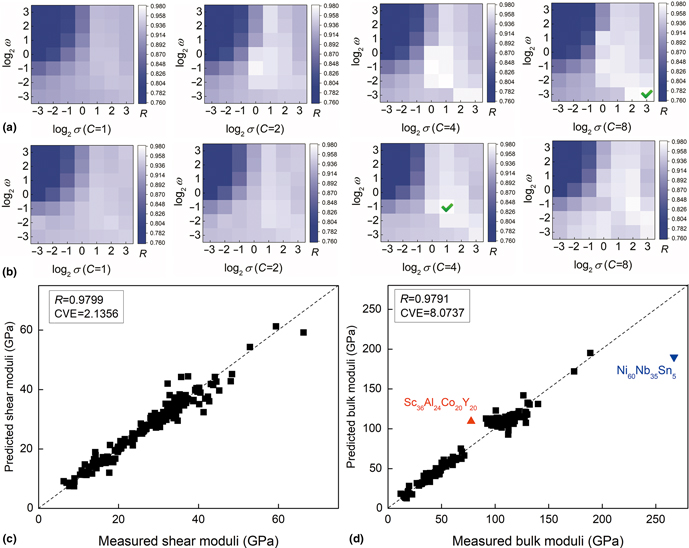
Machine learning prediction of elastic properties and glass-forming ability of bulk metallic glasses
-
- Journal:
- MRS Communications / Volume 9 / Issue 2 / June 2019
- Published online by Cambridge University Press:
- 24 April 2019, pp. 576-585
- Print publication:
- June 2019
-
- Article
- Export citation
Formulation analyses of high-volume prescription drugs
-
- Journal:
- Powder Diffraction / Volume 34 / Issue 2 / June 2019
- Published online by Cambridge University Press:
- 23 April 2019, pp. 130-142
-
- Article
- Export citation
Denver X-ray conference comments and reflections on current issue of Powder Diffraction Journal (PDJ) — CORRIGENDUM
-
- Journal:
- Powder Diffraction / Volume 35 / Issue 1 / March 2020
- Published online by Cambridge University Press:
- 23 April 2019, p. 80
-
- Article
-
- You have access
- HTML
- Export citation
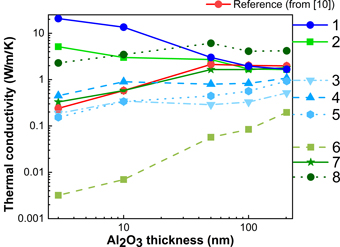
Scanning thermal probe calibration for accurate measurement of thermal conductivity of ultrathin films
-
- Journal:
- MRS Communications / Volume 9 / Issue 2 / June 2019
- Published online by Cambridge University Press:
- 22 April 2019, pp. 650-656
- Print publication:
- June 2019
-
- Article
- Export citation
Index
-
- Book:
- Quantum Theory of Materials
- Published online:
- 05 April 2019
- Print publication:
- 18 April 2019, pp 646-654
-
- Chapter
- Export citation
6 - Electronic Excitations
-
- Book:
- Quantum Theory of Materials
- Published online:
- 05 April 2019
- Print publication:
- 18 April 2019, pp 280-318
-
- Chapter
- Export citation
Copyright page
-
- Book:
- Quantum Theory of Materials
- Published online:
- 05 April 2019
- Print publication:
- 18 April 2019, pp iv-iv
-
- Chapter
- Export citation
4 - From Many Particles to the Single-Particle Picture
-
- Book:
- Quantum Theory of Materials
- Published online:
- 05 April 2019
- Print publication:
- 18 April 2019, pp 161-226
-
- Chapter
- Export citation
10 - Magnetic Behavior of Solids
-
- Book:
- Quantum Theory of Materials
- Published online:
- 05 April 2019
- Print publication:
- 18 April 2019, pp 480-528
-
- Chapter
- Export citation
4 - From Many Particles to the Single-Particle Picture
-
- Book:
- Quantum Theory of Materials
- Published online:
- 05 April 2019
- Print publication:
- 18 April 2019, pp 161-226
-
- Chapter
- Export citation
Contents
-
- Book:
- Quantum Theory of Materials
- Published online:
- 05 April 2019
- Print publication:
- 18 April 2019, pp v-ix
-
- Chapter
- Export citation
Preface
-
- Book:
- Quantum Theory of Materials
- Published online:
- 05 April 2019
- Print publication:
- 18 April 2019, pp xxi-xxii
-
- Chapter
- Export citation
Appendix C - Quantum Mechanics
- from Appendices
-
- Book:
- Quantum Theory of Materials
- Published online:
- 05 April 2019
- Print publication:
- 18 April 2019, pp 565-609
-
- Chapter
- Export citation
1 - From Atoms to Solids
-
- Book:
- Quantum Theory of Materials
- Published online:
- 05 April 2019
- Print publication:
- 18 April 2019, pp 1-51
-
- Chapter
-
- You have access
- Online view
- Export citation
Chapter 3 - Symmetries Beyond Translational Periodicity
-
- Book:
- Quantum Theory of Materials
- Published online:
- 05 April 2019
- Print publication:
- 18 April 2019, pp 119-160
-
- Chapter
- Export citation
-
Summary
In thewe discussed in detail the effects of lattice periodicity on the single-particle wavefunctions and the energy eigenvalues. We also touched on the notion that a crystal can have symmetries beyond the translational periodicity, such as rotations around axes, reflections on planes, and combinations of these operations with translations by vectors that are not lattice vectors, called “non-primitive” translations. All these symmetry operations are useful in calculating and analyzing the physical properties of a crystal. There are two basic advantages to using the symmetry operations of a crystal in describing its properties. First, the volume in reciprocal space for which solutions need to be calculated is further reduced, usually to a small fraction of the first Brillouin zone, called the “irreducible” part; for example, in the FCC crystals with one atom per unit cell, the irreducible part is
of the full BZ.
6 - Electronic Excitations
-
- Book:
- Quantum Theory of Materials
- Published online:
- 05 April 2019
- Print publication:
- 18 April 2019, pp 280-318
-
- Chapter
- Export citation
3 - Symmetries Beyond Translational Periodicity
-
- Book:
- Quantum Theory of Materials
- Published online:
- 05 April 2019
- Print publication:
- 18 April 2019, pp 119-160
-
- Chapter
- Export citation
Appendices
-
- Book:
- Quantum Theory of Materials
- Published online:
- 05 April 2019
- Print publication:
- 18 April 2019, pp 529-530
-
- Chapter
- Export citation
8 - Phonon Interactions
-
- Book:
- Quantum Theory of Materials
- Published online:
- 05 April 2019
- Print publication:
- 18 April 2019, pp 379-416
-
- Chapter
- Export citation
