To save content items to your account,
please confirm that you agree to abide by our usage policies.
If this is the first time you use this feature, you will be asked to authorise Cambridge Core to connect with your account.
Find out more about saving content to .
To save content items to your Kindle, first ensure no-reply@cambridge.org
is added to your Approved Personal Document E-mail List under your Personal Document Settings
on the Manage Your Content and Devices page of your Amazon account. Then enter the ‘name’ part
of your Kindle email address below.
Find out more about saving to your Kindle.
Note you can select to save to either the @free.kindle.com or @kindle.com variations.
‘@free.kindle.com’ emails are free but can only be saved to your device when it is connected to wi-fi.
‘@kindle.com’ emails can be delivered even when you are not connected to wi-fi, but note that service fees apply.
Effects of traveling magnetic field (TMF) on freckle formation of directionally solidified Pb–Sn alloys were investigated experimentally and numerically. The experimental results demonstrated that freckles could form without any magnetic field and with the upward TMF. In the former case, the formation location is the center. In the latter case, it diverted from the center to the surface with the increasing intensity of TMF. However, freckle could not form under the downward TMF. Numerical results indicated that the change of the formation location under upward TMF should be attributed to the different solid/liquid interface shape, and no formation under downward TMF should be attributed to the convection intensity driven by TMF. These magnetic fields are used to modulate melt flow, which is similar to the effects of the gravity. For eliminating freckle, a microgravity environment can be established under the suitable downward TMF.
Based on 15 diffusion couples located in face centered cubic single-phase region of ternary Ni–Al–Mo system, high-throughput determination of composition-dependent interdiffusivity matrices at 1273, 1373, and 1473 K was performed by using the recently developed numerical inverse method. The determined main interdiffusivities over the investigated composition and temperature ranges are all positive, and $\tilde D_{{\rm{AlAl}}}^{{\rm{Ni}}}$ is generally larger than $\tilde D_{{\rm{MoMo}}}^{{\rm{Ni}}}$. Moreover, $\tilde D_{{\rm{AlAl}}}^{{\rm{Ni}}}$ generally increases with concentration of Al, while $\tilde D_{{\rm{MoMo}}}^{{\rm{Ni}}}$ increases with concentrations of both Al and Mo. In contrast, the cross interdiffusivities can be either positive or negative. Average relative errors of $\tilde D_{{\rm{AlAl}}}^{{\rm{Ni}}}$, $\tilde D_{{\rm{AlMo}}}^{{\rm{Ni}}}$, $\tilde D_{{\rm{MoAl}}}^{{\rm{Ni}}}$, and $\tilde D_{{\rm{MoMo}}}^{{\rm{Ni}}}$ were evaluated to be 2.4, 5.1, 16.1, and 1.7% using error propagation. Furthermore, our prediction of composition profiles and interdiffusion fluxes based on evaluated interdiffusivity matrices agrees quite well with measured data. Traditional Matano–Kirkaldy method was also applied to further verify the reliability of obtained interdiffusivities. Besides, three-dimensional planes of activation energies of main interdiffusivities were also evaluated using the Arrhenius equation.
With increasing output of petroleum coke, the value-added exploitation of petroleum coke has become a tough problem. Preparing porous carbons is a traditional way to the value-added exploitation of petroleum coke. Here, we used a facile and efficient hard-templating strategy to synthesize mesoporous carbon with high surface area from petroleum coke. N2 adsorption analyses show that the BET specific area and pore volume of the carbons can reach up to 864 m2/g and 1.37 cm3/g, respectively. To utilize the abundant mesopores of the carbons, anthraquinone-modified mesoporous carbon was tested as an electrode material for supercapacitor applications. Electrochemical measurements demonstrated that the specific capacitance reached up to 366 F/g at the current density of 1 A/g, indicating a promising prospect of using this carbon in electrochemical energy-storage field. More importantly, the strategy used in this work can be easily modified to prepare other nano-carbon materials from petroleum coke.
A CeO2/ZrO2-hydroxyapatite (HA) composite bio-ceramic coating was prepared on ZK60 magnesium (Mg) alloy by using micro-arc oxidation (MAO) and electrophoretic deposition (EPD). MAO coating was done as the basal layer was grown in alkaline electrolyte with the addition of nanoparticles (CeO2 and ZrO2) to improve the mechanical properties of coating. A HA coating as the covering layer was deposited on the surface of MAO coating for improving the biological properties of the coating. The phase compositions and morphology of coatings were monitored with X-ray diffraction (XRD) and scanning electron microscopy (SEM), respectively. Adhesion and wear resistance of coatings were evaluated using a scratch test and a pin-on-disc sliding wear test. The corrosion resistance of coatings was evaluated in a simulated body fluid (SBF) using electrochemical tests at 36.5 ± 0.5 °C. The experimental results showed that the CeO2/ZrO2-HA composite coating on Mg alloy effectively improved its mechanical properties and corrosion resistance. Combining MAO and EPD is a promising modification technology for degradable Mg alloys as biomaterials.
Four 9Cr2WVTa deposited metals with different titanium contents were studied to reveal the role of minor elements titanium, which guide for the design of welding consumables for reduced activation ferritic/martensitic steel and meet for the requirements of accelerator driven systems-lead fusion reactors. The microstructural evolution of 9Cr2WVTa deposited metals was analyzed and discussed. Results show that the surface layer of 9Cr2WVTa deposited metal exhibits the columnar structure and the δ-ferrite is seen as a film distributed along the martensite lath. The microstructures are uniform in the middle of the deposited metal and exhibit the equiaxed structure. The fine stripe δ-ferrite decorates along the prior austenite grain boundaries and therefore, refines the grain size. The primary blocky Ti-enriched particles are the main factor affecting the mechanical properties for the 9Cr2WVTa deposited metal. The 9Cr2WVTa deposited metals obtain good mechanical properties when the titanium content does not exceed 0.08 wt%.
The push–pull fatigue characteristics of the peak-aged Mg–0.2Zn–0.5Zr alloys with different addition levels of neodymium (Nd) have been investigated. The fatigue strength (σf) of the Mg–xNd–0.2Zn–0.5Zr (NZx0K) alloy increases proportionally with the increase of the Nd content (CNd) as follows: σf (T6) ≈ (13.8–14.0) CNd + 46 (for x between 0 and 3.0 wt%). The cyclic stress amplitude also increases but the plastic strain value decreases with the increase of the Nd content. The studied alloys exhibit the strain hardening followed by cyclic softening during fatigue test. During the low-cycle fatigue (LCF) test, the cracks originate from the cyclic deformation and cumulative damage. In high-cycle fatigue (HCF), the failure is due to the cyclic deformation and damage irreversibly caused by environment-assisted cyclic slip. The LCF lives of the alloys fitted well with the Coffin–Manson relation and Basquin laws, the three-parameter equation, and the energy-based concepts. The developed multi-scale fatigue (MSF) life models can be used to predict the LCF and HCF lives of the alloys. Among these models, the MSF life can well capture the influence of Nd addition on fatigue.
Two series of lithium iron phosphate (LiFePO4) nanocomposites are prepared by a solvothermal method coupled with high temperature calcination using mononuclear and binuclear metal hexaaminophthalocyanines as modulatory additives, respectively. Physical and electrochemical performances of the composites as cathode materials of lithium-ion batteries are characterized by inductively coupled plasma (ICP), X-ray diffraction (XRD), infrared (IR), scanning electron microscopy (SEM), transmission electron microscopy (TEM), and electrochemical techniques. The results indicate that the as-synthesized samples modified with binuclear metal phthalocyanines can improve electrochemical properties of LiFePO4 (LFP) for lithium-ion batteries. The composite using binuclear manganese hexaaminophthalocyanine as additive can achieve the highest initial specific discharge capacity of 152.3 mAh/g at 0.1 C, higher than that of ones modified with the corresponding mononuclear phthalocyanine 143.0 mAh/g. Furthermore, the most excellent product exhibits a pretty good capacity retention of 93.0% after 50 cycles at 0.1 C, cycling stability, and low charge transfer resistance of 58.7 Ω.
The effect of aluminizing and Cu electroplating of the steel insert in fabrication of Al-matrix bimetal on the microstructure and mechanical properties of the interface layer was investigated. Compound casting process was used to fabricate Al-matrix bimetals reinforced with coated steel insert. The microstructures at the interface region were studied using light optical and scanning electron microscopes and energy dispersive X-ray spectroscopy. The interfacial shear strengths of the fabricated bimetals were compared using push-out test. The results showed that electroplating with copper and aluminizing of steel insert in aluminum matrix led to significant improvement of metallurgical bonding between the steel and aluminum cast matrix. Cu-coated insert contained a thicker and uniform reaction layer formed at the interface between the steel insert and aluminum matrix compared to aluminized coated insert. The results of push-out tests indicated higher interfacial shear strength for the bimetal with Cu-coated insert despite possessing a larger thickness.
TiC/H13 nanocomposite parts were processed by selective laser melting using various energy densities; one part also underwent hot isostatic pressing (HIP). The effect of energy density and HIPing on densification, microstructure, and hardness were evaluated. It was found that the densification was not largely affected by the energy density, but the HIP-treated sample displayed a large improvement in relative density. With increasing energy density, the microstructures showed high levels of dispersion of nanoparticles, while HIP treatment coarsened the microstructure and induced agglomeration. Both HIP treatment and increased energy density lowered hardness markedly; this was likely due to annealing effects.
A free standing 2D PS colloidal crystal with Au nanoshells/hydrogel composite film (CAuHCF) was fabricated by embedding a 2D PS colloidal crystal with Au nanoshells into a polyacrylic acid (PAA) hydrogel film. This CAuHCF can act as a visualized sensor with high diffraction intensity. The 2D PS colloidal crystal with Au nanoshells was prepared by depositing an Au layer on PS colloidal crystal obtained by interfacial self-assembly. The diffraction intensity of the CAuHCF was increased by about 30-fold than that of traditional 2D PS colloidal crystal/hydrogel composite film on transparent substrate due to large scattering cross section of Au shell. Such sensors based Au nanoshells array with the simple preparation process and the strong diffraction signal are promising ones for practical applications in visual detection. Additionally, with the simple preparation process and high diffraction intensity, other visualized sensors based different hydrogel matrix and the 2D PS colloidal crystal with Au nanoshells could be synthesized for monitoring various analysts.
In a hot forming process, the study of the interface tool/product proves important. This study focuses on the influence of the third body in the case of pin-on-disc in an open contact. The objective of this work was to identify the third body-particle circulation mechanisms at high temperatures. The “wear and friction” tests were conducted with an open sliding contact on pairs of X40CrMoV5/Fe360B steels under a normal force of 70 N at 600 °C and with a speed of rotation of the disc of 50 rev/min. The pin material was X40CrMoV5 (AISI H13) steel and the disc material was Fe360B steel. Scanning electronic microscope, energy-dispersive spectroscopy (EDS), and X-ray diffractometer explored the development surface damage and oxides tribo-oxides. It was concluded that various types of the third body particles were present in the contact. The wear mechanism on the X40CrMoV5 pin in a high temperature contact is proposed.
The study presents the results of the influence of high-energy ball-milling time on the structure of the new β-type Ti–Ta–Nb–Zr alloys for biomedical applications. Initial elemental powders were mechanically alloyed in a planetary high-energy ball mill at different milling times (from 10 to 90 h). Observation of the powder morphology after various stages of milling leads to the conclusion that with the increase of the milling time the size of the powder particles as well as the degree of aggregation change. Clear tendency of crystalline size reduction at every stage of the grinding process is clearly observed. The X-ray diffraction results confirmed the formation of β phase during high-energy ball milling of the precursor mixture of Ti, Ta, Nb, and Zr. The Rietveld refinement method has shown that both the production method and the atomic radii of the elements used in the mechanical synthesis have influence on the structure. Furthermore, it was found that a broadening of the diffraction peaks with increase of the milling time results from an increase in the crystallites dispersion and an enlargement in the lattice distortion. The results indicate that this technique is a powerful and high productive process for preparing new β-titanium alloys with nanocrystalline structure and appropriate morphology.
The diverse and fascinating properties of transition metal oxides stem from the strongly correlated electronic degrees of freedom; the scientific challenge and range of possible applications of these materials have caused fascination among physicists and materials scientists, thus capturing research efforts for nearly a century. Here, we focus on the binary VxOy and the ternary perovskite AVO3 and review the key aspects from the underlying physical framework and their basic properties, recent strides made in thin-film synthesis, to recent efforts to implement vanadium-based oxides for practical applications that augment existing technologies, which surpass limitations of conventional materials.
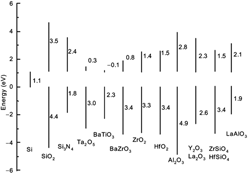
Epitaxial layers of insulating binary lanthanide oxides have been considered as potential alternative to conventional SiO2 for gate dielectric application in future Si-based MOSFET devices, which was investigated in more detail for epitaxial Gd2O3 and Nd2O3 as model systems. Additionally, the ability to integrate epitaxial dielectric barrier layers into Si structures can usher also in a variety of novel applications involving oxide/silicon/oxide heterostructures in diverse nanoelectronic and quantum-effect devices. Although epitaxial layers of such ionic oxides with excellent structural quality can be grown using molecular beam epitaxy, they often exhibit poor electrical properties such as high leakage current density, flat band instability, poor reliability etc. owing to the presence of electrically active charge defects, generated either during the oxide layer growth or typical subsequent CMOS process steps. Based on the origin and individual character of these defects, we review various aspects of defect prevention and passivation which lead to a significant improvement in the dielectric properties of the heterostructures.
Crystallized FeB and Fe2B powders were synthesized by a molten salt method with elemental Fe and B powders as starting materials. The results indicated that the presence of molten NaCl/KCl salts and the excess of Fe or B powders were essential to obtain pure FeB or Fe2B powders. The formation mechanism of iron borides was investigated by examining the phase compositions of the obtained products with different molar ratio of Fe/B. It was found that Fe powders firstly reacted with B powders to form Fe2B phase, and FeB phase formed from the reaction between Fe2B and excessive B. The as-synthesized FeB and Fe2B powders had a uniform short-rod and plate like morphology, respectively. Both FeB and Fe2B exhibited typical soft magnetic behavior. The saturation magnetization and the coercivity were 36.4 emu/g and 15.5 kA/m for FeB, 126.9 emu/g and 6.1 kA/m for Fe2B, respectively. The electrochemical performances of the as-synthesized FeB powders were evaluated by cyclic voltammetry, galvanostatic charge–discharge and electrochemical impedance test.
Recent advances in synchrotron based x-ray spectroscopy enable materials scientists to emanate fingerprints on important materials properties, e.g., electronic, optical, structural, and magnetic properties, in real-time and under nearly real-world conditions. This characterization in combination with optimized materials synthesis routes and tailored morphological properties could contribute greatly to the advances in solid-state electronics and renewable energy technologies. In connection to this, such perspective reflects the current materials research in the space of emerging energy technologies, namely photocatalysis, with a focus on transition metal oxides, mainly on the Fe2O3- and TiO2-based materials.
In this study, we investigate spray pyrolysis as an approach to synthesis of tunnel structure sodium manganese oxide, as it is a cost-effective and scalable technology. The powders synthesized with Na/Mn ratio of 0.50 displayed a pure tunnel structure, and demonstrated the best electrochemical performance, with a discharge capacity of 115 mAh/g. The material also showed good cycleability and rate capability. Noticeable decay in performance was seen in materials with Na/Mn ratios other than 0.50, indicating that this material is sensitive to minor compositional deviations. This study has demonstrated that spray pyrolysis is a promising synthesis method for this material.
Phase stability, elastic, and thermodynamic properties of (Co,Ni)3(Al,Mo,Nb) with the L12 structure have been investigated by first-principles calculations. Calculated phonon density of states show that (Co,Ni)3(Al,Mo,Nb) is dynamically stable, and calculated elastic constants indicate that (Co,Ni)3(Al,Mo,Nb) possesses intrinsic ductility. Young’s and shear moduli of the simulated polycrystalline (Co,Ni)3(Al,Mo,Nb) phase are calculated using the Voigt–Reuss–Hill approach and are found to be smaller than those of Co3(Al,W). Calculated electronic density of states depicts covalent-like bonding existing in (Co,Ni)3(Al,Mo,Nb). Temperature-dependent thermodynamic properties of (Co,Ni)3(Al,Mo,Nb) can be described satisfactorily using the Debye–Grüneisen approach, including heat capacity, entropy, enthalpy, and linear thermal expansion coefficient. Predicted heat capacity, entropy, and linear thermal expansion coefficient of (Co,Ni)3(Al,Mo,Nb) show significant change as a function of temperature. Furthermore the obtained data can be used in the modeling of thermodynamic and mechanical properties of Co-based alloys to enable the design of high temperature alloys.
Bimetallic catalyst Ni–Fe/SiO2 microspheres were obtained by reducing bimetallic (Ni,Fe2+)3Si2O5(OH)4 microspheres with controllable morphology structure in situ under the hydrogen atmosphere at 650 °C, which are synthesized via one-step self-template method under hydrothermal conditions. The TEM images indicate the formation process of the different morphology and the synthesis conditions of bimetallic Ni–Fe silicate were obtained. Bimetallic catalyst Ni–Fe/SiO2 (reduced) hollow microspheres had the smaller surface area and the bigger pore diameter than that of (Ni,Fe2+)3Si2O5(OH)4 (unreduced) hollow microspheres because the reduction reaction under high temperature may make part pores in nanosheets collapsing and metal particles aggregating easily for the strong magnetism. For synergistic effect of nickel ion and iron ion, the reaction conditions of the chosen catalyst with higher activity were decreased from 140 °C–24 h + 180 °C −12 h for iron silicate hydroxide to 140 °C–12 h. Ni–Fe/SiO2 core-shell microspheres exhibited excellent catalytic activity with a conversion of nitrobenzene reaching 94% within 2 h, which is 82% higher than Fe/SiO2.
Electropolymerization is a promising approach to produce thin films of active organic conjugated materials on a desired conducting substrate. In this work, an electropolymerization study has been carried out on two diketopyrrolopyrrole (DPP)-based monomers 2,5-bis(2-butyloctyl)-3,6-di(furan-2-yl)pyrrolo[3,4-c]pyrrole-1,4(2H,5H)-dione (BO-DPPF) and 2,5-bis(2-butyloctyl)-3,6-di(thiophen-2-yl)pyrrolo[3,4-c]pyrrole-1,4(2H,5H)-dione (BO-DPPT). These monomers consist of thiophene and furan heterocyclic moieties attached to a DPP core with a common solubilizing alkyl chain (butyl-octyl). The properties of these monomers were analyzed via differential scanning calorimetry, thermogravimetric analysis, UV–Vis spectrometry (UV) and photoluminescence. Cyclic voltammetry (CV) studies indicate the presence of irreversible oxidation and reduction reactions. The electropolymerization of BO-DPPF and BO-DPPT electron-deficient monomers to form polymer films on a glassy carbon electrode is achieved by applying a potential between −2 V and 2 V versus ferrocene for up to 50 cycles. The properties of the polymers were investigated using the cyclic voltammetry (CV) technique.