To save content items to your account,
please confirm that you agree to abide by our usage policies.
If this is the first time you use this feature, you will be asked to authorise Cambridge Core to connect with your account.
Find out more about saving content to .
To save content items to your Kindle, first ensure no-reply@cambridge.org
is added to your Approved Personal Document E-mail List under your Personal Document Settings
on the Manage Your Content and Devices page of your Amazon account. Then enter the ‘name’ part
of your Kindle email address below.
Find out more about saving to your Kindle.
Note you can select to save to either the @free.kindle.com or @kindle.com variations.
‘@free.kindle.com’ emails are free but can only be saved to your device when it is connected to wi-fi.
‘@kindle.com’ emails can be delivered even when you are not connected to wi-fi, but note that service fees apply.
SrTiO3 is an important photocatalyst for hydrogen evolution under solar light, a promising way to solve energy shortage. However, a rapid and efficient method to synthesize high-performance SrTiO3 used for this purpose still remains a challenge. In this work, we successfully prepared SrTiO3 catalyst with narrowed band gap through a rapid laser-melting method of a limited reaction time to seconds. The prepared SrTiO3 catalyst, which has a band gap of 3.05 eV, presents enhanced photocatalytic performance for hydrogen evolution under visible light. The evolution rate of laser-melted SrTiO3 is approximately 3.5 times higher than that of pristine SrTiO3. In addition, the magnetism in laser-melted SrTiO3 is also enhanced, which could not be observed in pristine SrTiO3, confirming the defective structure of the obtained laser-melted SrTiO3. The proposed laser-melting method will be a promising way to rapidly and efficiently synthesize homogeneous, solar-driven SrTiO3 photocatalyst for hydrogen evolution with rich defects and thus high-performance.
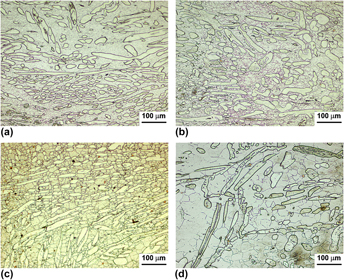
The effects of alkaline earth strontium (Sr) additions on the microstructure and properties of Al–Si–Ge–Zn alloys and brazed joints were investigated. The results showed that the appropriate addition of Sr changed the morphology of β-GeSi phases from coarse needle-like to fine granular shapes effectively. Sr addition prevented the growth of Si by Sr adsorbing on the Si surface and caused the formation of many twins in Si. Sr addition had little impact on the melting temperature of the filler metals, but the spreading areas of Al–Si–Ge–Zn–xSr filler metals increased firstly and then decreased with the increase of Sr addition. In addition, the Sr addition optimized the microstructure of the brazed joints and improved the mechanical properties. Sound joints with high shear strength up to 152.4 ± 2.5 MPa could be obtained by applying Al–9.5Si–10Ge–15Zn–0.7Sr (all in wt%) filler metal.
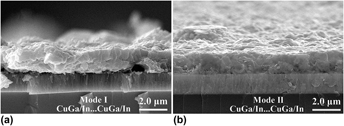
The absorber layers for chalcopyrite solar cells were fabricated by selenization of the stacked metal layers (SML). Co-sputtering and sequential sputtering methods were utilized to prepare the SML, and the variation of the stacking sequences and the effect of each stacked layer thickness were investigated. The stacking sequence of In/CuGa⋯In/CuGa was found having advantages in the SML growth and the average size of indium hillocks might be tailored by changing the thickness of each stacked layer. The SML in the stacking mode of In/CuGa⋯In/CuGa prepared while the thickness for each indium layer fixed at approximately 83 nm exhibited the desired morphology with evenly distributed indium hillocks in small diameters. The selenized ${\rm{CuI}}{{\rm{n}}_x}{\rm{G}}{{\rm{a}}_{1 - x}}{\rm{S}}{{\rm{e}}_2}$ (CIGS) layer showed a smooth surface and largest grain size with phase segregation being suppressed effectively. The hole mobility of the best CIGS layers reached 8.36 cm2/V s.

The in situ synthesis of nickel-based composite coating reinforced with WC particle on mild steel has been investigated. Results show a planar crystal at the interface and some relatively coarse columnar dendrites on the side of the coating near the substrate. The synthesized WC particles homogenously distribute in the coating without cracks and pores. The maximum size, mean size, and volume fraction of the WC particle is 270 µm, 35 µm, and 71%, respectively. The microhardness value of the prepared coating can be up to a maximum of 755 HV2. The synthesized WC particles generally show a unique triangular prism shape, whose evolution rule and growth mechanism are investigated by Bravais–Friedel–Donnay–Harker theory. It is deduced that crystal structure and interface energy play important role in determining the shape of WC, which evolves from sphere to hexagonal prism and finally to triangular prism.
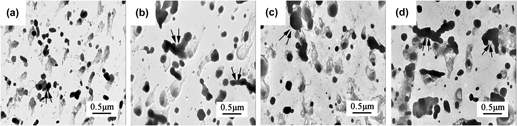
In this paper many studies have been carried out to ascertain the phenomenon of strain-induced precipitation and coarsening of carbides in AISI H13 hot-work die steel during the tests at 700 °C. The microstructure of H13 with various loadings was studied to identify the effects of mechanical strain on the evolutionary behavior of carbides. SEM and TEM were used to observe the size and distribution of the carbides of each sample. It was found that the coagulation of carbides is more obvious in mechanical strained samples than that in mechanical strain-free sample which means mechanical strain promotes the precipitation and coarsening of carbides, and these processes are affected by the mechanical strain amplitude. Precipitation is increased by the strain enhanced because of more nucleation sites produced and accelerate the diffusion of solute atoms. Moreover, the results are shown that lower strain rates are more beneficial for precipitation and coarsening of carbides under the same strain because they provide a longer time to nucleate and grow into nuclei.
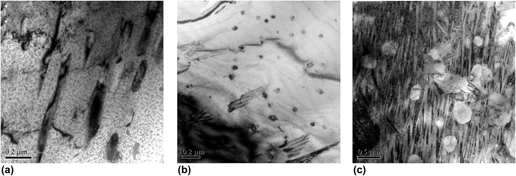
A kind of nickel–aluminum bronze (Cu–10Al–4Fe–4Ni) prepared by centrifugal casting (CC) and gravity casting (GC), respectively, were investigated. The results indicate that CC alloy, which is totally different from GC alloy, consists of α, κI, κII, κIII, κIV, and β′ phases and the microstructures of CC alloy shows nonuniformities from external to internal layer mainly because the distribution of iron and nickel are influenced by centrifugal force. Besides, it is noted that comprehensive mechanical properties of CC alloy are superior to those of GC alloy. Additionally, heat treatments were performed on CC alloy. The results demonstrate the optimal heat treatment is aging at 450 °C/1 h by air cooling after solution treated at 890 °C/1 h by water quench. The ultimate tensile strength and hardness are increased by about 10% and 56%, respectively, and wear resistance is also greatly improved. However, the elongation is decreased by 53%.
N-doped single-crystal-like TiO2 is claimed to be a very promising material among various catalytic. In this paper, N-doped single-crystal-like TiO2 (N-S-TiO2) samples were firstly prepared by molten salt method with urea and mixed nitrates as synergistic doping agents, therein, the mixed nitrates works also as a morphology modifier to form a single-crystal-like structure in the sample. The nitrogen content in the N-S-TiO2 sample could be improved because of the adding of NaNO3 and KNO3 mixed nitrates compared with using urea as a single nitrogen source. UV–Vis absorption spectroscopy analysis indicated that the nitrogen doped TiO2 has a red shift of the light absorption edge. The presence of N–O bonds on the surface of the N-S-TiO2 samples could be confirmed by x-ray photoelectron spectroscopy. The degradation efficiency of N-S-TiO2 to methylene blue under visible light is the best compared with different TiO2 samples without the treatment of mixed nitrates.
Phase separation of InxGa1−xN into Ga-rich and In-rich regions has been studied by electron energy-loss spectroscopy (EELS) in a monochromated, aberration corrected scanning transmission electron microscope (STEM). We analyze the full spectral information contained in EELS of InGaN, combining for the first time studies of high-energy and low-energy ionization edges, plasmon, and valence losses. Elemental maps of the N K, In M4,5 and Ga L2,3 edges recorded by spectrum imaging at 100 kV reveal sub-nm fluctuations of the local indium content. The low energetic edges of Ga M4,5 and In N4,5 partially overlap with the plasmon peaks. Both have been fitted iteratively to a linear superimposition of reference spectra for GaN, InN, and InGaN, providing a direct measurement of phase separation at the nm-scale. Bandgap measurements are limited in real space by scattering delocalization rather than the electron beam size to ∼10 nm for small bandgaps, and their energetic accuracy by the method of fitting the onset of the joint density of states rather than energy resolution. For an In0.62Ga0.38N thin film we show that phase separation occurs on several length scales.
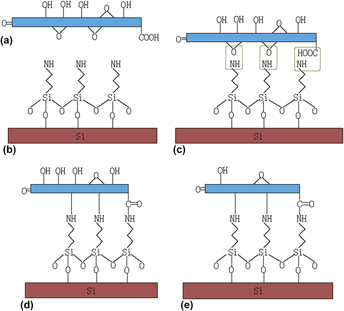
In this study, three types of graphene films—hydrothermal reduced graphene oxide (GO) film, thermal reduced GO film, and GO film—on silicon substrate by using 3-aminopropyl triethoxysilane (APTES) as the interface adhesive layer were prepared for investigation. The chemical compositions of the samples were characterized by x-ray photoelectron spectroscopy (XPS). Surface morphologies, adhesive forces, and nano friction forces in air and aqueous solutions with different pH values were investigated by atomic force microscopy (AFM). Results showed that capillary force dominated the adhesive force in air condition, and adhesive force was much smaller in aqueous solution than in air due to the disappearance of the capillary force. Adhesive force and friction coefficient of the three samples slightly decreased with the increase of pH values. Hydrothermal reduced GO film exhibits the best lubricity both in air and in liquids among those three films.
Synchrotron powder diffraction data have been obtained and indexed for ferrous gluconate, a common supplement used for the treatment and prevention of iron-deficiency anemia. Ferrous gluconate (Fe(C6H11O7)2 · x H2O, Z = 4) crystallizes in a monoclinic cell (space group I2, #5) with lattice parameters a = 19.953 16(9) Å, b = 5.513 92(3) Å, c = 18.470 58(9) Å, and β = 111.3826(3)°. The pattern shows no evidence of impurity reflections.
Ultrasonic impact treatment (UIT) combined with high energy electropulsing (EP) was applied to low carbon steel to introduce severe plastic deformation on the surface. The investigation indicated that a strengthened layer with a maximum hardness of approximately 330 HV on cross section was obtained, in comparison with the hardness value of 260 HV resulted from UIT solely. Alongside with high hardness, the enhanced structure layer was extended to a distinguishing depth of 2 mm. Microstructure in the cross section revealed a crack-free superficial layer by EP-UIT and pearlite colonies here experienced morphology variations by redistribution and spheroidization of cementite. A 3 μm oxide layer consisting of amorphous oxide and nitride as well as MnFe2O4 and hematite crystalline was formed on the treated surface. Thermal and athermal effect of EP was the key factor in these phenomena and it is assumed that acoustic softening, electro plasticity, and thermal softening were engaged simultaneously.
Hot deformation characteristics of 2304 duplex stainless steel were analyzed by hot compression tests at temperature range of 850–1150 °C and strain rates of 0.001–1 s−1. The flow curves at low temperatures and high strain rates were suggesting sluggish dynamic recovery (DRV) in ferrite and partial dynamic recrystallization (DRX) in austenite. However, at high temperatures and low strain rates, the flow curves showed implied the domination of DRV in ferrite. The hyperbolic sine equation with activation energy of 508 kJ/mol could relate the processing parameters. Microstructural observations showed that DRV in ferrite is the controlling mechanism at all deformation conditions. However, at high temperatures and strain rates partial DRX could also occur in austenite. Based on the law of mixture and Baragar’s equations a modified model was proposed to consider work hardening and dynamic softening in the constituents. The model could satisfactorily predict the flow curves at different deformation regimes.
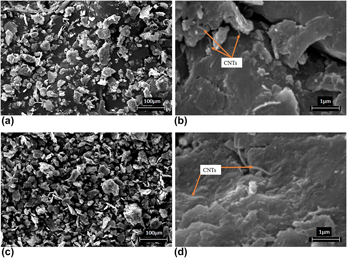
In this research work, planetary ball mill has been used to disperse carbon nanotubes (CNTs) in Al powders. Al-CNT nanocomposite samples have been produced using double pressing double sintering (DPDS) method. The effects of CNTs weight percent and secondary pressing and sintering on the hardness, tensile, and bending strength of Al-CNTs nanocomposites were investigated. Enhancements of about 98% in hardness, 40% in tensile strength, and 20% in bending strength of Al-CNTs nanocomposites were observed as compared with pure Al samples. Using DPDS technique increments of 2.4–16.14% in density has been obtained as compared with the nanocomposites produced by conventional sintering method. The composites were studied by scanning electron microscope and differential thermal analysis. The X-ray diffraction (XRD) was used to identify various phases if present in Al-CNTs nanocomposites.
The purpose of this paper is to propose a critical assessment of Young’s modulus determination of coated materials using Impulse Excitation Technique (IET). In this technique, the coated substrate is excited by an impulse and the acoustic vibrations are recorded. The frequency of the first bending mode is then used in a mechanical model to obtain the Young’s modulus of the coating. The existing models are based on two different theories: the flexural rigidity of a composite beam and the Classical Laminated Beam Theory (CLBT). The aim of the present paper is to assess the accuracy (trueness and precision) of the technique. For this, different models proposed in the literature are compared with a finite element model of the specimen for various conditions. The trueness and precision of models were evaluated and the best model was identified. Then a detailed uncertainty budget is performed to identify and quantify the most influent factors on the global uncertainty.
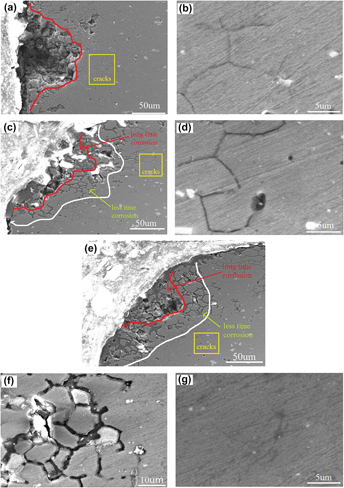
Influence of corrosion/fatigue factors on the fatigue life of 7B04-T6 aluminum alloys were studied in this paper. Different kinds of alternating corrosion-fatigue tests were carried out. Three factors influencing fatigue life were investigated: pre-corrosion time, corrosion/fatigue alternation frequency, and specimen’s size. The results show that: with the extension of pre-corrosion time, fatigue lives decreased; although the total corrosion time was the same (192 h), as the corrosion/fatigue alternation frequency increased, the total fatigue lives increased. The total fatigue lives of specimens subjected to two, four, and six corrosion/fatigue cycles (n = 2, 4, 6), in which specimens underwent pre-corrosion for 96 h per cycle (n = 2), 48 h per cycle (n = 4), and 32 h per cycle (n = 6), respectively, was measured. It was found that the fatigue lives increased by 56.4, 84.4, 136%, as the number of cycles increased, compared to tests in which no alternation took place (192 h of continuous corrosion). When exposed to the same corrosion times, different sized specimens demonstrated different fatigue lives. The fatigue lives of small specimens were shorter than the larger specimens. These results are all due to the specific properties of corrosion/fatigue factors.
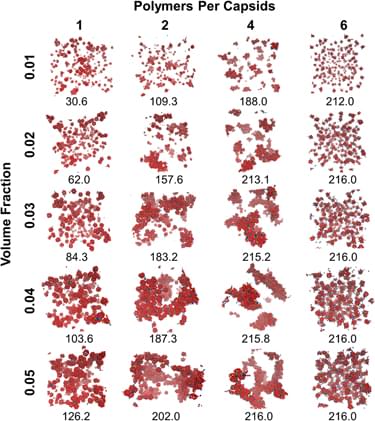
Self-assembly of biocompatible nanoparticles is part of a promising field in drug delivery and biomaterials. Virus capsids are an example of nanoparticles capable of being tethered with functional groups for specific targeting. There have been experimental efforts on grafting polymers to virus capsids to synthesize tailored nanostructures. To provide insight at the nanoscale, we perform a highly coarse-grained molecular dynamics study, simulating the self-aggregation of cowpea mosaic virus (CPMV) capsids decorated with polyethylene glycol (PEG) and PEG polylactic acid (PLA) block polymers. We examined the effects of grafting architecture and volume fraction on equilibrated clusters. Characterization of the aggregation dynamics are summarized by the radius of gyration of the clusters, coordination number distributions, and average cluster size. When the system and methods are parameterized with respect to atomistic models or empirical results, the results can serve as the basis in broadly mapping the theoretical design space for controlled self-assembly of polymer-decorated virus capsids.