To save content items to your account,
please confirm that you agree to abide by our usage policies.
If this is the first time you use this feature, you will be asked to authorise Cambridge Core to connect with your account.
Find out more about saving content to .
To save content items to your Kindle, first ensure no-reply@cambridge.org
is added to your Approved Personal Document E-mail List under your Personal Document Settings
on the Manage Your Content and Devices page of your Amazon account. Then enter the ‘name’ part
of your Kindle email address below.
Find out more about saving to your Kindle.
Note you can select to save to either the @free.kindle.com or @kindle.com variations.
‘@free.kindle.com’ emails are free but can only be saved to your device when it is connected to wi-fi.
‘@kindle.com’ emails can be delivered even when you are not connected to wi-fi, but note that service fees apply.
Three-dimensional (3D) printing generates cellular architected metamaterials with complex geometries by introducing controlled porosity. Their ordered architecture, imitative from the hierarchical high-strength structure in nature, defines the mechanical properties that can be coupled with other properties such as the acoustic, thermal, or biologic response. Recent progress in the field of 3D architecture materials have advanced that enables for design of lightweight materials with high strength and stiffness at low densities. Applications of these materials have been identified in the fields of ultra-lightweight structures, thermal management, electrochemical devices, and high absorption capacity.
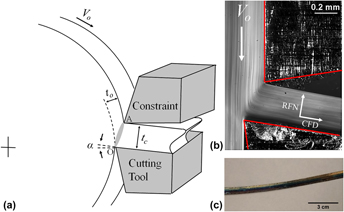
Simple shear deformation via hybrid cutting-extrusion is used to produce continuous electrical steel sheet from a commercial high-silicon (nominal 4 wt%) iron alloy of poor workability in a single deformation step, a fundamentally different route from the multi-step processing of rolling and annealing currently in use. The shear texture created in the sheet is found to be quite different from that produced by rolling. The magnetic properties of the shear-textured Fe–Si sheet are measured using closed-circuit permeametry and compared with those from sheet produced by rolling of the same alloy and a commercial non-grain-oriented sheet of similar composition. Properties compared include maximum relative permeability, induction, coercivity, and hysteresis loss. The results are interpreted in terms of microstructure, texture, and composition. A unit cell representation of the shear texture components is introduced that relates the expected orientation of easy magnetization directions with the sheet axes.
To clarify the effect of bainite in microstructure on hydrogen diffusion and trapping behavior and susceptibility to hydrogen assisted cracking of API grade linepipe steel, three specimens with different fraction of bainite in the microstructure are used. Firstly, hydrogen diffusion and trapping behaviors of the steels are studied by utilizing the electrochemical permeation technique. For fundamental analysis on the experimental data, a variety of diffusion parameters were determined by curve-fitting with a theoretical diffusion equation based on numerical finite difference method (FDM). It indicates that the steel with higher fraction of bainite exhibits much higher sub-surface hydrogen concentration and much lower apparent hydrogen diffusivity. This behavior can be understood by the fact that the steel containing higher fraction of bainite in the microstructure has higher concentration of reversible traps and consequent larger diffusible hydrogen, leading to much slower diffusion kinetics of hydrogen atoms. Consequently, the susceptibility to hydrogen induced cracking (HIC) and sulfide stress cracking (SSC) of the steel with higher fraction of bainite increases significantly.
Nanoindentation techniques are commonly used to characterize nanomechanical properties of microscaled and nanoscaled materials. Nanoindentation using a cylindrical flat-tip indenter has a constant contact area which makes it a reliable source to find material’s yield strength as well as other mechanical properties. However, an angular misalignment of the indenter with the specimen results in experimental error. In this work, the effects of angular misalignment on the nanoindentation testing with a cylindrical flat-tip indenter were numerically analyzed. A three-dimensional nanoindentation solid model was generated, computer modeling based on finite element analysis was conducted. The angle of misalignment ranged from 0° to 1°. Young’s modulus and hardness were evaluated. Based on the hemispherical stress–strain distribution assumption of an elastic plastic indentation, corrected depths and modifiers were proposed for adjusting material’s 0.1% offset and 0.2% offset yield strengths. Low carbon steel AISI 1018 was selected as sample material for indentation testing and modeling validation.
Carbon-based nanomaterials (CANOMATs), including fullerenes, carbon nanotubes, graphene, and their derivatives, are widely considered to be the next-generation materials for a broad range of biomedical applications, owing to their unique opto-electronic, chemical, and mechanical properties. However, for bio-applications, CANOMATs need to be surface-functionalized, to render them passive, non-toxic, and water-soluble. Here, we review the current state-of-the-art in the methods of functionalization of CANOMATs. In contrast to other Reviews, we present an objective analysis of the various approaches reported in the literature, using metrics such as the agent of functionalization, number of steps, and time required, the need for special instruments, effect on properties, scalability, reproducibility, and applications. Our Review offers a way for researchers to make a rational selection of the process of functionalization to best suit their desired application. This opens up new opportunities for developing targeted functionalization strategies, based on the need to excel at the above metrics.
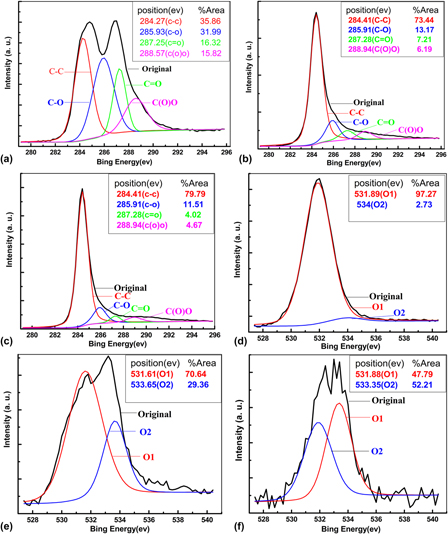
A cost-effective and highly efficient method was proposed for preparing reduced graphene (rEG) by modified Hummers approach. The influence of ratio of KMnO4 to graphite, oxidation time and oxidation temperature on oxidative degree of graphite oxide (GO) was investigated by x-ray diffraction (XRD) and Fourier Transform Infrared Spectroscopy (FTIR). The thermal exfoliated graphene (EG) was characterized with transmission electron microscopy (TEM), FTIR, Raman spectrum and Brunauer–Emmett–Teller (BET) method. The EG was treated for 4 h at 800 °C with H2/Ar mixed atmosphere (15/85, v%) to remove the residual functional groups. The characterization of x-ray photoelectron spectroscopy (XPS) showed that rEG contains less functional groups than EG, which shows the C/O ratio increased from 10.6 (EG) to 34.71 (rEG). The results indicate that treating EG with a mixed H2/Ar atmosphere (15/85, v%) remarkably removes residual functional groups of EG, supplying a simple and feasible approach with large scale production of reduced graphene.
X-ray powder diffraction data, unit-cell parameters, and space group for alogliptin benzoate, C18H21N5O2·C7H6O2, are reported [a = 28.8260(8) Å, b = 9.9654(4) Å, c = 8.1477(8) Å, α = 90, β = 90, γ = 90°, unit-cell volume V = 2340.57 Å3, Z = 4, ρcal = 1.3097 g cm−3, and space group P212121]. All measured lines were indexed and are consistent with the P212121 space group, No detectable impurities were observed.
Surface roughness and finite sample thickness are major sources of error in the nanoindentation measurements of thin films as the former makes it difficult to determine the effective contact point between the indenter and sample while the latter limits the usable depth range to be no more than ∼10% of the film thickness. Combining a closed-form model of a film/substrate system with the ability of nanoindentation to monitor the contact depth, the present method defines the two-dimensional shape profile of the indenter contacting the composite system with one unknown constant associated with the model and another unknown constant associated with the effective contact point. On the basis that the obtained shape profile of the rigid indenter is identical to the pre-determined indenter shape profile function, the method extrapolates the two constants simultaneously so as to determine the effective contact point. The method was demonstrated for amorphous diamond-like carbon (DLC) coatings.
The new processing method of spark plasma sintering (SPS) followed by hot extrusion was developed to produce Mg–1Al–xCNTs composites. Microstructural characterization revealed that the reinforcement particles were distributed uniformly in Mg matrix. The results of mechanical properties indicated a fact that compared with monolithic Mg, all Mg–1Al–xCNTs composites, especially the Mg–1Al–0.15CNTs composite, fabricated by SPS followed by hot extrusion exhibited better tensile and compressive properties. Under tension, Mg–1Al–0.15CNTs composite exhibited higher 0.2% tensile yield strength (TYS) (157 MPa versus 98 MPa, increased by ∼60%) and ultimate tensile strength (271 MPa versus 188 MPa, increased by ∼44%) than monolithic Mg. In compression, Mg–1Al–0.15CNTs composite also obtained a great enhancement in 0.2% compressive yield strength (118 MPa versus 81 MPa, increased by ∼46%) and ultimate compressive strength (321 MPa versus 255 MPa, increased by ∼26%) compared to monolithic Mg. Meanwhile, Mg–1Al–0.15CNTs composite maintained a high tensile failure strain of ∼8.8% and a high compressive failure strain of ∼17.9%.
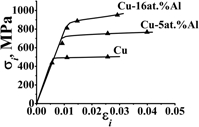
The deformation mechanisms responsible for the strength and ductility of nanostructured Cu and Cu–Al alloys processed by high pressure torsion have been analyzed in frames of a model of elastic–plastic medium and using the available experimental data. The income of the Peierls strength, as well as solid solution hardening, dislocation hardening, twinning hardening, taking into account possible annihilation processes has been estimated. It was shown that in the Cu–5 at.% Al alloy annihilation processes contribute to the maintenance of deformation. The material is hardened by the accumulation of dislocations at the twin boundaries, postponing the moment of reaching the ultimate strength. In the Cu–16 at.% Al alloy processes of the annihilation are limited. As a result, the possibility of further deformation is limited and the degree of homogeneous deformation decreases in comparison with the case of the Cu–5 at.% Al alloy. Significantly increased concentration of deformation vacancies contributes to the destruction of the former alloy as well.
Here, we demonstrate the enhanced imaging capabilities of an aberration corrected scanning transmission electron microscope to advance the understanding of ion track structure in pyrochlore structured materials (i.e., Gd2Ti2O7 and Gd2TiZrO7). Track formation occurs due to the inelastic transfer of energy from incident ions to electrons, and atomic-level details of track morphology as a function of energy-loss are revealed in the present work. A comparison of imaging details obtained by varying collection angles of detectors is discussed in the present work. A quantitative analysis of phase identification using high-angle annular dark field imaging is performed on the ion tracks. Finally, a novel 3-dimensional track reconstruction method is provided that is based on depth-dependent imaging of the ion tracks. The technique is used in extracting the atomic-level details of nanoscale features, such as the disordered ion tracks, which are embedded in relatively thicker matrix. Another relevance of the method is shown by measuring the tilt of the ion tracks relative to the electron beam incidence that helps in knowing the structure and geometry of ion tracks quantitatively.
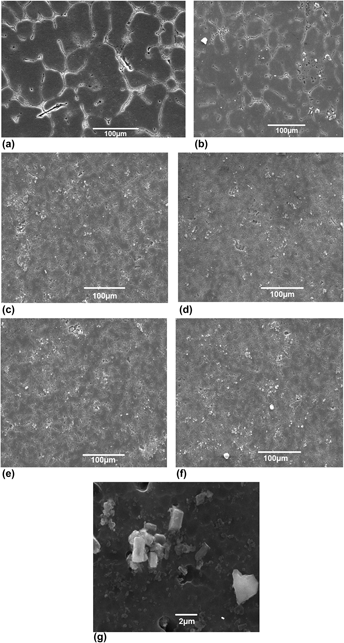
In the present investigation, AA6351 aluminum alloy matrix composites reinforced with various percentages of AlN particles were fabricated by stir casting technique. The percentage of AlN was varied from 0 to 20% in a step of 4%. The prepared AA6351-AlN composites were characterized using scanning electron microscope (SEM) and x-ray diffraction (XRD). The mechanical properties such as micro-hardness, compression strength, flexural strength, and tensile strength of the proposed composite have been studied. X-ray diffraction patterns confirm the presence of AlN particles in the composites. SEM analysis reveals the homogeneous distribution of AlN particles in the AA6351 matrix. The mechanical properties of the composite were found to be noticeably higher than that of the plain matrix alloy due to augmented particle content. The produced composites exhibit superior mechanical properties when compared with unreinforced matrix alloy. Fracture surface analysis of tensile specimens show the ductile–brittle nature of failure in the composites.
A theoretical model for the Functionally Graded Shape Memory Alloy (FG-SMA) cylinders subjected to internal pressure is investigated. The gradient properties in this work are embodied in the Young’s modulus and Poisson’s ratio gradient through the thickness of the cylinder. The critical transformation stresses and maximum formation strain are all assumed to be constant. Combining the elasticity and exponential function of the Young’s modulus and Poisson’s ratio with the different gradient parameters, the elastic stress distributions and displacement distributions for the FG-SMA cylinder under the internal pressure are obtained, respectively. To get the theoretical solution, the Tresca yield function and the ideal elastic–plastic constitutive model are selected for the shape memory alloy to illustrate the phase transformation. The relationships between the internal pressure and total strain at the internal radius with different gradient parameters are then given, and the results show that the total strains are greatly influenced by the different parameters.
A series of Eu3+ and Dy3+ singly and doubly doped Gd2MoO6 phosphors were synthesized with solid state reactions. The X-ray powder diffraction analysis of phosphors shows that substitution of Eu3+ and Dy3+ does not change the host structure of phosphors. The absorption spectra measurements show that un-doped Gd2MoO6 can absorb near ultraviolet light without any visible light emission. However, energy absorbed by Gd2MoO6 can be effectively transferred to doped Eu3+ and Dy3+ and makes them emit blue, yellow, and red light, respectively. White light can be obtained by combining blue, yellow, and red emission. The doping of Dy3+ plays a major role for the formation of white light. The introduction of Eu3+ can remarkably decrease the color temperature of the white light emission. The measurement of the temperature-dependent luminescent properties indicates that the phosphors present a good thermal stability. Our investigation indicates that Gd2MoO6:Eu3+,Dy3+ is a potential candidate for white light emitting diodes applications. It also provides a new sight for the achievement of white light emission.
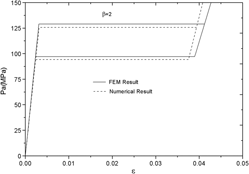
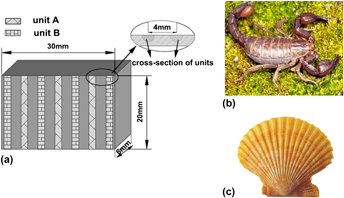
Wear resistance plays an important role to ensure the machining precision of machine tool using gray cast iron guide rail. Bio-inspired surfaces imitating the cuticle of desert scorpion and shell archetype with alternate units were prepared on gray cast iron using biomimetic coupling laser remelting in air and water. Samples consisting of striature bionic units with various distributions were examined under dry sliding condition using a home-made wear testing machine. It was found that samples with bionic units displayed better wear resistance than the untreated gray cast iron. While samples with bionic units processed in water by laser returned highest wear resistance in the short run, samples with alternatively distributed units (processed by laser) presented better wear resistance in the long run. However, to understand the stress distributions and the wear mechanism of the samples finite element method was used in this study. Based on the experimental evidences, a two-stage wear mechanism was proposed.
A comparison of two electron microscopy techniques used to determine the polarity of GaN nanowires is presented. The techniques are convergent beam electron diffraction (CBED) in TEM mode and annular bright field (ABF) imaging in aberration corrected STEM mode. Both measurements were made at nominally the same locations on a variety of GaN nanowires. In all cases the two techniques gave the same polarity result. An important aspect of the study was the calibration of the CBED pattern rotation relative to the TEM image. Three different microscopes were used for CBED measurements. For all three instruments there was a substantial rotation of the diffraction pattern (120 or 180°) relative to the image, which, if unaccounted for, would have resulted in incorrect polarity determination. The study also shows that structural defects such as inversion domains can be readily identified by ABF imaging, but may escape identification by CBED. The relative advantages of the two techniques are discussed.
The new ternary compound of Al2Cu3Gd was prepared by melting with stoichiometric composition in an electric arc furnace. The X-ray powder diffraction data of Al2Cu3Gd have been collected by the Rigaku Smart Lab X-ray powder diffractometer. The Rietveld refinement method had been used to study the crystal structure of Al2Cu3Gd. The results showed that the Al2Cu3Gd, new compound have the hexagonal structure, space group P6/mmm (No. 191) with a = 5.1822 (1) Å, c = 4.1566 (1) Å, V = 96.67 Å3, Z = 1, and the density is 6.62 g cm−3, and the intensity ratio reference intensity ratio is 1.29.
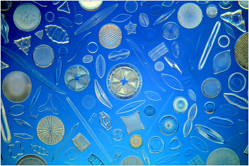
Diatoms microalgae can be regarded as living factories producing nanostructured and mesoporous biosilica shells (frustules) having a highly ordered hierarchical architecture. These unique, morphological, chemical and mechanical properties make diatoms’ biosilica a very attractive nanomaterial for a wide variety of applications. Methods of purification of frustules that preserve their nanostructured morphology have been set up as well as in vivo or in vitro chemical modification protocols of the biosilica with functional molecules to generate biohybrid active materials for photonics, sensing, drug delivery and electronics. Herein we describe, with some selected examples, the great variety of applications envisaged for native and modified frustules, highlighting the material scientists’ benefit to avail of nature in the construction of highly ordered biohybrid architectures for nanotechnology. New concepts for the biotechnological production of nanomaterials are opened by the use of diatoms as living factories.