To save content items to your account,
please confirm that you agree to abide by our usage policies.
If this is the first time you use this feature, you will be asked to authorise Cambridge Core to connect with your account.
Find out more about saving content to .
To save content items to your Kindle, first ensure no-reply@cambridge.org
is added to your Approved Personal Document E-mail List under your Personal Document Settings
on the Manage Your Content and Devices page of your Amazon account. Then enter the ‘name’ part
of your Kindle email address below.
Find out more about saving to your Kindle.
Note you can select to save to either the @free.kindle.com or @kindle.com variations.
‘@free.kindle.com’ emails are free but can only be saved to your device when it is connected to wi-fi.
‘@kindle.com’ emails can be delivered even when you are not connected to wi-fi, but note that service fees apply.
The development of doped photonic glass is of fundamental importance for various applications, including telecommunication, lasers, and photovoltaics. Despite the great advances in doping techniques, a long-standing barrier remains concerning how to gain better control over the properties of active dopants in disordered systems. Here, we provide a brief overview of recent progress on the engineering of the chemical environment and chemical state of dopants in glass by tuning the topological features, including sublattices and packing manner of the network. The methods allow us to finely tune the chemical state of active dopants over a wide range of length scales, from dispersed ions to aggregated clusters to nanoparticles, and also offer new opportunities to engineer the local crystal field around active dopants. This inherent structure-based strategy leads to intriguing optical phenomena such as tunable luminescence and notable enhancements in radiative transition probability.
Rigidity theory is an extraordinary tool to understand glasses. This article demonstrates how this model can help in understanding the link between structure, dynamics, and subtler properties such as drift and aging, in particular, in phase-change materials (PCMs). First, a map of flexible/rigid regions in the Ge-(Sb)-Te system is drawn on the basis of atomistic structures modeled either by ab initio or reverse Monte Carlo techniques. A clear link between the flexible/rigid nature of the glass and its aging behavior is shown through resistivity drift as a function of composition measurements in amorphous GexTe100–x. In the particular case of amorphous GeTe, application of rigidity theory indicates that the average number of mechanical constraints decreases during aging, making the glass less stressed-rigid. Finally, the stability of PCMs also depends on the topology of the materials. The increasing number of constraints in GeTe when doped with C or N results in increased stability of the PCM.
Ball milling induced the formation of nanocrystalline and amorphization phase in Fe–25.68% Dy2O3 powder mixtures (mass fraction, %). The microstructure was investigated by using X-ray diffraction and transmission electron microscopy. The transformation of Dy2O3 from cubic to monoclinic crystal structure and then to the amorphization was observed during ball milling. A few Dy atoms were dissolved into Fe crystal structure, which was discussed using mechanical kinetics. After 48 h of ball milling, the homogenous mixtures of supersaturated nanocrystalline solid solution of Fe (Dy, O) and Dy2O3 amorphization were formed and the elements of Fe, Dy, and O were distributed uniformly in the ball-milled particles. During the whole ball mining process, a rapid decrease in Fe grain size was observed over the initial time period, while a constant value was presented in later stage, resulting in a final size of about 20 nm. The mechanism of the microstructural evolution of powder mixtures was analyzed and discussed.
X-ray powder diffraction data, unit-cell parameters, and space group for Ethyl (Z)-2-chloro-2-[2-(4-methoxyphenyl)hydrazin-1-ylidene]acetate, C11H13ClN2O3, are reported [a = 13.308(4) Å, b = 9.908(5) Å, c = 4.753(4) Å, α = 90°, β = 91.510(8)°, γ = 90°, unit-cell volume V = 626.64 Å3, Z = 2, ρcal = 1.361 g cm−3, and space group P21]. All measured lines were indexed and are consistent with the P21 space group. No detectable impurities were observed.
Self-assembly of multiferroic oxide composites by chemical and biochemical methodology is discussed. The approach involves covalently attaching organic functional groups or oligomeric DNA/RNA to the nanoparticles (NPs). The organic functional groups are only reactive toward functional groups located on different NPs. Using oligomeric DNA/RNA, one could program NPs to only interact with particles possessing complementary DNA/RNA. We have applied both concepts to the assembly of nanostructures with ferrites for the ferromagnetic phase and barium titanate for the ferroelectric phase. The assembled core–shell particles and superstructures obtained in a magnetic field show evidence for strong interactions between the magnetic and ferroelectric subsystems.
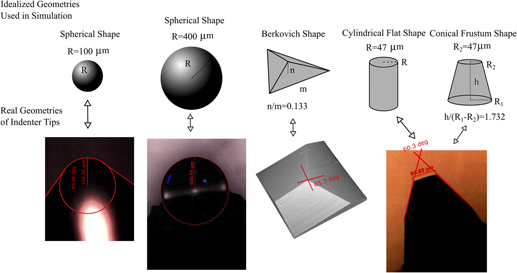
Nanoindentation testing of compliant materials has recently attracted substantial attention. However, nanoindentation is not readily applicable to softer materials, as numerous challenges remain to be overcome. One key concern is the significant effect of adhesion between the indenter tip and the sample, leading to larger contact areas and higher contact stiffness for a given applied force relative to the Hertz model. Although the nano-Johnson–Kendall–Roberts (JKR) force curve method has demonstrated its capabilities to correct for errors due to adhesion, it has not been widely adopted, mainly because it works only with perfectly spherical tips. In this paper, we successfully extend the nano-JKR force curve method to include Berkovich and flat indenter tips by conducting numerical simulations in which the adhesive interactions are represented by an interaction potential and the surface deformations are coupled by using half-space Green’s functions discretized on the surface.
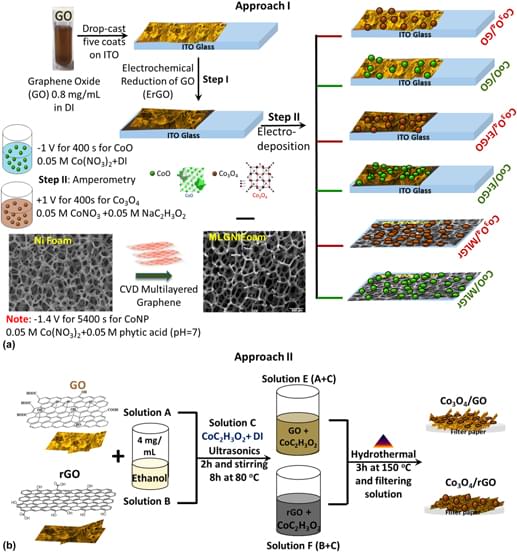
We report the development of hybrids consisting of supercapacitive graphene oxide (GO), reduced GO (rGO), electrochemically reduced GO (ErGO), multilayer graphene (MLG) decorated with pseudocapacitive nanostructured cobalt oxides (CoO, Co3O4) and nanoparticles (CoNP) via electrodeposition and hydrothermal synthesis facilitating chemically bridged (covalently and electrostatically anchored) interfaces with tunable properties. These hybrid samples showed heterogeneous transport behavior determining diffusion coefficient (4 × 10⁻⁸–6 × 10⁻⁶ m2/s) following CoO/MLG < Co3O4/MLG < Co3O4/rGOHT < CoO/ErGO, CoNP/MLG and delivering the maximum specific capacitance >550 F/g for Co3O4/ErGO and Co3O4/MLG. We found an ultrahigh sensitivity of 4.57 mA/(mM cm2) and excellent limit of glucose detection <50 nM following Co3O4/rGOHT < CoO/ErGO < CoNP/MLG < Co3O4/MLG. These findings are due to open pore network and topologically multiplexed conductive pathways provided by graphene nanoscaffolds to ensure rapid charge transfer and ion conduction. Density functional theory determined density of states in the vicinity of Fermi level in-turn providing contribution toward electroactivity due to orbital re-hybridization.
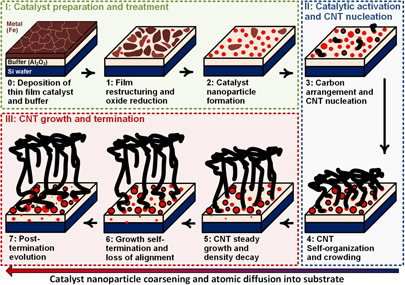
Aligned carbon nanotubes (CNTs) possess great potential for transforming the fabrication of advanced interfacial materials for energy and mass transport as well as for structural composites. Realizing this potential, however, requires building a deeper understanding and exercising greater control on the atomic scale physicochemical processes underlying the bottom-up synthesis and self-organization of CNTs. Hence, in situ nanoscale metrology and characterization techniques were developed for interrogating CNTs as they grow, interact, and self-assemble. This article presents an overview of recent research on characterization of CNT growth by chemical vapor deposition (CVD), organized into three categories based on the growth stage, for which each technique provides information: (I) catalyst preparation and treatment, (II) catalytic activation and CNT nucleation, and (III) CNT growth and termination. Combining all three categories together provides insights into building the process–structure relationship, and paves the way for producing tailored CNT structures having desired properties for target applications.
Three spinel materials were prepared and characterized by in situ powder X-ray diffraction (PXRD) techniques to track their phase changes that occurred in the typical batch synthesis process from a sol–gel mixture to the final crystalline spinel oxide. The materials were also characterized by thermal gravimetric analysis, whereby the materials decomposition mechanisms that were observed as the precursor, was gradually heated to the final oxide. The results showed that all the materials achieved their total weight loss at about 400 °C. The in situ PXRD analysis showed the progression of the phase transitions where certain of the materials changed from a crystalline precursor to an amorphous intermediate phase and finally to the spinel cathode oxide (Li1.03Mg0.2Mn1.77O4). For other materials, the precursor would start as an amorphous phase and upon heating, convert into an impure intermediate phase (Mn2O3) before forming the final spinel oxide (Li1.03Mn1.97O4). On the other hand, the LiAl0.4Mn1.6O4 would start with an amorphous precursor, with no intermediate phases and immediately formed the final spinel oxide phase. The in situ PXRD study also showed the increases in the materials respective lattice parameters of the crystalline unit cells upon heating and the significant increases in their crystallite sizes when heated above 600 °C.
The first book on the topic, with each chapter written by pioneers in the field, this essential resource details the fundamental theory, applications, and future developments of liquid cell electron microscopy. This book describes the techniques that have been developed to image liquids in both transmission and scanning electron microscopes, including general strategies for examining liquids, closed and open cell electron microscopy, experimental design, resolution, and electron beam effects. A wealth of practical guidance is provided, and applications are described in areas such as electrochemistry, corrosion and batteries, nanocrystal growth, biomineralization, biomaterials and biological processes, beam-induced processing, and fluid physics. The book also looks ahead to the future development of the technique, discussing technical advances that will enable higher resolution, analytical microscopy, and even holography of liquid samples. This is essential reading for researchers and practitioners alike.
This research article addresses the effect of fillers on the high-temperature corrosion behavior of AISI 347 weld joints. Multi-pass pulsed current gas tungsten arc welding was carried out on 6.67 mm thick plates of AISI 347 using three different fillers namely ER347, ER2553, and ERNiCrMo-3. The fusion zone microstructures of AISI 347 employing ER2553 and ERNiCrMo-3 exhibited columnar and dendritic grain growth; whereas vermicular delta ferrite was observed at the fusion zone of ER347 welds. Tensile studies showed that the weld employing ERNiCrMo-3 exhibited better tensile strength than the parent metal. High-temperature corrosion studies were carried out on the fusion zones by exposing the coupons to an aggressive, synthetic molten-salt incinerator environment containing 40% Na2SO4–40% K2SO4–10% NaCl–10% KCl at 650 °C for 50 cycles. The studies attested that the fusion zone employing ERNiCrMo-3 exhibited better corrosion resistance than the other two fillers used in the study. Spallation of oxides was witnessed due to the dissolution of Cr2O3 in the ER347 and ER2553 fusion zones. The hot corroded samples were characterized using surface analytical techniques.
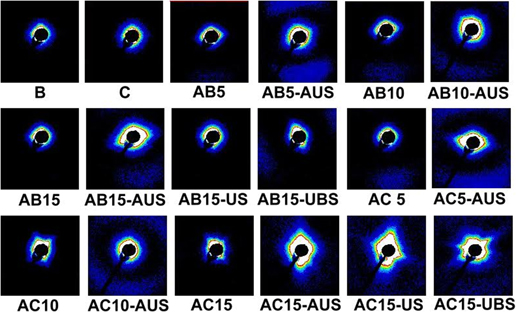
The main aim of this research was investigation of the processing-structure-property relationship for polymer blends. The paper presents the results of tests on the structure, basic physical and porous properties of polymer films blend of low density polyethylene (LDPE) with poly(4-methyl-1-pentene) (PMP). Studies utilizing LDPE/PMP blends were undertaken to investigate a three-stage process: melt-extrusion/annealing/uniaxial-stretching (MEAUS), and a two-stage process: melt-extrusion/uniaxial and biaxial stretching (MEUS and MEUBS), used to produce porous films. The permeability and porosity results coupled with small-angle x-ray scattering data provide a direct connection between changes in microstructure to the observed changes in gas transport properties.
In the present work, we report the development of phase pure and highly crystalline stibnite Sb2S3 nanostructures by a surfactant-mediated hydrothermal method. Polyvinylpyrrolidone (PVP) as the surfactant has a striking effect on the assembly of nanorods into dumbbell shaped nanorod-bundles. While nanorods with high aspect ratio were formed in absence of the surfactant, dumbbell shaped nanorod bundles were obtained using the surfactant. The structural, morphological, and optical properties were examined by X-ray diffraction (XRD), Raman scattering, scanning electron microscopy (SEM), energy dispersive x-ray spectroscopy, x-ray photoelectron spectroscopy (XPS), and UV–visible spectrophotometer. Both XRD and Raman spectroscopy confirmed the formation of orthorhombic phase pure stibnite (Sb2S3). The ratio of Sb to S is found to be close to 2:3, corresponding to Sb2S3. The optical band gap varied in the range of 1.65–1.68 eV depending on the concentration of the surfactant.
Effect of Ce addition on electric conductivity of Al alloys is investigated in this paper. Addition of proper amount of Ce leads to a remarkable improvement of electric conductivity. Adding Ce enhances the formation of binary, ternary, or quaternary compounds of Ce, Si, Fe, and Al and reduces the solution content of Fe and Si in the Al solution accordingly, well consistent with the Al lattice constant calculations and the Bragg models. Density of state adjacent to Fermi level of Al–Ce solution is obviously different from other solute atoms involving in La, Fe, and Si etc. and fairly similar with that of pure Al. Two possible contributions of Ce lead to the remarkable improvement of conductivity. First, Ce addition alleviates the lattice static distortion of Al solution and hence expands the average electrical free path. Second, Ce-induced alteration of electron energy band structure may intensify the effective electron number that participates conduction.
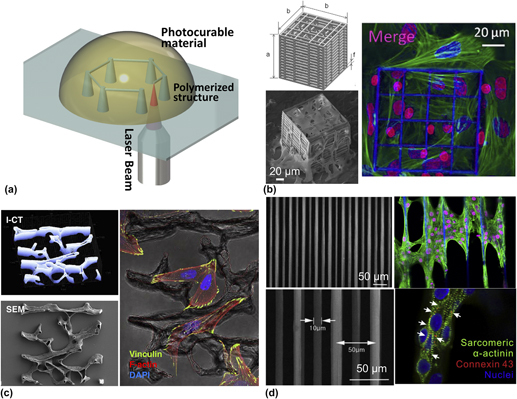
Controlling the spatial arrangement of biomaterials and living cells provides the foundation for fabricating complex biological systems. Such level of spatial resolution (less than 10 µm) is difficult to be obtained through conventional cell processing techniques, which lack the precision, reproducibility, automation, and speed required for the rapid fabrication of engineered tissue constructs. Recently, laser-assisted biofabrication techniques are being intensively developed with the use of computer-aided processes for patterning and assembling both living and nonliving materials with prescribed 2D or 3D organization. In this review, we discuss laser-assisted fabrication methods, including laser tweezers, multi-photon polymerization, laser-induced forward transfer (LIFT), matrix assisted pulsed laser evaporation (MAPLE), and laser ablation as well as their applications in biological science and biomedical engineering. These advanced technologies enable the precise manipulation of in vitro cellular microenvironments and the ability to engineer functional tissue constructs with high complexity and heterogeneity, which serve in regenerative medicine, pharmacology, and basic cell biology studies.
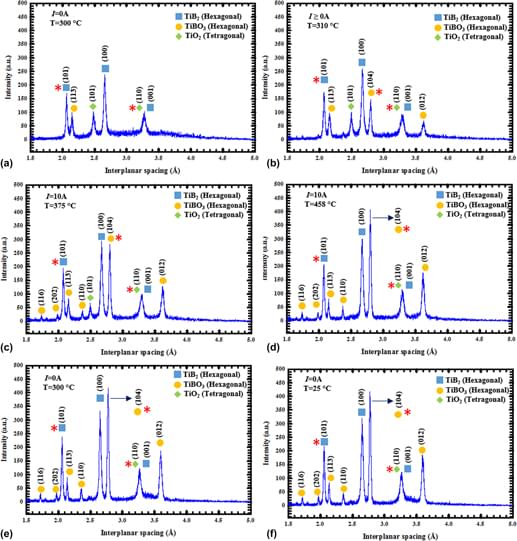
Nano-TiB2 powder of 58 nm size with TiO2 and TiBO3 as secondary phases was heated with 20 °C to <650 °C in argon while applying an electric field. The powder became conductive at 520 and 305 °C (Tonset) for 16 and 40 V/cm, respectively, at which point current bursts of 4.5 and 10.0 A (peak value) were observed. Current bursts were accompanied by >1% TiB2 unit cell expansion, exceeding zero field thermally induced expansion. The current bursts also induced nonisothermal reaction between TiB2 and TiO2, yielding TiBO3 that is absent with no field. Increase from 16 to 40 V/cm shifts the TiB2 → TiBO3 reaction forward, decreases Tonset but increases reaction rate. Analysis using Van’t Hoff relation, including electrochemical effects, precluded possibility of appreciable Joule heating, which was supported with adiabatic internal temperature calculations. The observed low temperature oxidation of TiB2 to TiBO3 that is electrochemically driven and is mediated by the TiO2 solid electrolyte.
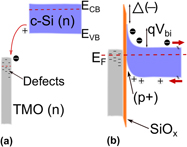
Transition metal oxides (TMOs) have recently demonstrated to be a good alternative to boron/phosphorous doped layers in crystalline silicon heterojunction solar cells. In this work, the interface between n-type c-Si (n-Si) and three thermally evaporated TMOs (MoO3, WO3, and V2O5) was investigated by transmission electron microscopy, secondary ion-mass, and x-ray photoelectron spectroscopy. For the oxides studied, surface passivation of n-Si was attributed to an ultra-thin (1.9–2.8 nm) SiOx∼1.5 interlayer formed by chemical reaction, leaving oxygen-deficient species (MoO, WO2, and VO2) as by-products. Carrier selectivity was also inferred from the inversion layer induced on the n-Si surface, a result of Fermi level alignment between two materials with dissimilar electrochemical potentials (work function difference Δϕ ≥ 1 eV). Therefore, the hole-selective and passivating functionality of these TMOs, in addition to their ambient temperature processing, could prove an effective means to lower the cost and simplify solar cell processing.