To save content items to your account,
please confirm that you agree to abide by our usage policies.
If this is the first time you use this feature, you will be asked to authorise Cambridge Core to connect with your account.
Find out more about saving content to .
To save content items to your Kindle, first ensure no-reply@cambridge.org
is added to your Approved Personal Document E-mail List under your Personal Document Settings
on the Manage Your Content and Devices page of your Amazon account. Then enter the ‘name’ part
of your Kindle email address below.
Find out more about saving to your Kindle.
Note you can select to save to either the @free.kindle.com or @kindle.com variations.
‘@free.kindle.com’ emails are free but can only be saved to your device when it is connected to wi-fi.
‘@kindle.com’ emails can be delivered even when you are not connected to wi-fi, but note that service fees apply.
The aim of this work was to compare different excitation modes for the analysis of light elements from carbon (Z = 6) upwards using a total reflection X-ray fluorescence analysis (TXRF) vacuum chamber which allows the attachment of different X-ray tubes and detectors. In the first set of experiments, two water-cooled high-power X-ray tubes with Cr (Z = 25) and Cu (Z = 29) anodes, respectively, were compared with an air-cooled low-power tube with Mo anode (Z = 42) and a thin Be window for the transmission of Mo-L lines. In the first two cases, monochromatic Kα radiation was used for excitation, while in the case of the Mo tube the multilayer acted as a cut-off reflector and part of the Mo bremsstrahlung continuum together with the Mo-L series were used for excitation. Multi-element standards containing elements ranging from Na (Z = 11) to Ti (Z = 22) were analyzed by a silicon drift detector (SDD) with a 300 nm ultrathin polymer window (UTW). Detection limits were calculated and compared for the three excitation modes. The second set of experiments was performed using an air-cooled low-power X-ray tube with Rh anode (Z = 45) in order to show that a conventional SDD with a 25 μm beryllium window can be used for the detection of elements from Na upwards. The use of compact air-cooled low-power X-ray tubes together with Peltier-cooled SDDs with UTW should lead to the development of highly sensitive tabletop vacuum TXRF spectrometers with a design optimized for the analysis of light elements. Detection limits as achieved by vacuum chambers using conventional water-cooled high-power tubes (e.g. Streli et al., 2004) are realistically achievable with the new approach.
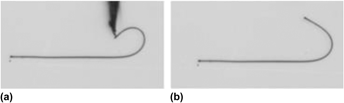
The kinetic and static friction forces between Al2O3 nanowires (NWs) and a Si substrate were simultaneously determined by the use of bending manipulation, which bent a NW into a “hook” shape, and then let it recover elastically. An analytical model was developed to estimate the kinetic friction force based on the hypothesis that part of the elastic energy stored in the bent NW was consumed by the work of the friction during recovering. The static friction force was also calculated using force equilibrium. Finite element analysis and experimental testing were performed to verify the analytical model. The kinetic and static friction forces per unit area obtained were in the ranges of 1.16–3.4 MPa and 0.68–2.7 MPa, respectively, which agree well with most of the values reported previously for NWs or nanoparticles on flat substrates. It was also found that the NW size had no apparent effect on the interfacial shear stress.
The size of dopant-rich nanodomains was assessed in four samples of Ce1−μYμO2−μ/2 through systematic pair distribution function (PDF) refinements. Experimental G(r) curves were fitted by different structural models with the aim of finding a description which balanced precise structure parameterization and reasonable number of parameters. The most reliable model was a single Y2O3-like phase, which best accommodated to the close relationship between the fluorite (CeO2-like) and C-type (Y2O3-like) structures. In this model, a refined cation coordinate, x(M2), measured the relative occurrence in the G(r) of the chemical environment of Y and Ce at any value of r. The r-value at which x(M2) vanished, i.e. at which the refined C-type cell becomes a redundant, low-symmetry description of a fluorite cell, was assumed as the size of a C-type domain. Subtle features in G(r) could be attributed to the fluorite or C-type phase up to ~500 Å thanks to the narrow instrumental resolution function of the ID31 beamline (now ID22) at the ESRF, which allows us to get high resolution PDF data.
The thermal history of amorphous polymers near the glass-transition temperature determines the extent to which macromolecules structurally relax, and ultimately their properties. Here, we report the correlation between physical aging, dielectric breakdown, and capacitive energy storage of polystyrene, poly(methyl-methacrylate), and associated silica nanocomposites. Guided by enthalphic recovery rates, dielectric breakdown strength increased from 20% to 40% when aged at Tg−10 °C before use. The generality of improvement and connection to enthalpic recovery afford a means to design pre-service processing of new polymers and additive manufacturing techniques to reduce excess volume within the glass; and thereby reduce initiation and inhibit propagation of electronic failure.
Metallic zinc nanoparticles are generated in two compositional ranges of borosilicate glasses upon 200 and 300 keV electron beam irradiation in a transmission electron microscope. Irradiation effects are studied either with a stationary electron beam as a time series or with spatially varying beams for line-scan patterning. The size of the zinc nanodots formed is inversely related to the distance from the center of the electron beam, and growth from 5 to 50 nm over time via ripening can be observed. Line-scan patterning via both thermal gun and field emission gun electron irradiation has been successfully achieved. Our findings also show the occurrence of self-organized particle ordering, such as formation of chains. Metal nanoparticles have a tendency to migrate toward the glass fragment center, unless high intensity radiation ablates the glass matrix, when Zn particles remain decorating the surface. High-resolution lattice imaging, scanning transmission electron microscopy, and electron energy loss spectroscopy are used to confirm particle identity.
The fracture toughness values of nanosized Cu and Ni single crystals with an edge nanocrack were determined under quasi-static loading conditions. Molecular statics (MS) simulations that can essentially capture the discreteness and the nonlinearity of materials were used in the present study. Different crack lengths were used to evaluate the effects of crack size on the fracture toughness. Based on MS simulations, the energy release rate was calculated using the energies obtained from two models with neighboring crack lengths under the same loading conditions. Furthermore, continuum counterparts of the atomistic models were used to calculate the toughness by the finite element method for linear elastic fracture mechanics (LEFM). The reasons behind the discrepancies between the toughness values obtained using different methods were discussed, and the applicable ranges of the toughness and the LEFM were indicated in terms of the lattice constants.
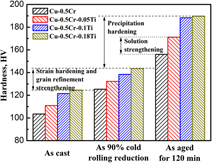
The Cu–Cr system alloys with different Ti contents were prepared and processed by deformation and heat treatment. The microstructures, mechanical, and electrical properties were investigated under as-cast and aged conditions. The results indicate that the Cr precipitates present a dispersed distribution and exhibit a face-centered cubic (fcc) structure rather than equilibrium body-centered cubic (bcc) structure in the initial stage of aging. A certain amount of Ti atoms dissolves in matrix due to the large solid solubility, while the remaining atoms segregate around the interface of the Cr precipitates to form a sandwich structure. Improvement of mechanical properties is achieved with Ti addition and the increasing rolling reduction, which can be ascribed to multiple mechanisms. In addition, Ti has a negative effect on the electrical conductivity, while deformation has a slight effect on conductivity.
Dielectric thin films of high- and low-refractive index are the essential components for optical coatings. To achieve high sputtering rates and superior film quality, the authors have developed novel conductive SiO2:Si and ZnO:Zn composites that become conductive once the doped silicon and metal Zn reach a critical ratio. The sputtering characteristics of the composite targets in direct current and radio-frequency (RF) plasma discharge are quite different from the corresponding element targets. The optical properties of the RF sputtered SiO2 and ZnO films from the composite targets is comparable with the films obtained from RF sputtering of pure oxide targets.
The formation of deformation and recrystallization textures has been investigated in a Ni7W alloy after heavy cold rolling and subsequent annealing at different temperatures. Cold rolling to a von Mises strain of 4.17 produced a mix of rolling texture that lies between classical brass- and copper-type rolling textures, with the fraction of S({123}<634>), brass({110}<112>), and copper({112}<111>) orientations being 33, 28, and 13%, respectively. The fraction of rolling texture for the deformed Ni7W alloy samples increased slightly during recovery, was then consumed significantly during recrystallization, and dropped to 22% after being annealed at 800 °C for 1 h. The fraction of cube({001}<100>) orientation increased to 26% after primary recrystallization, whereas other random orientations of 43% formed in the Ni7W alloy samples. Further annealing promoted cube grain growth, which lead to a significant strengthening of the cube texture and to a significant loss in high angle boundary (HAB). The fractions of cube texture and HAB of the Ni7W alloy substrate were 92.1 and 27.8%, respectively, after annealing at 1200 °C for 1 h.
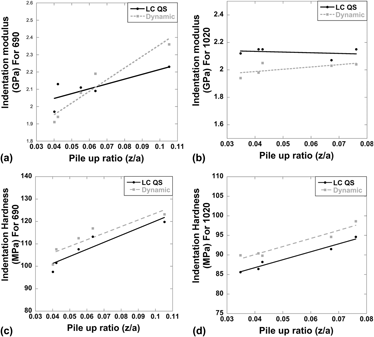
The local micromechanical properties of two cyclic olefin copolymers (COCs) under an applied strain were measured using quasi-static (QS) and dynamic nanoindentation. Samples were prepared by compression molding and tested at five various applied strain levels, leading to a variation in pileup around the residual indentation impression. The variation in the resulting pileup morphology and the subsequent perceived changes in modulus and hardness as a function of applied strain was quantified for these COCs. The perceived mechanical properties determined using both QS and dynamic tests were influenced by the relative out of plane deformation, and as such provide a method to map local variations in residual stresses and strains without the need to measure residual impression pileup for each indentation. The dynamically measured properties appear to provide a more consistent correlation with both the applied strain and pile up behavior around the indents than the modulus and hardness determined from QS nanoindentation.
Fluorine-doped tin oxide (FTO) thin films were deposited by spray pyrolysis in a pulse mode at 450 °C on glass substrates, using an alcoholic solution of SnCl4·5H2O and NH4F with different F/Sn ratios in the precursor solution. The film structure was nanocrystalline for all molar F/Sn ratios in the solution from 0 to 1.0. Postdeposition annealing treatments were not carried out. The films with a F/Sn = 0.35–1.0 ratio present a high grain orientation in the (200) crystallographic plane. A minimum sheet resistance of 4.5 Ω/sq, a resistivity of 2.2 × 10⁻⁴ Ω cm, a maximum electron mobility of 21.6 cm2/V s, and a carrier concentration of 1.7 × 1021 cm−3, corresponding to a strong degeneration of the electron gas in the conduction band, as well as a mean value of the transmittance of 0.84 in the visible spectral range, were obtained for the films fabricated with a F/Sn = 0.5 ratio. A high value of the figure of merit was obtained using two methods (38.8 × 10⁻³ Ω−1 and 5.75 Ω−1), that is, comparable with the highest values reported to date.
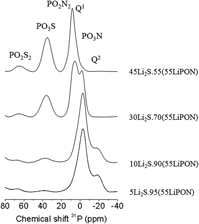
Lithium thio-phosphorus oxynitride glasses, LiPOSN, have been prepared by mechanical milling process from the mixture of Li2S and LiPON glass. The anionic substitution of oxygen by sulphur and nitrogen in the phosphate glass structure has been confirmed by 1D 31P solid state nuclear magnetic resonance and x-ray photoelectron spectroscopy. The study of thermal and electrical properties reveals a decrease in the glass transition temperature, likely due to the depolymerization of glass network by the decrease of bridging oxygens and sulphurs, along with a sharp increase in the ionic conductivity when lithium sulphide is incorporated into the oxynitride glasses. The improvement of chemical durability by the introduction of nitrogen, together with the increase in ionic conductivity up to values closed to the value of commercial LiPON thin film electrolyte, suggests that these LiPOSN glasses could be good candidates as solid electrolytes for lithium microbatteries.
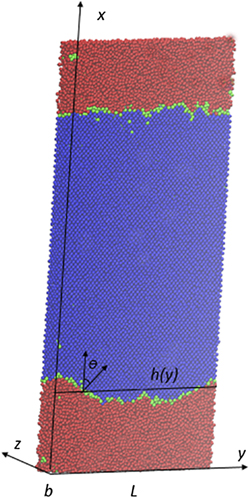
The crystal–melt interfacial free energy is an important quantity governing many kinetic phenomena including solidification and crystal growth. Although general calculation methods are available, it is still difficult to obtain the interfacial energies that differ only slightly due to anisotropy. Here, we report such a calculation of Al crystal–melt interfacial energy based on the general framework of the capillary fluctuation method (CFM). The subtle dependence of both the melting temperature and interfacial free energy at melting temperature on the crystal interface orientation was examined. For Al, the average melting temperature is obtained at 934.79 ± 5 K and the orientationally averaged mean interfacial free energy is 98.35 mJ/m2. In addition, the anisotropy of the interfacial free energy is found weak, nevertheless with the values ranked as γ100 > γ110 > γ111.
The authors present and discuss a method for simultaneous quantitative analysis of total loss on ignition (LOI) (CO2 + H2O) and CO2 content separate from the LOI, in an industrial environment of quicklime production. Total LOI is determined by the Compton scattered RhKα tube radiation which is used directly in the calibration equation. The resulting calibration curve for LOI, including matrix correction shows an accuracy of 0.15 mass%. The carbon content (CO2) is distinguished from total LOI by measuring CKα radiation, which is possible with the required accuracy by employing a new multilayer analyzer with greatly improved background characteristics. The method aims at high reliability and sample throughput and at becoming a less time-consuming alternative to the conventional method of LOI determination by weighing sequences before and after “ignition” at 1050 °C.
X-ray powder diffraction data, unit-cell parameters, and space group for calcium(II)–naproxen complex, C28H26CaO6·2H2O, are reported [a = 36.918(2) Å, b = 5.655(6) Å, c = 12.505(6) Å, β = 91.263(2)°, cell volume V = 2610.47 Å3, Z = 4, and space group C2]. All measured lines were indexed and are consistent with the C2 space group. No detectable impurities were observed.