To save content items to your account,
please confirm that you agree to abide by our usage policies.
If this is the first time you use this feature, you will be asked to authorise Cambridge Core to connect with your account.
Find out more about saving content to .
To save content items to your Kindle, first ensure no-reply@cambridge.org
is added to your Approved Personal Document E-mail List under your Personal Document Settings
on the Manage Your Content and Devices page of your Amazon account. Then enter the ‘name’ part
of your Kindle email address below.
Find out more about saving to your Kindle.
Note you can select to save to either the @free.kindle.com or @kindle.com variations.
‘@free.kindle.com’ emails are free but can only be saved to your device when it is connected to wi-fi.
‘@kindle.com’ emails can be delivered even when you are not connected to wi-fi, but note that service fees apply.
The study of chemical reactions has been of great interest to the chemists. They wish to investigate the manner in which the reaction occurs and the speed at which it takes place. They are also interested in studying the effect of various parameters like temperature, pressure and concentration on the rate of the reaction. Chemical kinetics deals with all the above and can be defined as the branch of chemistry which deals with
• Rate of chemical reaction
• Mechanism by which the reactants are converted into products and
• Factors affecting the rate of a reaction
It is observed that different reactions occur at different rates. Some reactions are fast and some reactions occur very slowly and take months or even years for their completion, while some reactions occur at a moderate rate. It is these reactions occurring at moderate speed which are of great interest to the chemists as their rates can easily be measured in the laboratory.
Depending upon their speed the chemical reactions are categorized as follows
1. Fast Reactions Reactions that occur instantaneously as soon as the reactants are mixed together are termed as fast reactions. For example, the precipitation of the solution of silver nitrate and sodium chloride.
AgNO3 + NaCl → AgCl+ NaNO3
Similarly, neutralization of acid and base also occurs as soon as the two substances are mixed. Generally, ionic reactions are fast reactions because they involve ions that are held together by electrostatic forces and no bonds are broken in them. The rates of these reactions are too fast to be determined by conventional methods. These methods cannot deal with reactions whose half lives are less than a second or so. Special techniques are employed to measure the rate of such reactions.
2. Very slow reactions Some reactions like rusting of iron occur so slowly that one can be misled into thinking that no reaction is occurring at all. These reactions proceed very slowly and it becomes difficult to determine the speed of the reactions.
Phase change materials are identified for their ability to rapidly alternate between the amorphous and crystalline phases and have large contrast in the optical/electrical properties of the respective phases. The materials are not only primarily used in memory storage applications, but also recently they have been identified as potential thermoelectric materials [D. Lencer et al., Adv. Mater.23, 2030–2058 (2011)]. Many of the phase change materials studied today can be found on the pseudo-binary (GeTe)1−x(Sb2Te3)x tie-line. While many compounds on this tie-line have been recognized as thermoelectric materials, here we focus on Ge4SbTe5, a single phase compound just off of the (GeTe)1−x(Sb2Te3)x tie-line, which forms in a stable rocksalt crystal structure at room temperature. We find that stoichiometric and undoped Ge4SbTe5 exhibits a thermal conductivity of ∼1.2 W/m K at high temperature and a large Seebeck coefficient of ∼250 μV/K. The resistivity decreases dramatically at 623 K due to a structural phase transition which leads to a large enhancement in both thermoelectric power factor and thermoelectric figure of merit at 823 K. In a more general sense, the work presents evidence that phase change materials can potentially provide a new route to highly efficient thermoelectric materials for power generation at high temperature.
Catalyst development is needed to enable the use of renewable electricity to chemically convert carbon dioxide (CO2) and water into fuels and chemicals, a more sustainable, lower-carbon alternative to conventional processes that produce fuels and chemicals based on fossil resources. In this study, the catalytic activity and selectivity of polycrystalline platinum (Pt) is thoroughly characterized for the CO2 reduction reaction, based on an electrochemical cell design that offers high sensitivity for product detection. Thin polyaniline films are then electrodeposited onto polycrystalline Pt foils to form hybrid organic–inorganic surfaces. The addition of the polymer is observed to have an impact on the catalytic chemistry, yielding up to a fivefold enhancement in formate and CO production over pure Pt foils. This work elucidates new strategies to perturb interfacial chemistry in a manner that could help steer CO2 electro-reduction catalysis in desired directions.
Recent efforts to characterize the nanoscale structural and chemical modifications induced by energetic ion irradiation in nuclear materials have greatly benefited from the application of synchrotron-based x-ray diffraction (XRD) and x-ray absorption spectroscopy (XAS) techniques. Key to the study of actinide-bearing materials has been the use of small sample volumes, which are particularly advantageous, as the small quantities minimize the level of radiation exposure at the ion-beam and synchrotron user facility. This approach utilizes energetic heavy ions (energy range: 100 MeV–3 GeV) that pass completely through the sample thickness and deposit an almost constant energy per unit length along their trajectory. High energy x-rays (25–65 keV) from intense synchrotron light sources are then used in transmission geometry to analyze ion-induced structural and chemical modifications throughout the ion tracks. We describe in detail the experimental approach for utilizing synchrotron radiation (SR) to study the radiation response of a range of nuclear materials (e.g., ThO2 and Gd2TixZr2−xO7). Also addressed is the use of high-pressure techniques, such as the heatable diamond anvil cell, as a new means to expose irradiated materials to well-controlled high-temperature (up to 1000 °C) and/or high-pressure (up to 50 GPa) conditions. This is particularly useful for characterizing the annealing kinetics of irradiation-induced material modifications.
Designing materials for performance in high-radiation fields can be accelerated through a carefully chosen combination of advanced multiscale modeling paired with appropriate experimental validation. The studies reported in this work, the combined efforts of six universities working together as the Consortium on Cladding and Structural Materials, use that approach to focus on improving the scientific basis for the response of ferritic–martensitic steels to irradiation. A combination of modern modeling techniques with controlled experimentation has specifically focused on improving the understanding of radiation-induced segregation, precipitate formation and growth under radiation, the stability of oxide nanoclusters, and the development of dislocation networks under radiation. Experimental studies use both model and commercial alloys, irradiated with both ion beams and neutrons. Transmission electron microscopy and atom probe are combined with both first-principles and rate theory approaches to advance the understanding of ferritic–martensitic steels.
The progressive build up of fission products inside different nuclear reactor components can lead to significant damage of the constituent materials. We demonstrate the use of time-domain thermoreflectance (TDTR), a nondestructive thermal measurement technique, to study the effects of radiation damage on material properties. We use TDTR to report on the thermal conductivity of optimized ZIRLO, a material used as fuel cladding in nuclear reactors. We find that the thermal conductivity of optimized ZIRLO is 10.7 ± 1.8 W m−1 K−1 at room temperature. Furthermore, we find that the thermal conductivities of copper–niobium nanostructured multilayers do not change with helium ion irradiation doses of 1015 cm−2 and ion energy of 200 keV, demonstrating the potential of heterogeneous multilayer materials for radiation tolerant coatings. Finally, we compare the effect of ion doses and ion beam energies on the measured thermal conductivity of bulk silicon. Our results demonstrate that TDTR can be used to quantify depth dependent damage.
Ca0.98Eu0.02Al1−4δ/3Si1+δN3 (δ = 0–0.36) red-emitting phosphors were prepared by carbothermal reduction and nitridation method with stable and inexpensive CaCO3 as Ca source. Optimal nominal composition was obtained at δ = 0.18, showing intense emission peaked at 625 nm and high external quantum efficiency of 71%. The emission wave length could be successfully tuned from 630 to 606 nm with increasing δ value. Ca0.98Eu0.02Al1−4δ/3Si1+δN3 phosphors provided two coordinated environments for Eu2+ ions, resulting in two fitted Gaussian peaks. Energy transfer from Eu2+ sites in Si-rich environments to those in Si/Al-equivalent modes has been confirmed by analysis of the decay curve of each peak. The decay behaviors suggested that energy transfer effect slowed with higher δ value. Finally, warm white light was created by combining as-prepared red-emitting Ca0.98Eu0.02Al0.76Si1.18N3 and yellow-emitting YAG:Ce3+ phosphors with a blue-emitting chip, exhibiting a color rendering index Ra of 91 at a low correlated color temperature of 3500 K with a luminous efficiency of 79 lm/W.
Electron backscatter diffraction (EBSD) is a micro-analytical technique typically attached to a scanning electron microscope (SEM). The vast majority of EBSD measurements is applied to planar and polished surfaces of polycrystalline bulk specimen. In this paper, we present examples of using EBSD and energy-dispersive X-ray spectroscopy (EDX) to analyze specimens that are not flat, not planar, or not bulk – but pillars, needles, and rods. The benefits of low vacuum SEM operation to reduced drift problems are displayed. It is further demonstrated that small and thin specimens enhance the attainable spatial resolution for orientation mapping (by EBSD or transmission Kikuchi diffraction) as well as for element mapping (by EDX).
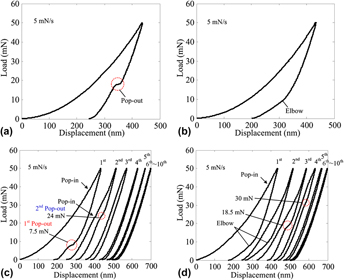
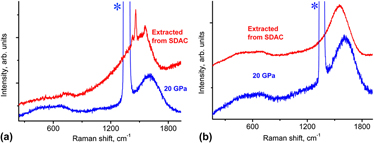
In cyclic nanoindentation of single-crystal silicon, an interesting phenomenon of a secondary pop-out event that closely follows the first pop-out event but with a larger critical load than the first is presented. Cyclic nanoindentation experiments under various loading/unloading rates and various maximum indentation loads were performed to verify the generality of the phenomenon of two pop-out events. Raman spectroscopy results indicate that the secondary pop-out does not induce any new phase, and the dominated end phases after the two pop-out events are still a mixture of Si-XII/Si-III phases. According to average contact pressure analysis, the phase transformation paths and the formation mechanism for the secondary pop-out event are discussed from the viewpoint of crystal nucleation and growth. The results indicate that phase transformations from the Si-I phase to Si-XII/Si-III phases are completed by two pop-out events in two adjacent indentation cycles, and the Si-XII/Si-III phases formed in previous indentation cycles strongly affect the phase transformations in subsequent loading/unloading processes.
Conjugated polymers (CPs) are widely investigated because of their intriguing optical and semiconducting properties in various optoelectronic device applications. Because of the one-dimensional p-orbital overlap along the main chain, CPs exhibit strong anisotropy in optoelectronic characteristics. Therefore, macroscopic assembly and alignment of CPs are essential to fully utilize their potential properties in real device applications. Here we review various processing strategies and material design principles for efficient CP alignment that result in highly anisotropic optical and electronic characteristics. Furthermore, we thoroughly review the incorporation of aligned CPs layers in organic light-emitting diodes, organic thin film transistors, and organic photovoltaic devices. The achieved macroscopic CP alignment has increased the optoelectronic properties and greatly improved device performance.
A catalytic depolymerization (a reversible polymerization) of 3D-polymerized C60 phases (including an ultrahard fullerite phase) takes place in the presence of sulfur under the conditions of a large plastic deformation at room temperature. The sulfur atoms remain in the samples of 3D C60 polymers after catalytic synthesis using carbon disulfide (CS2) as a catalyst (the presence of sulfur has a considerable impact on the 3D C60 polymerization by decreasing the polymerization pressure). Raman, infrared, and transmission electron microscope studies show that the depolymerized fullerite samples have a structure typical for dimers, 1D and 2D C60 polymers. The 3D C60 samples with some remaining sulfur can be quenched under ambient conditions if the samples have not undergone a large plastic deformation. There is no depolymerization for pure C60 3D-polymerized phases synthesized without a sulfur-based catalyst.
X-ray fluorescence (XRF) is a well-established method for quantitative elemental analysis. For accurate quantification, secondary excitation has to be taken into account. In this paper, the secondary excitation process was discussed for analysis by confocal micro-XRF. Experimental depth profiles were shown for a layered sample of Co and Cu. An additional peak was observed in the depth profile of Co, and it was explained by secondary excitation process. Additionally, a Mosaic model was proposed for quantification of confocal micro- XRF analysis.
In this paper, the Ni-decorated ZnO photocatalysts with magnetic separable characteristics were prepared by a simple replacing-hydrothermal process for the first time. The as-synthesized composites were characterized by powder x-ray diffraction, UV–visible diffuse reflectance spectroscopy, x-ray photoelectron spectroscopy, scanning electron microscope, transmission electron microscopy, and so on. It is found that the introduction of Ni (as Ni0 and Ni2+ forms) turned the morphologies of ZnO photocatalysts, enhanced photoabsorption in a visible light region, and increased amount of surface adsorbed oxygen. The photodegradation test of anthraquinone dye (reactive brilliant blue KN-R) indicated that the Ni-decorated ZnO photocatalysts have better activities as compared to the ZnO reference. The enhancement of photocatalytic activity of Ni-decorated ZnO photocatalysts can be attributed to the existence of Ni2+ doping, Ni0/ZnO heterostructure, and abundant-adsorbed oxygen (as the electronic scavenges), which caused efficient separation of electron–hole pairs in Ni-decorated ZnO photocatalysts. Furthermore, the introduction of metallic Ni also endued ZnO with good magnetic recoverability. The re-collected experiments by external magnetic field indicated that Ni-decorated ZnO as a magnetically recoverable photocatalyst is acceptable.
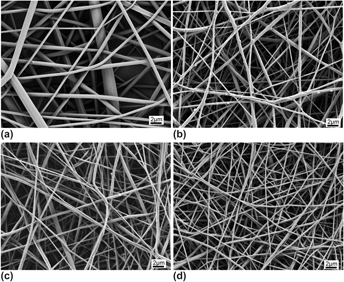
The work was intended to explore the effect of the widely available cationic polymer polyethylenimine (PEI) on small diameter poly(ɛ-caprolactone) (PCL) blood vessel grafts. PEI was blended with PCL and electrospun into nanofibrous vascular scaffolds. The morphologies, wettabilities, mechanical properties, and biological activities of the PCL/PEI electrospun nanofibers were investigated. It was found that by increasing the content of PEI to 5% within the scaffolds, the fiber diameters decreased from 469.7 ± 212.1 to 282.5 ± 107.1 nm, the water contact angle was reduced from 126.6 ± 1.1° to 27.6 ± 3.9°, while the Young's modulus increased from 2.0 ± 0.2 to 4.1 ± 0.1 MPa, the suture retention strength increased from 4.2 ± 0.4 to 6.1 ± 0.7 N, and the burst pressure increased from 801.2 ± 14.1 to 926.2 ± 22.8 mmHg. The in vitro evaluations demonstrated that the nanofibers containing 2% PEI promoted the attachment and proliferation of human umbilical vein endothelial cells (HUVECs).
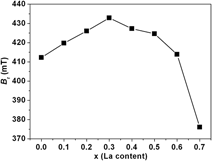
The M-type hexaferrite Sr1−xLaxFe11.75Co0.10Zn0.15O19 (0 ≤ x ≤ 0.7) magnetic powders and magnets were synthesized by the ceramic process. The phase constituents of the magnetic powders were analyzed by x-ray diffraction. There is a single magnetoplumbite phase in the magnetic powders with La content (0.2 ≤ x ≤ 0.4). For the magnetic powders containing La content (0 ≤ x ≤ 0.1) or (0.5 ≤ x ≤ 0.7), magnetic impurities coexist in the structure. The microstructures of the magnets were characterized by field emission scanning electron microscopy. The magnets consist of homogenously distributed ferrite particles with the hexagonal structures. The magnetic properties of the magnets were measured by a permanent magnetic measure equipment. The remanence, maximum energy product, and Hk/Hcj ratio of the magnets at x = 0.3 reach the maximum values. However, the intrinsic coercivity and magnetic induction coercivity of the magnets at x = 0.2 reach the maximum values.
A phase transfer method was developed to prepare Mg(OH)2 nanosheets and a subsequent adsorption–calcination process was followed to obtain lamellar MgO nanostructures. The as-prepared MgO nanosheets also showed a superior adsorption property of Congo red. Transmission electron microscopy and x-ray diffractometer results indicated that the as-obtained Mg(OH)2 was plate-shaped with a hexagonal crystal structure where MgO possessed a lamellar structure with a cubic phase. The maximum adsorption capacities of Mg(OH)2 and MgO were reached up to 1820 and 2650 mg g−1, respectively. The high adsorption capacity might be related to the particle geometry and large surface area (87.97 m2 g−1 for Mg(OH)2 and 132.31 m2 g−1 for MgO). The adsorbents can be easily regenerated for five times without any significant loss in their adsorption property. The adsorption behaviors of the Mg(OH)2 and MgO adsorbents showed that the adsorption kinetics and isotherms were in good agreement with pseudo-second-order rate equation and Freundlich adsorption model.