To save content items to your account,
please confirm that you agree to abide by our usage policies.
If this is the first time you use this feature, you will be asked to authorise Cambridge Core to connect with your account.
Find out more about saving content to .
To save content items to your Kindle, first ensure no-reply@cambridge.org
is added to your Approved Personal Document E-mail List under your Personal Document Settings
on the Manage Your Content and Devices page of your Amazon account. Then enter the ‘name’ part
of your Kindle email address below.
Find out more about saving to your Kindle.
Note you can select to save to either the @free.kindle.com or @kindle.com variations.
‘@free.kindle.com’ emails are free but can only be saved to your device when it is connected to wi-fi.
‘@kindle.com’ emails can be delivered even when you are not connected to wi-fi, but note that service fees apply.
In the present work, the Li2ZnTi3O8 ceramics were prepared via the solid-state reaction method, afterward annealed at 800 °C in a time variation from 4 to 20 h. The ordering, microstructures and dielectric properties were investigated using x-ray diffraction, scanning electron microscopy, network analyzer, and Raman spectroscopy. The most significant enhancement of quality factor is obtained in the sample annealed for 20 h, while the dielectric constant and temperature coefficient of resonant frequency change slightly. This result mainly attributes to the enhancement of ordering, which could be related to the increase in the Zn–O bond strength in ZnO4 tetrahedra. Meanwhile, the full-width at half-maximum of A1g mode decreased with higher annealing time, which suggested less variation in the Zn–O bond length and a higher degree of ordering. The best combination of microwave dielectric characteristic is obtained in the sample annealed at 800 °C for 20 h: Q × f = 112,400 GHz, εr = 24.500, and τf = −11 ppm/°C.
A bimodal mixture of silver nanoparticles consisting of spheres and triangular nanoplates was synthesized from silver nitrate (AgNO3) and polyvinylpyrrolidone with the aid of a microwave reactor system, reducing total reaction time from days to minutes; a specific shape-directing reagent was not used. It is known that freshly prepared solutions of AgNO3 contain a high population of Ag3+, while aged solutions contain fewer trimers. We propose that the product ratios of spheroidal to triangular particles are proportional to the relative population of trimers in solution prior to initiation of the microwave reaction.
We report on electronic properties of water-filled fullerenes [H2O(n)@C60, H2O(n)@C180, and H2O(n)@C240] under mechanical deformation using density functional theory. Under a point load, energy gap change of empty and water-filled fullerenes is investigated. For C60 and H2O(n)@C60, the energy gap decreases as the tensile strain increases. For H2O(n)@C60, under compression, the energy gap decreases monotonously while for C60, it first decreases and then increases. Similar behavior is observed for other empty (C180 and C240) and water-filled [H2O(n)@C180 and H2O(n)@C240] fullerenes. The energy gap decrease of water-filled fullerenes is due to the increased interaction between water and carbon wall under deformation.
Several hitherto unknown hydrates of magnesium selenate have been formed by quenching aqueous solutions of MgSeO4 in liquid nitrogen. MgSeO4·11H2O is apparently isostructural with the mineral meridianiite (MgSO4·11H2O), being triclinic, $P{\rm \bar 1}$, Z = 2, with unit-cell parameters a = 6.779 00(8) Å, b = 6.965 16(9) Å, c = 17.4934(2) Å, α = 87.713(1)°, β = 89.222(1)°, γ = 63.121(1)°, and V = 736.15(1) Å3 at −25 °C. MgSeO4·9H2O represents a new hydration state in the MgSeO4–H2O system; it is monoclinic, space-group P21/c, Z = 4, with unit-cell parameters a = 7.270 24(6) Å, b = 10.510 94(9) Å, c = 17.4030(2) Å, β = 109.447(1)°, and V = 1254.02(1) Å3 at −22 °C. The heavy-atom structure of MgSeO4·9H2O has been determined by direct-space methods from X-ray powder diffraction data and consists of isolated Mg(H2O)62+ octahedra and SeO42− tetrahedra linked by hydrogen bonds. The remaining three water molecules occupy the space between the polyhedral ions, contributing to the H-bonded network, which comprises 4-, 5-, and 6-membered rings. A third phase has been observed to crystallise prior to the 11-hydrate upon warming of liquid-nitrogen-quenched glass, but this transforms rapidly to the meridianiite-structured 11-hydrate and the identity of this phase is unclear.
The quantification of stress in polycrystalline materials by diffraction-based methods relies on the proper choice of grain interaction model that links the observed strain to the elastic stress state in the aggregate. X-ray elastic constants (XEC) relate the strain as measured using X-rays to the state of stress in a quasi-isotropic ensemble of grains. However, the corresponding interaction models (e.g., Voigt and Reuss limits) often possess unlikely assumptions as to mechanical response of the individual grains. The Kröner limit, which employs a self-consistent scheme based on the Eshelby inclusion method, is based on a more physical representation of isotropic grain interaction. For polycrystalline aggregates composed of crystals with cubic symmetry, Kröner limit XEC are equal to those calculated from a linear combination of Reuss and Voigt XEC, where the weighting fraction, xKr, is solely a function of the single-crystal elastic constants and scales with the material's elastic anisotropy. This weighting fraction can also be experimentally determined using a linear, least-squares regression of diffraction data from multiple reflections. Data on metallic thin films reveals that this optimal experimental weighting fraction, x*, can vary significantly from xKr, as well as that of the Neerfeld limit (x = 0.5).
As multifunctional electroactive materials, ferroelectric polymers are unique owing to their exceptionally high dielectric strength (>600 MV/m), high flexibility, and easy and low-temperature fabrication into required shapes. Although polyvinylidene difluoride (PVDF)-based ferroelectric polymers have been known for several decades, recent findings reveal the potential of this class of electroactive polymers (EAPs) to achieve giant electroactive responses by tuning the molecular, nano, and meso-structures. This paper presents these advances, including giant electrocaloric effect, giant electroactuation, and large, hysteresis-free polarization response. New developments in materials benefit applications, such as environmentally benign and potentially highly energy-efficient electrical field controlled solid-state refrigeration, artificial muscles, and high-energy and power density electric energy storage devices. The challenges in developing these materials to realize these applications, and strategies to further improve the responses of EAPs will be also discussed.
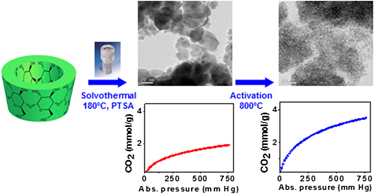
Microporous carbon nanospheres were prepared from β-cyclodextrin (β-CD) by solvothermal carbonization in o-dichlorobenzene in the presence of various concentrations of p-toluene sulfonic acid (PTSA). The contribution of PTSA toward solvothermal char (STC) was established. The STC showed the highest surface area, porosity, and CO2 sorption capacity at a PTSA to β-CD weight ratio of 2.5. The surface area, pore volume, and CO2 sorption capacity were further increased by an in situ high-temperature activation due to the oxidation of carbon at high temperature by oxygen present in the STC. The high-temperature activation reduces the significance of PTSA concentration, as the activated STC showed surface area, micropore volume, and CO2 adsorption capacity in a close range at the PTSA to β-CD weight ratio in the range of 0.04–2.50. The highest CO2 adsorption capacity of the STC increased from 2.4 to 3.5 mmol/g upon the high-temperature activation. The activated STC adsorbs significant amount (0.35 mmol/g) of CO2 from dry air containing 400 ppm CO2. The activated STC showed excellent regeneration stability and selectivity over nitrogen.
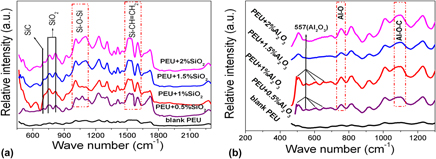
Polyurethane open cell (PUOC) composites containing SiO2 and Al2O3 nanoparticles (NPs) were prepared. Scanning electron microscopy and Z-scan methods were used for observing porosity and detecting third-order nonlinear optical properties of related samples. Adding NPs into polymer matrix decreased the cell size and subsequently increased the porosity of samples. The nonlinear effects of samples were increased by adding 1 wt% of NPs into polymer in comparison with blanks. However, those features were decreased again through higher loading (up to 2.0 wt%) of NPs. The nonlinear refractive indices and nonlinear absorption coefficients of the synthesized samples were obtained in the order of 10−8 (cm2/W) with negative sign and 10−5 (cm/W), respectively. All the results suggest that the nonlinear coefficients of the synthesized samples can be controlled by NP contents in PUOC.
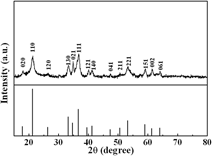
Micro/nanostructured goethite (α-FeOOH) was synthesized by a low-temperature water bath method based on the reaction of urea and FeSO4•7H2O at 95 °C. It has been shown that the as-prepared α-FeOOH consists of nearly spherical particles with about 0.5–1 μm in diameter. The microsized α-FeOOH particles are urchin-like in morphology and composed of nanosized leaf-like objects, with about 150–200 nm in length and about 30–50 nm in width, in radial arrangement, showing high specific surface area (∼118 m2/g). The formation of such urchin-like α-FeOOH could be described by a two-step process, or formation of spherical particles, and ethylene glycol-adsorption induced preferential growth of nanoleaves on the preformed spherical particles. Importantly, such micro/nanostructured α-FeOOH has exhibited much higher photocatalytic activity to the organic pollutants, such as Rhodamine 6G, and better re-usable performances than the goethite nanorod powders, exhibiting the good application potential in the environmental treatment. This study could provide a useful material for environmental pollution treatment.
Combining the classical theories of contact mechanics and lubrication with the study of friction on the nanometer range, this multi-scale book for researchers and students alike guides the reader deftly through the mechanisms governing friction processes, based on state-of-the-art models and experimental results. The first book in the field to incorporate recent research on nanotribology with classical theories of contact mechanics, this unique text explores atomic scale scratches, non-contact friction and fishing of molecular nanowires as observed in the lab. Beginning with simple key concepts, the reader is guided through progressively more complex topics, such as contact of self-affine surfaces and nanomanipulation, in a consistent style, encompassing both macroscopic and atomistic descriptions of friction, and using unified notations to enable use by physicists and engineers across the scientific community.
Summarising recent research on the physics of complex liquids, this in-depth analysis examines the topic of complex liquids from a modern perspective, addressing experimental, computational and theoretical aspects of the field. Selecting only the most interesting contemporary developments in this rich field of research, the authors present multiple examples including aggregation, gel formation and glass transition, in systems undergoing percolation, at criticality, or in supercooled states. Connecting experiments and simulation with key theoretical principles, and covering numerous systems including micelles, micro-emulsions, biological systems, and cement pastes, this unique text is an invaluable resource for graduate students and researchers looking to explore and understand the expanding field of complex fluids.
Structural measurements have been performed on the La0.7Sr0.3Mn3+0.85Nb5+0.15O3 compound with oxidation state of manganese close to +3. The composition undergoes a structural transition from rhombohedral to orthorhombic symmetry below room temperature. The calculated structural parameters show that the orthorhombic phase is not long-range orbitally ordered and that the structural transition is associated with a steric effect. The compound is ferromagnetic with a Curie point of around 150 K and a magnetic moment of 3.1 μB/Mn. It is suggested that ferromagnetism is originated from superexchange interactions via oxygen. Covalence enhances the positive part of the superexchange interactions whereas structural disorder leads to suppression of ferromagnetism.
The fracture strength of β-Mg17Al12 and τ-Mg32(Al, Zn)49 intermetallic coatings on AZ91E Mg alloy was investigated using a nanoindentation-based microcantilever bending technique. A set of micrometer-sized cantilevers with varying dimensions were machined using focused ion beam milling. A nanoindenter was then used to apply an increasing bending load until each cantilever fractured. The corresponding linear-elastic finite element models were created to simulate the deflection of the cantilevers and the fracture strength σm was derived from the models. The results showed that the fracture occurred at the root of the cantilever where the tensile stresses were highest; the average fracture strengths of the β-Mg17Al12 and τ-Mg32(Al, Zn)49 phases were 1.76 and 1.05 GPa, respectively. The potential sources of error are also discussed.
Porous carbon nanospheres (PCNSs), with a diameter of about 100 nm and porous structure, were synthesized by a hydrothermal method. Then, poly(3-hexylthiophene):PCNS (P3HT:PCNS) composite films were prepared by a spin-coating method using PCNS and P3HT mixtures in a chlorobenzene solution. The effects of mixture ratio, revolving speed, suspension concentration during spin coating, and annealing on the optical properties of P3HT:PCNS composite films were investigated. The results indicate that PCNSs exhibit an energy level matching with P3HT and the optical properties of the P3HT:PCNSs depend strongly on mixture ratio, revolving speed, and suspension concentration during spin coating. A 2:1 ratio of P3HT to PCNSs, suspension concentration of 20 mg/mL (P3HT), and spinning rate of 2000 rpm are appropriate for fabricating P3HT:PCNS composite films, and annealing increases the crystallinity of P3HT, resulting in enhanced visible light absorption and increased charge transport in composite films.
The hot deformation behavior of X45CrSi93 valve steel was investigated by a series of compression and tensile tests by means of the Gleeble-1500 simulator and microstructural analyses. The experimental results show that the flow stress decreases with the increasing temperature between 850 and 900 °C followed by an abnormal increase with the increasing temperature between 900 and 1000 °C under the compressive conditions. A normal decrease of the flow stress is continued with the increasing temperature above 1000 °C. Meantime, the tensile specimen conducted at 1000 °C shows double necking effect. Further microstructural analyses show that the phase transition from α-ferrite to austenite and the solution strengthening caused by carbide dissolution are the main reasons for abnormal variation of flow stress for X45CrSi93. The negative temperature gradient in the tensile specimen results in the symmetrical microstructure and then the double necking phenomenon.
The hybrid halide perovskites combine the low-cost processing characteristics of organic materials with the performance factors of inorganic compounds. Recently the power conversion efficiencies of perovskite photovoltaic solar cells have reached a respective value of ~20%. The charge transport properties were indirectly approximated in these compounds because of lack of available field-effect transistors (FETs). Here we report the fabrication and room-temperature operation of FETs based on the hybrid perovskites. We obtained balanced electron and hole transport with mobilities of ~1 cm2/Vs. We also found that the yield, as well as the operational and environmental stability of the fabricated transistors is limited.
The present study investigates the joining of 5-mm-thick plates of superaustenitic stainless steel, AISI 904L by continuous current (CC) and pulsed current (PC) gas tungsten arc welding (GTAW) using ER2553 and ERNiCrMo-4 fillers. This research article attempts to provide a detailed structure–property relationship of these weldments. Interface microstructure revealed the absence of deleterious secondary phases at the heat affected zone in all the cases. Skeletal delta ferrite morphology at the cap of ER2553 fusion zone and multidirectional grain growth at the ERNiCrMo-4 fusion zone were observed for both the weldments. The average hardness at the fusion zone was found to be higher for PCGTA weldments using ER2553 due to the higher proportions of ferrite. Tensile studies corroborated that the failure occurred at the parent metal in all the cases. Charpy V-notch studies divulged that the CCGTA and PCGTA weldments utilizing ERNiCrMo-4 filler exhibited the greater impact toughness of 69 J and 75 J, respectively. The bend test results conveyed that both the CCGTA and PCGTA weldments using ERNiCrMo-4 exhibited soundness and ductility.
We detail the influence of tapered interfaces on the nanoscale morphologies of ion-doped poly(styrene-b-oligo-oxyethylene methacrylate) block polymers (BPs). Most significantly, the location of double-gyroid network phase window was found in ion-doped normal-tapered materials, and a similar window was not detectable in the corresponding non-tapered and inverse-tapered BPs. Additionally, the effective interaction parameters, χeff, were reduced substantially in the tapered materials in comparison with their non-tapered counterparts. Overall, this work demonstrates that tapering between polymer blocks provides unique control over BP morphologies and improves the material processability (due to lower χeff), potentially facilitating the development of future ion-conducting devices.
This research is devoted to the study of the effect of grain size and structural disorders on the melting behavior of Al nanocrystals under nonequilibrium conditions. The results indicate that Tm is constant and similar to Tm of perfect crystal for nanocrystals of 14 nm and higher. But, by a decrease in the grain size, Tm is significantly reduced. In addition, by further decrease in the size of the grain up to about three times the value of Al-lattice parameter, the behavior of the melt will be similar to the amorphous phase. Since it seems that these behaviors are related to high percentage of grain boundaries in nanocrystalline materials, the structural disorders of the atoms in different regions of nanocrystalline samples are separately studied during heating. The results show that premelting of boundary regions causes the melting process of nanostructure materials to be done within one temperature limit instead of at one temperature point.